
Lion’s Head to Platteklip: Weekend heat triggers multiple mountain rescues
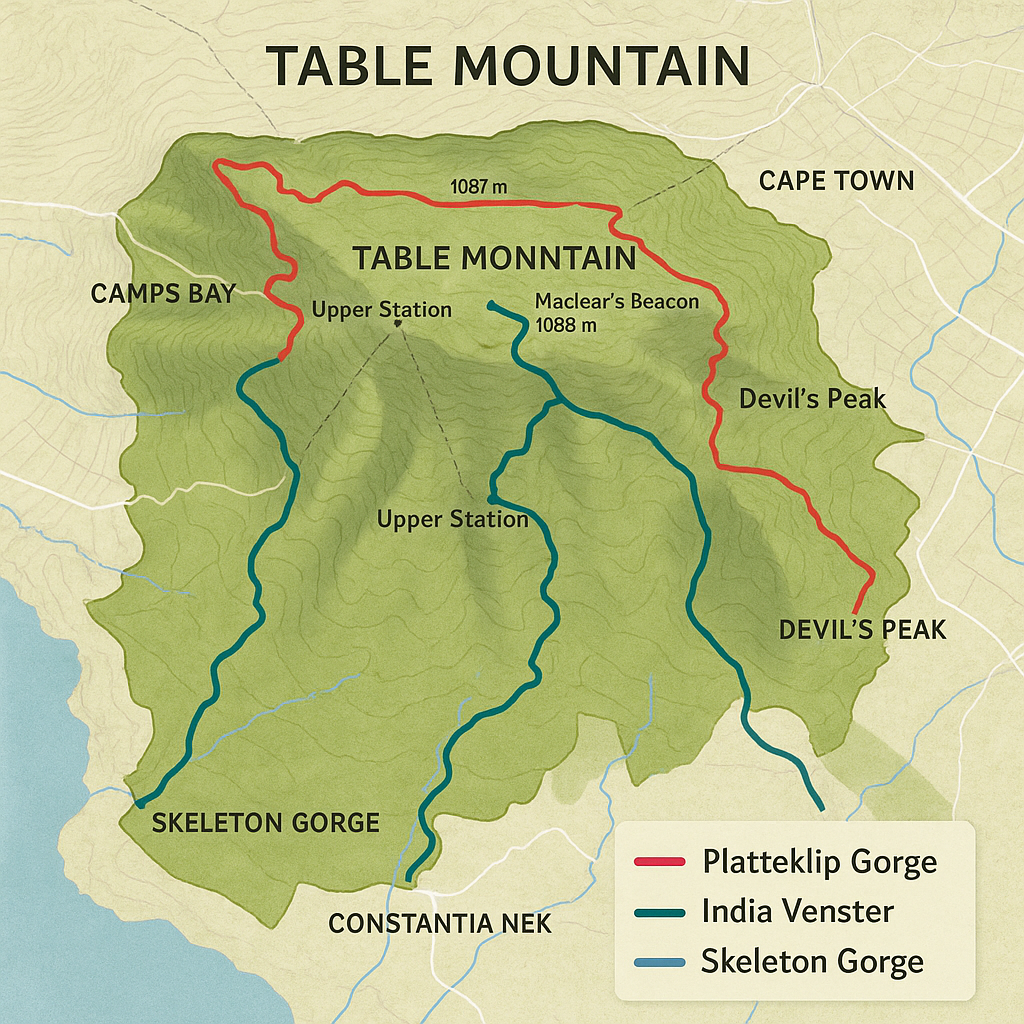
WSAR volunteers brave extreme heat to complete three mountain rescues in one weekend, highlighting increasing call-outs and climate impact.
Scorched Slopes: How a Single Weekend Pushed Cape Town’s Volunteer Rescuers to the Brink
Cape Town's volunteer rescuers faced a brutal weekend, pushing them to their limits. Extreme heat turned beautiful mountains into dangerous traps, leading to multiple emergencies. They saved hikers from broken bones and severe heatstroke, even as the volunteers themselves battled exhaustion. This story shows their incredible bravery and the growing challenge of hotter, more crowded mountains.
How can hikers stay safe in extreme heat on trails?
To stay safe in extreme heat on trails, pre-hydrate with 500ml water an hour before starting, add a teaspoon of salt to every second liter of water, and start hiking at first light. Use the ResQLive app for GPS tracking and save "021 937 0300" as "Mountain 911." If you stop sweating, immediately find shade, call for help, and douse yourself with water.
Get Cape Town news in your inbox
Stay updated with the latest stories from the Mother City.
1. A postcard turned pressure-cooker
Lion’s Head, Jonkershoek, Platteklip - these names usually sell calendars: ribbon waterfalls, rusty cliffs, fynbos shimmering like coloured dust.
Yet for Wilderness Search And Rescue the same three syllables now spell sprint drills, rope coils that scorch bare forearms, rotor-blades churning grit into eyes, and the soft beep of a medic’s watch while fluid seeps into a stranger’s vein.
Between one Saturday dawn and the following dusk the unpaid crew answered three full-blown mountain emergencies while the thermometer on the lower slopes kissed 38 °C and the black west-face quartzite radiated above 40 °C.
The raw numbers feel small - three events, five patients - until you zoom in: a stretcher threaded down a 60 m rock funnel, a 57-year-old woman dangling from a cable above a gorge whose only flat spot is café-table sized, two Dutch tourists so hot their words melted into gibberish.
Throw in 25 call-outs logged in December plus 13 more before January’s mid-point and the pattern is relentless: a mountain rescue every 28 hours since the holiday rush began, powered by people who clock back into office jobs at sunrise on Monday.
2. Saturday morning on Lion’s Head
- Timeline: 08:42 – 13:29*
A 28-year-old analyst from Joburg left Tamboerskloof at dawn in slick-soled runners, reaching the first ladder just after eight.
Powdery sand rolled like ball-bearings under her heel; she spun, her body slid, her ankle stayed.
The crack echoed, hikers froze, a whistle chorus started the radio relay that ends at WSAR.
Eighteen minutes later a Table Mountain ranger was splinting the joint; by 09:10 a rope tech arrived soaked from sprinting uphill with 15 kg on his back.
A chopper was impossible - cable towers boxed the ledge - so the team built a twin-point anchor, shared the load, and hand-steered the stretcher down the ladder chute like a bobsleigh on rails.
She cracked a joke about “off-road Uber,” left in an ambulance at 13:29 with a pain score of six and a core temp of 37.1 °C.
Back at the parking lot the rescuers had already shed 1.8 kg of sweat.
3. Sunday furnace in Jonkershoek
- Timeline: 13:57 – 15:54*
Jonkershoek’s shark-fin peaks funnel midday heat like a blast furnace.
A paediatric nurse started early with 2.5 L of water, but the gorge thermometer jumped to 41 °C and shade became a moving mirage.
One slick boulder later she lay with a snapped femur, bone ends overriding, every heartbeat a hammer.
Her GP friend blew six whistle blasts a minute until rangers arrived with a vintage stretcher last used during the 2018 fires.
They rigged a vacuum mattress, started IV paracetamol and hop-scotched 400 m of car-sized boulders while a space blanket fluttered overhead like a tiny circus tent.
Air Mercy’s AS-350 slipped into a 40 m rock slot, tail rotor inches from stone, and winched her out on a 60 m line.
Forty-four minutes after the hoist started she was on an orthopaedic table; surgeons expect a full recovery within four months.
4. Platteklip’s microwave corridor
- Timeline: 16:40 – 18:18*
Platteklip Gorge is the city’s vertical stair-master - 1.6 km, 670 m up - but after lunch the granite turns into a pizza stone.
A Dutch couple began the climb at 14:30, each armed with 500 ml of water and a banana that looked more like a joke than nutrition.
Two hours later the woman’s core temp hit 40.2 °C, her heart racing at 148 beats, blood pressure tumbling to 88/50.
Rescuers wrapped both in evaporative blankets, poured iced water over torsos and pumped cold saline.
Carrying them down would have needed 14 bearers rotating every five minutes, so the helicopter pilot teased the skids onto a ledge two pool-tables wide while the machine remained in contact with rock to avoid rollover.
Both tourists flew out with stage-1 kidney injury; four days later they were back in the flat Netherlands, lucky to be alive.
5. The hidden casualty: volunteers
What seldom makes the headline is the heat load on the rescuers themselves.
Each volunteer humped 18 kg: harness, hardware, 30 m rope, radios, three litres of water.
Inside Gore-Tex the micro-climate soared to 45 °C; one ranger vomited from exertion, another chalked up 38.4 °C.
Post-mission weigh-ins showed an average fluid loss of 1.8 kg despite necking five litres on site.
As one veteran put it, the sole difference between patient and medic was “which side of the stretcher you woke up on.”
6. Climate, crowds and compounding risk
Cape Town’s average January maximum has crept up 1.7 °C since 1990, but the real kicker is frequency: days above 35 °C have tripled.
Add 4 % more humidity from warmer sea surfaces and the “feels-like” index now cranks past 40 °C on 18 afternoons each summer, up from six in the early ’90s.
Meanwhile Instagram tags for Lion’s Head have multiplied twelve-fold since 2014, and the cableway ferries twice the riders it once did.
End result: a mountain that is simultaneously hotter and more crowded, its rescue curve bending upward like a hockey stick.
7. New tech on the sharp end
- Phase-change vests, borrowed from F-1 pits, drop skin temperature 1.4 °C within half an hour.
- Pocket-size blast chillers flash-cool saline to 4 °C in 90 seconds, scrapping the old ice-box logistics.
- Mavic-3 drones now drop 3 kg pods of water, salt tablets and space-blankets to teams pinned down by weight limits.
- A prototype “trail threat index” crunches slope aspect, albedo and wind to spit out three-hourly heat-risk pings via WhatsApp.
8. Voices from the edge
Dr Lize-Marie van der Watt, flight medic:
“We can land a helicopter inside a gorge, but we can’t insert common sense into a human brain. Heat illness is 100 % avoidable.”
Johan Marais, rope boss:
“Quartzite polished by millions of boots owes you nothing; it will drop you faster than you can update your status.”
Nadia Abrahams, winch paramedic:
“Sixty metres of steel cable is all that sits between life and a very long fall. When I hover above that ledge I’m calculating gust margins, not likes.”
9. If you still insist on going
- Pre-drink 500 ml the hour before you leave the car - hydrate before you dehydrate.
- Stir a flat teaspoon of table salt into every second litre; low sodium kills as fast as heat.
- Hit the trail at first light; if the sun can see you, you should already be heading down.
- Download the free ResQLive app - it squirts your GPS to rescue control every 15 minutes even offline.
- Save 021 937 0300 under “Mountain 911”; panic erases digits, seldom names.
- Aim for straw-coloured urine; anything darker is a late red flag.
- If you stop sweating while still moving, you are minutes from collapse - find shade, call for help, douse yourself with whatever liquid you can find.
10. The week ahead - again, and again
Forecasters warn of a lingering high-pressure ridge that will keep the Western Cape above 34 °C for the next six days, with berg-wind valleys nudging 40 °C.
WSAR has stashed extra rope kits at the lower cable station and placed a helicopter on 30-minute alert.
Models predict the heat index on north-facing rock will top 42 °C between 14:00 and 17:00 daily.
If the past is precedent, another dozen radios will crackle before the last beach towel is shaken free of sunset sand.
The mountains aren’t getting any lower, the sun isn’t getting any cooler, and the volunteers will still clock in on Monday - ready, again, to run uphill while the rest of the city sips its first flat white.
[{"question": "### What challenges did Cape Town's volunteer rescuers face recently?", "answer": "Cape Town's volunteer rescuers faced an extremely challenging weekend due to extreme heat, which transformed the mountains into dangerous environments. They responded to multiple emergencies, saving hikers from serious injuries like broken bones and severe heatstroke. The volunteers themselves battled exhaustion, highlighting the growing difficulties posed by hotter and more crowded mountains."}, {"question": "### How hot did it get during the rescue operations?", "answer": "During the challenging weekend, the thermometer on the lower slopes kissed 38 °C, while the black west-face quartzite radiated above 40 °C. In Jonkershoek, the gorge thermometer jumped to 41 °C. Platteklip Gorge also saw granite turn into a 'pizza stone' after lunch, with a Dutch tourist's core temperature hitting 40.2 °C."}, {"question": "### What specific types of emergencies did the rescuers handle?", "answer": "The volunteer rescuers handled a variety of emergencies, including a 28-year-old analyst with a broken ankle on Lion's Head, a paediatric nurse with a snapped femur in Jonkershoek, and two Dutch tourists suffering from severe heatstroke on Platteklip Gorge. These incidents required complex operations such as stretcher evacuations down steep rock, winching from gorges, and rapid cooling of patients."}, {"question": "### What impact did these rescues have on the volunteers?", "answer": "The rescue missions took a significant toll on the volunteers. Each volunteer carried heavy gear (around 18 kg), and the micro-climate inside their Gore-Tex gear soared to 45 °C. Many experienced extreme exertion, with one ranger vomiting and another recording a body temperature of 38.4 °C. Post-mission weigh-ins showed an average fluid loss of 1.8 kg despite drinking five liters of water, demonstrating the intense physical demands."}, {"question": "### How is climate change affecting mountain safety in Cape Town?", "answer": "Climate change is making mountains in Cape Town significantly more dangerous. The average January maximum temperature has increased by 1.7 °C since 1990, and the frequency of days above 35 °C has tripled. Increased humidity further elevates the 'feels-like' temperature, which now exceeds 40 °C on 18 afternoons each summer, compared to six in the early '90s. This combination of hotter weather and growing numbers of hikers due to increased popularity (e.g., Instagram tags for Lion's Head multiplying twelve-fold) creates a rapidly escalating risk."}, {"question": "### What new technologies are being used to aid mountain rescues?", "answer": "New technologies are being deployed to improve rescue efficiency and safety. These include phase-change vests that reduce skin temperature, pocket-sized blast chillers to rapidly cool saline, Mavic-3 drones capable of dropping 3 kg pods of water and supplies, and a prototype 'trail threat index' that provides three-hourly heat-risk pings via WhatsApp based on environmental factors like slope aspect, albedo, and wind."}]

Emma Botha is a Cape Town-based journalist who chronicles the city’s shifting social-justice landscape for the Mail & Guardian, tracing stories from Parliament floor to Khayelitsha kitchen tables. Born and raised on the slopes of Devil’s Peak, she still hikes Lion’s Head before deadline days to remind herself why the mountain and the Mother City will always be her compass.
View all articles →