
MALARIA IN SOUTH AFRICA, WHY WINTER IS NOT A FREE PASS
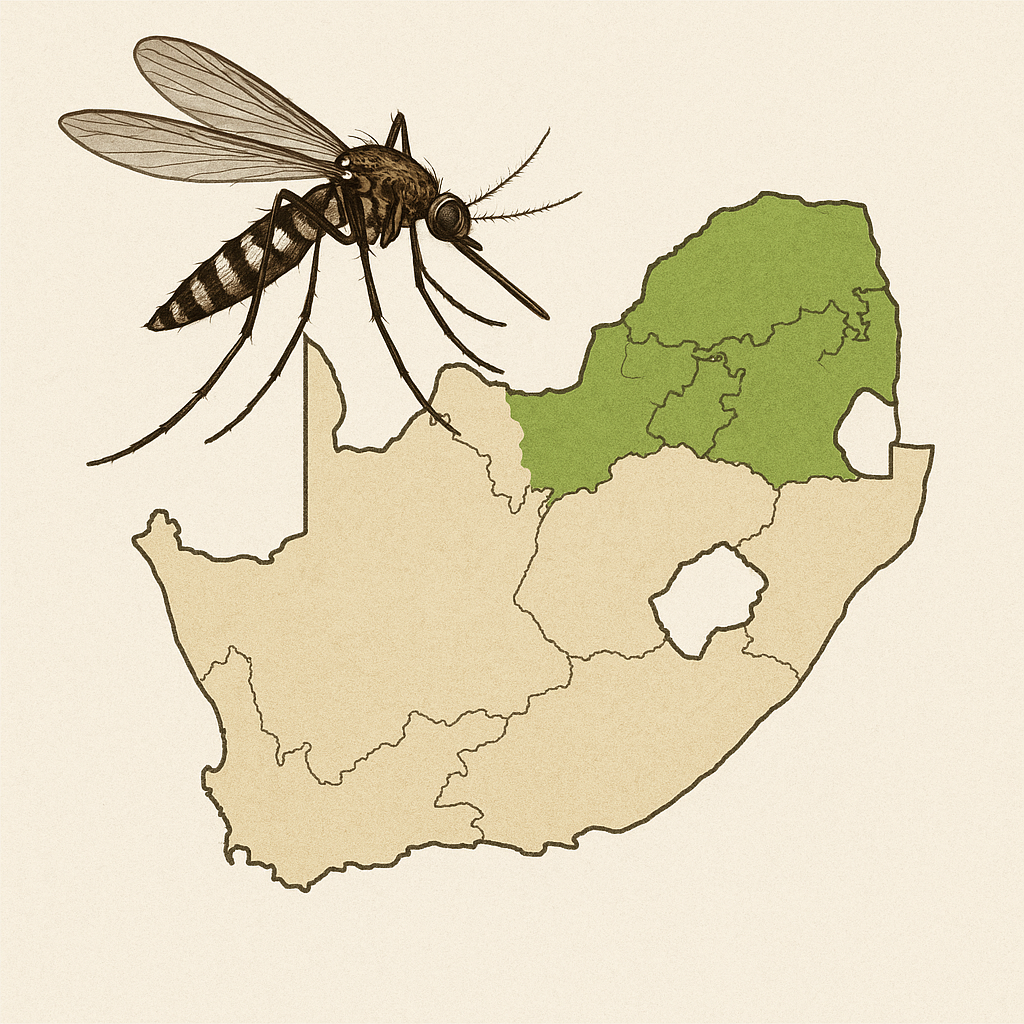
Malaria in South Africa: Despite winter's chill, changing climate, human habits, and new parasite strains keep malaria a threat. Learn how to stay safe.
Don't be fooled by winter's chill; malaria is still a real threat, even in frosty places like South Africa. Mosquitoes are clever and find warm spots to hide, ready to bite. Plus, things like more rain and people traveling can spread the sickness. Sadly, many get sick because they think winter means no malaria, which can be very dangerous.
Can you get malaria in winter?
Yes, malaria can still be contracted in winter, particularly in regions like South Africa. Mosquitoes find micro-refuges to survive the cold, and factors like increased rainfall, cross-border travel, and specific parasite strains (e.g., P. vivax with hypnozoites) contribute to winter malaria cases. Delayed diagnosis due to the misconception of a "malaria-free winter" also poses a significant risk.
Get Cape Town news in your inbox
Stay updated with the latest stories from the Mother City.
The Illusion of a Mosquito-Free Season
Pretoria’s night air may glitter with frost, but the parasite that triggers malaria never clocks out for winter.
From Limpopo’s Lowveld to the humid coastal strip of northern KwaZulu-Natal, female Anopheles tuck themselves into micro-refuges: the muggy gap under a thatch overhang, a tyre rut that never drains, an irrigation ditch that stays a cosy 22 °C right through July.
A single dusk-time blood snack can keep Plasmodium falciparum hidden inside a human liver for weeks, ready to detonate into fever the moment the traveller touches down in Johannesburg.
The maths is merciless - one symptom-free adult, one shared taxi to a Vereeniging mall, one secondary infection in a teenager who has never left the province.
In 2026 the tally reached 858 lab-confirmed cases in Mpumalanga, four of them deaths, plus another 414 in Gauteng - a province declared “malaria-free” in 1950.
Eleven Gauteng patients died, not because the drugs failed, but because the word “winter” fooled patients, nurses and even private doctors into postponing a simple blood slide.
Risk geography has shifted.
The 2025–26 La Niña dumped 40 % more rain on the eastern escarpment than the 1981–2010 average.
European Sentinel-2 satellites counted 1 300 km² of fresh surface water in Vhembe and Mopani during February 2026 - an area bigger than central Gauteng.
Within ten days Anopheles arabiensis, the same species that fuelled apartheid-era epidemics, colonised these puddles; larvae appeared at 920 m above sea level, 150 m higher than ever recorded.
Meanwhile, cross-border traffic that had collapsed under COVID-19 rebounded to 110 % of 2019 levels once Kruger scrapped its last PCR rule.
Mozambican minibus taxis now terminate at Mbombela’s gleaming new inter-modal hub, whose basement car park hovers at 25 °C all night - an invisible shuttle service for freshly fed mosquitoes tucked inside wheel arches or jacket cuffs.
Plasmodium falciparum no longer acts alone.
Its cousin P. vivax, unseen in South Africa since 1988, resurfaced in three blood samples from Ndumo village in March 2026.
Unlike falciparum, vivax can nap as hypnozoites in liver cells for months, then re-ignite when the patient celebrates the first warm weekend back home with a braai and a cold six-pack.
The imported strain carries a pvcrt-o mutation that halves its sensitivity to standard 14-day primaquine.
Consequently, the National Health Laboratory Services now demands PCR speciation for every positive smear nationwide, stretching lab turnaround to 48 h in some districts.
Clinicians must ask not only “where did you visit?” but also “when did you last feel 100 %?” - a question winter bravado too often replaces with “it can’t be malaria, it’s June.”
Roads, Rain and Relapsing Parasites
Before the N4 upgrade in 2024, the haul from Maputo to Mbombela took four bumpy hours; today the dual-carriageway cuts the trip to 75 minutes.
NHLS figures show 62 % of Gauteng’s 2026 cases surfaced within seven days of arrival from Mozambique, versus 38 % in 2019.
Median parasite density on admission jumped from 0.8 % to 2.3 % of red cells infected - a proxy for late diagnosis.
Truckers crossing the Lebombo port between midnight and 04:00 formed a distinct cluster: ten cases sharing an identical kelch13 propeller mutation, the genetic badge linked to sluggish artemisinin clearance in the Mekong.
Whole-genome sequencing found the strain 99.7 % similar to parasites collected in Cabo Delgado in late 2025, proof that partial artemisinin resistance is now riding diesel tankers rather than tourist jets.
South Africa’s mosquito cast is dominated by three siblings of the An. gambiae complex: arabiensis, quadriannulatus and merus.
Winter survival hinges on gonotrophic dissociation: the female pauses egg development and runs on leftover blood for energy.
Field cages run by the Wits Research Institute for Malaria at Naboomspruit kept females alive for 42 days at 18 °C - long enough to pass on parasites picked up in late autumn.
Larvae reared in turbid water - exactly what cotton-and-citrus farms leave behind after floods - yield adults whose mid-guts are 14 % more susceptible to Plasmodium infection.
Insecticide-resistance cards for 2026 show 88 % of arabiensis carry the kdr-west mutation against pyrethroids, yet they remain fully tame to clothianidin, the active in a new class of long-lasting indoor sprays piloted in 2 000 Limpopo homes.
Humans supply the final variable.
South Africans adore winter bush breaks.
SANParks booking data show June–July occupancy at 96 % in Satara and Letaba, the very months locals swear “the mozzies are dead.”
Open-vehicle game drives leave at 17:00 and return at 20:30; passengers in shorts exhale CO₂ plumes detectable 30 m away by hungry Anopheles.
Back at the bungalow, air-con is cranked to 28 °C and windows stay open for the nightjar’s song.
One mosquito inside a thatched rondavel can bite three times before sunrise, satisfying the threshold for transmission.
Kruger’s policy of cutting insecticide use inside guest units - protecting beneficial arthropods - turns a holiday into what parasitologists call “an uncontrolled exposure trial,” except nobody signs consent forms.
Prophylaxis, Pocket Costs and Pocket-Sized Labs
The 2026 chemoprophylaxis playbook, signed off by the Medicines Control Council, sorts travellers into three tiers based on G6PD status and exposure:
Tier 1 – low-risk winter stay (fewer than seven nights, ceiling fans, sealed rooms)
Atovaquone-proguanil 250/100 mg daily, begun 24 h before arrival and continued seven days after leaving.
Price: R 11.40 a tablet - often less than an airport cappuccino.
Tier 2 – moderate risk (backpackers, campers, outdoor workers)
Doxycycline 100 mg daily, started two days pre-travel, extended four weeks post-return.
Winter UV sits below 4, so phototoxicity is rare, but sunscreen still shields the oesophagus from pill-induced irritation.
Tier 3 – high risk, G6PD-normal, long stay (more than 14 nights, farmers, long-haul truckers)
Tafenoquine 200 mg loading dose three days before departure, then 200 mg weekly for eight weeks.
Stocked by 78 % of Dis-Chem and Clicks outlets, the full course costs R 485 - cheaper than a Gauteng-to-border tank of petrol.
Every traveller also receives a stand-by emergency pack: artemether-lumefantrine 80/480 mg, six doses, to be swallowed only if professional care is more than 24 h away.
Pharmacists must hammer home the fat rule - at least 20 g per dose; two shots of Amarula satisfy the guideline and add festive flair.
Rapid diagnostics have reached the fringe.
The National Department of Health has handed out 1 200 QBC Malaria ParaLens™ LED clips that bolt onto ordinary light microscopes and flag parasite nuclei stained with fluorescent acridine orange in five minutes.
Sensitivity is 96 % at 0.01 % parasitaemia - good enough to catch a single brooding hypnozoite.
Where microscopes are absent, 20 000 SD-Bioline Pf/Pv combo RDTs wait in storerooms; the Pv-pLDH band spots the relapsing strain now in circulation.
Patients must demand a finger-prick even when the triage nurse insists “it’s flu season.”
Traditional indoor residual spraying with pirimiphos-methyl still blankets 870 000 structures every February, but winter opens a window for source reduction.
Government pays unemployed youth R 150 per metre to shovel 4 200 km of irrigation canals clear of silt in Limpopo.
VectoBac® WG, a Bacillus thuringiensis israelensis formulation, is applied monthly because cool water slows bacterial sporulation.
In Bushbuckridge, concrete water tanks are seeded with copepods (Mesocyclops aspericornis) that eat 98 % of first-instar larvae yet leave drinking water potable.
Cotton and citrus farmers in the Letsitele valley have swapped bromophos cattle dips for fluazuron tick collars; mosquito blood-meal positivity fell 27 %, proving zooprophylaxis still works when managed smartly.
Rand, Resistance and the Rise of the Monoclonal Shield
Climate models for winter 2026 forecast a weak negative Indian Ocean Dipole, nudging eastern plateau temperatures 0.5–1 °C above the 1991–2020 mean.
Degree-day calculations for An. arabiensis predict the extrinsic incubation period - the time a parasite needs to become infectious - will shrink from 14 to 11 days during July.
In plain language, mosquitoes turn contagious faster than the traveller’s stand-by drugs clear the body, underlining why prophylaxis must continue seven days after exit, not the moment one passes the Nelspruit toll plaza.
Economics sharpen the argument.
A private Gauteng hospital spends R 48 000 on an average malaria admission, ICU included.
Multiply 414 cases by the 22 % ICU fraction and the bill tops R 4.5 million in one quarter - enough to spray 23 000 houses.
Conversely, a R 120 bottle of 30 % DEET shields a family of four for the entire winter, yielding a cost-benefit ratio above 1:90.
Discovery Travel Insurance now demands proof of prophylaxis before reimbursing corporate travellers; claims dropped 34 % after the rule launched in April 2026.
Traditional leaders in Giyani have revived “xikhomba,” a carved pointer once used to mark sacred pools.
Today the tip is dipped in water-based fluorescent dye and stabbed into puddles; pupils GPS-tag glowing spots, feeding open-source larval maps that refresh faster than any state survey.
During the 2026 winter drive, volunteers flagged 212 unreported sites, slicing expected cases in Risinga village by 46 %.
The project weds ancestral pride to molecular epidemiology, proving algorithms alone can’t beat a grandmother who remembers 1972’s rainwater pockets.
A quiet line in the 2026 budget handed R 60 million to the Bill & Melinda Gates Medical Research Institute for a Phase IIb trial of CIS43LS, a long-acting monoclonal antibody that sterilises sporozoites before they reach the liver.
A single 10 mg/kg IV infusion delivers 88 % protection for six months - long enough to cover the winter-plus-early-summer travel spike.
Six hundred adult volunteers who live in malaria-free metros but commute to the Lowveld are enrolling at Helen Joseph and Unitas hospitals; each visit earns R 1 500, a welcome stipend in a flat economy.
If efficacy holds, CIS43LS could become Africa’s first licensed biologic for seasonal prevention, reshaping winter travel medicine the way statins reshaped cardiac risk.
Gauteng’s 11 winter deaths clustered in Alexandra, Diepsloot and an unfinished Sandton skyscraper where Mozambican guards slept on site.
Phylogenetic fingerprints match parasites from Komatipoort, confirming that urban transmission followed human boots, not mosquito wings.
Johannesburg has deployed ten infrared CO₂-baited traps around the construction fence; nightly catches peaked at 74 An. arabiensis in May, falling to zero when mercury dipped below 13 °C.
The moral is blunt: city malaria in winter is a housing-and-labour issue wearing a tropical mask.
Behavioural economists have joined the fight.
The NHLS WhatsApp bot “Mali-G” nudges users whose phones loiter near OR Tambo departures for more than 45 min: “Heading to the bush? Reply YES for pill reminders.”
Early figures show a 27 % rise in pharmacy pickups among 18–35-year-olds, the group least likely to finish prophylaxis.
A monthly lottery sweetens the pot; every completed course enters a draw for Kruger wilderness trails.
Uptake doubled among domestic tourists, proving that even a R 12 000 safari voucher costs less than a single ICU day.
Picture 19 July 2026: satellite overnight-surface-temperature maps reveal a 4 °C micro-clutch hugging the Levubu valley.
Inside that pocket, a lone Anopheles arabiensis that dodged IRS beneath a cow-shed awning lifts off at 18:30.
She cruises 1.2 km upwind, tracing exhaled CO₂ to a hunting-lodge fire pit where a Johannesburg banker jokes about the “malaria-free winter” meme he retweeted.
The mosquito settles, probes, taps a capillary in the ankle.
Thirty minutes later she is bloated with blood; fourteen days after that, when the banker is back in his Rosebank office, the sporozoites will redraw his calendar.
Frost may glitter on the Highveld grass, but evolution, climate and human habit have conspired to keep the season wide open.
[{"question": "Can you get malaria in winter?", "answer": "Yes, malaria is still a threat in winter, even in colder regions like South Africa. Mosquitoes are resourceful and find warm micro-refuges to survive the cold, such as under thatch overhangs or in irrigation ditches. Factors like increased rainfall, cross-border travel, and specific parasite strains (e.g., P. vivax, which can lie dormant) contribute to winter malaria cases. A dangerous misconception that winter is a 'malaria-free season' often leads to delayed diagnosis and treatment, increasing the risk of severe illness or death."}, {"question": "How do mosquitoes survive the winter cold?", "answer": "Mosquitoes, specifically the female Anopheles, are adept at finding warm micro-refuges to survive the winter chill. These can include muggy gaps under thatch roofs, undrained tyre ruts, or irrigation ditches that maintain a comfortable temperature of around 22 °C even in July. They can also exhibit 'gonotrophic dissociation,' where the female pauses egg development and relies on leftover blood for energy, allowing them to live for extended periods in cooler temperatures and transmit parasites picked up in late autumn."}, {"question": "What factors contribute to the spread of malaria during winter?", "answer": "Several factors contribute to winter malaria. Increased rainfall, as seen with La Niña events, creates more breeding grounds for mosquitoes, even at higher altitudes. Rebounding cross-border travel, especially from malaria-endemic areas like Mozambique, introduces infected individuals into previously 'malaria-free' regions. Furthermore, the re-emergence of strains like P. vivax, which can lie dormant in the liver for months (hypnozoites), means symptoms can appear long after exposure, often when people assume the risk is gone. Human behavior, such as winter bush breaks and open-air game drives, also increases exposure to mosquitoes."}, {"question": "Are there new challenges in treating winter malaria?", "answer": "Yes, there are new challenges. The re-emergence of Plasmodium vivax, for instance, presents a unique challenge as its hypnozoites can 'nap' in liver cells for months before re-igniting symptoms. Some imported strains carry mutations that reduce their sensitivity to standard treatments like primaquine. Additionally, partial artemisinin resistance has been observed, with specific genetic mutations being tracked in parasites, indicating a need for careful monitoring and potentially adjusted treatment protocols. Late diagnosis due to the winter misconception also means cases are often more severe upon admission."}, {"question": "What preventative measures are recommended for winter travel to malaria-prone areas?", "answer": "Chemoprophylaxis is crucial and should be tailored based on risk. Options include Atovaquone-proguanil for low-risk stays, Doxycycline for moderate risk (campers, outdoor workers), and Tafenoquine for high-risk, G6PD-normal individuals on long stays. It's vital to start prophylaxis before travel and continue for a specified period after returning. Additionally, carrying a stand-by emergency treatment (e.g., artemether-lumefantrine) is advised if professional care is not immediately available. Personal protection measures like using DEET repellent and avoiding mosquito bites during peak hours are also highly recommended."}, {"question": "How are authorities and communities combating winter malaria?", "answer": "Authorities are employing various strategies. Traditional indoor residual spraying continues, but source reduction efforts are being intensified, such as clearing irrigation canals and using biological controls like Bacillus thuringiensis israelensis and copepods in water sources. There's an increased focus on rapid diagnostics, with LED clips for microscopes and combo rapid diagnostic tests (RDTs) being deployed for quick and accurate identification of parasite strains. Community engagement, like the 'xikhomba' project in Giyani, integrates traditional knowledge with modern technology for identifying breeding sites. Research into new prevention methods, such as long-acting monoclonal antibodies (e.g., CIS43LS), is also underway to offer prolonged protection.", "additional_info": "The economic impact of winter malaria is significant, with hospital admissions costing tens of thousands of Rands, far outweighing the cost of preventative measures. Behavioral economics is being utilized through initiatives like the NHLS WhatsApp bot 'Mali-G' to encourage prophylaxis uptake, especially among younger travelers. The clustering of urban malaria deaths also highlights social issues, with transmission often linked to human movement and living conditions rather than just mosquito activity alone."}]

Chloe de Kock is a Cape Town-born journalist who chronicles the city’s evolving food culture, from township braai joints to Constantia vineyards, for the Mail & Guardian and Eat Out. When she’s not interviewing grandmothers about secret bobotie recipes or tracking the impact of drought on winemakers, you’ll find her surfing the mellow breaks at Muizenberg—wetsuit zipped, notebook tucked into her backpack in case the next story floats by.
View all articles →