
Mfuleni turns 50 as mayor promises river of investment
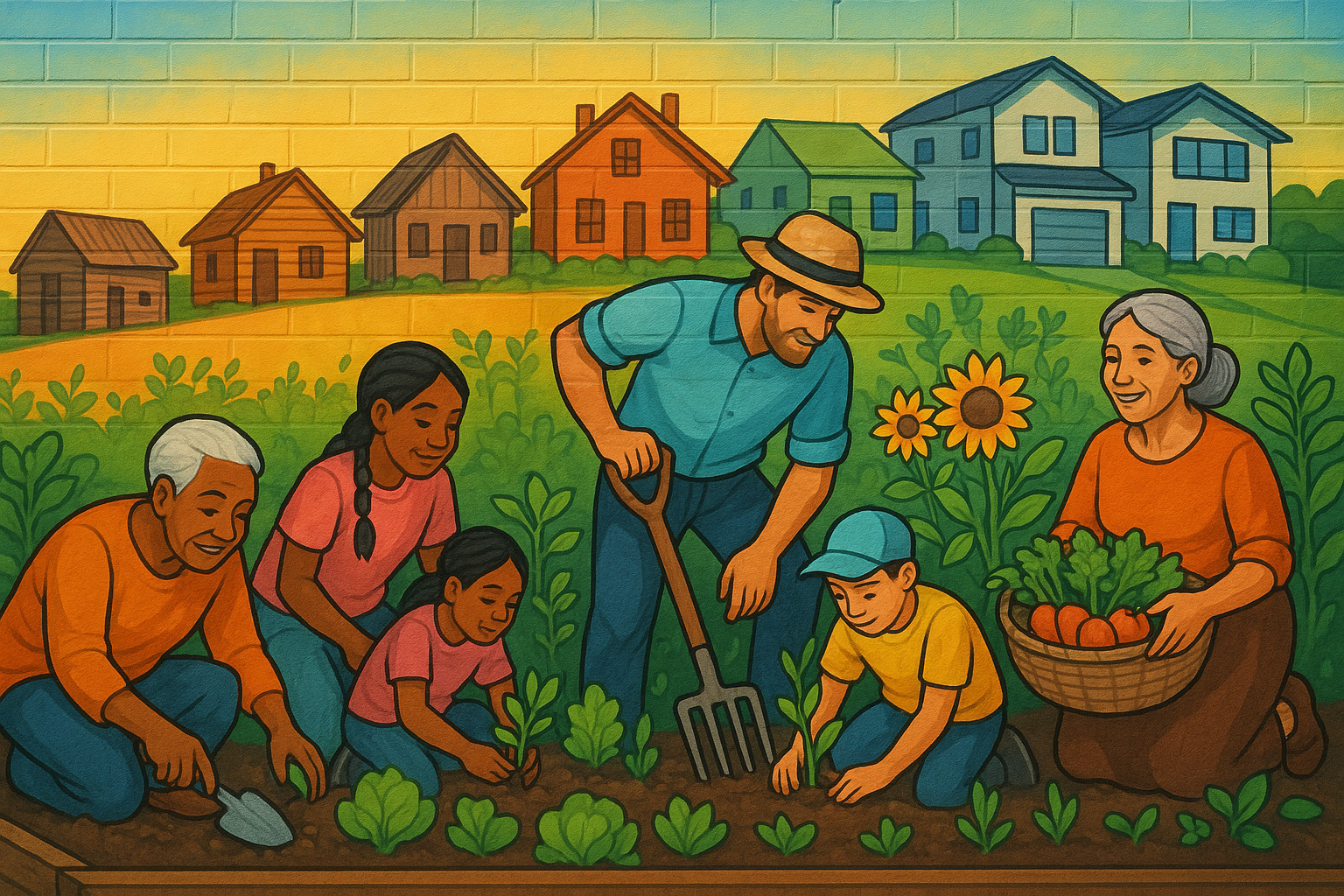
Mfuleni at 50: A Cape Town township's journey of survival, self-organisation, and the ongoing fight for dignity amidst promises of infrastructure.
Mfuleni, a township in Cape Town, South Africa, is celebrating 50 years of incredible strength. It started as a place for displaced families during tough times but has grown into a vibrant community. Despite many challenges like poor housing and services, the people of Mfuleni always find ways to build, create, and make things better for everyone. They are constantly working hard to improve their lives and build a brighter future, showing amazing spirit and cleverness.
What is Mfuleni?
Mfuleni is a township in Cape Town, South Africa, established in 1974. Initially a dumping ground for displaced families during apartheid, it has grown significantly, now housing approximately 210,000 residents. The community is known for its resilience and ongoing efforts to develop infrastructure, housing, and essential services despite historical neglect and current challenges.
Get Cape Town news in your inbox
Stay updated with the latest stories from the Mother City.
1. A Township Throws Its Own Party – and Reads the Small Print
On the last morning of January 2024 the Cape Flats breeze felt unusually soft, as though it too had been invited to the celebration. By mid-morning the dusty lot beside Manzomthombo High had turned into a living collage: navy skirts swaying to gqom bass-lines, toddlers chasing balloons between braai stands, a gospel troupe harmonising beside amapiano dancers who had hijacked a taxi battery for power. This was not protest nor funeral, but an official, council-endorsed birthday bash for a neighbourhood whose very name still tastes of eviction – Mfuleni, “to swallow”, a verb that became an address when apartheid clerks ran out of euphemisms.
Mayor Geordin Hill-Lewis arrived in shirtsleeves and pledged “a river of infrastructure”, a line that ricocheted across WhatsApp before his SUV left the gravel. The pledge-list sounded familiar: a turf sports field, an expanded fire house, 2 047 state-subsidised homes, R100 million for moving people faster, a satellite police office and extra uniforms. Applause followed each bullet point, the kind township audiences ration for cameras while their eyes hunt for loopholes. When the microphone mentioned title deeds, older women erupted in high-pitched ululation; younger guys filmed the moment, already captioning it “2030 loading – we’ll clap when the keys turn”.
After the podiums quietened, attention shifted to a freshly finished mural on the stadium’s back wall. Three artists – two local, one from next-door Delft – had painted through the night. Thirty-two metres of wall: left side a grey bulldozer shoves faceless families; right side a woman in emerald doek pushes a barrow of bricks while a child boots a blazing soccer ball toward a sun-yellow horizon. The numeral “50” stands between them, shaped like an hour-glass whose grains are miniature human figures clasping hands. No one needed a curator; selfies multiplied under the still-wet paint, hashtagged #MfuleniTurns50 before the drips dried.
2. Bulldozers, Paper Trails and the Art of Making a Town
The suburb was born inside apartheid file covers in 1974. The Coloured Affairs Administration wanted a dumping ground for households chopped out of Langa’s Ndabeni quarter and for families whose streets had been declared “whites only”. They chose Steltzoon farm, 27 km south-east of the city centre, far enough to be beyond Khayelitsha’s official border yet near enough to feed factories a daily stream of cheap labour. Earth-machines ripped out Port Jackson thicket, surveyors hammered pegs and, by 1976, the first 500 plots – 300 m² each, no electricity, one tap per twenty stands – were ready. New arrivals received a paraffin tin, a door frame and a voucher for zinc sheets. “We were told five years max,” laughs Nomalungelo Mboxela, still on the plot she got at 23. “Five became fifty, and the babies became grannies.”
Because Pretoria never imagined Mfuleni lasting, it never built arteries for expansion. Roads were drawn ruler-straight but halt abruptly at the N2 like a sentence someone refused to finish. The sewer main stops two kilometres shy of the newest shack settlements; storm canals appeared only after 2005 floods drowned three toddlers. Every decade simply parked newcomers on top of neglect: backyard shacks, then transit camps for people evicted from inner-city “Bad Buildings”, then Covid-19 occupations that doubled head-count to roughly 210 000. Census takers still argue over the figure; the post office shut because most lanes have no names.
Still, the place keeps rewriting itself. Early-1990s civics such as the Mfuleni Residents Organisation bargained with the unbanned ANC and won a clinic, a high school, the first tarred artery now called Mew Way. Women ran stokvels that financed 300 brick homes before the state laid one. A KwaZulu-Natal Pentecostal church pitched a tent that evolved into the 5 000-seat House of Treasures Assembly, doubling each election as a voting hall. Football clubs carved pitches from bush and lobbied hard enough to host a 2010 World Cup training venue still booked every weekend. Every gain arrived piecemeal, argued for, sometimes fought over, never simply handed out.
3. Housing Promises, Fire Trucks and the Maths of Staying Alive
City spreadsheets promise 2 047 subsidised houses as part of a bigger plan to erase Cape Town’s 343 000-unit backlog by 2032. In Mfuleni the formal waiting list shows 18 600 verified households, plus another 11 000 “unverified” households who arrived after the 2019 land occupations. Units will rise on a 42-hectare wedge trapped between the N2 and False Bay Coastal Park, a former dredge-dump that environmentalists call a seasonal wetland. Officials insist only the higher 26 hectares will be built on; NGOs warn that any compaction will channel floodwater toward existing shacks. Papers have been filed in court, yet shovels are pencilled for October, with the first 450 homes earmarked for military veterans and backyard tenants living within a two-kilometre radius.
Even if the keys arrive on schedule, the plan collides with a rental ecology that keeps thousands afloat. A 2022 University of Cape Town survey found 38 % of “main-house” owners earn half their income from back-yard shacks; evicting those tenants to clear plots risks creating the very homelessness the project aims to cure. The City has set aside R52 million for “backyard upgrading kits” – fire-proof cladding, solar lights, prepaid meters – hoping landlords can improve shacks without losing rent-paying residents. Whether that softens tenure wars is an open question.
Fire services reveal the urgency behind glossy promises. The existing fire station, a single-bay prefab wedged between a spaza and a shebeen, was meant to be interim when it opened in 2009. It serves 180 000 people across Mfuleni, Khayelitsha pockets and rural Driftsand, but runs one ageing water tanker that must refill four kilometres away because network pressure limps at 1.2 bars, half the national standard. Average response time is 18 minutes; the national target is eight. Shack fires destroyed 534 dwellings between April and December 2023; three kids burnt to death in July when a candle toppled during load-shedding. The new design adds two bays, a 1.5-megalitre on-site reservoir and a pump fed by a dedicated 200-mm main parallel to the R300. German development bank KfW is co-funding the R72 million bill, but tender litigation has pushed occupation to March 2026 at the earliest.
Water and watts are inseparable here. Communal standpipes run on prepaid meters; when Eskom hits stage 6, borehole pumps stall and queues balloon around the few taps still fed by gravity, nightly gatherings that double as gender-based-violence flashpoints. Engineers are piloting solar micro-pump stations: 3 kW panels bolted to shipping containers that shove 15 000 litres an hour into plastic bladders on six-metre towers. Three already hum in Khayelitsha; Mfuleni is booked for two by December 2024. Price per unit: R1.8 million, a bargain compared with retrofitting copper cables underground.
4. Moving, Surviving, Dreaming – the Next Chapter
Transport vows are the murkiest item on the mayor’s menu. Cape Town’s MyCiTi bus highway ends 7 km short of Mfuleni at Khayelitsha mall; commuters transfer to overloaded minibus taxis that charge R12 for a ten-minute hop to the N2, then another R8 to town. Morning queues at Mew Way rank snake 400 m; murders over queue-jumping forced metro-police deployment in 2022. The R100 million will not extend the steel-and-concrete busway – officials say 8 km more would cost R2.3 billion – but will instead fund “intermodal tweaks”: widening the Mew Way bridge to four lanes, geotextile-paving 18 km of mud feeder roads so taxis don’t bog down in winter, erecting 120 high-mast lights along the N2 pedestrian path where muggings surge after sunset, and installing 22 e-ink departure boards fed by taxi-industry GPS data. Taxi associations signed a memorandum in February, yet the scheme hinges on accepting route restructuring that could trim daily trips 8 % – a red line for many operators.
Policing plans hinge on LEAP, the City’s metro force. Mfuleni recorded 178 murders in 2023, up 14 % and the worst per-capita rate outside Nyanga. The area floats between three SAPS stations, each pushing cases across invisible borders. Residents dial the municipal emergency centre because 10111 often rings dead. LEAP patrols began December 2023 with 60 officers; early stats claim a 22 % drop in house-breakings along main taxi routes, but community forums mock the unit as “graduation-day decorations”. A 1 000 m² LEAP headquarters is slated for land beside the Thusong Centre, complete with a 30-bed holding cells so that suspects no longer travel 17 km to Philippi. Skeptics remind locals that LEAP can seize guns but must hand detainees to SAPS within six hours; magistrates still release six of every ten arrested gangsters due to docket pile-ups.
Beyond bricks, budgets and body-cams, the township’s engine is an unofficial economy that wakes at 4 a.m. when the first queue forms outside Spaza Hub to buy 50 kg sugar sacks for repackaging into R2 pockets. By sunrise, “door-to-door” food vendors are ladling R5 plates of pap and liver to N2 construction crews; by 7 a.m. a 3 200-member WhatsApp group sells load-shedding timetables for spaza ads; scrap-youth push trolleys toward last night’s bumper guards, worth 80 cents a kilo at Athlone. A 2023 CPUT study values this grey sector at R1.4 billion a year – R6 700 per resident, triple the flow of state grants.
Technology is sneaking in on the side. Lokishi, a USSD start-up founded by 26-year-old local Sinethemba Ndaba, lets shack dwellers without data order 25-litre water refills for R7 – 20 cents cheaper than walking to the standpipe trader – and track delivery by bike. Funded by the French Development Agency, Lokishi employs 34 couriers who move 17 000 litres daily. The City is testing integration with its prepaid-meter app, a move that could turn every spaza into a water kiosk and leapfrog pipes the way M-Pesa leapfrogged banks.
Health and learning claw forward too. Mfuleni day hospital, birthed as a 24-hour midwife unit, now triages gun-shot patients with four rotating doctors and no on-site surgeon; ambulances race 35 km to Groote Schuur, the golden hour long dead. Mother-to-child HIV transmission has nevertheless fallen from 8 % in 2010 to 0.8 %, beating provincial averages, thanks to peer counsellors. Yet child asthma admissions doubled in the same window; low-cost air sensors in primary schools record particulate levels nearly triple WHO limits. A proposed “green wall” of bamboo and kikuyu along the N2 could cut diesel dust 18 % if irrigation cash ever clears red tape.
Education hackers are busy wiring their own future. Manzomthombo High, scene of the birthday gala, became the first no-fee school in the province to build a home-made ISP. Teacher Ndileka Qaba crowdfunded R120 000 in 2020, scrounged 3 km of discarded fibre and, with learners, soldered 12 mesh routers from dumped PCs. Matric maths passes jumped from 52 % to 81 % in step with free MOOC traffic. Four primary schools have cloned the mesh, forging a 4 km “homework corridor” where kids upload assignments from street corners after 7 p.m. without buying data. A containerised digital lab is planned for the new sports complex; if it taps the school network, Mfuleni could own South Africa’s first community-run zero-rated zone.
Art keeps count of the loops. At the mural wall, painter Khanyisile Rafu explains her hour-glass: “Time here spirals; every shack fire spins us back to zero, then we build again.” Her collective runs weekend stencil classes; their latest work is a 40-metre trail of yellow footprints from the 1976 survey peg to the new show-house, inviting walkers to “cross fifty years in 474 steps”. Jazz pianist Nduduzo Makhathini is compiling a 50-track digital archive of neighbourhood musicians, files to be mirrored on the high-school mesh so the music survives even if the library burns.
Whether the mayor’s river floods or trickles, trolleys will rattle at dawn, solar pumps will blink awake, spaza roller-doors will rise, and another pair of sneakers will land on the yellow footprints, heading toward a future no infrastructure map has yet imagined.
What is Mfuleni and where is it located?
Mfuleni is a township in Cape Town, South Africa, established in 1974. It is located 27 km south-east of the city center, initially designed as a settlement for displaced families during the apartheid era.
What is Mfuleni celebrating?
Mfuleni is celebrating its 50th anniversary, marking half a century of resilience, ingenuity, and community development despite significant challenges. The celebration acknowledges its transformation from a transient settlement to a vibrant community.
What challenges does Mfuleni face?
Mfuleni faces numerous challenges, including poor housing conditions, inadequate infrastructure (like roads and sewage systems), insufficient basic services (water, electricity), high crime rates, and a significant housing backlog. Historically, it was also neglected in terms of urban planning and development.
What efforts are being made to improve Mfuleni?
Various initiatives are underway to improve Mfuleni, including pledges for new infrastructure (like sports fields and an expanded fire station), plans for 2,047 state-subsidized homes, upgrades to transport infrastructure, and the establishment of a satellite police office. Community-led efforts have also resulted in clinics, schools, and self-financed housing projects.
How does the community of Mfuleni demonstrate resilience?
The community demonstrates resilience through its vibrant informal economy, which significantly contributes to the local economy, and through innovative solutions like crowdfunding for an internet service provider at a local school. Residents actively organize and advocate for their needs, building infrastructure and services where formal provisions are lacking.
What is the significance of the mural unveiled at the celebration?
The mural on the stadium's back wall depicts Mfuleni's history and future: a grey bulldozer representing past displacement and a woman pushing a barrow of bricks towards a bright horizon, symbolizing the community's ongoing efforts to build and improve. The number '50' shaped like an hourglass with miniature human figures signifies the passage of time and the collective spirit in overcoming adversity.

Kagiso Petersen is a Cape Town journalist who reports on the city’s evolving food culture—tracking everything from township braai innovators to Sea Point bistros signed up to the Ocean Wise pledge. Raised in Bo-Kaap and now cycling daily along the Atlantic Seaboard, he brings a palpable love for the city’s layered flavours and even more layered stories to every assignment.
View all articles →