
Mitchells Plain hospital accused of delayed emergency care
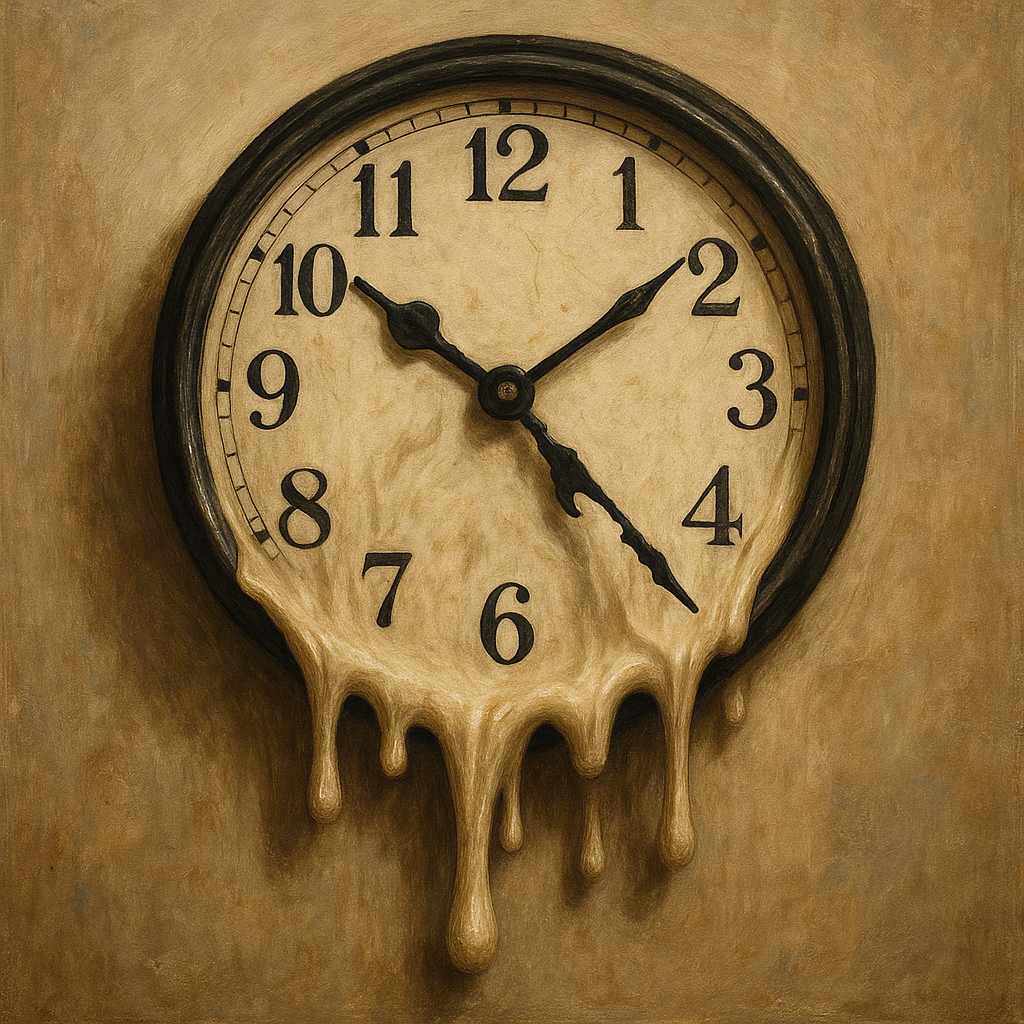
Mitchells Plain Hospital faces scrutiny after a woman's alleged 12-hour wait for stroke care, highlighting South Africa's strained emergency services.
A woman's 12-hour wait at Mitchells Plain District Hospital exposed its broken system. Understaffing, especially for emergency nurses and doctors, leads to dangerous delays. The hospital's triage, meant to sort patients by need, often just manages crowds, making critical cases wait. No after-hours CT scans mean serious conditions like strokes are missed, turning a treatable issue into a life-threatening one. This story shows a hospital bursting at the seams, with patients suffering silent and deadly consequences.
What are the critical issues highlighted in the article regarding the Mitchells Plain District Hospital (MPDH)?
The article highlights several critical issues at MPDH, including chronic understaffing, particularly of emergency nurses and medical officers, leading to long patient wait times. It also points to a lack of after-hours radiology services due to frozen overtime for CT radiographers and a triage system often used for crowd control rather than clinical decision-making. These factors contribute to severe delays in critical care, like stroke treatment, with potentially fatal consequences.
Get Cape Town news in your inbox
Stay updated with the latest stories from the Mother City.
The Collapse in Beacon Valley
Just after three o’clock on Monday 3 March, a 42-year-old woman crumpled to her kitchen floor in Beacon Valley, clutching her head and moaning that her ears felt “underwater.” Within minutes her left arm dangled useless, words slurred, and bladder control vanished. Relatives dialled the municipal ambulance line; the crew reached the house in 26 minutes and sped the five-kilometre dash to Mitchells Plain District Hospital (MPDH), the only 24-hour casualty unit serving the entire south-eastern Cape Flats.
At 15:45 she rolled into triage. Staff slapped a “Code Green” bracelet on her wrist - the second-lowest rung of South Africa’s four-colour triage ladder - signalling “stable, can wait four hours.” Family friend Oscar Peter Bougardt later posted a minute-by-minute chronicle that 2 400 Facebook users shared within two days. His timeline claims the patient was still parked on a plastic chair at 21:30, now vomiting, incontinent again, and unable to name the year. A left-sided facial droop had appeared. Not until 04:15 - twelve and a half hours after arrival - did an ambulance finally ferry her to Groote Schuur Hospital where a CT angiogram exposed a 14-mm ruptured anterior-communicating-artery aneurysm and a Fisher Grade 3 subarachnoid haemorrhage.
Internal MPDH logs leaked to Cape {town} Etc show 131 walk-ins on that shift against an 80-patient target. Only two registered emergency nurses and one medical officer held the fort after 19:00, instead of the required four and three. Overtime for CT radiographers had been frozen; the 16-slice scanner sat dark from 22:00 to 06:00 except for red-tagged resuscitations. The province has yet to release an official statement.
Why Every Tick of the Clock Kills
Global stroke registries are unambiguous: mortality from aneurysmal subarachnoid haemorrhage climbs about one per cent for every lost hour in the first 24. Blood-pressure control, anti-vasospasm drugs, seizure prophylaxis and, if indicated, endovascular coiling or open clipping all hinge on a swift picture inside the skull. The 2023 American Heart Association wants a door-to-CT window under 25 minutes; Britain’s NHS allows 60. At MPDH the gap ballooned beyond 11 hours - time enough, says vascular neurosurgeon Dr Karen Smits of Tygerberg Hospital, for re-bleed risk to double. “Re-bleed is the single most preventable early killer. Every extra hour of uncontrolled hypertension is a coin-toss,” she warns.
Yet district facilities in the Western Cape have no radiologists on site after hours. Radiographers snap images, upload to the provincial PACS, and a teleradiologist in Durban or Pretoria reports the scan the next morning. Groote Schuur specialists can log in remotely - if someone remembers to phone them. Provincial policy restricts after-hours CT at district level to red-tagged life-, limb- or eyesight-threats. Sudden-headache syndromes, transient weakness or even dense hemiplegia therefore queue unless a senior clinician overrides the algorithm. “The safest thing would be to scan every thunderclap headache, but we don’t have the radiographer bodies,” Smits admits. Last year MPDH performed 2 400 CT scans, 62 % after midnight; Groote Schuur does 9 000 head CTs annually with round-the-clock radiographers and two on-site radiologists.
A Triage Tool Bent Out of Shape
South Africa adopted the South African Triage Scale (SATS) in 2006 to impose order on chaotic casualty corridors. Points are tallied for vital signs plus a complaint list; a green tag should mean mild pathology - ankle sprains, small lacerations, stable tummy pain. Research from Khayelitsha and Soweto shows that when waiting rooms swell, staff subconsciously nudge the bar for orange higher. “The scale morphs into crowd-control, not clinical decision-making,” admits emergency physician Dr Malcolm Molyneaux, one of the original architects. On 3 March the Beacon Valley woman first scored 14/18, one point shy of orange. At 21:00 her score hit 16, but the bracelet stayed green because, relatives claim, the triage nurse insisted only a doctor could re-colour.
MPDH was never built for this load. Opened in 1985 for 80 000 annual visits, it logged 147 000 casualty attendances last year. Its catchment spans 650 000 people across Mitchells Plain, Philippi, Strandfontein and Khayelitsha. Permanent emergency-trained doctors: six. Nursing turnover in 2023 reached 28 %, lured by private hospitals or overseas posts. “We train them, they leave,” acting CEO Dr Faizal Khan told provincial lawmakers last October while requesting 22 extra posts - still unfunded. Night shifts therefore become arithmetic warfare: once capacity breaches 120 %, ambulances are diverted, yet private cars like the family VW minibus cannot lawfully be refused.
Screens, Scanners and Social Fury
Short of new buildings, tech stop-gaps are emerging. At Khayelitsha District a handheld pupillometer adds two SATS points when infrared light reflexes wobble, cutting missed SAH cases by 38 %. A R18 000 ultrasound probe that measures optic-nerve-sheath diameter - surrogate for raised intracranial pressure - is rolling out to four districts. Machine-learning models that mine routine vitals flag SAH risk with 91 % sensitivity; UCT’s digital-health unit wants seed money to embed the code in the provincial warehouse.
Meanwhile, Facebook has become the de-facto oversight body. Bougardt’s post collected 34 similar horror stories within hours: a toddler with intussusception waiting seven hours, a fractured femur pensioner overnight on a stretcher. During 2020 the group “Cape Town Emergency Care Uncovered” documented 52 alleged district delays, forcing legislature hearings. Yet official complaint forms remain scarce after 16:00 when clerks clock off; MPDH logged only 15 in 2023. The Beacon Valley family has now filed a statutory “Form 14” adverse-event notice, triggering a 30-day internal probe and inviting Health Professions Council and Office of Health Standards Compliance scrutiny. Civil lawyers are circling: in 2022 the Eastern Cape paid R5.2 million for an 11-hour stroke delay that ended in irreversible brain damage.
Provincial treasury, however, offers little relief. The 2023 health allocation rose 3.1 %, below 5.9 % inflation. District hospitals were ordered to trim 5 % from non-staff budgets, guzzling radiographer overtime. National treasury’s 2024 add-on fell R9.8 billion short of what the South African Medical Association deems bare-bones maintenance. Medical-scheme membership in the province has shrunk 7 % since 2020, pushing ever more patients into public corridors. Health economists forecast casualty visits will rise 6 % a year for the next five unless community clinics learn to handle minor ills.
Religious halls and street-corner NGOs may yet become the first line of defence. Hypertension prevalence in Mitchells Plain sits at 46 %, double the national rate. Volunteer-run blood-pressure tables outside supermarkets already net 2 000 untreated cases annually; scaling such drives could slash stroke demand 15 %. A Dutch NGO donated a 128-slice CT to Durban’s Wentworth Hospital in 2022 - similar philanthropy could light up Mitchells Plain if paired with radiographers and service plans. The provincial infrastructure wish-list schedules a second district CT by 2027, but capital rows currently read “unfunded.”
Until numbers meet reality, the nightly queue will keep curling past MPDH’s security turnstile, triage colours sliding from green to red only when someone “shouts loud enough.” The ministerial office promises answers “once due process concludes”; the OHSC will arrive unannounced within 60 days. In the interim, nurses play human maths, doctors play roulette, and patients play the waiting game - where the stakes are measured in millimetres of brain blood and hours of priceless time.
What critical issues are highlighted in the article regarding Mitchells Plain District Hospital (MPDH)?
The article highlights several critical issues at MPDH, including chronic understaffing, particularly of emergency nurses and medical officers, leading to long patient wait times. It also points to a lack of after-hours radiology services due to frozen overtime for CT radiographers and a triage system often used for crowd control rather than clinical decision-making. These factors contribute to severe delays in critical care, like stroke treatment, with potentially fatal consequences.
What happened to the 42-year-old woman from Beacon Valley who sought treatment at MPDH?
The woman suffered a sudden collapse with symptoms of a stroke, including slurred speech, paralysis of her left arm, and loss of bladder control. She arrived at MPDH at 15:45 and was triaged as "Code Green" despite her severe symptoms. After waiting over 12 hours, during which her condition worsened significantly, she was finally transferred to Groote Schuur Hospital. There, a CT angiogram revealed a ruptured aneurysm and a subarachnoid hemorrhage, conditions that could have been identified and treated much earlier.
Why are delays in stroke diagnosis and treatment at district hospitals like MPDH so dangerous?
Global stroke registries indicate that mortality from aneurysmal subarachnoid hemorrhage increases by approximately one percent for every lost hour in the initial 24 hours. Critical interventions like blood-pressure control, anti-vasospasm drugs, and endovascular coiling or open clipping are time-sensitive. Delays, such as the 11-hour gap experienced by the Beacon Valley patient, can double the risk of a re-bleed, which is a major cause of early death in these cases.
What are the limitations of after-hours CT scanning at Western Cape district facilities?
District facilities in the Western Cape lack on-site radiologists after hours. Radiographers take images, which are then uploaded to a provincial system for teleradiologists to report on the next morning. Provincial policy restricts after-hours CT scans at district hospitals to only the most severe, "red-tagged" life-, limb-, or eyesight-threatening cases. This means that serious conditions like sudden-headache syndromes or transient weakness often queue unless a senior clinician overrides the system, leading to critical delays in diagnosis.
How has the South African Triage Scale (SATS) been misused at MPDH?
MPDH, like other facilities facing overcrowding, uses the SATS scale more for crowd control than for accurate clinical decision-making. The article notes that when waiting rooms are full, staff may subconsciously raise the bar for higher triage categories. The Beacon Valley patient, despite worsening symptoms that should have elevated her score, remained coded as "Code Green," reportedly because only a doctor could change her triage color, leading to significant delays in her care.
What are some proposed solutions and ongoing challenges for MPDH and similar district hospitals?
Proposed solutions include implementing technological aids like handheld pupillometers and ultrasound probes to detect severe conditions earlier. Machine-learning models to flag SAH risk are also being explored. However, challenges persist due to chronic underfunding, with the 2023 health allocation rising below inflation and district hospitals being ordered to cut non-staff budgets, impacting radiographer overtime. The growing patient load due to shrinking medical-scheme membership and an aging population further strains resources. Community-based initiatives, such as volunteer-run blood-pressure tables, and potential philanthropic donations of equipment are also being considered to alleviate the burden.

Zola Naidoo is a Cape Town journalist who chronicles the city’s shifting politics and the lived realities behind the headlines. A weekend trail-runner on Table Mountain’s lower contour paths, she still swops stories in her grandmother’s District Six kitchen every Sunday, grounding her reporting in the cadences of the Cape.
View all articles →