
Nutricia baby formula recalled over toxin contamination fears
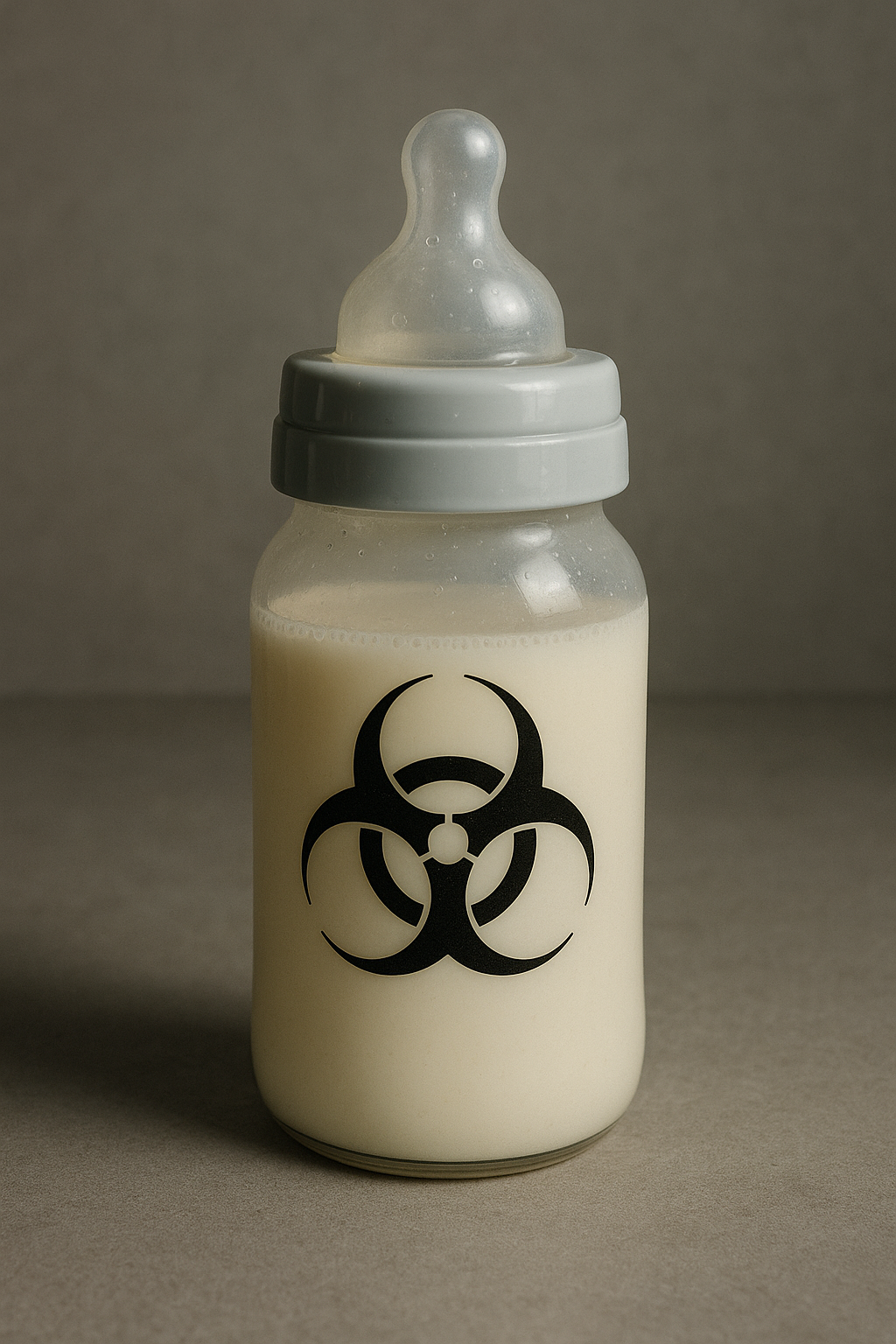
Aptamil recall: Nutricia pulls two infant formula variants after cereulide toxin detected. Parents, retailers, and regulators take action.
A dangerous toxin called cereulide was found in Aptamil baby formula in South Africa. This toxin is very harmful to babies and can cause serious health problems, even leading to brain swelling. The discovery led to a fast recall of thousands of tins across several countries. Even though the formula looked and smelled normal, the toxin can't be destroyed by cooking. Now, there are ongoing investigations, legal actions, and efforts to prevent this from happening again.
What is cereulide and why is it dangerous in baby formula?
Cereulide is a potent, heat-stable toxin produced by Bacillus cereus bacteria. In baby formula, it's dangerous because it can cause hypoglycaemic shock and brain-swelling in infants, who are highly susceptible due to their rapid metabolism. It's undetectable by taste or smell, and cooking doesn't destroy it.
Get Cape Town news in your inbox
Stay updated with the latest stories from the Mother City.
A Tuesday Blip That Froze Supermarket Shelves
A mass-spectrometer in Johannesburg coughed up an alarm at 08:22 on 3 March 2026. The 1.17 kDa peak was tiny, yet it flashed “cereulide” louder than any siren. South Africa’s food-safety rules treat anything above 0.05 µg kg⁻¹ in baby milk as a Category-1 emergency; the tech dialled the internal “red code” before the coffee cooled. Ninety minutes later 18 000 kg of powder sat behind yellow tape, and by 15:00 the National Consumer Commission (NCC) knew it had a national crisis on its hands. Forty-six hours after the first blip, Government Gazette notice NCC-IF-2026-03-07 ordered every tin of two popular Aptamil follow-on formulas out of trolleys from the Limpopo River to the Cape. The same alert reached Gaborone and Windhoek through the Southern African Customs Union hotline, yanking 2 989 tins off the market in three countries before the weekend.
The speed of the reaction surprised even veterans who remember the 2018 listeriosis slog. What drove the urgency is the nature of the contaminant: cereulide, a mitochondrial poison that laughs at autoclaves, stomach acid and anxious mothers who re-boil kettle water. One 800 g tin can hold enough toxin to push a six-month-old into hypoglycaemic shock, yet the powder smells, dissolves and tastes ordinary. That invisible threat triggered Nutricia Southern Africa’s pre-loaded recall software, a system installed after the French Lactalis scandal and never field-tested until now. Within the same working day Dis-Chem’s servers blocked the batches at tills, Clicks froze its click-and-collect baskets, and independent pharmacies received a WhatsApp broadcast from their wholesaler, UniPharm, warning “Do not dispense – red alert.”
Retailers that never carried the SKUs felt the ripple too. Empty pegs where Aptamil once sat became makeshift notice boards plastered with toll-free numbers. Parents who had never read a government gazette in their lives learned to photograph the laser code inside the rim of a tin and to pronounce “cereulide.” By Thursday, Facebook mom-groups had pinned step-by-step refund guides, while local radio stations recycled the same question: “Is my baby safe?” The answer, mercifully, was yes if the can was already finished and the child still playful – but confirming the batch felt like a lottery everyone had unwillingly entered.
The Poison That Survives a Pressure Cooker
Cereulide is not alive; it is a chemical assassin, a twelve-ring depsipeptide knitted together by certain strains of Bacillus cereus when they inhale oxygen at room temperature. The molecule is so robust that laboratories routinely cook it at 121 °C for 90 minutes and still recover enough toxin to shut down mitochondria. Once swallowed, it slips through gastric juices, slips into enterocytes and slams the cellular power switch from aerobic to anaerobic. Adults feel only a queasy déjà-vu; infants, whose metabolic engine runs twice as hot per kilogram, can tip into high respiratory rate, low blood sugar and brain-swelling that mimics pyloric stenosis. Medics have no antidote, only dextrose drips and, in extremis, lipid infusions to lure the poison away from cell membranes.
The dose that matters is tiny. In 2023 a Bavarian NICU ventilated eight pre-term babies for 36 hours after cereulide crawled into a batch of expressed fortifier. South Africa’s legal trigger of 0.05 µg kg⁻¹ is stricter than the EU’s 0.1 µg kg⁻¹, yet the recalled starch had already blended into 18 tonnes of formula before the spectrometer chirped. Scientists at the Council for Scientific and Industrial Research later found levels between 0.12 and 0.19 µg kg⁻¹ – enough to force a recall, but well below the 8 µg kg⁻¹ bench where neurologists start to sweat. That narrow gap between legal and lethal explains why regulators did not wait for epidemiology; they acted on chemistry alone.
Parents hoping to rescue half a tin by scalding it in a pot are wasting electricity. Cereulide barely notices home stoves; it needs 1 100 °C incinerator flames to crack apart. Nor will a second scoop-wash help – the toxin adheres to powder particles like glitter to playdough. The only safe bin is a haz-bag on its way to a rotary kiln in Germiston, where the recalled milk will help generate electricity while being destroyed. Until then, sealed zip-locks and batch photos are the best defence, both for baby and for the refund queue.
The Batch Numbers Everyone Still Memorises
Two blue-lidded tins dominate the drama: Aptamil Nutribiotik 2 (800 g) stamped 20260911, and Aptajunior Nutribiotik 3 (800 g) stamped 20261209. Both are follow-on formulas marketed for babies who have started solids, bridging the gap between starter milk and cow’s milk. The villain is not the whey or the lactose but a rice-starch thickener added to reduce spit-up and keep tiny tummies full. The starch left northern Italy in June 2025, lingered in Rotterdam, then entered Nutricia’s Isando plant on 18 August. Because the factory runs week-long “campaigns” on a single ingredient stream, every tin filled that week inherited the same stowaway.
Retailers had already sold 1 844 units when the stop-sale hit; another 1 145 sat in distribution centres. Independent pharmacies, often run by single owners, discovered they had three or four tins on back shelves worth more in liability than profit. Dis-Chem’s enterprise software clawed back stock within hours, while smaller shops relied on sales assistants pulling boxes by hand. Across the border, Botswana’s food-control unit photographed warehouse pallets before sealing them, a procedural step that speeds insurance claims but slows forklifts. In Namibia, customs officers slapped bright red “CONDEMNED” stickers that will remain visible even after incineration, a bureaucratic flourish meant to deter midnight theft.
Consumers who kept empty tubs for craft projects suddenly eyed them like biohazard. The tin’s inner rim, where the laser code hides, became the most photographed body part in South African family life. WhatsApp groups traded screenshots: “20260911 – bad, 20261127 – safe,” while dads learned to pronounce “pregelatinised rice starch” at dinner tables. The recall turned ordinary rubbish into evidence, and every kitchen cupboard into a potential crime scene.
From Shop Shelf to Courtroom – What Happens Next
Money, blame and reform now travel faster than the toxin itself. Nutricia’s South African turnover was R 2.3 billion in 2025; if the NCC finds negligence, section 60(1) of the Consumer Protection Act allows a fine of up to 10 % – enough to erase a year of profit. Class-action lawyers already advertise on Facebook, echoing the R 1.2 billion that Tiger Brands paid for listeriosis-contaminated polony in 2018. Criminal prosecutors must open a docket, though history shows they rarely reach court without proof of deliberate cover-up. The real battle will be civil, fought in the South Gauteng High Court on 30 June when a judge decides whether every anxious parent qualifies as a single plaintiff.
Internationally, Interpol’s Illicit Goods Unit is tracing the Italian rice-starch supplier because the same thickener flavours vegan drinks and gluten-free biscuits in nineteen countries. Genome detectives uploaded the Bacillus strain to a global database and spotted a never-seen plasmid cluster, suggesting evolution rather than farm-level malpractice. If the hypothesis stands, Brussels will face pressure to set cereulide limits for infant cereals, not just for dairy. That regulatory ripple could raise ingredient costs for every baby-food maker worldwide, all because a Johannesburg lab technician refused to shrug at a Tuesday-morning blip.
Inside the Isando factory, production line 3 stands silent under LED strip lights. Engineers wear hairnets while installing a positive-pressure starch bay that will force incoming powder through HEPA-filtered air. Workers attend trauma counselling paid by the company, and the union has secured a no-retrenchment pledge for the next six months. Downstream, EnviroServ will burn 2 989 tins at 1 100 °C and feed the heat into the municipal grid, offsetting 2.1 tonnes of CO₂ through Danone’s KwaZulu-Natal reforestation project. The saga ends only when every tin is ash, every claim is paid, and every parent can pronounce “cereulide” without a shudder – a milestone South Africa hopes to reach before the first anniversary of a blip that arrived just after breakfast.
[{"question": "
What is cereulide and why is it so dangerous in baby formula?
", "answer": "Cereulide is a potent, heat-stable toxin produced by certain strains of Bacillus cereus bacteria. It's particularly dangerous in baby formula because infants are highly susceptible to its effects, which can include hypoglycaemic shock and brain swelling. It cannot be detected by taste or smell, and crucially, it is not destroyed by cooking or boiling, making it an invisible and persistent threat."}, {"question": "Which specific Aptamil products were affected by the recall in South Africa?
", "answer": "The recall primarily affected two specific products: Aptamil Nutribiotik 2 (800g) with batch number 20260911, and Aptajunior Nutribiotik 3 (800g) with batch number 20261209. Both are follow-on formulas intended for babies who have started solids. The contaminant was traced back to a rice-starch thickener used in these formulas."}, {"question": "How was the cereulide contamination detected and how quickly did authorities react?
", "answer": "The contamination was detected by a mass-spectrometer in Johannesburg on March 3, 2026, which identified a tiny but significant peak indicating cereulide. South Africa's food-safety rules mandate a Category-1 emergency for anything above 0.05 \u00b5g kg\u207b\u00b9 in baby milk. The reaction was remarkably swift; within 90 minutes, 18,000 kg of powder were isolated, and within 46 hours, a government gazette ordered a nationwide recall. Alerts also reached neighboring countries like Botswana and Namibia through the Southern African Customs Union hotline, leading to the removal of thousands of tins from shelves."}, {"question": "Can heating or cooking destroy cereulide in contaminated formula?
", "answer": "No, cereulide is exceptionally robust and heat-stable. It cannot be destroyed by typical home cooking methods, including boiling water or even pressure cooking. Laboratory tests show it can survive temperatures of 121 \u00b0C for 90 minutes. The toxin only breaks down at extremely high temperatures, such as those found in an incinerator (1,100 \u00b0C). Therefore, parents are advised that attempting to 'rescue' contaminated formula by heating it is ineffective."}, {"question": "What are the potential legal and financial consequences of this recall?
?", "answer": "The recall has significant legal and financial ramifications. Nutricia, the manufacturer, faces potential fines of up to 10% of its R 2.3 billion 2025 turnover if the National Consumer Commission finds negligence. There are also class-action lawsuits being initiated by affected parents, reminiscent of the 2018 listeriosis payouts. Internationally, Interpol is tracing the rice-starch supplier, and the discovery could lead to new cereulide limits for infant cereals globally, potentially increasing ingredient costs for all baby-food manufacturers."}, {"question": "What should parents do if they have these recalled Aptamil products at home?
", "answer": "Parents should immediately stop using any recalled Aptamil Nutribiotik 2 (batch 20260911) or Aptajunior Nutribiotik 3 (batch 20261209). They should check the laser code inside the rim of the tin. Do not attempt to consume or heat the formula. The only safe action is to return the product for a refund. Retailers like Dis-Chem and Clicks implemented immediate blocking of affected batches, and independent pharmacies were also alerted. The recalled milk will be safely destroyed, often by incineration, to generate electricity."}]
Oliver Daniels is a Cape Town journalist who chronicles the intersection of food, migration and identity in South Africa's kitchens—from wood-fired Gugulethu braai spots to Constantia vineyards. Born and raised on the slopes of Devil’s Peak, he still starts each week with a dawn walk across Table Mountain to catch the first Atlantic light before filing copy.
View all articles →