
Parent raises alarm after Sea Point Promenade scooter collision
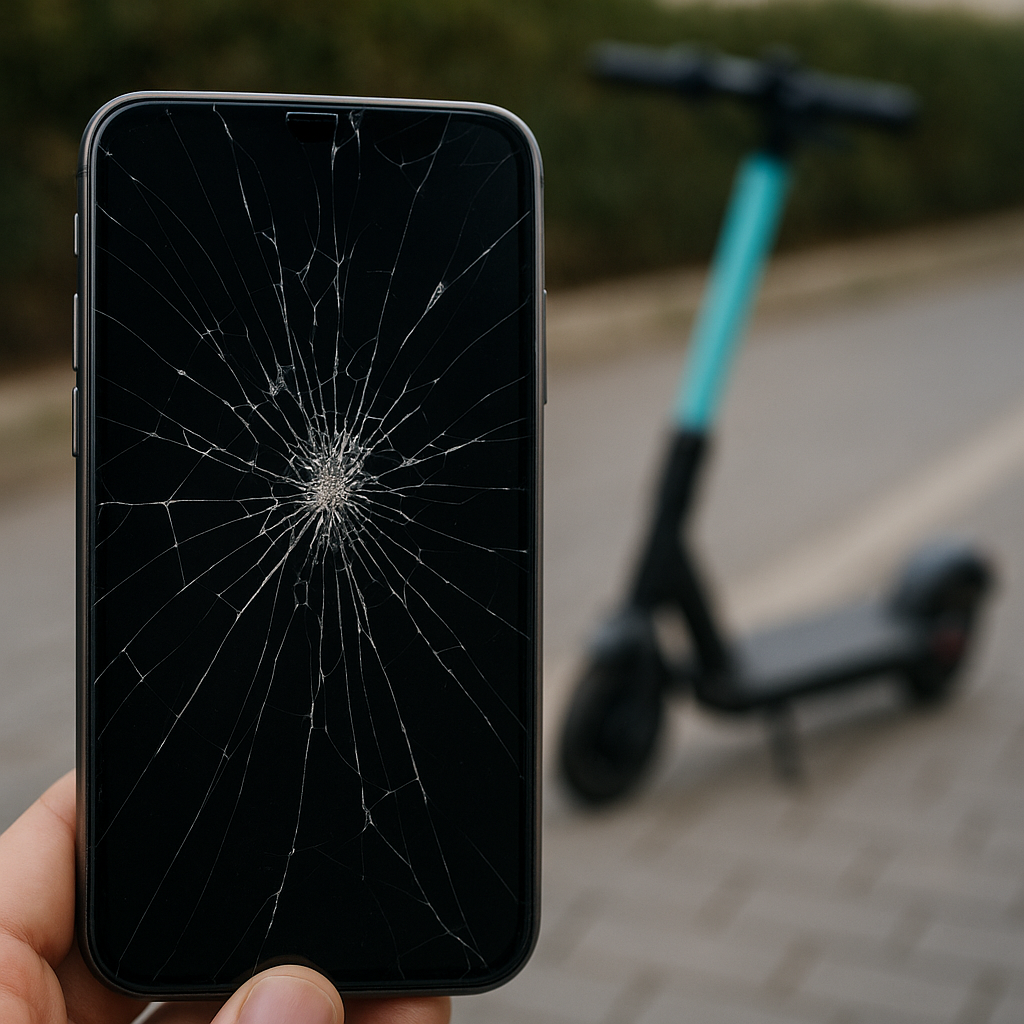
Dissecting a tragic e-scooter collision on Sea Point Promenade, this report uncovers regulatory failures, tech flaws & urban planning dilemmas.
E-scooters on promenades are causing serious injuries, especially to kids. These fast machines, often hacked to go even faster, are barely regulated, leading to concussions and broken bones. The police and city rules often don't help, making it hard to stop these accidents. This means busy public spots are becoming dangerous, changing fun family times into trips to the emergency room.
What are the dangers of e-scooters on promenades and public spaces?
E-scooters pose significant risks in public spaces, leading to severe injuries like concussions and fractures, particularly for children. The article highlights issues such as high speeds (up to 30 km/h), firmware hacking, inadequate regulations, and underreported incidents, creating an unsafe environment for pedestrians despite official assurances.
Get Cape Town news in your inbox
Stay updated with the latest stories from the Mother City.
- 900-word field report from the 3.6 km strip where holiday vibes collide with emergency-room intake forms*
Blue Hour, 19:07 – Eight Seconds That Shredded a Family Calendar
The Atlantic had already swallowed the sun, leaving a mirror-coloured gloss on the Sea Point concrete. Dog-walkers were winding leashes, restaurant staff were sparking tiki-lamps, and a dad paused to thumb-reply to his wife. In that half-light gap his seven-year-old twirled on the balustrade; her nine-year-old sister monitored a strawberry gelato that dripped like a stopwatch.
From the Green Point end came a whisper-quiet rental unit - Xiaomi MI 4 Pro, firmware hacked to 30 km/h. The rider, a Berlin coder on a ninety-day “work-from-surf” visa, wore his helmet like handbag jewellery. A retired trauma nurse watched the front wheel clip the younger girl’s ankle, the deck hammer the older one’s hip, both kids flung sideways. Ice-cream kissed the cement first, then a skull met the stone seating edge; 43 seconds of unconsciousness timed on a stranger’s iPhone.
The skid mark measured 4.2 metres on dry cement, arithmetic that converts neatly to 23–25 km/h. In the aftermath, the father’s WhatsApp remained open, cursor blinking above an unfinished “on our way…” that never turned into a sentence.
Ledger of a Lost Semester – What Two Bedside Charts Say About a City
Red Cross War Memorial’s paediatric log for 1 April 2026 lists a 4 cm occipital gash closed under ketamine, a GCS of 13, six hours of post-traumatic amnesia and night terrors that still ambush sleep at week four. The older sibling escaped with a bruised hip and a resurrected bed-wetting habit last seen at age four.
Both children were funnelled to the hospital’s new Mild TBI & Return-to-Play programme. Inside a VR headset, a silent promenade simulation spiked the seven-year-old’s pulse to 155 bpm - triple the dog-phobia benchmark. The unit’s neuropsychologist notes that “startle metrics track closer to mall-shooting survivors than to playground falls,” a sentence no tourism brochure ever anticipates.
Groote Schuur’s billing department sees the injury differently: one overnight paediatric observation equals R18 000, ten physio sessions another R5 400, weekly trauma counselling R950 a pop. Multiply by the eleven under-fourteen cases that arrived in the first quarter of 2026 and you have already spent two full months of industry revenue before anyone mentions possible long-term cognitive gaps or missed school terms.
The App, The Visa, The Dongle – Anatomy of a Rider Who Didn’t Break a Single Law
Metro Police declined to open a docket; the National Road Traffic Act still thinks 30 km/h is a toy, not a weapon. The dad therefore harvested the rider’s identity through a by-stander’s photo of the QR code. What emerged is a textbook profile: 26-year-old SaaS contractor, RSA licence acquired online the previous Tuesday, 42 trips logged in eight days, “Beginner Mode” toggled off after a mere 10 km of cumulative riding.
Because the scooter ships capped at 29.5 km/h - 0.5 km/h beneath the statutory threshold for “motor vehicle” - the user agreement, pages 11–19, indemnifies the platform in four languages. Meanwhile, a R199 Bluetooth dongle available on local e-commerce re-flashes the controller to 600 W in ninety seconds, a loophole the fleet discovers only every third nightly charging cycle.
The rider flew home to Germany before the strawberry stain was power-hosed away, leaving behind a medical file, a deleted app history, and an algorithmic five-star rating for “smooth trip.”
Battlefield by the Tide – Why Nobody Can Legally Take the Keys Away
Sea Point’s 3.6 km ribbon is governed by two separate fiefdoms: City roads department controls the tarmac, Table Mountain National Park owns the concrete. Rangers can issue a R500 “reckless cycling” ticket but cannot impound; City traffic can impound but only on roads, and the promenade is, legally speaking, a “public open space,” not a road. Net result: the harshest on-the-spot penalty is a verbal warning and a frown.
Under-reporting is baked into the system. SAPS codes scooter-versus-pedestrian crashes as “assault” or “fall,” erasing them from transport statistics. The City’s shiny Micro-Mobility Dashboard therefore lists four first-quarter incidents; hospital intake shows 38, eleven involving primary-school kids. The gap is not a rounding error - it is a civic strategy.
Operators bank roughly R3.4 million a month here, tipping car-guards, baristas and data-prepaids in a trickle-down carnival that finances silence. Paris voted to expel rental fleets in 2023; Stockholm embedded RFID tags that kneecap speed to 6 km/h; San Diego narrows walkways with planters, forcing dismount. Cape Town’s latest intervention is a laminated sign planted in a flowerbed - unidirectional, unseen, unenforced.
Code, Costs, and a Father’s GitHub Repo – What Reckoning Looks Like From the Sand
One month after the crash the software-engineer dad uploaded 18 hours of municipal CCTV to an open-source tortoise-counting algorithm, re-trained it to flag any 70 cm-wide object exceeding 18 km/h. @PromBotCT auto-tweeted 1 048 violations in fourteen days, peaking at 33 in a single Saturday hour. Heat-maps, time-stamps and blurred-face stills are now lodged with the ward councillor, who promises a safety summit “within the next quarter” - a phrase recycled since 2022.
The code is GPL-licensed; a Raspberry Pi plus R280 webcam turns any balcony into a speed trap. Whether local government will act before the next child meets moving aluminium is an open question, but the economic algebra is no longer mysterious. Each scooter nets R64 daily; one avoided concussion case saves R25 000 in direct fees. Break-even happens at roughly one prevented hospitalisation for every 390 scooter-days - about four hours of peak-season traffic.
Tonight, as LEDs replace daylight, the same seating bay greets a new set of strollers. A girl skirts the sand verge instead of the concrete, eyes fixed on a parked scooter as if it were a predator. A brand-new notice reads “E-SCOOTERS MUST BE PUSHED,” but riders flash past at 22 km/h, untouched by either law or conscience. The only thing that has really changed is the vocabulary of fathers, who now know the precise length of a skid mark that ends where childhood used to be.
What are the main dangers of e-scooters on promenades and public spaces?
E-scooters, especially those that are illegally modified, pose significant risks in public areas. They can reach high speeds (up to 30 km/h), leading to severe injuries such as concussions, fractures, and even trauma similar to that experienced by mall-shooting survivors, particularly in children. The lack of effective regulation and enforcement exacerbates these dangers, turning recreational spaces into hazardous environments.
How do regulations and law enforcement currently address e-scooter incidents?
Regulations are often inadequate or poorly enforced. The National Road Traffic Act may classify e-scooters below the legal threshold for 'motor vehicles,' allowing them to operate with minimal oversight. Law enforcement agencies might categorize scooter-related accidents as 'assault' or 'fall' instead of transport incidents, leading to underreporting. Jurisdictional complexities between city departments and national parks further complicate enforcement, often resulting in only verbal warnings for reckless riding.
What are the typical injuries sustained from e-scooter accidents?
Common injuries include concussions, skull fractures, and significant lacerations, particularly occipital gashes. Victims may also experience post-traumatic amnesia, night terrors, and long-term cognitive gaps. Children are especially vulnerable, with incidents leading to psychological trauma such as heightened startle responses and regression (e.g., bed-wetting).
What are the financial implications of e-scooter accidents?
The costs associated with e-scooter accidents are substantial. A single overnight pediatric observation can cost approximately R18,000, with additional expenses for physiotherapy (R5,400 for ten sessions) and trauma counseling (R950 per session). These costs quickly accumulate, potentially reaching millions of Rands annually, diverting significant healthcare resources and causing financial strain on families.
How are e-scooters modified to achieve higher speeds, and what are the legal loopholes?
Many e-scooters are designed to operate just below the legal speed limit that would classify them as 'motor vehicles.' However, they can be easily hacked using inexpensive Bluetooth dongles, re-flashing their controllers to achieve higher speeds (e.g., 600W, significantly increasing power and speed). User agreements often indemnify rental platforms, leaving riders and victims with little recourse, especially when riders can delete app histories and flee the country.
What community-led initiatives are emerging to address the e-scooter problem?
In the absence of effective official action, communities are taking matters into their own hands. For example, one software engineer developed an open-source algorithm, @PromBotCT, to analyze CCTV footage and automatically tweet violations of speed limits. This system uses Raspberry Pi and webcams to create localized speed traps, providing data to local authorities and highlighting the scale of the problem, aiming to pressure officials into implementing more robust solutions.

Chloe de Kock is a Cape Town-born journalist who chronicles the city’s evolving food culture, from township braai joints to Constantia vineyards, for the Mail & Guardian and Eat Out. When she’s not interviewing grandmothers about secret bobotie recipes or tracking the impact of drought on winemakers, you’ll find her surfing the mellow breaks at Muizenberg—wetsuit zipped, notebook tucked into her backpack in case the next story floats by.
View all articles →