
Parents’ consent and children’s health: important ruling in Cape High Court

A Cape Town hospital navigates cultural beliefs and life-saving medicine when a family refuses amputation for their child. Can they find common ground?
This story is about a little girl named AD who got very sick, and her feet turned black. Doctors wanted to cut off her feet to save her, but her father believed it would make her ancestors angry and even kill her. The hospital had to figure out how to respect his old beliefs while still trying to save her life. In the end, a judge decided the doctors could operate, and AD got new, shiny pink legs, showing how old ways and new medicine can sometimes work together.
What happens when traditional beliefs clash with modern medicine in a children's hospital?
When traditional beliefs clash with modern medicine, hospitals may adapt practices to accommodate cultural rituals while seeking legal intervention for life-saving treatments. This often involves ethics committees, cultural liaisons, and sometimes court orders to ensure the child's best interests, integrating ancestral practices with medical care to bridge the divide.
Get Cape Town news in your inbox
Stay updated with the latest stories from the Mother City.
The Scent of Impepho in a Sterile Corridor
Cape Town’s Red Cross War Memorial Children’s Hospital normally smells of nothing stronger than bleach.
This January, Ward F carried a softer note: crushed sage, sun-baked earth, the incense Africans burn when grandmothers are invited home.
Night-shift guards soon recognised the barefoot visitor whose beaded anklets chimed like distant cattle bells; they waved him past without pat-downs.
Inside a side-room he knelt, steam from a dented basin curling around a six-year-old girl whose toes had turned the colour of storm clouds.
Monitors beeped, morphine pumps clicked, yet the ward found ways to keep the ritual alive: linen swaddled candles so smoke detectors stayed mute; the duty matron dimmed corridor lights at seven sharp so chants could rise uncluttered.
No policy manual explained how to braid ancient song with IV lines, but nurses invented answers on the spot.
A domestic worker donated her lunch towel as altar cloth; a cleaner taped a “Do Not Disturb - Cultural Practice” sign scrawled on a glove wrapper.
By the second week the paediatric surgeon scheduled dressings around “evening prayer,” and the pharmacist stored holy water in a specimen jar labeled “External Use Only.”
What unfolded next - pieced together from court affidavits, voice notes zipped between villages, and interviews with clinicians - reveals what happens when “best interests” is not a slogan printed on consent forms but a cliff edge both medicine and ancestry must climb without ropes.
A Race Against Gangrene and Calendar Pages
AD reached casualty at 03:42 on 12 January, torso dappled purple, pulse sprinting at 180.
Meningococcal septicaemia - the same pathogen that claimed fourteen UCT students in 2017 - had stormed her bloodstream overnight.
While Dr Jessica Browne slid a central line, she hummed lullabies to steady her own fingers; by sunrise the child’s feet were cold wax, by dusk the digits looked charred.
Paediatric vasculature is a narrow creek; once clot blocks it, tissue drowns within hours, not days.
On 15 January Browne laid two surgical options on the table: below-knee on the left, ankle-level Syme on the right.
The girl’s father, a Flagstaff taxi-driver, unfolded a sheet torn from an exercise book: “Imilambo ayihlaselwa ngekhandlela” - rivers are not crossed by candlelight.
He recounted how his grandmother’s amputation after a 1982 train crash ended in a grave dug six months later; the family ledger blames the severing, not steel.
To cut AD, he warned, would be to beckon the waiting ancestors to collect whatever remained unhacked.
The mother, five months pregnant, stared at the linoleum and whispered, “I cannot leave my baby in the wilderness.”
Red Cross convened its monthly ethics salon - South Africa’s only paediatric forum of its kind - around an oval table sticky with Rooibos rings and mince-pie crumbs.
A philosopher of ubuntu, an imam, an oncologist-turned-bereaved-parent, and the hospital’s poet-in-residence debated until the clock hands kissed midnight.
They agreed: discharging the child while unstable would breach Section 27 of the Constitution; yet marching straight to court risked torching every bridge of trust.
They needed a detour, not a battering ram.
The Herbalist, the Psychologist-Sangoma, and the Empty Chair
Enter Nkosi Mqalo, famed along the Wild Coast for coaxing goats to cough out truths.
CEO Dr Margarita Schlein signed a one-page waiver: examination welcome, no leaves, no powders.
Mqalo arrived with nephews balancing a clucking chicken and a pocket of aloe roots.
After forty minutes alone with AD he announced: if the girl reaches ancestral soil within seven days, “fire will return to the flesh.”
Browne asked for a calendar mark; the healer replied, “Amaxesha akumntu” - time owns no master.
That night the C-reactive protein doubled, a biochemical drumbeat no drum could hush.
The NGO PaedsPal parachuted in Dr Vuyo Mankahla - clinical psychologist by degree, sangoma by calling - who speaks both ICD-10 and dream symbol.
He sketched family trees across butcher paper, translating amputation into river-diversion: “We change the riverbed, not the ocean it seeks.”
The father listened, nodded, still refused ink on scalpel forms, yet agreed to remain inside hospital borders - an undeclared ceasefire that bought ten priceless days.
On 11 February the mother cracked; morphine visions of her dead grandmother stalking the ward tipped her scale.
“I’m caught between two rivers,” she told Browne, then signed a unilateral consent.
South African law, however, demands both legal guardians unless a judge bangs the gavel.
A retired teacher, the father’s 82-year-old uncle, was Zoomed in from Qunu via donor-funded satellite.
After a long silence he offered a riddle: “The tree dodging the axe sometimes crushes the goat,” meaning refusal could kill the child and rupture the lineage worse than any blade.
Still, patriarchal protocol tied his tongue: “A man is not lectured by a woman,” he concluded, leaving the father’s chair empty even in cyberspace.
Infection advanced another centimetre overnight; surgeons warned the heel pad - crucial for future walking - would soon be collateral damage.
After Midnight: Court Order, Choir in Theatre, Prosthetics Painted Pink
At 02:00 on 22 February attorneys typed an urgent High Court application, filed in chambers to shield the minor.
They leaned on Sections 129–130 of the Children’s Act: the upper guardian of every child may override when life stands on a cliff.
Judge Mas-udah Pangarker, herself mother to twin girls, requested two extras: a 30-second clip of AD dragging blackened feet toward a teddy, and a letter from her ten-year-old brother scrawled in crayon: “Please save my sister - she loves to dance.”
By 16:45 the ink was dry: operate, fund prosthetics, appoint a cultural liaison for rehab.
That evening the father slipped into scrubs, doek knotted by a nurse who once sang in township musicals.
For three hours he sat at the foot of the operating table, reciting seven generations of women while surgeons sawed necrotic bone.
A junior doc live-streamed audio to the ward; the mother answered on a kalimba, metal tines glowing under fluorescent bars.
When the tourniquet loosened, the father’s voice rose, a human ligature against bleeding.
AD woke demanding amasi and chips - coded by dieticians as “positive coping.”
Within 120 hours she stood between parallel bars on 3-D-printed sockets sparkling with pink glitter, designed by a UCT engineer who lost his own legs on a crag.
Batch number two, delivered last month, flaunts Ndebele geometry chosen by the father, now a ward translator turning discharge sheets into isiXhosa rhymes.
The judgment is already required reading at four medical schools and has nudged the Traditional Health Practitioners Council to draft national guidelines: infection-control modules for sangomas, consent templates for ritual visits, a roster of dual-qualified mediators like Mankahla.
Parliament is debating whether “imminent risk” needs a stopwatch or a story; either way, the statistic to watch is collaboration, not amputation.
Roughly seventy-five South African children contract meningococcal disease yearly; twelve percent lose limbs.
AD’s feet may be gone, but her footprints - robot girls can still fly - are pressing both systems toward a joint future where no family must choose between ancestral whispers and the surgeon’s song.
[{"question": "
What was AD's medical condition, and what was the proposed treatment?
\nAD was diagnosed with meningococcal septicaemia, a severe bacterial infection that caused her feet to turn black. To save her life, doctors proposed a double amputation: below-knee on the left leg and ankle-level Syme on the right.
\n", "answer": null}, {"question": "Why did AD's father initially refuse the recommended amputation?
\nAD's father, holding strong traditional beliefs, feared that amputating his daughter's feet would anger her ancestors and lead to her death, citing a family history where his grandmother's amputation was followed by her passing. He believed that such an intervention would sever her connection to her heritage.
\n", "answer": null}, {"question": "How did the hospital attempt to reconcile traditional beliefs with modern medical care?
\nThe hospital demonstrated remarkable adaptability. They allowed traditional rituals, such as the burning of impepho, within the ward, even inventing solutions like swaddling candles to bypass smoke detectors. They also engaged traditional healers and a psychologist-sangoma to bridge the cultural gap and facilitate communication with the family, scheduling medical procedures around the family's 'evening prayer'.
\n", "answer": null}, {"question": "What role did legal intervention play in AD's case?
\nDue to the father's continued refusal of consent, and the mother's unilateral consent not being sufficient under South African law, the hospital sought an urgent High Court application. The judge, considering evidence like a video of AD and a letter from her brother, ruled in favor of the operation, citing the Children's Act to override parental refusal when a child's life is at risk.
\n", "answer": null}, {"question": "What was the outcome of AD's treatment, and what was the father's involvement?
\nAD underwent successful amputations and received new, shiny pink prosthetic legs. Her father, despite his initial resistance, was present during the surgery, reciting ancestral names. He later became actively involved in her rehabilitation, helping to choose designs for her prosthetics and translating discharge information into isiXhosa rhymes, symbolizing a powerful collaboration between old ways and new medicine.
\n", "answer": null}, {"question": "What broader impact has AD's case had on medical practice and policy in South Africa?
\nAD's case has become a landmark, now required reading in medical schools. It has spurred the Traditional Health Practitioners Council to develop national guidelines for integrating traditional practices with hospital care, including infection control for sangomas and consent templates for ritual visits. It highlights the importance of collaboration and cultural understanding in healthcare, pushing for a future where traditional beliefs and modern medicine can coexist for the patient's best interest.
\n", "answer": null}]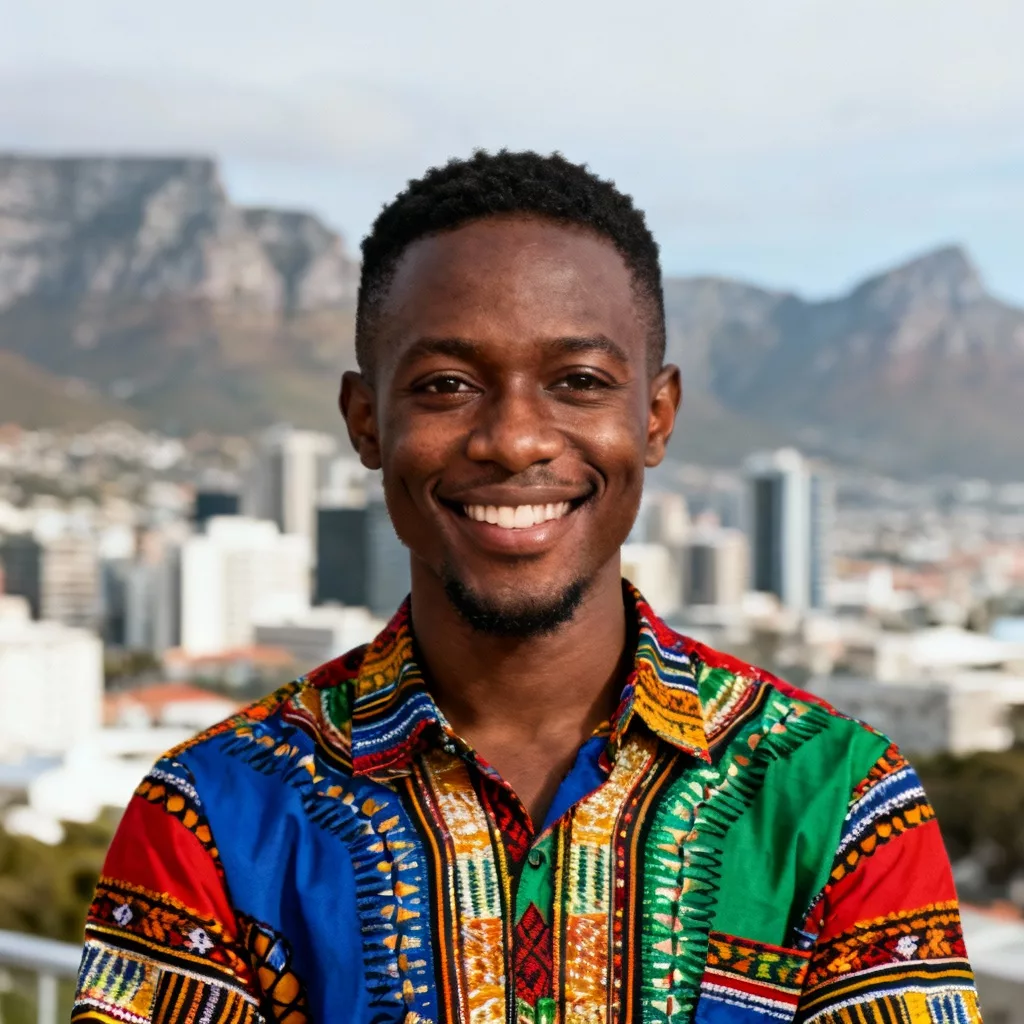
Thabo Sebata is a Cape Town-based journalist who covers the intersection of politics and daily life in South Africa's legislative capital, bringing grassroots perspectives to parliamentary reporting from his upbringing in Gugulethu. When not tracking policy shifts or community responses, he finds inspiration hiking Table Mountain's trails and documenting the city's evolving food scene in Khayelitsha and Bo-Kaap. His work has appeared in leading South African publications, where his distinctive voice captures the complexities of a nation rebuilding itself.
View all articles →