
R67 million investment secured to rebuild Paarl Hospital after devastating fire
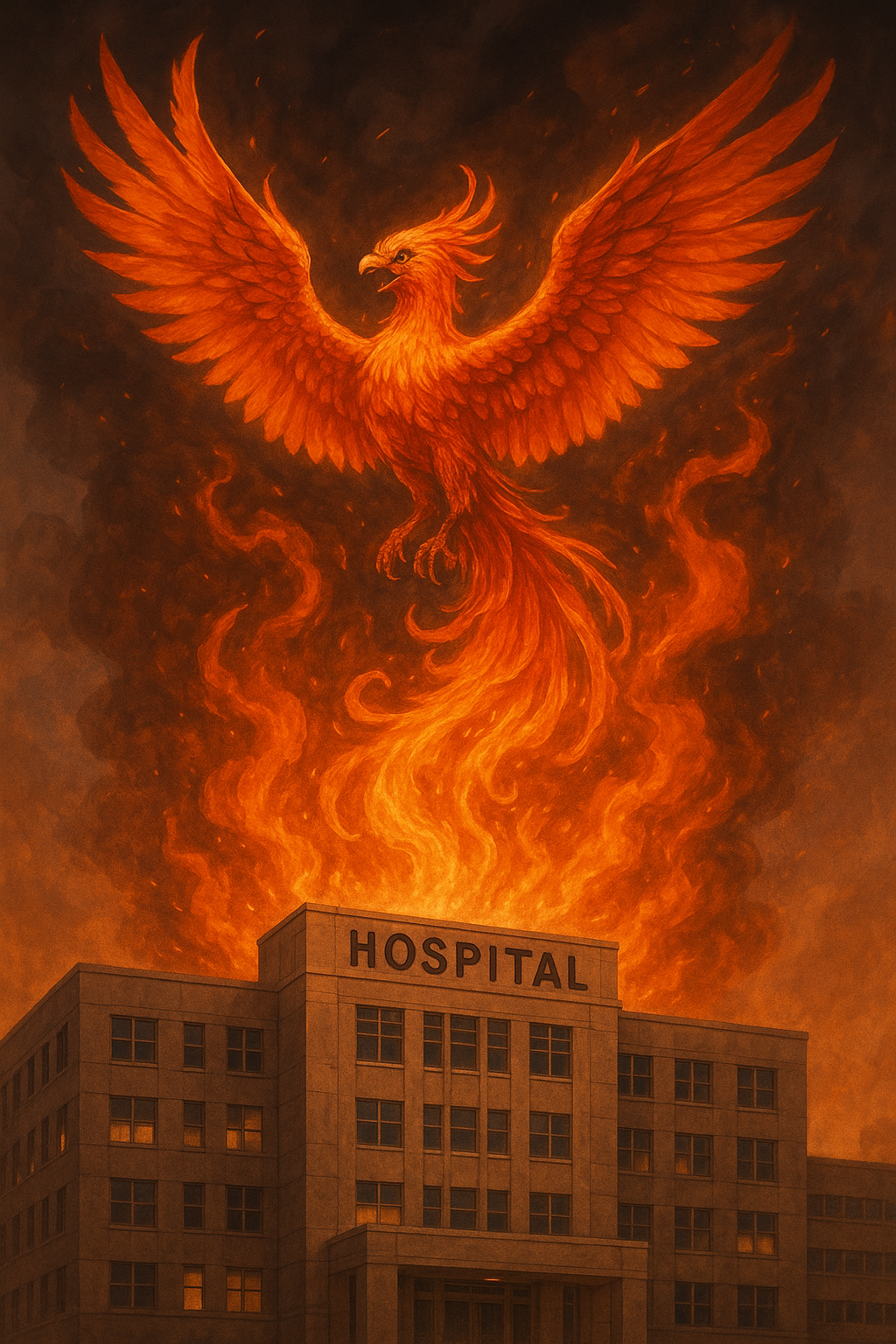
Discover how Paarl Hospital rose from a devastating arson attack, achieving the Western Cape's fastest, most patient-centred rebuild.
After a devastating fire, Paarl Hospital quickly rebuilt using smart money moves. They got R67 million fast and rebuilt the damaged parts in just 45 days, even while still treating patients! They used modern building tricks to keep things super clean and added cool new tech like speedy internet and 5G. This turned the hospital into a super-modern, eco-friendly place, proving that even a disaster can lead to amazing improvements.
How did Paarl Hospital rebuild so quickly after the fire?
Paarl Hospital achieved an overnight makeover through fiscal innovation, rerouting R67 million for a disaster budget and implementing a rapid 45-day rebuild. They used advanced construction techniques, including a HEPA tunnel to maintain sterile environments, and upgraded infrastructure with modern technology like converged fiber and a private 5G grid, transforming the facility into Africa's first public hospital with on-site edge-cloud.
Get Cape Town news in your inbox
Stay updated with the latest stories from the Mother City.
Section 1 – 19:42, 27 January: A Spark on the Roof and a Hospital in Motion
At 19:42 the helipad camera recorded a hair-thin ribbon of smoke sneaking from the north-eave of the Out-Patient Department. Four minutes later that ribbon became a blow-torch. Night pharmacist Nico September shoved wet towels over air vents, locked narcotics in fire safes and still had time to shepherd nine sleeping toddlers from the paediatric ward. By 19:51 the entire campus was a live level-four evacuation – no exercise, this was the real deal.
Two 3 000-litre HVAC compressors exploded, hurling aluminium shrapnel 70 m into the terraced vineyards of KWV cathedral cellar. Yet at 20:29 an 84-year-old pensioner on portable oxygen crossed the visitor parking lot and became the last patient settled inside a 24-tent field hospital. Every single X-ray folder survived the night.
Investigators uncovered three ignition points on one truss, petrol-soaked rag fragments and pry-bar scars on the electrical isolator. The Hawks’ serious-organised-crime team still holds the docket; motive unknown. What is certain is that the province’s rule-book on hospital resilience was rewritten before the embers cooled.
Section 2 – Zero Budget, Nineteen Days: Where a Blank Cheque Was Minted
On 26 January no line item existed for “rebuild torched hospital”. Treasury permits only an 8 % in-year budget shuffle; Health Director-General Keith Cloete woke up to a R1.4 million petty-cash jar - barely tarps and diesel. By lunchtime the province had launched fiscal judo. Nineteen days later a freshly-minted disaster budget totalled R67 043 000, the biggest emergency health-infrastructure injection since the 2017 Knysna wildfires.
The magic combined R17 million “borrowed” from postponed Karoo clinic builds, R9 million disaster-relief cash released by Human Settlements, and a national-Treasury Section 16 deviation normally reserved for riots and floods. Arup Cape Town priced 4 700 items off a 3-D point-cloud scan before the ashes were cold; the adjusted budget tabled 12 March carried their signature on every cent.
Open-tender rules were bent, not broken. All invoices appear on the provincial portal inside 48 hours; 62 % of contract value now sits with firms that are at least 51 % black-owned, comfortably above the 40 % target. Fiscal purists call it a stunt; patients call it a second chance.
Section 3 – Surgery on a Beating Heart: 45-Day Rebuild While Doors Stay Open
Evacuating 1 800 daily clinic visitors was impossible, so engineers diced the OPD into six colour quadrants, each shut, stripped, rebuilt and reopened in rolling seven-day cycles. One week you checked in through a tennis-court marquee; the next you queued in the old physio quad - an elaborate game of human chess played with corridors.
To keep concrete dust out of operating theatres, contractors erected a double-skin HEPA tunnel - tech borrowed from silicon-wafer plants. Negative-pressure fans sucked air through 99.97 % filters; infection audits later showed a 27 % drop in airborne colony-forming units versus pre-fire levels. Catastrophe delivered a cleaner ICU than the facility had ever owned.
Fire engineers threw out the 1972 blueprint. New specs demand 120-minute fire doors, sprinkler density of 10.2 mm/min across 260 m² and a purpose-built million-litre reservoir fed by a 150 mm Drakenstein water main. Roof sheeting is a German Sarnafil membrane that melts at 260 °C then self-extinguishes - originally designed to protect Cape Town Stadium turf, now guarding paediatric cubicles.
Section 4 – Smart, Green, Human: The Extra Upgrades No Fire Code Asked For
Copper telephone cable installed in 1978 pooled into molten puddles. Instead of re-cabling the past, the province overlaid converged fibre, Wi-Fi 6 and a private 5G grid - turning Paarl into Africa’s first public hospital with on-site edge-cloud. Patients receive SMS tickets with QR codes; banking-style triage kiosks read them in three languages, cutting average wait time from 148 to 92 minutes amid construction chaos.
Energy rules demanded SANS 10400-XA compliance; leaders chased the tougher Green-Star Healthcare v2 badge. Rooftop PV (1 100 m²) feeds a 1 MWh lithium-iron-phosphate battery that can island the OPD for six load-shedding hours. Solar-thermal evacuated tubes now deliver 70 % of hot-water needs, while low-carbon concrete slashed 480 t of embodied CO₂ - equal to parking 104 cars for a year.
Staff wellbeing shaped bricks and mortar. After the blaze, beta-HCG tests among female workers jumped 38 % - stress-triggered unplanned pregnancies. The province answered with 24-hour workplace childcare inside the decommissioned laundry; critical-care vacancy rates slid from 14 % to 6 % in eight weeks. A 480 m² simulation training suite, funded by the Michael & Susan Dell Foundation, will welcome Stellenbosch medical students in 2025, seeding rural doctors while the walls are still wet with paint.
Community members weren’t decoration. Forty-two local stonemasons hand-cut 120 t of grey Paarl granite for a new porte-cochère; residents scribble improvement ideas on unpainted drywall every Friday. Their prayer alcove and a La Leche League breastfeeding nook are already built into the blueprint. MyPaarlHospital app pushes trilingual updates to 18 000 phones, turning a distant construction site into a living neighbourhood story.
Phase-2 has already been seeded: a 192-bed tower south of the campus designed to “click” into the fire-hardened utility spine. Treasury ring-fenced R1.8 billion in the outer-year MTEF, conditional on ISO 9001 certification by 2027. From district to regional referral level, Paarl is poised to catch complex cases from Worcester to Malmesbury, easing pressure on Tygerberg. The suspected arsonist flung a 1970s hospital into the air; Western Cape simply chose to build wings on it while it flew.
[{"question": "What caused the fire at Paarl Hospital?", "answer": "The fire at Paarl Hospital, which began on the roof of the Out-Patient Department, was determined to have multiple ignition points, petrol-soaked rag fragments, and pry-bar scars on the electrical isolator. The Hawks' serious-organised-crime team is still investigating the incident, with the motive currently unknown."}, {"question": "How was Paarl Hospital able to fund such a rapid rebuild?", "answer": "Despite having no initial budget for a torched hospital, Paarl Hospital secured R67 million through 'fiscal judo.' This involved borrowing R17 million from postponed Karoo clinic builds, obtaining R9 million in disaster-relief cash from Human Settlements, and utilizing a national-Treasury Section 16 deviation typically reserved for riots and floods. This became the largest emergency health-infrastructure injection since the 2017 Knysna wildfires."}, {"question": "How did Paarl Hospital manage to rebuild without fully evacuating patients?", "answer": "To keep the hospital operational, engineers divided the Out-Patient Department into six color-coded quadrants. Each quadrant was shut down, stripped, rebuilt, and reopened in rolling seven-day cycles, allowing for continuous patient care. They also implemented a double-skin HEPA tunnel with negative-pressure fans to prevent concrete dust from reaching operating theatres, significantly improving air quality."}, {"question": "What technological upgrades were included in the rebuild?", "answer": "The rebuild replaced the old copper telephone cables with modern infrastructure, including converged fiber, Wi-Fi 6, and a private 5G grid. This transformed Paarl into Africa's first public hospital with on-site edge-cloud capabilities. New patient systems, like SMS tickets with QR codes and banking-style triage kiosks, also significantly reduced wait times."}, {"question": "What sustainable and eco-friendly features were incorporated into the new hospital?", "answer": "Paarl Hospital aimed for the tougher Green-Star Healthcare v2 badge by installing 1,100 m² of rooftop photovoltaic panels feeding a 1 MWh lithium-iron-phosphate battery, capable of powering the OPD for six hours during load shedding. Solar-thermal evacuated tubes now provide 70% of hot water needs, and low-carbon concrete was used, slashing 480 tons of embodied CO₂."}, {"question": "How did the rebuild consider staff and community well-being?", "answer": "Recognizing heightened stress among staff, the hospital established 24-hour workplace childcare in the decommissioned laundry, which led to a decrease in critical-care vacancy rates. Community involvement was also key, with local stonemasons contributing to the new porte-cochère, and residents providing improvement ideas. A prayer alcove, La Leche League breastfeeding nook, and a trilingual app kept the community informed and engaged."}]

Amanda Wilson is a Cape Town-born journalist who covers the city’s evolving food scene for national and international outlets, tracing stories from Bo-Kaap spice shops to Khayelitsha micro-breweries. Raised on her grandmother’s Karoo lamb potjie and weekend hikes up Lion’s Head, she brings equal parts palate and pride to every assignment. Colleagues know her for the quiet warmth that turns interviews into friendships and fact-checks into shared laughter.
View all articles →