
Relief efforts accelerate after Dunoon blaze
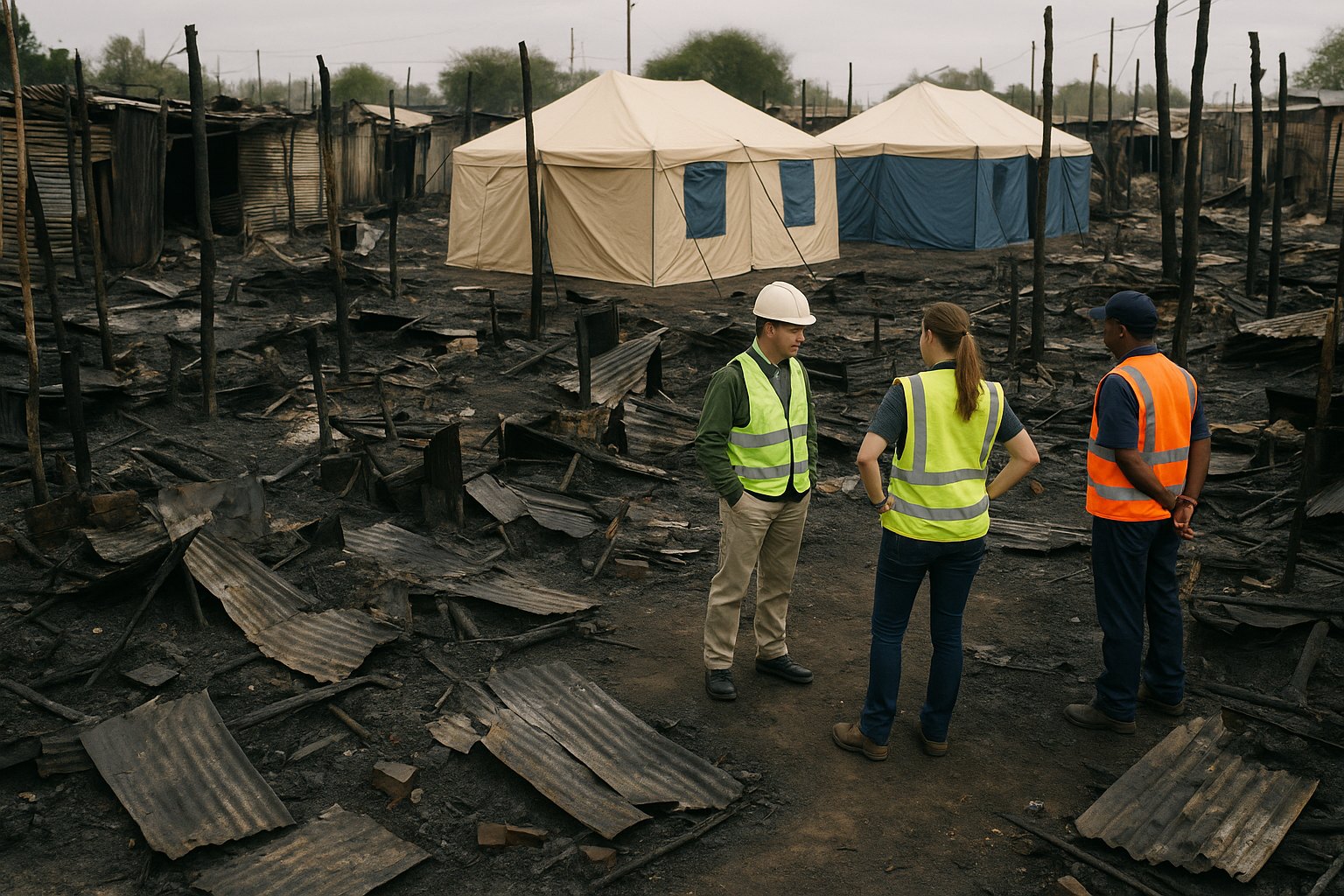
Dunoon rises from ashes: After a devastating fire, a community rebuilds with innovative aid, re-blocking, and hopes for a safer future.
A roaring fire turned Dunoon's Site 5 into ashes, swallowing 632 homes in just 90 minutes. But instead of despair, the community, with quick help, started an amazing comeback. They used drones, set up relief camps, and fast-tracked aid to build a new, safer neighborhood. This disaster became a chance to create a fire-resistant area, showing incredible strength and smart planning.
How did the Dunoon community respond to the devastating fire?
The Dunoon community, aided by emergency services and NGOs, responded swiftly to the fire by implementing an "active disaster" plan. This involved rapid drone mapping, establishing relief camps, fast-track procurement for aid, and setting up logistical centers to distribute essential supplies and begin planning for a fire-resistant neighborhood.
Get Cape Town news in your inbox
Stay updated with the latest stories from the Mother City.
The Day the Sky Turned Crimson
A single unattended Primus stove birthed an inferno that ate 632 wood-and-zinc homes in ninety breathless minutes. Eyewitnesses describe a “scarlet tsunami” galloping three rugby pitches long, liquefying TV aerials and water tanks into Dalí-like sculptures before the City’s 22 fire engines could weave 35 km through Cape Town’s snarled afternoon traffic. When the wind finally paused, fifteen hectares of Dunoon’s Site 5 lay naked beneath a charcoal sky, dotted by a handful of miraculously spared shacks that now stick out like stubborn teeth in a battered gum.
The shock still pulses, yet despair has been evicted from the scene. Where ash once swirled, neon-bibbed aid workers glide between orderly tent rows, clipboards swap palms, and toddlers giggle after a half-flat soccer ball. Four mornings after the blaze, 2 604 displaced residents no longer see only loss; they glimpse the chalk lines of a re-imagined, flame-resistant neighbourhood.
Emergency choreography began while embers yet glowed. The Joint Operations Committee triggered its “active disaster” clause - language usually reserved for provincial floods or runaway mountain flames. Within six hours a drone stitched a GPS map of every ruined dwelling; within twelve, 46 chemical toilets rolled in; by sunset the next day the mayor had opened a fast-track procurement lane that ignores the customary 30-day tender snooze. A sports field morphed into logistics central: pallet towers of nappies, shrink-wrapped blankets, maize sacks stacked like sandbags, and - because Cape Town never forgets Day Zero - 2 000 five-litre containers with twist taps to curb spillage when stand-pipes reopen.
Canvas, Cards and Cash: Inside the Relief Machine
Pink, green and blue pegs dangle on wire mesh: baby goods, hygiene parcels, builder starter packs. Residents queue by surname initials, a trick borrowed from election-day crowd science. “We cleared 600 beneficiaries in 47 minutes yesterday,” grins Nkosinathi Mrwetyana, a disaster manager more accustomed to dispatching snowploughs on the Matroosberg. “Informal settlements are data swamps - shared shacks, absentee landlords, IDs reduced to ash - so we photograph every QR-coded form and upload once we hit 4G again.”
Rebuilding, however, demands more than tin sheets. Engineers plan to “re-block” the area: colour-coded pegs and orange twine will carve 3.5 m gravel roads pulling double duty as firebreaks. UCT researchers say the tactic cut fire-spread odds by sixty percent in neighbouring Kosovo after a 2017 flare-up. Contractors pocket R2 000 per standby day to stay shovel-ready, but nothing moves until a street-committee ballot next Sunday. “We learned that shifting one latrine without consensus can freeze a site for months,” notes Pophaim, the project lead.
Humanitarian brands have stampeded in from Durban and Windhoek. Gift of the Givers - better known for drilling wells in Yemen - parked a 12 000-litre reverse-osmosis rig to desalinate the briny Table View aquifer. Doctors Without Borders canvas a paediatric ward where infants balance on digital Salter scales screwed to plywood to defeat uneven ground. A collective of jobless hairdressers now offers “wash-and-talk” therapy, turning shampoo circles into pop-up trauma counselling.
Money, Politics and the Price of a Fresh Start
City bean-counters have locked R12 million from the Human Settlements capital vote, yet whisper it is merely the down-payment. A basic zinc-and-poles starter kit has leapt from R1 800 in 2019 to R3 070 today, mirroring global steel graphs. Throw in reticulation, container toilets, storm-water channels and Dunoon’s tab could brush R70 million - still excluding the metro’s bigger gambit: convincing National Treasury to return disaster-rebuild powers to Cape Town, a role the city handled so deftly between 2012 and 2020 that the average shack-replacement window fell from 90 days to nine. Centralisation to Pretoria in 2021, City voices argue, has ballooned turnaround times as dossiers shuttle between bureaucratic desks.
Electoral thermometers hover. Mayor Hill-Lewis, elected on “clean audits and pothole warfare,” faces his first large-scale crisis six months before local polls. At dawn he praised “ratepayer generosity” while blaming “distant red-tape,” neatly front-loading any future delays onto the national ANC. Simultaneously he unveiled debt-relief carrots: R1 500 worth of municipal arrears written off and 24 months of free prepaid meter installation - concessions that could forgo R4 million revenue but harvest priceless goodwill.
Entrepreneurial DNA surfaces fast. Nombulelo Macingwane, whose Spaza once stood where a scorched fridge now sits, has spray-painted her initials onto the surviving concrete slab, an analogue title deed. “I lost R18 000 stock, yet the first thing I bought with the City’s food voucher was a new cash box,” she laughs. Nearby, a teen in a sun-faded Manchester United top flogs R15 SIMs pre-loaded with 1 GB, hawking to data-hungry aid staff who upload cloud reports all day.
Innovation, Pitfalls and the Winds of Tomorrow
Tech hacks sprout like weeds. Start-up AeraHeat donated five smartphone thermal imagers; nightly volunteers scan for rogue heat pockets that could reignite. Radio Zibonele hosts a trilingual evening call-in: residents list lost IDs, SASSA cards or asylum papers, and Home Affairs clerks on standby instantly verify reference numbers - governance as hackathon, imperfect yet blisteringly quick.
Daily rhythms have been hacked, too. Water tankers pull in at 06:00 and 16:00, syncing with factory shift changes so labourers don’t sacrifice wages for H2O. Breakfast packs swap sugary buns for high-protein peanut bars after UCT dietitians warned of starch overload. Chlorine tablets arrive in odour-proof sachets so the chemical stench doesn’t deter their use during January’s diarrhoea spike.
Still, every fix carries a weak heel. Re-blocking needs to shuffle at least twelve percent of shacks; backyard landlords fear permanent rental loss and quietly urge tenants to shun meetings. Insurance penetration here sits under five percent, so replacing tools or school gear relies on NGO goodwill. Stress is surfacing: medics record twice as many hypertensive crises and a jump in diabetic ketoacidosis - flare-ups the local clinic, still scented of smoke, can barely absorb.
Long-range planners whisper of a bigger leap: trading the entire 42-hectare Site 5 for a mixed-income mix of row houses and rental flats, bankrolled by a R1.2 billion social-housing grant currently frozen by land-title tangles. Success would catapult Dunoon from paraffin perils and zig-zag footpaths into a climate-proof suburb stitched to Cape Town’s MyCiTi web by paved cycle lanes. Whether that dream survives depends on the same mercurial forces shaping every intervention here: political winds, steel prices, and the direction the summer breeze decides to blow next.
[{"question": "What was the immediate aftermath of the Dunoon fire?", "answer": "The Dunoon fire, caused by an unattended Primus stove, destroyed 632 homes in just 90 minutes across 15 hectares of Site 5. The sky turned dark with smoke, and many eyewitnesses described a 'scarlet tsunami.' Despite the devastation, the community, with the help of aid workers, began an immediate recovery effort, focusing on rebuilding a safer, fire-resistant neighborhood."},{"question": "How did the authorities and community organize the relief efforts?", "answer": "The Joint Operations Committee initiated an 'active disaster' clause. Within six hours, drones mapped the ruined area, 46 chemical toilets were brought in within twelve hours, and the mayor fast-tracked procurement for aid. A sports field was converted into a logistics center for distributing supplies like nappies, blankets, and water containers. They also used a system of surname initials to efficiently process beneficiaries, clearing 600 in 47 minutes on one occasion."},{"question": "What innovative solutions were implemented during the rebuilding process?", "answer": "Engineers planned to 're-block' the area using color-coded pegs and orange twine to create 3.5m gravel roads that would double as firebreaks, a tactic that previously cut fire-spread odds by 60% in neighboring Kosovo. Technology was also used, with AeraHeat donating smartphone thermal imagers to scan for rogue heat pockets, and Radio Zibonele hosting a trilingual call-in show where Home Affairs clerks could instantly verify lost IDs and documents."},{"question": "How was the financial aspect of the relief and rebuilding handled?", "answer": "The City allocated R12 million from the Human Settlements capital vote as a down-payment, though the total cost for Dunoon could reach R70 million. The cost of a basic zinc-and-poles starter kit increased significantly from R1,800 in 2019 to R3,070. The mayor also offered debt relief, writing off R1,500 in municipal arrears and providing 24 months of free prepaid meter installation, a move expected to cost R4 million in revenue but gain significant goodwill."},{"question": "What were some of the challenges faced during the recovery and rebuilding?", "answer": "Re-blocking required shuffling at least 12% of shacks, which led to concerns from backyard landlords about permanent rental loss. Insurance penetration was under 5%, meaning residents relied heavily on NGO goodwill for replacing belongings. Health issues also arose, with medics reporting an increase in hypertensive crises and diabetic ketoacidosis, straining the local clinic's capacity. Additionally, the centralization of disaster-rebuild powers to Pretoria in 2021 was cited as causing delays compared to when Cape Town managed these processes locally."},{"question": "What is the long-term vision for Dunoon's Site 5?", "answer": "Long-range planners envision transforming the entire 42-hectare Site 5 into a mixed-income area with row houses and rental flats, funded by a R1.2 billion social-housing grant. The goal is to move Dunoon beyond the dangers of paraffin and informal pathways to become a climate-proof suburb integrated into Cape Town's MyCiTi transport network with paved cycle lanes. This ambitious plan, however, depends on political will, economic factors like steel prices, and environmental conditions."}]

Sarah Kendricks is a Cape Town journalist who covers the city’s vibrant food scene, from township kitchens reinventing heritage dishes to sustainable fine-dining at the foot of Table Mountain. Raised between Bo-Kaap spice stalls and her grandmother’s kitchen in Khayelitsha, she brings a lived intimacy to every story, tracing how a plate of food carries the politics, migrations and memories of the Cape.
View all articles →