
SA sees 11% drop in road crashes as Easter Road Safety Campaign kicks off
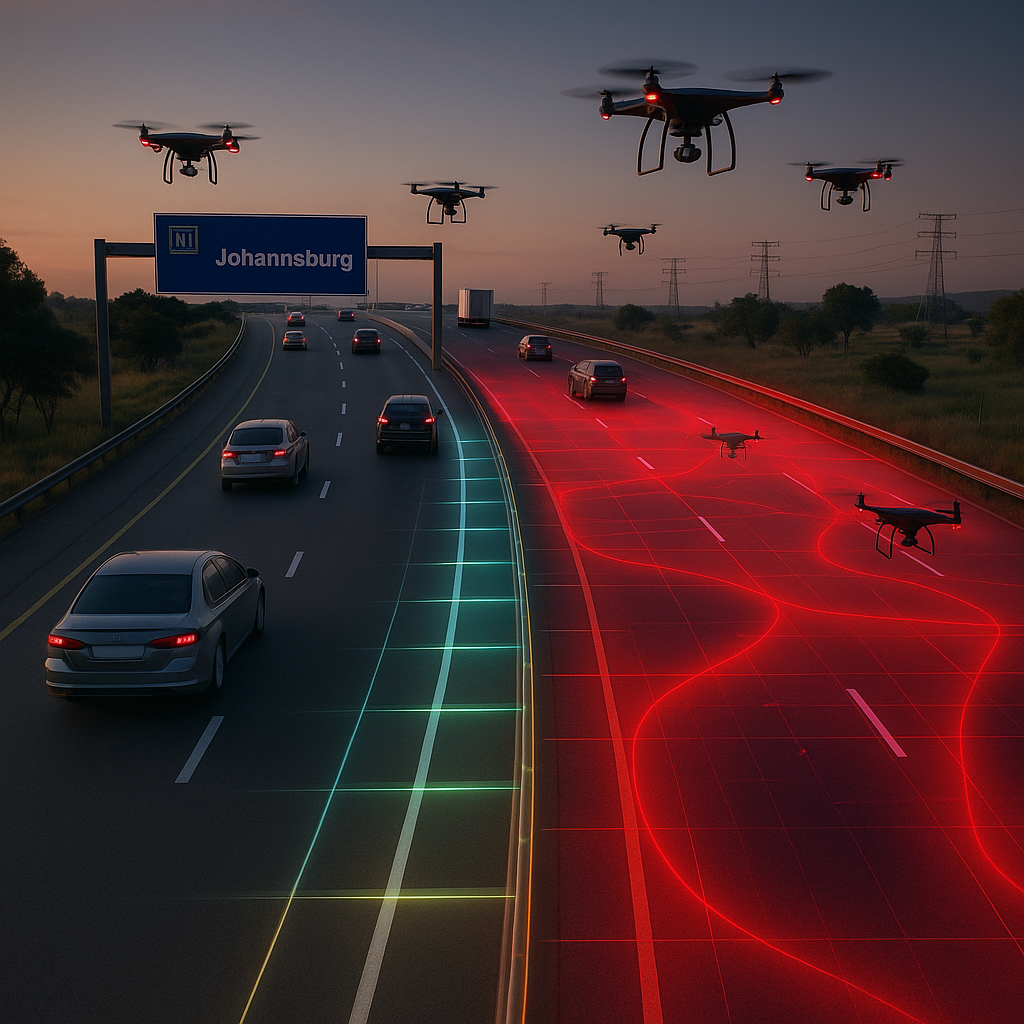
Inside South Africa's Easter Exodus 2026: A 360-degree traffic lockdown with AI, drones, and behavioral science to cut road deaths.
South Africa is gearing up for an unprecedented 360-degree traffic lockdown this Easter 2026 to drastically cut road fatalities. They're using smart tricks like making unsafe driving expensive and comparing how well your neighborhood drives. Pedestrians, who are often hit, will get special protection like 'highway hostels' for drunk walkers and QR codes on their skin for emergencies. Even students are joining in, acting as 'human guardrails' and reporting dangerous behavior. With super-strict alcohol rules and AI cameras watching everything, South Africa hopes to turn its roads from death traps into safe zones.
What measures are being implemented to reduce road fatalities in South Africa during Easter 2026?
South Africa is implementing a 360-degree traffic lockdown for Easter 2026, focusing on behavioral changes, pedestrian safety, and advanced technology. Key measures include: financial disincentives for unsafe driving, pedestrian protection initiatives like "highway hostels" and QR-coded skin-prints, deployment of traffic college cadets, a 0% blood alcohol amendment, dynamic corridor control on major arteries, and AI-powered cameras to detect violations. These strategies aim to significantly reduce road fatalities.
Get Cape Town news in your inbox
Stay updated with the latest stories from the Mother City.
1. Tarmac Turnaround – How 2026 Became the Year of the Living Road
Barbara Creecy took the stage at Centurion’s Highveld e-Campus just after sunrise on 17 March 2026. Behind her, wall-sized screens glowed green - empty lanes where carnage once thrived. Between New Year and mid-March the country had already shed 229 fatal collisions compared with the same spell in 2025; an 11 % dip unmatched since the 2010 World Cup after-glow. The minister’s message was blunt: the drop is not luck, it is epidemiology. Three NICD outbreak specialists now sit inside the RTMC, mapping “super-spreader behaviours” the way they once hunted COVID-19 clusters. Their dashboard no longer waits for long weekends; it pings on pay-day Fridays, ride-hail surge pockets and 02:00 shebeen lock-outs.
The philosophical shift is simple: treat every death as a data point, not a sermon. If a stretch of the N1 records three night-time smashes within seven days, the system asks “what behaviour just went viral?” rather than “who was to blame?” Overnight, crash barriers have become lab benches and traffic officers have turned into contact tracers.
2. Behavioural Doses – Nudging Drivers Before They Crash
Creecy’s team believes 80 % of disasters are cooked in the kitchen of human habit, so the antidote is a three-shot behavioural vaccine.
Shot one is financial shock. Variable-message boards now flash the real price of the latest fatal prang on that very stretch - R3.2 million in medical bills, lost wages and trauma counselling - updated every twenty minutes from Road Accident Fund actuaries.
Shot two is neighbourly comparison. At 16:00 every Friday your phone buzzes with an SMS ranking your suburb’s road manners out of ten, mined from speed traps and seat-belt cams. Ekurhuleni pilots show an average speed drop of 7 km/h once locals realised the street next door was behaving better.
Shot three is engineered irritation. If your licence-disc scan at a toll gate flags unpaid speeding tickets, the bank stalls your e-payment for thirty seconds. Fleet owners, tired of idling drivers, now settle fines before wheels turn.
3. Feet First – Why Pedestrians Own the Headlines
Pedestrians still deliver nearly half the annual death toll, so the campaign treats walkers as an endangered species worth protecting.
Shipping-container “highway hostels” have been parked 200 m off the N2 outside Cape Town. Intoxicated patrons trade car keys or pedestrian access for a bunk token and free coffee until sunrise. NGOs trained in brief alcohol interventions run the units like triage wards for bad decisions.
Students from Tshwane University created a 72-hour reflective skin-print: a QR-coded stencil sprayed on forearms at taxi ranks. When headlights hit the code, rescuers see blood group and emergency contacts.
After dark, borrowed Kruger anti-poaching drones patrol the N3 with heat-seeking cameras and 120 dB speakers. If a thermal blob crosses a barrier, the drone lights it up and barks a warning in two languages, then hovers until Metro Police arrive. Night-time pedestrian strikes on the Mariannhill plateau have already fallen by a third.
4. Young Blood on the Asphalt – Students Become Human Guardrails
Eighteen-hundred traffic-college cadets will swap Easter egg hunts for pink bibs this April. Psychologists chose the colour because it cools tempers. Posted 400 m apart on deadly strips, the rookies log every jay-walk, drunk-walk or assisted crossing into an app that feeds “JayNet,” a machine-learning camera project meant to teach lenses how to read pedestrian intent. One verified hour equals one community-development credit, turning the highway into an open-air campus where data is the new term mark.
5. Bottles, Bars and Zero-tolerance – The Alcohol End-game
Cabinet will receive a 0 % Blood Alcohol amendment by June, but the fine print is sneakier: drive within six hours of last night’s 0.05 % reading and you can be nailed for “impairment by chronic hangover.” Officers may demand a saliva cortisol test if three of five biomarkers - tremor, racing pulse, dilated pupils, blood-shot eyes or jerky tracking - show up. Logistics firms are already fitting steering-wheel tremor sensors; Swedish firm SenseDrive promises the data will hold up in court.
6. Corridor Control – N1, N2, N3, N4 Under Dynamic Licence
These four arteries swallow 42 % of Easter travellers and 57 % of freight. From 06:00–10:00 and 14:00–20:00 the inside shoulder glows red and becomes an 80 km/h crawler lane for trucks, freeing two overtaking lanes for cars. Disregard the LED studs and you’re R2 500 lighter on the spot.
“Wave brakes” will see three cruisers drive side-by-side at 100 km/h for 15 km, breaking up clumps and cutting rear-end shunts by almost a third.
At the Lebombo border, vaccine-and-licence kiosks offer truckers flu and pneumococcal jabs while RTMC officers scan road-worthiness discs in the same queue.
7. Heavy Metal Diet – Slicing 2 % of Trucks Off the Road
A quiet deal with the Road Freight Association trims Easter-week truck journeys by 2 %. In exchange, SANRAL rebates 15 % of annual tolls for fleets above 50 rigs. Algorithms identified “deferrable cargo” - empty pallets, packaging, bulk paper - that can travel a week earlier or later. The cut equals 18 000 eighteen-wheelers, freeing an entire lane from Joburg to Durban for the duration.
8. The Invisible Net – Cameras That Think Before They Blink
Every Gauteng speed camera now carries an edge-computing chip. Instead of flooding servers with raw footage, the device flags only speeding, lane-weaving or phone use, slashing bandwidth by 94 %. Savings bankroll WhatsApp bot “Siphila Sonke.” Upload a dash-cam clip and within 90 seconds AI returns a violation score and prosecution reference. Citizens have already uploaded 1 402 successful clips, most for overtaking on solid lines.
9. Loyalty for Life – Turning Good Kilometres into Free Tyres
Nedbank and Discovery’s “VitaMiles” converts compliant kilometres into rewards. Stay below 105 km/h and buckle up 90 % of the time and you earn points for free washer fluid or discounted tyres. Outperform your suburb’s average by 15 % and a R50 data voucher wings its way to a pedestrian in your neighbourhood, letting safe drivers gift connectivity to high-risk walkers.
10. Hour-by-Hour – The Easter Weekend Script
Maundy Thursday 18:00–00:00: 0 % BAC blitz around PSL stadiums.
Good Friday 06:00: “Pray & Park” lanes open near major church off-ramps.
Holy Saturday 10:00–14:00: east-bound rolling roadblocks, west-bound freight catch-up.
Easter Sunday 02:00–06:00: maximum drone patrol; thermal feed to Night Hawk ops room.
Easter Monday 12:00: return-leg wave brakes; picnic bays offer five-minute fatigue massages.
11. City Street Experiments – Paint, Plastic and Superstition
Cape Town painted 30 km of suburban tarmac into 20 km/h shared zones using recycled-plastic speed cushions and cheap neck-downs; child injuries are down 22 %.
eThekwini’s solar LED cat-eyes flash red when a taxi approaches a rank above 40 km/h, exploiting drivers’ dread of bad omens.
Tshwane turns late-night robots into four-way stops; drivers slow to negotiate, cutting T-bone crashes by 18 %.
12. Who Foots the Survival Bill?
The campaign price tag is R1.4 billion, 38 % fatter than 2025. Treasury unlocked R400 million from the fuel levy reserve on condition provinces match it. The beer industry coughed up R180 million in a “harm-offset” levy. Mobile operators donated R90 million in SMS airtime. VitaMiles coupons chip in another R60 million. The RTMC reallocated the remaining R670 million from capital equipment - proof that crash heat now draws budget heat.
13. Wild Cards – Storms, Boycotts and Dead Batteries
Stage-jumping load-shedding could black-out VMS boards; 5 000 power banks are cached at service centres.
A late-season Mozambican cyclone might reroute holidaymakers onto the N2; 72-hour cyclone odds are piped live into traffic algorithms.
The #FreeTheRoad fringe urges cling-film number-plate covers to fool AI cameras - an offence already carrying a R7 500 fine for defeating justice.
14. The 72-hour Mirror – Every Death Re-draws the Map
Each fatality now triggers a flash audit within three days: pathologist, engineer, psychologist and data scientist extract telematics, phone logs, dash-cam SD cards and asphalt samples. Findings feed the “Crash Genome” repository; machine models re-weight risk factors nationwide. The loop is merciless: every tragedy redraws the next morning’s patrol roster, drone route and student post.
15. After the Chocolate Wrappers – Freedom Day and the Permanent Revolution
If Easter delivers a sustained 15 % fatality cut, Cabinet will lock the dynamic corridor licence into law and extend the 0 % BAC clause to motorcycles by September. Until then the country’s roads remain a living laboratory - an asphalt circuit wired to algorithms, student eyes, and the quiet gamble that 2026 is the year South Africans stop turning holiday tarmac into tragedy.
[{"question": "What are the main strategies South Africa is implementing to reduce road fatalities during Easter 2026?", "answer": "South Africa is implementing a comprehensive 360-degree traffic lockdown for Easter 2026. This includes financial disincentives for unsafe driving, such as flashing the real cost of accidents on variable-message boards. There's also a system for comparing neighborhood road manners via SMS, and engineered irritation tactics like delaying toll gate payments for those with unpaid speeding tickets. Advanced technology like AI cameras and drones will monitor roads, alongside stricter alcohol regulations."}, {"question": "How is pedestrian safety being addressed in the new measures?", "answer": "Pedestrian safety is a major focus, as they account for nearly half of annual road deaths. Initiatives include 'highway hostels' made from shipping containers, offering intoxicated pedestrians a safe place to rest until morning. Students are spraying QR-coded reflective skin-prints on pedestrians for emergency identification. Additionally, anti-poaching drones equipped with heat-seeking cameras and loud speakers patrol high-risk areas at night to deter and warn pedestrians."}, {"question": "What role do students play in this new road safety campaign?", "answer": "Students from traffic colleges are actively involved as 'human guardrails.' Dressed in pink bibs, they are posted along deadly road segments to log jay-walking, drunk-walking, and assist with crossings using an app. This data feeds into 'JayNet,' a machine-learning project aimed at teaching cameras to understand pedestrian intent. This initiative also serves as an open-air campus, giving students community development credits."}, {"question": "What changes are being made to alcohol-related driving laws and enforcement?", "answer": "A significant change is the proposed 0% Blood Alcohol Content (BAC) amendment. Furthermore, new enforcement will target 'impairment by chronic hangover,' allowing officers to demand saliva cortisol tests if certain biomarkers are present. Logistics firms are even fitting steering-wheel tremor sensors to detect impairment, with data intended to be admissible in court."}, {"question": "How are major national arteries like the N1, N2, N3, and N4 being managed during Easter 2026?", "answer": "During peak hours, the inside shoulder of these major arteries will become an 80 km/h crawler lane specifically for trucks, freeing up overtaking lanes for cars. Disregarding LED stud warnings will result in a R2,500 fine. 'Wave brakes' involving multiple cruisers will break up traffic clumps to reduce rear-end collisions. At border posts, vaccine and license kiosks will offer jabs to truckers while road-worthiness discs are scanned concurrently."}, {"question": "What technological innovations are supporting the traffic lockdown?", "answer": "Several technological innovations are being deployed. Every speed camera in Gauteng now has an edge-computing chip to process violations locally, significantly reducing bandwidth usage. This saving funds 'Siphila Sonke,' a WhatsApp bot that allows citizens to upload dash-cam clips for AI-powered violation scoring and prosecution references. Furthermore, AI cameras are used for general surveillance and detecting unsafe driving behaviors."}]

Emma Botha is a Cape Town-based journalist who chronicles the city’s shifting social-justice landscape for the Mail & Guardian, tracing stories from Parliament floor to Khayelitsha kitchen tables. Born and raised on the slopes of Devil’s Peak, she still hikes Lion’s Head before deadline days to remind herself why the mountain and the Mother City will always be her compass.
View all articles →