
Steenhuisen moves to declare foot-and-mouth crisis a national disaster
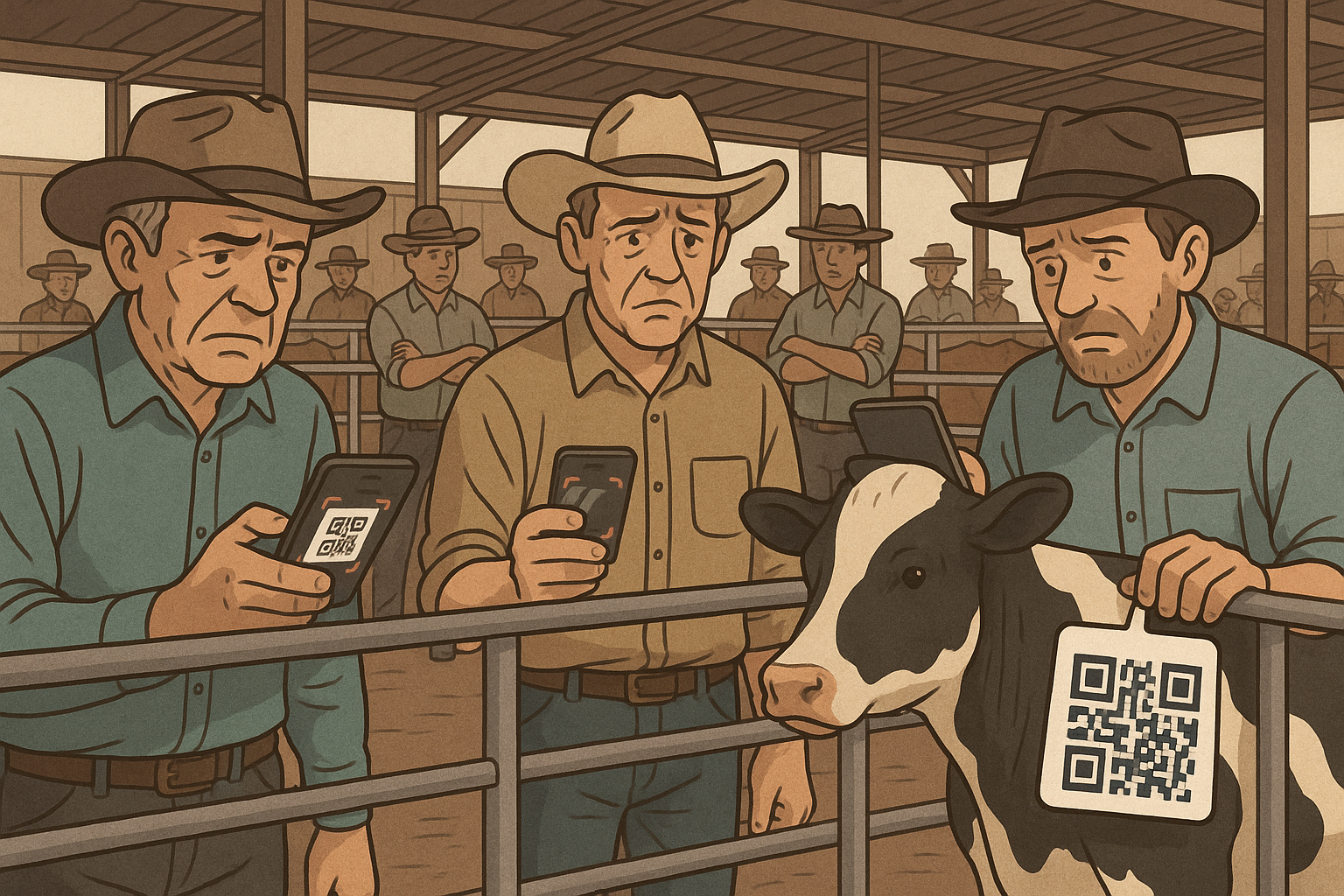
South Africa declares a state of disaster over FMD, launching a 10-year plan to combat the disease and restore export status.
South Africa is facing a big problem with Foot-and-Mouth Disease, like a persistent illness. To fight it, they've launched a massive 10-year plan, declaring it a national disaster. This plan involves lots of vaccinations, using new high-tech vaccines, and super-smart ways to track animals. They're also using tough rules to get resources and spend money fast. It's a huge effort to heal the country's animal health and get back to being FMD-free.
What is South Africa doing to combat the FMD outbreak?
South Africa is implementing a comprehensive 10-year plan to combat Foot-and-Mouth Disease (FMD) and regain its FMD-free status. This includes a national disaster declaration, a redrawing of the risk atlas, ring-fence vaccination using a new trivalent vaccine, and advanced surveillance technologies like blockchain ledgers for livestock tracking. The plan also involves legal measures to commandeer resources and streamline spending.
Get Cape Town news in your inbox
Stay updated with the latest stories from the Mother City.
From Limpopo’s russet communal rangelands to the Free State’s feedlot mazes, the same uneasy soundtrack is playing: disinfectant squelching under gumboots, portable fridges humming like anxious cicadas, and farmers debating in every tongue the republic allows.
On 25 January 2026, Agriculture Minister John Steenhuisen ended the guessing game in Pretoria: “Cabinet will be asked to proclaim a national disaster.”
The line is more than drama; it fires the starting gun on a ten-year stress test of every joint in the country’s animal-health skeleton - labs, border gates, auction rings, tribal councils and the WhatsApp groups that organise Saturday cattle parades.
The request is no knee-jerk cry for help.
It is the climax of a slow unravel that began in 2019 when WOAH revoked South Africa’s glittering “FMD-free without vaccination” badge after SAT-2 viral RNA surfaced in buffalo and neighbouring cattle.
Since that watershed moment the pathogen has acted like a ripped stitch: each new spill-over - buffalo to cow, cow to sheep, auction to feedlot - reopens an economic cut that now leaks roughly R5 billion in export earnings every 365 days.
Steenhuisen’s twin-track blueprint therefore targets viral silence at home and diplomatic applause abroad.
Track one is the nastier, boots-on-the-ground phase.
It opens with a ground-up redrawing of the national risk atlas, pushing the watch-list from 54 districts in 2022 to 92 today.
Satellite pictures are overlaid on ranger patrol logs to flag every buffalo wallow, shared watering hole and livestock route that breaches a game fence.
The final heat-map resembles measles on bovine skin: scarlet splashes along the Kruger escarpment, arterial streaks down the KwaZulu-Natal calf corridor, and an angry bruise on the Eastern Cape’s former homeland edges where animals still trek across invisible boundaries.
Inside each scarlet blob the plan demands “ring-fence vaccination” with a trivalent SAT 1-2-3 formula that has been the subject of a hush-hush molecular arms race.
The glass vials leaving Onderstepoort’s plant near Bloemfontein hold a second-generation double-deleted vector that, on paper, can be told apart from wild virus in a blood test.
That distinction is vital because WOAH rules insist on a 24-month “vaccination holiday” before a country may even petition for free status again.
To escape that purgatory, officials need a DIVA (Differentiate Infected from Vaccinated Animals) assay.
The only commercial kit accurate for SAT types comes from a small Rio de Janeiro biotech that can squeeze out 40 000 ELISA plates a quarter - barely sufficient for one province, let alone nine.
A hush-hush tech-transfer pact would let the Council for Scientific and Industrial Research 3-D-print micro-array plates locally, but pilot lots will not leave the printers before mid-2027.
While lab scientists chase deadlines, field vets are resurrecting tactics last aired during the 1980s rinderpest wars: road-block dip tanks, overnight stand-still orders and a divisive proposal to cull cattle older than eight years that carry antibodies yet look healthy.
Because destroying outwardly fit animals courts outrage, traditional monarchs will hold the veto; the Zulu royal house has already asked for 48-hour notice so ancestral rites can precede any dip-tank shooting party.
Legal Levers, Cold Chains and the Diplomatic Chessboard
Declaring a disaster hands the agriculture ministry three legal crowbars it has long coveted.
Section 15 of the Disaster Management Act lets the state commander private minus-80 °C freezers hoarded by pharmaceutical giants in Gauteng - crucial because the new high-potency vaccine must ride at minus-60 °C, twenty degrees colder than the standard vet chain.
Second, an automatic memorandum among Agriculture, Police and Transport empowers vets to press-gang traffic cops and even army patrols into roadblocks.
Last year a single illicit truck on the N1 near Polokwane crammed 87 weaners into a 45-cattle space and stopped at auctions across three provinces in four days - a rolling super-spreader on wheels.
Third, disaster cash can be spent without the usual 90-day Treasury scrutiny, meaning broken dip tanks can rise again in weeks, not quarters.
Yet the virus is merely half the war.
The other theatre is export diplomacy, a blood-sport where rivals pray Pretoria trips again.
China, which swallowed R2.3 billion of South African beef in 2022, already bans produce from five of the nine provinces, updating the blacklist every 48 hours through WOAH’s encrypted pathogen Bloomberg.
Steenhuisen’s vow to “phase out vaccination and win back recognition” hinges on persuading those same trading partners that any future flare-up will be spotted within 24 hours and boxed in within 72.
To cement the boast, the Agricultural Research Council is beta-testing a blockchain ledger that welds every birth, movement, jab and serology file to a unique 15-character code; data are hashed nightly and mirrored in Geneva, Brussels and Tokyo so no retrospective fiddling is possible.
If the platform flies, it could become the global reference for FMD transparency - though it also turns local farmers into guinea pigs for the biggest commercial blockchain trial on four legs, an irony not lost on men who still record calving dates in school exercise books.
Cash Cows, Bonds and Buffalo GPS Collars
The decade-long campaign comes with an R18 billion price tag, but National Treasury has padlocked only R4.2 billion so far.
The remaining hole must be filled by industry levies, development-bank loans and - most controversially - a proposed “red-line meat tax” of 15 cents on every kilogram sold at home.
Organised agriculture balks, arguing that domestic shoppers already chew through 14% food inflation.
An alternative dreamt up by the Bureau for Food and Agricultural Policy would securitise the future export earnings of vaccinated herds - essentially a cattle-backed bond paying coupons linked to FMD-free beef prices in 2029.
Rating agencies applaud the ingenuity but warn that a fresh outbreak could bulldoze the bond into default, morphing a vet disaster into a sovereign credit spasm.
Money talk filters down to village level, reshaping rural society in real time.
In Vhembe, communal farmers have revived “dip-tank courts,” weekly summits where neighbours fine transgressors in chickens or mobile airtime; repeat offenders forfeit grazing rights for an entire season - pastoral house arrest.
In the Western Cape, still free of the virus, stud breeders run a “clean-zone compact,” refusing to sell genetics north of the Orange River unless calves carry a notarised 90-day travel diary.
The outcome is a two-speed cattle economy: certified clean animals command premiums up to 40%, while unvaccinated beasts slump to half the market rate at distress auctions.
Even wildlife - once the untouchable tourism crown jewel - now wears the dragnet.
SANParks has begun a phased “stay-at-home” experiment for buffalo, strapping GPS collars on 600 animals that trigger ranger alarms if a herd drifts within five kilometres of domestic stock.
Each collar costs R8 000 and demands annual re-immobilisation for battery swaps, a procedure that itself risks virus spread via dirty darts.
Yet the maths is cruel: one positive buffalo can evaporate R600 million in game-meat exports overnight.
Private reserves are prototyping “buffalo bio-bubbles,” 10 000-hectare enclosures ring-fenced by double electrified wire and stocked with artificial water points to remove the urge to roam.
Drones survey the fences every 48 hours; any breach dispatches a rapid-response crew with a mobile PCR lab that can declare a faecal sample negative or positive in 90 minutes.
Rumours, Roadblocks and the Rumbling Auction Gavel
Technology, however, cannot vaccinate the human mind.
In October 2025 a Sesotho voice note ricocheted across WhatsApp alleging the jab contained infertility drugs cooked up by “white monopoly capital” to thin black-owned herds.
Within a week eastern Free State turnout plummeted from 78% to 22%, forcing the minister to summon traditional healers to bless each vaccine batch before it leaves the depot.
Uptake has since rebounded, but the scare proves that every campaign is also a battle of story, trust and symbolism.
Across the frontier, neighbours watch with clenched empathy.
Namibia has slammed shut its southern “Red Line” fence to South African weaners, throttling its own feedlots and sending Windhoek beef prices into orbit.
Botswana has seconded 50 vet technicians and a mobile lab - on condition Pretoria foots the R12 million bill and provides diplomatic air-cover at the next SADC summit, where Gaborone will push for a regional eradication kitty funded by a 0.1% levy on intra-African beef sales.
Zimbabwe, nursing its own SAT-2 spike in the southeast lowveld, eyes Pretoria’s stumble as a chance to claw back the EU quota it lost in 2021; Harare’s pitch is to market itself as the “clean alternative,” a move that could skim R800 million of European orders off South Africa’s plate.
Back home, the auction hammer still falls, yet the cadence has changed.
At Kranskop in KwaZulu-Natal buyers arrive armed with portable printers that spit out QR-coded compliance slips; calves are scanned, not simply weighed.
The auctioneer’s rolling chorus still ends with “Going once, going twice…” but the real drama unfolds on a phone app that refreshes border bans in real time.
Between first gavel and final bid a single WOAH alert can mutate a R30 000 bull into a R12 000 liability before the ink dries.
When Steenhuisen’s Cabinet memo finally lands it will ask for more than disaster money; it will seek licence to weave the entire livestock universe - formal and informal, high-tech and tribal - into a single breathing biosecurity animal.
Victory will be tallied not only in virus-free hoofprints but in something harder to measure: the restoration of trust among small farmers who have witnessed too many schemes wilt, traders who crave predictability, and diplomats who must once again believe that South African beef is shorthand for safety.
What is Foot-and-Mouth Disease (FMD)?
Foot-and-Mouth Disease (FMD) is a severe, highly contagious viral disease of cloven-hoofed animals, including domestic and wild bovines, swine, sheep, goats, and deer. It is characterized by fever and blister-like lesions followed by erosions on the tongue, lips, feet, and teats. While not typically fatal for adult animals, it causes significant production losses due to weight loss, decreased milk yield, and reproductive issues. FMD is a major concern for the livestock industry globally due to its rapid spread and severe economic impact, primarily through restrictions on international trade of animals and animal products from affected regions.
Why has South Africa declared FMD a national disaster?
South Africa declared FMD a national disaster to gain emergency powers and facilitate a rapid, coordinated response to the persistent outbreaks. This declaration allows the government to fast-track resource allocation, commandeer necessary equipment (like specialized freezers), and streamline spending without the usual bureaucratic delays. It underscores the severity of the situation and the commitment to an aggressive, multi-faceted approach to regain the country's FMD-free status, which was revoked in 2019.
What are the key components of South Africa's 10-year plan to combat FMD?
South Africa's 10-year plan is comprehensive, involving several key strategies: a national disaster declaration, a redrawing of the national risk atlas to identify high-risk areas, and ring-fence vaccination using a new trivalent SAT 1-2-3 vaccine. The plan also incorporates advanced surveillance technologies like blockchain ledgers for livestock tracking to ensure transparency and traceability, legal measures to commandeer resources, and efforts to educate and involve local communities and traditional leaders in the disease control efforts.
How will the new FMD vaccine and surveillance technology work?
The new trivalent SAT 1-2-3 vaccine is a second-generation double-deleted vector that allows for differentiation between vaccinated and infected animals (DIVA technology), a crucial factor for regaining FMD-free status according to WOAH rules. On the surveillance front, South Africa is piloting a blockchain ledger system that records every birth, movement, vaccination, and serology result for livestock with a unique 15-character code. This data is hashed nightly and mirrored internationally to prevent tampering, aiming to provide unparalleled transparency and traceability for South African beef products.
What are the financial implications of this long-term FMD battle?
The decade-long campaign is estimated to cost R18 billion. While R4.2 billion has been secured from the National Treasury, the remaining funding is expected to come from industry levies, development-bank loans, and potentially a controversial

Chloe de Kock is a Cape Town-born journalist who chronicles the city’s evolving food culture, from township braai joints to Constantia vineyards, for the Mail & Guardian and Eat Out. When she’s not interviewing grandmothers about secret bobotie recipes or tracking the impact of drought on winemakers, you’ll find her surfing the mellow breaks at Muizenberg—wetsuit zipped, notebook tucked into her backpack in case the next story floats by.
View all articles →