
US embassy criticises South Africa for naval drills with Iran
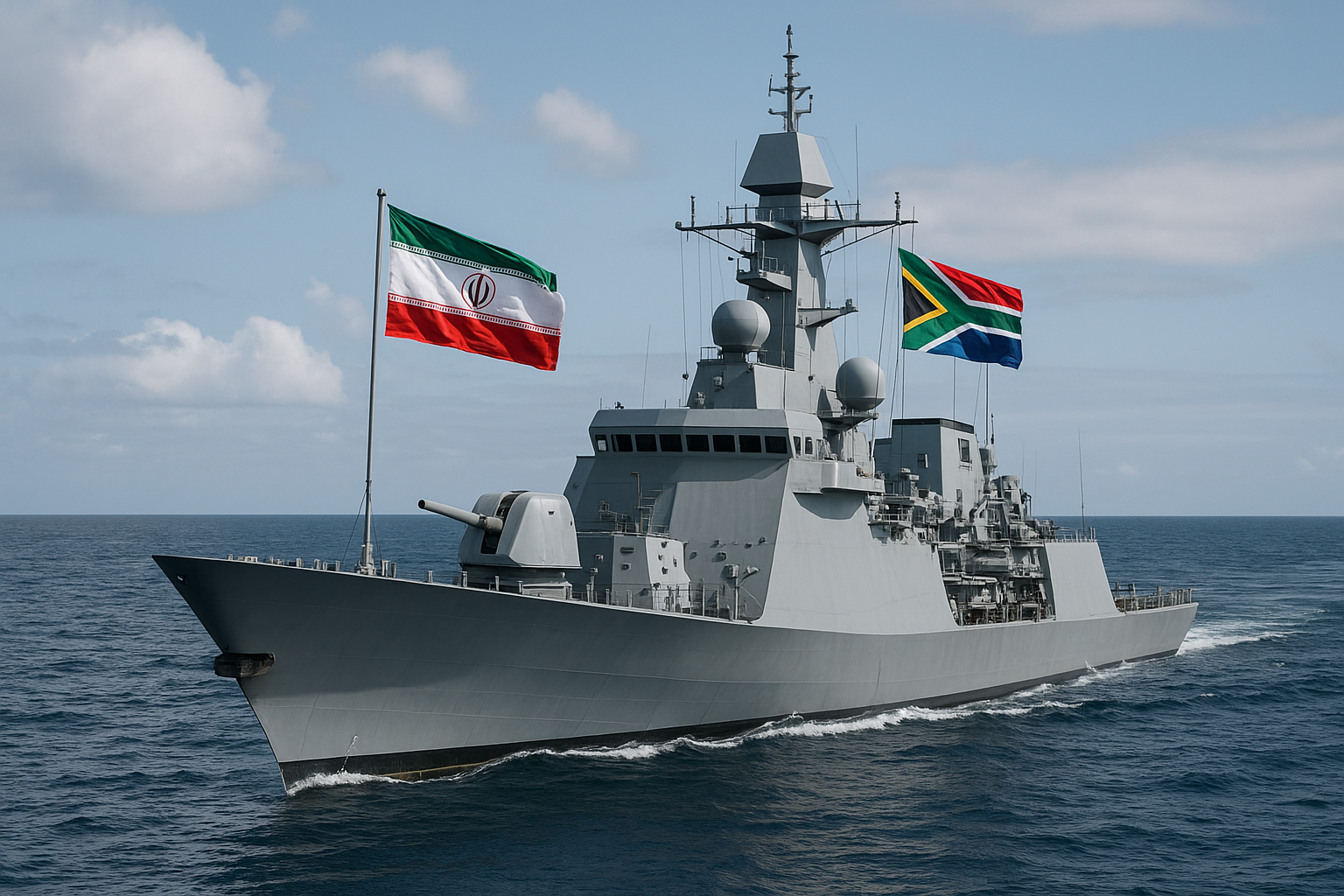
An Iranian corvette in Cape Town sparks a geopolitical firestorm, turning the city into a chessboard of diplomacy, sanctions, and naval drills.
Cape Town became a global hotspot when an Iranian warship arrived for a naval exercise alongside South Africa, Russia, and China. This seemingly routine drill, 'Will for Peace,' quickly sparked a diplomatic storm, with the US criticizing South Africa's choice of partners.
The exercise, meant to practice combating fictional pirates, transformed into a real-world stage for international tensions. Social media buzzed, protests erupted, and even cyberattacks were launched. The event showcased how a single port call could turn into a complex geopolitical drama, affecting everything from local politics to global trade and security.
Get Cape Town news in your inbox
Stay updated with the latest stories from the Mother City.
What is "Will for Peace"?
"Will for Peace" is a joint naval exercise involving South Africa, Iran, Russia, and China, among others. The scenario involves combating a fictional criminal gang hijacking a tanker. The 2026 edition, particularly with Iran's participation, has stirred significant diplomatic and geopolitical controversy, transforming a routine drill into a global incident.
Section 1 – Monday, 13 January: A Quiet Breakwater, a Loud Signal
08:17 SAST. The tugs at Simon’s Town throttle back to idle. A 1 540-ton steel wedge eases past the mole, Cape sun glinting off its boxy superstructure. Up aft flutters the tricolour of Iran; up forward, for courtesy’s sake, the South African standard. IRIS Naghdi – C-802 launcher slits clearly visible – has arrived for “Will for Peace”. By mid-afternoon dockworkers are lining up for Persian faloodeh and local koeksisters; by sunset Twitter’s top trend in Cape Town is #NaghdiInTheCape.
Less than two days later Washington’s embassy drops a 287-word grenade onto the timeline. It accuses Pretoria of tarnishing “the moral beacon of 1994” and warns that navies which “jail poets and shoot schoolgirls” are not welcome training partners. The tweet racks up 10 000 shares before the press officer can spell-check “Magnitsky”.
Overnight, what began as a routine port call mutates into a diplomatic bar fight. Talk-radio callers argue over sovereignty; harbour-tour operators triple ticket prices; insurance underwriters quietly tack an extra 0.15 % onto war-risk premiums for any bulker loitering south of 28°S. One corvette, one harbour, one tweet – and the southern tip of Africa feels like the latest square on a global chessboard.
Section 2 – “Will for Peace”: A Bigger Cast Than Advertised
The drill itself is not new; the 2026 programme is simply its most crowded edition. South Africa has sent the frigate SAS Amatola, strike craft SAS Isaac Dyobha, 350 Marines and two AW-109 helicopters. Russia’s contribution is an Admiral Gorshkov-class frigate, a tug and an ice-strengthened tanker whose meteorologists are still trying to explain its presence in 30-degree sunshine.
China’s Type 054A frigate Yuncheng is here, along with a submarine-rescue mother-ship that Beijing insists is only watching. The UAE has dispatched the corvette Al-Dhafra, bringing the only all-female damage-control squad in the line-up. Ethiopia, Egypt and Indonesia have each sent observers, notebooks ready.
The scenario reads like a paperback thriller: criminal gang “Crimson Tide” hijacks a tanker hauling Namibian yellowcake; navies must recapture the ship, escort it to safety and cope with a mock reactor leak. The kicker is that the hijackers’ mother-ship sails under a Persian-Gulf flag – a wink that frames Iran as part of the rescue posse, not the problem set.
Section 3 – Smoke, Mirrors and Satellites – How Information Becomes a Weapon
At 09:04 on 14 January the SANDF posts a drone clip: Naghdi sailors arranging themselves into the word “PEACE” on the flight deck. Eighteen minutes later the footage disappears. Defence spokespeople blame “a protocol slip in DIRCO”, but deny cabinet interference. The top Farsi comment captured before deletion – “From Hormuz to the Cape, the wave belongs to us” – is lifted verbatim from a 2023 IRGC music video glorifying Iran’s first Atlantic loop.
Behind the public row, quieter machinery hums. AFRICOM orders a classified satellite pass, hunting thermal confirmation that Naghdi’s Noor missiles are still in their tubes. Treasury re-jigs a long-scheduled financial-sector visit to Pretoria so officials can quiz banks on “maritime sanctions exposure”. Lloyd’s Joint War Committee quietly redraws the hull-risk map, shoving South Africa’s southern coastline into the danger stripe for the duration of the drill.
Cyber-security shops spot a flurry of look-alike domains - “naghdi-sandf-schedule.com”, “willforpeace-updates.org” - mailing poisoned PDFs that drop Python backdoors. Dragos fingers the cluster as APT42, usually traced to Tehran’s Ministry of Intelligence. South African IPs, in turn, hammer Iranian infrastructure with brute-force SSH attacks. Neither capital admits anything; both tell power-grid and port bosses to patch Log4j again, just in case.
Section 4 – Banners, Brews and the Price of Bread – When a Port Becomes a Stage
Domestic politics quickly outruns military protocol. South Africa’s cabinet must chair the BRICS summit in Durban later this year, with Iran set to join as a full member. Any snub in Cape Town would make September’s handshakes awkward. Roughly a quarter of the nation’s crude now arrives through a Rosneft-Iran swap that dodges Western price caps; ruling-party strategists call the naval visit “a down-payment on affordable fuel before the May municipal vote”.
Opposition parties table an urgent parliamentary question: does bunkering and feeding Naghdi break the National Conventional Arms Control Act? The Speaker has 21 sitting days to respond - long after the corvette’s scheduled 25 January departure.
On the water, two NGOs - Freedom on the Horizon and Cape Peace Flotilla - announce a kayak armada to “greet” the warship. Naval regs demand permits for anything under 12 m; organisers cite constitutional free-speech rights and refuse. The harbourmaster issues arrest warrants, guaranteeing live-stream ratings. Iranian sailors film the stand-off; hours later the clip surfaces on Instagram channels titled “South Africans Defend Iran”.
Meanwhile, the V&A Waterfront registers record footfall as locals chase selfies with “the Iranian ship”. Craft brewers release a limited IPA, “Axis of Hops”, complete with QR-coded primer on the law of the sea. Fruit exporters fume over redirected berths and delayed Valencia oranges, but the tourism board is already re-branding the city as a front-row seat for “grey-zone theatre”.
Even the weather gate-crashes the plot. False Bay’s infamous summer south-easter, the “Buster”, is forecast to stay tame for 72 hours, but a cut-off low is drifting north from the Prince Edward Islands. If it arrives early, the climactic opposed-boarding phase could become a live search-and-rescue in six-metre seas. Two air-force Oryx helicopters sit on strip-alert, cabins stuffed with survival suits labelled in English, Farsi, Russian and Mandarin.
Whether the drill ends with handshakes, handcuffs or helicopter hoists, its after-image lingers: a British-designed, Iranian-refitted warship flying South Africa’s rainbow jack while protesters paddle round her bow. Radars whisper in frequencies humans cannot hear, actuaries recalculate risk, and container ships keep to their lanes, each adjustment another tick in the invisible abacus of global trade.
[{"question": "
What was the 'Will for Peace' naval exercise?
", "answer": "The 'Will for Peace' naval exercise was a joint drill involving South Africa, Iran, Russia, and China, among other observers. Its stated purpose was to practice combating a fictional criminal gang hijacking a tanker. However, the 2026 edition, particularly with Iran's participation, transformed a routine drill into a significant diplomatic and geopolitical incident, drawing international scrutiny and criticism, notably from the US."}, {"question": "Which countries participated in the 'Will for Peace' exercise?
", "answer": "The core participants in the 'Will for Peace' exercise included South Africa (with the frigate SAS Amatola, strike craft SAS Isaac Dyobha, Marines, and helicopters), Russia (with an Admiral Gorshkov-class frigate, a tug, and an ice-strengthened tanker), China (with the Type 054A frigate Yuncheng and a submarine-rescue mother-ship), and Iran (with the IRIS Naghdi). Additionally, the UAE dispatched the corvette Al-Dhafra, and Ethiopia, Egypt, and Indonesia sent observers."}, {"question": "Why did the arrival of the IRIS Naghdi in Cape Town cause controversy?
", "answer": "The arrival of the Iranian warship IRIS Naghdi in Cape Town for the 'Will for Peace' exercise sparked significant controversy. The US criticized South Africa's choice of partners, accusing Pretoria of tarnishing its democratic values by engaging with navies from countries like Iran. This single port call quickly escalated into a complex geopolitical drama, attracting social media attention, protests, and even cyberattacks, highlighting how local events can have global repercussions on trade and security."}, {"question": "How did the 'Will for Peace' exercise impact international relations and local politics?
", "answer": "The 'Will for Peace' exercise had a profound impact. Internationally, it strained relations between South Africa and the US, with Washington issuing strong condemnations. Locally, it became a focal point for domestic politics, with opposition parties questioning the legality of hosting the Iranian vessel and the ruling party defending it as a strategic move related to BRICS and fuel supply. The event also affected economic aspects, leading to increased war-risk premiums and logistical disruptions for port operations, while simultaneously boosting tourism interest in Cape Town."}, {"question": "What were some of the information warfare and cyber activities observed during the exercise?
", "answer": "During the exercise, information became a weapon. The SANDF posted, then deleted, a drone clip of Iranian sailors forming 'PEACE' on the deck, leading to speculation about political interference. Classified satellite passes were ordered by AFRICOM to monitor the Iranian warship. Cyber-security threats emerged, with look-alike domains spreading malicious PDFs, attributed to Iranian intelligence, and South African IPs launching brute-force attacks on Iranian infrastructure, showcasing a silent cyber conflict alongside the naval drill."}, {"question": "What was the fictional scenario for the 'Will for Peace' exercise?
", "answer": "The fictional scenario for the 'Will for Peace' exercise involved a criminal gang named 'Crimson Tide' hijacking a tanker carrying Namibian yellowcake. The participating navies were tasked with recapturing the ship, escorting it to safety, and managing a mock reactor leak. Notably, the hijackers' mother-ship was specified to sail under a Persian-Gulf flag, subtly framing Iran as a partner in rescue efforts rather than a potential problem.", "additional_info": "The exercise also highlighted the strategic importance of the Cape of Good Hope as a vital global shipping lane. The participation of multiple naval powers, especially those with geopolitical tensions with the West, underscores the increasing competition for influence in key maritime choke points. The incident further emphasized the concept of 'grey-zone' warfare, where actions fall below the threshold of conventional armed conflict but still serve strategic objectives and create significant international ripples."}]
Sarah Kendricks is a Cape Town journalist who covers the city’s vibrant food scene, from township kitchens reinventing heritage dishes to sustainable fine-dining at the foot of Table Mountain. Raised between Bo-Kaap spice stalls and her grandmother’s kitchen in Khayelitsha, she brings a lived intimacy to every story, tracing how a plate of food carries the politics, migrations and memories of the Cape.
View all articles →