
Watch: Hout Bay fence prompts Gaza comparison and debate
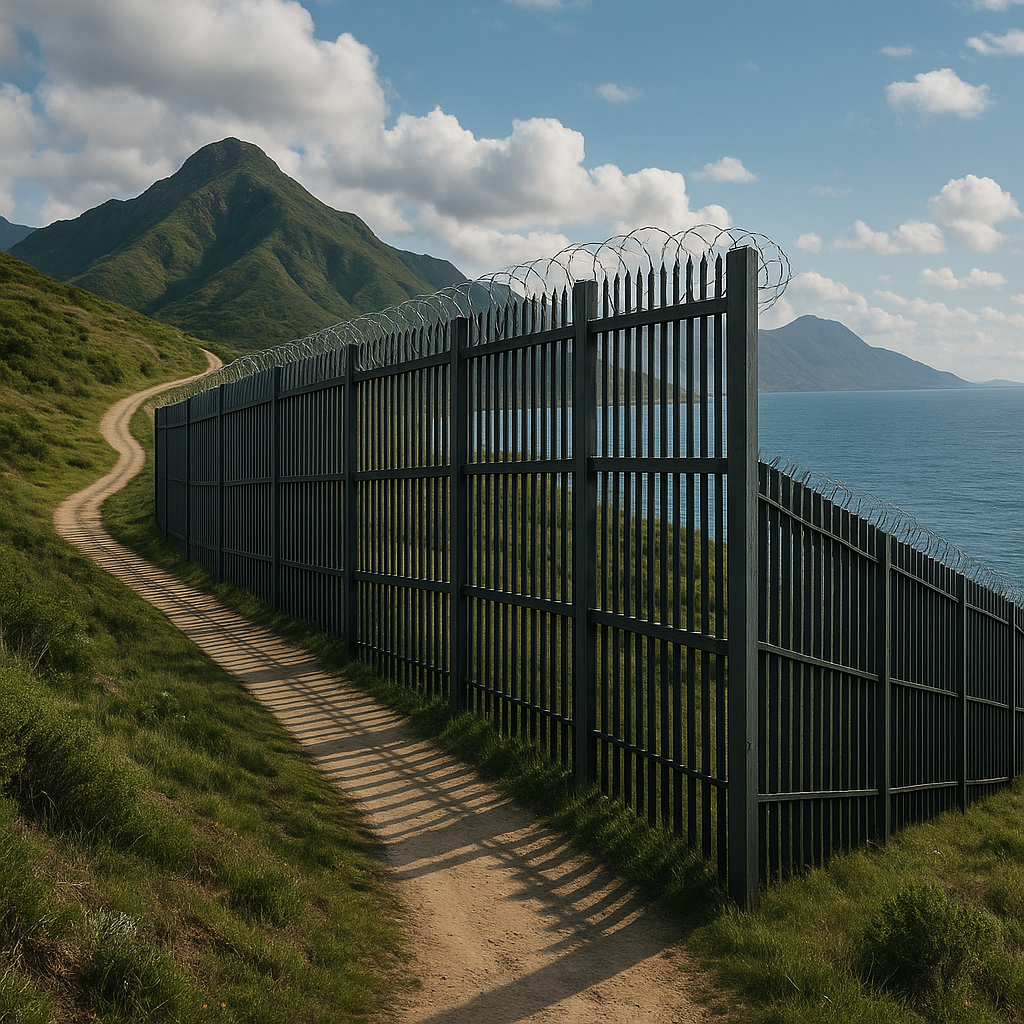
A new 1.8km fence cuts Hout Bay's Pipe Track, sparking controversy & #HoutBayGaza trends. It raises questions of safety, exclusion & land use.
A sudden 1.8 km wire fence appeared in Hout Bay, dividing the community and sparking outrage. While officials claim it's for baboon control and safety, many believe it's a land grab for luxury estates. This "wire wall" has become a symbol of inequality, igniting protests and debate about who truly benefits and who is excluded.
What is the Hout Bay wire wall?
The Hout Bay wire wall is a 1.8 km fence erected in Hout Bay, South Africa, ostensibly for ecological and safety reasons due to baboon incursions and crime. However, its sudden appearance and location have sparked controversy, with critics arguing it creates social division and serves other interests, like future luxury-estate zoning.
Get Cape Town news in your inbox
Stay updated with the latest stories from the Mother City.
Dawn of the Barrier: 48 Hours That Shrank a Valley
12 February 2026 started like any salty-sweet summer morning until people opened curtains and felt the visual equivalent of a slap. Where yesterday the lower slope of Vlakkenberg wore only fynbos and foot-worn sand, a 1.8 km silver serpent now glittered. Powder-coated roll-top mesh, twin rows of concertina wire, concrete still damp - the fence flashed like fishing lure by day and under security lamps glowed like a surgical scar by night. Social-media timelines filled with the same three-second clip: residents asking neighbours if martial law had been declared while they slept.
Behind the sudden appearance lay paperwork that moved faster than a southeaster gale. Peninsular Asset Protection lodged an “urgent ecological exemption” on 9 February, blaming “exponential baboon incursions” and “home-invasion robberies linked to informal trails.” A 2024 report commissioned by the Hout Bay Ratepayers’ Forum claimed households on the contour bleed R 28 000 a year replacing torn refuse bags and French-door mesh. The city department that can stall a Bishopscourt boundary tweak for nine months stamped approval in forty-eight hours. Insiders call the turnaround “lightning in triplicate,” proof that fear plus money equals velocity.
Gcobani Ndzongana, leader of the Land Party, arrived before the cement footings set. A single-take, ninety-second reel - wire rattling in the wind, then his crisp comparison: “Hout Bay is being turned into Gaza.” The phrase detonated online. Within six hours the clip out-trended the Springbok squad and a soap-star divorce; #HoutBayGaza topped South Africa’s X sidebar by sunset. Analysts at UCT traced the lift-off to three unrelated re-tweeters: a crypto-bro, a UK humanitarian influencer, and a fake account spoofing Nkandla jokes. None had ever mentioned the bay before, proving the word “Gaza” is algorithmic nitroglycerin.
Who Paid, Who Profits, Who Protects
The upper-slope owners quietly formed the Vlakkenberg Conservancy Trust in late 2025. Pages four through seven of its deed empower trustees to “erect wildlife-resistant perimeter defence” and “commission armed response at discretion.” Nowhere does the deed mention that three signatories sit on the board of a private-equity vehicle sitting on R 380 million worth of vacant stands. Fresh survey pegs photographed by satellite in January line up perfectly with the new barrier, feeding suspicion that the wire doubles as a placeholder urban edge that will grease future luxury-estate zoning. The trust chair, a retired geologist, insists motives are “purely conservation and safety,” but will not reveal individual contributions toward the R 2.4 million installation bill.
Baboon specialists are not unanimous cheerleaders. The Cape Peninsula Baboon Research Unit says the animals already detour through pine plantations, simply moving raiding pressure toward Constantia vineyards. The city’s own Baboon Technical Team counters that a twenty-percent drop in human-wildlife encounters is worth celebrating, citing a Scarborough toddler mauled last year. Telemetry shows twelve adult males in the Vlakkenberg troop; one tagged male, KTB-47, has learned to lean a pole ladder against the mesh. Peninsular Asset Protection has applied for a R 600 000 hot-wire upgrade, again outside normal council procurement because baboon management is an “unfunded mandate.”
Crime numbers muddy the safety narrative. SAPS recorded 387 “trespassing/property invasion” cases in Hout Bay from 2023 to 2025; only fourteen files reference the Pipe Track. A primary-school teacher who lives near the lower trail keeps a colour-coded spreadsheet: 38 of 42 burglaries on her street happened between dusk and dawn when the path is empty. She labels the structure “a placebo of steel - nice for cortisol levels inside the estates, useless against thieves who arrive by hatchback.” Her data set is now copied across WhatsApp stokvel groups and amateur GIS channels, forming an alternative risk map the municipality never commissioned.
Contested Ground: Politics, Commerce and the Everyday
The symbolism is almost cartoon-perfect. Built in 1953 as a maintenance servitude for a 19-inch water main, the Pipe Track evolved into a social spine linking Imizamo Yethu, Hangberg, nurseries and the wealthier ridge. At sunrise hoodie and Patagonia fleece share the same Atlantic mist. The fence lands precisely where the gradient slackens and the ocean view explodes - so a walker from the township meets the barrier just as the horizon beckons. You can still photograph the bay; you just cannot stroll toward it on this path, a literal line between promise and refusal.
Political opportunism followed within hours. The DA ward councillor hailed the barrier as “ratepayer-led service delivery,” then deleted the post after hundreds of Palestinian-flag emojis swarmed the thread. The ACDP has demanded council review of “privately initiated spatial exclusion devices,” a catch-all phrase that could rope in everything from electric fencing to boom gates. On Valentine’s Day an EFF cavalcade circled the bay, red flags whipping against surf spray, handing out flyers warning: “First the mountain, tomorrow the beach.” Meanwhile, a surf shop sells “Hout Bay Gaza” T-shirts at R 320 a pop, half snapped up by European tourists who think the slogan belongs to a punk band.
Night choreographs its own theatre. At 19:30 a private-security jeep idles engine-on so LED bars can sweep the slope. A Ugandan veteran listens to Bobi Wine while scanning for motion. Down-slope, three Hangberg boys sprint, tag the mesh, race back before infrared beams trip: their game, “Gaza Touch,” record 14 tags in 21 minutes on a stormy night when sensors misfired. Mothers beside a paraffin heater track every flash of amber light, swapping eviction stories and crayfish-price woes. Cartographers duel on OpenStreetMap: one labels the obstruction barrier=fence + access=no + note=”contested”; another draws an alternative path cheekily named “Apartheid 2.0 Detour.” Google Earth still shows pre-fence greenery, so for now the structure exists mostly in drone reels, TikTok filters and a local coder’s AR lens that sets the wire ablaze with digital flames - Grade-9s swipe up and barbs morph into fynbos, everything content, everything contested.
Rust, Laws and the Long View
Lawyers smell billable hours. The provincial heritage office received a complaint arguing the fence defaces an “intangible cultural landscape” protected by national law. A Hangberg civic structure filed separately, claiming breach of the constitutional right to freedom of movement. Both matters reach the Western Cape High Court in June, but an interim interdict is unlikely before September while the roll groans under land-use battles. Until judges speak, the barrier remains touchable fact and Rorschach symbol: cold steel you can photograph, blank screen on which to project every South African anxiety about belonging, border, and benefit.
Weather, not courts, may write the final clause. Coastal fog eats galvanising; mossies already weave grass nests into diamond mesh. One winter storm will snap the highest strand, reopening the track for a few hours until a repair truck arrives. Someone will film the sagging wire, post victory emojis, and the cycle - clip, outrage, metaphor, merchandise - will reboot. Because a fence, unlike a mountain, is never finished; it demands updates, upgrades, interpretations. Hout Bay’s skyline changed overnight, but the story that sprouted alongside the steel is still climbing, looking for the next crest, the next detour, the next tag on the wire.
[{"question": "
What is the Hout Bay wire wall and why was it erected?
\nThe Hout Bay wire wall is a 1.8 km fence constructed in Hout Bay, South Africa. Officials claim it was erected for baboon control due to increasing incursions into residential areas and for safety reasons, citing a rise in home-invasion robberies linked to informal trails. Peninsular Asset Protection, the entity that lodged an \"urgent ecological exemption,\" specifically mentioned \"exponential baboon incursions\" and \"home-invasion robberies.\" However, many residents and critics believe the fence serves other purposes, such as facilitating future luxury-estate development and creating social division.", "answer": null}, {"question": "When did the Hout Bay wire wall appear and how quickly was it approved?
\nThe Hout Bay wire wall appeared suddenly on 12 February 2026. The paperwork for its construction, specifically an \"urgent ecological exemption\" lodged by Peninsular Asset Protection, was approved with remarkable speed. The city department, known for lengthier approval processes for similar projects, stamped its approval within 48 hours, leading to suspicions of expedited processes driven by financial and influential interests.", "answer": null}, {"question": "
Who is believed to be behind the construction of the fence and what are their alleged motives?
\nThe Vlakkenberg Conservancy Trust, formed by upper-slope owners in late 2025, is identified as the entity behind the fence. While the trust chair insists motives are \"purely conservation and safety,\" critics allege that the fence is a \"land grab\" for luxury estates. This suspicion is fueled by the fact that three signatories of the trust's deed are also on the board of a private-equity vehicle holding R380 million worth of vacant stands, and new survey pegs align perfectly with the fence, suggesting it acts as a placeholder for future urban development.", "answer": null}, {"question": "
What are the contrasting views on the effectiveness of the fence for baboon control and safety?
\nBaboon specialists are divided on the fence's effectiveness. The Cape Peninsula Baboon Research Unit suggests the fence may merely shift baboon raiding pressure to other areas, like Constantia vineyards. Conversely, the city's Baboon Technical Team cites a 20% drop in human-wildlife encounters as a positive outcome. Regarding safety, official crime statistics from SAPS show that only a small fraction of trespassing/property invasion cases in Hout Bay referenced the Pipe Track, and a local teacher's data suggests burglaries on her street primarily occur when the path is empty, leading her to describe the fence as a \"placebo of steel\" against thieves.", "answer": null}, {"question": "
How has the Hout Bay wire wall impacted the community and what symbolism does it hold?
\nThe fence has deeply impacted the community, becoming a symbol of inequality and social division. What was once the \"Pipe Track,\" a social spine linking diverse communities like Imizamo Yethu, Hangberg, and wealthier areas, is now bisected. The fence is seen as a \"literal line between promise and refusal,\" blocking access to the ocean view and fostering a sense of exclusion for those from less affluent areas. It has sparked widespread protests, political opportunism, and online debate, even leading to merchandise like \"Hout Bay Gaza\" T-shirts.", "answer": null}, {"question": "
What legal challenges and long-term outlook are there for the Hout Bay wire wall?
\nThe Hout Bay wire wall faces legal challenges from multiple fronts. The provincial heritage office has received a complaint arguing the fence defaces an \"intangible cultural landscape,\" while a Hangberg civic structure claims a breach of the constitutional right to freedom of movement. Both matters are headed to the Western Cape High Court. Beyond legal battles, the long-term outlook is uncertain. The fence is subject to the elements, with predictions that winter storms could damage it, leading to temporary reopening of the path and a continuation of the cycle of \"clip, outrage, metaphor, merchandise.\" Ultimately, the fence is viewed as an ongoing issue that will demand continuous updates, upgrades, and interpretations rather than a finished solution.", "answer": null}]

Aiden Abrahams is a Cape Town-based journalist who chronicles the city’s shifting political landscape for the Weekend Argus and Daily Maverick. Whether tracking parliamentary debates or tracing the legacy of District Six through his family’s own displacement, he roots every story in the voices that braid the Peninsula’s many cultures. Off deadline you’ll find him pacing the Sea Point promenade, debating Kaapse klopse rhythms with anyone who’ll listen.
View all articles →