
What Cape Town can do to save water
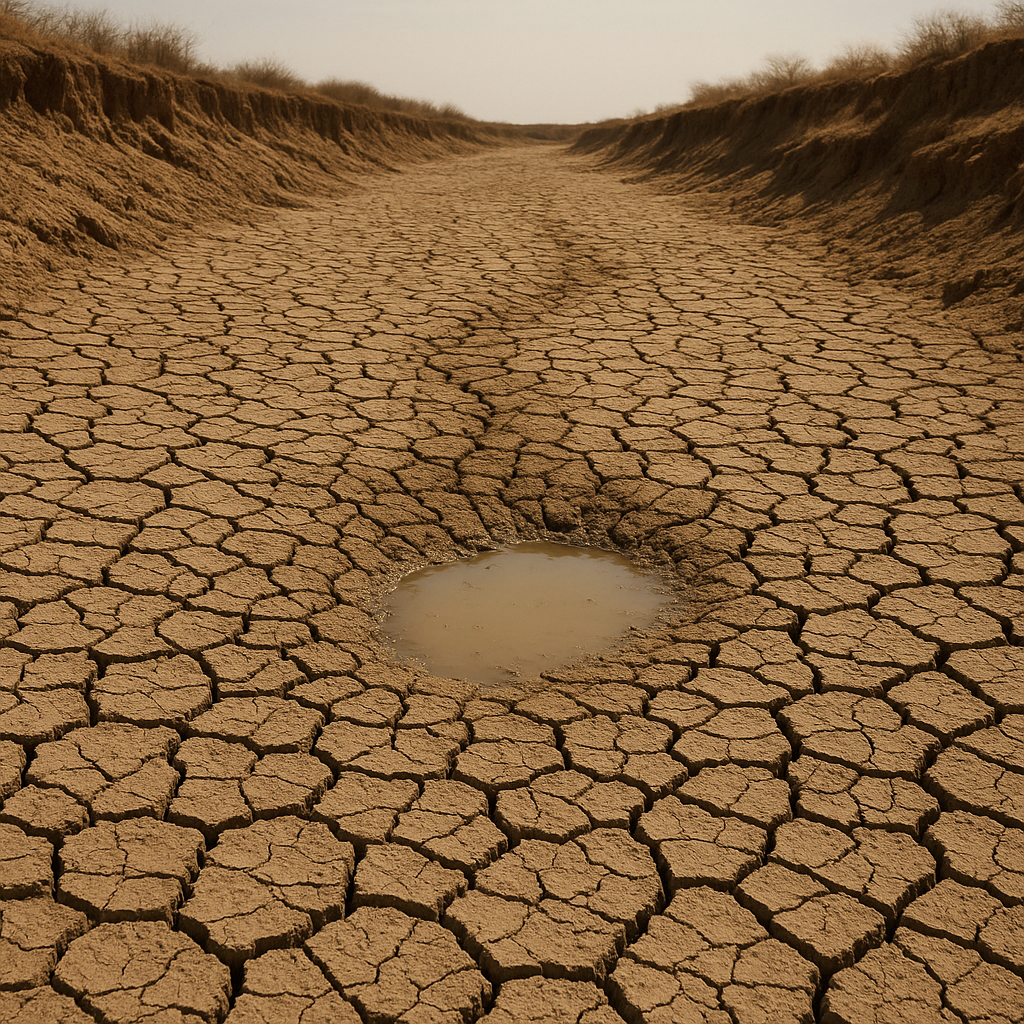
Cape Town's 59% dam level hides a complex water crisis. Leaks, tourism, and skewed consumption drain resources. Infrastructure woes persist, while citizen-led solutions emerge, creating a financial paradox for the city's water future.
Cape Town's dams show 59% full, but this number is tricky. It's not just about how much water there is, but how fast it's being used up. Leaks, tourists, and some people using a lot of water make the city use more than it plans. Even with new water projects, they are slow to start, and there's a big problem: saving water means less money for the city, which makes it harder to pay for new water sources. So, the city is stuck between saving water and making money to fix its water problems.
Why is Cape Town facing water scarcity despite seemingly adequate dam levels?
Cape Town's water scarcity issues stem from several factors beyond dam levels. High consumption by a small percentage of residents, significant water loss due to leaks and tourism, and slow progress on new water projects contribute to the problem. The reported dam percentage doesn't always reflect the true availability or the speed at which water is being used.
Get Cape Town news in your inbox
Stay updated with the latest stories from the Mother City.
The headline number hides a moving target
Cape Town’s dams flash 59 % on the weekly bulletin and the city breathes easy. That rounded digit, however, is the end-of-season balance of six linked reservoirs plumbed like leaky buckets along the same mountain chain. Because the hydrological year starts in November, the February reading arrives eight months into the draw-down cycle. History shows that 59 % in early summer can mean anything from 40 weeks of ordinary supply to a 12-week sprint toward empty taps. The difference is speed, not volume. In 2018 an identical percentage triggered Day Zero hysteria because daily use was 1.2 billion litres; today the bleed is 1.07 billion litres, thanks mainly to the aluminium smelter shutdown at Bokomo that freed 15 million litres a day and the raised Berg River Dam wall that added half-a-billion cubic metres of storage.
Comfort is therefore a function of volume plus velocity. Models kept inside the municipal war-room translate the 59 % into 280 days of cover provided nothing breaks and no heat wave materialises. One extra degree on the thermometer translates into 0.1 % weekly evaporative loss, while every percentage of economic growth nudges demand up 0.3 %. In short, the same ledger can swing from surplus to deficit in the space of a municipal tender protest or a week-long berg wind.
Where one-tenth of the supply simply vanishes
Ask officials why Cape Town is guzzling roughly 100 million litres above its own target and you will get a polite shrug. Disaggregate the overshoot and it dissolves into three silent drains. First, heat-expanded leakage: pipe bursts climb 1.3 % for every degree rise in ambient temperature, but the underground ruptures bloom even faster; since October, night-flow monitors show invisible losses doubling south of the N2. Second, tourism inflation: December-to-February hotel occupancy is up 12 % on 2023, pushing an extra 18 million litres a day through showers, kitchens and golf-course sprinklers. Third, lawn panic: satellite evapotranspiration maps reveal vegetation stress crossing the 0.65 trigger, the point where suburban timers click from once-every-second-day to daily irrigation.
No household willingly labels itself wasteful, yet the city-wide surplus disappears without a single tap left running. Municipal dashboards round to the nearest 25 million litres, so the creep is technically legal until it breaches the next bright-red bracket. By then the water is gone, the invoices posted, and the visitors have flown home.
133 litres per capita that almost no-one actually uses
Divide residential demand by headcount and you get 133 litres per citizen per day, a figure that exists only in spreadsheets. Forty percent of households survive on fewer than 50 litres each, while the top decile consumes more than 500 litres. The statistical ghost masks a lived reality: half the city already beats the conservation target, and the overshoot is concentrated in perhaps 150 000 properties with swimming pools, polo-field-sized lawns or embedded Airbnb enterprises. Heat-map the consumption grid and nodes such as Bishopscourt, Constantia wine estates, Durbanville golf belts and Atlantic-seaboard condos glow like charcoal briquettes.
Median consumption, the point at which half the population uses less and half more, sits at 87 litres. That gap between median and mean is one of the widest in the global water literature, proof that a tiny cohort can hijack an entire system. Targeted pressure-reduction valves in those post-code zones would free 40 million litres a day overnight, but the optics of policing wealthy suburbs makes politicians flinch. Instead, everyone gets higher tariffs, which the heavy users barely notice and the thrifty majority experience as punishment for virtue.
The reuse revolution that cannot find a risk-taker
Cape Town’s 2021 New Water Strategy promised 300 million alternative litres a day by 2030: 150 million from groundwater, 70 million from purified sewage, 50 million from permanent desalination and 30 million from alien-tree clearing. Delivery to date: 35 million litres, all from the emergency desal package hurriedly built at Strandfontein during Day Zero. The rest is mired in tender fallout, appeals and a stand-off over who carries the default risk. Private consortia want guaranteed revenue streams; the municipality wants off-balance-sheet debt; residents want neither higher bills nor murky beaches.
Consider the 70-million-litre reuse pillar. The plan is to upgrade effluent from Zandvliet and Athlans wastewater works to irrigation grade and inject it into the eastern suburbs’ purple-pipe network, freeing an equivalent slug of drinking water. Windhoek has done it for five decades, yet Cape Town’s bid collapsed twice when contractors demanded “take-or-pay” clauses on raw sewage, effectively forcing the city to deliver a fixed daily load even during power cuts or pandemic shutdowns. Meanwhile, the same semi-clean water now cascades into the Atlantic at half the required environmental standard, a perpetual tide of wasted opportunity.
Treatment plants that burp climate bombs
Overflowing sewage works do more than spill nutrients; they vent nitrous oxide, a greenhouse gas 298 times punchier than CO₂. A 2022 CSIR fly-over campaign logged anoxic plumes drifting from Potsdam, Athlone and Zandvliet equivalent to adding 52 000 cars to Western Cape roads. Repair and de-rate those reactors and the city could reclaim 150 million litres of reusable water daily while trimming 3 % off its municipal carbon footprint. The province is legally bound to carbon neutrality by 2050, so the fix is an environmental two-for-one, yet the plants queue for funding behind more photogenic projects.
Desalination, the perennial political talisman, is less energy profligate than folklore suggests. Modern reverse-osmosis modules consume 2.8 kWh per kilolitre; add intake and brine discharge pumps and the total is still below the 3.5 kWh per kilolitre Pretoria spends lifting Vaal water over the Drakensberg. The hurdle is capital: a 150-million-litre-a-day plant costs R8 billion upfront plus R1.2 billion annually for membranes and debt service. Amortised across 20 years and 55 million projected residents, the tariff premium is R1.40 per kilolitre, less than the drought levy scrapped in 2021. National Treasury, however, classes desal as emergency infrastructure, disqualifying it from concessional loans reserved for base-load supply. The city cannot re-label the project without jeopardising its subsidy-dependent bulk-water tariff, so the financiers wait while the ocean keeps pounding the sand.
Tourists, tanks and the next revenue trap
Cape Town markets itself as a water-wise destination, yet imposes no visitor-specific demand code. Lisbon, Barcelona and Maui oblige hotels to irrigate with reclaimed water and to display real-time consumption dashboards. A 2019 proposal for a “green leaf” hospitality certificate was shelved after hoteliers argued it would spook travellers. Consequently, 11 million annual guests soak through 300 litres each per day, the most price-inelastic slice of demand. A 50 % reuse tariff on commercial accounts exceeding 50 kilolitres a month would trim 15 million litres a day, but the item has never reached council agenda for fear of “brand damage.”
Parallel to the stalled megaprojects, a citizen-led water economy thrives. Since 2019, 18 000 households have tucked 5 000-litre “splash” bladders beneath gutters, feeding toilets and washing machines. Another 45 000 geysers now run closed-loop heat exchangers that repurpose greywater for gardens. The unregistered saving is already 25 million litres a day, larger than Phase 1 of the city’s own aquifer scheme. The devices technically breach a 1980s storm-water by-law, yet insurers issue cover and the municipality hands out letters of “no objection.” Legalising the practice through a one-line by-law amendment could unlock supply equal to a R4 billion desal plant without a single tender.
Behind the cheerful public dashboard, Cape Town is sliding into a financial paradox: every litre saved deepens the revenue hole used to justify the next big build. Dam levels will probably trough at 48 % this autumn, high enough to dodge harsh restrictions yet low enough to trigger the new “Level-1-plus” tariff that hikes the fourth-kilolitre tier by 40 %. Higher prices will accelerate private reuse, depress formal demand by another 40 million litres a day and strand the R8 billion desalination plant at 30 % capacity. The next crisis, then, is not a dry dam but a depreciating asset whose finance costs outrun the water-sales income pledged to repay it. Whether the city prices, permits, pipes or prohibits its way out of that spiral will decide the colour of the next headline number residents glance at before watering the petunias.
Why does Cape Town face water scarcity despite dams being 59% full?
Cape Town's 59% dam level is misleading because it doesn't account for the rate of water consumption. Factors like significant water loss from leaks, increased usage due to tourism, and high consumption by a small percentage of residents deplete water faster than planned. Furthermore, new water projects are slow to materialize, and water-saving efforts inadvertently reduce municipal revenue, creating a complex challenge.
How accurately do dam levels reflect Cape Town's water security?
Dam levels provide an end-of-season balance, but they are a 'moving target.' A 59% level in early summer can mean vastly different durations of supply depending on the daily consumption rate. For example, in 2018, the same percentage led to 'Day Zero' fears due to high daily usage, whereas current lower usage provides more days of cover. Factors like evaporation due to heat waves and economic growth also quickly impact the effective supply.
What are the main causes of Cape Town's water overconsumption?
Cape Town's water consumption exceeds targets due to three primary factors: heat-expanded leakage in the pipe network, which causes more pipe bursts and invisible underground losses; increased tourism, with 12% higher hotel occupancy pushing an extra 18 million litres daily through various facilities; and 'lawn panic,' where suburban irrigation increases significantly as vegetation stress levels rise.
Why is the average per capita water consumption figure misleading?
The calculated average of 133 litres per citizen per day is misleading because water consumption is highly unequal. 40% of households use less than 50 litres daily, while the top 10% consume over 500 litres. This means a small cohort of approximately 150,000 properties, often with swimming pools, large lawns, or Airbnb operations, drives the majority of the overshoot, making the average unrepresentative of most citizens' conservation efforts.
What challenges hinder the implementation of Cape Town's New Water Strategy?
The 2021 New Water Strategy, aiming for 300 million alternative litres daily by 2030, is significantly behind schedule, delivering only 35 million litres so far. This delay is due to issues like tender disputes, appeals, and a standoff over risk allocation. Private consortia demand guaranteed revenue, while the municipality seeks off-balance-sheet debt. Projects like purified sewage reuse are stalled as contractors demand 'take-or-pay' clauses, which the city is reluctant to accept.
How does water conservation create a financial paradox for Cape Town?
Every litre of water saved by residents deepens a revenue hole for the city. Water sales generate income used to fund infrastructure and new water projects. When demand falls due to conservation, the city loses revenue, making it harder to pay for vital developments like desalination plants. This paradox means that while conservation is crucial, it can financially destabilize the city, potentially leading to higher tariffs for remaining consumption or underutilized, depreciating assets.

Sarah Kendricks is a Cape Town journalist who covers the city’s vibrant food scene, from township kitchens reinventing heritage dishes to sustainable fine-dining at the foot of Table Mountain. Raised between Bo-Kaap spice stalls and her grandmother’s kitchen in Khayelitsha, she brings a lived intimacy to every story, tracing how a plate of food carries the politics, migrations and memories of the Cape.
View all articles →