
Women’s mortality in South Africa
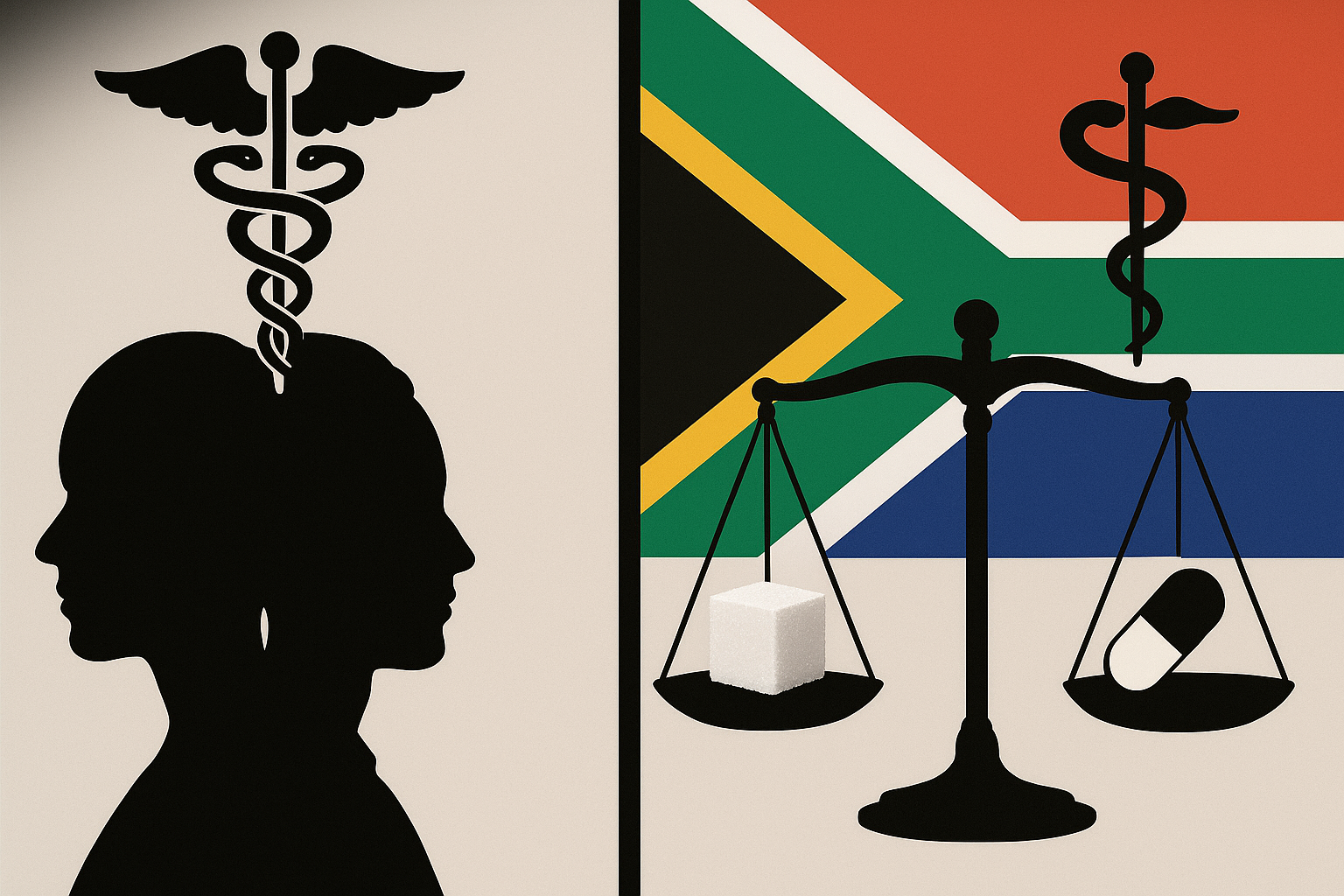
South Africa faces two epidemics: diabetes disproportionately affects women, while TB devastates men, highlighting gendered health disparities.
In South Africa, women often die from diabetes, while men commonly die from tuberculosis (TB). These differences are like two separate, harsh worlds, seen clearly in mortuaries. Women's causes are linked to diet and healthcare access, with many struggling with obesity and poorly managed diabetes. Men's TB deaths are often tied to HIV, mining, and smoking, made worse by clinics that don't suit their needs. Both diseases steal lives too early, impacting families and the country, and show how deeply gender affects health in South Africa.
What are the leading causes of death by gender in South Africa?
In South Africa, women predominantly die from diabetes, accounting for one in every 13 female deaths. Men primarily succumb to tuberculosis (TB), claiming one in every 20 male deaths. These conditions reflect a stark gender divide in mortality patterns, often linked to lifestyle, socioeconomic factors, and healthcare access.
Get Cape Town news in your inbox
Stay updated with the latest stories from the Mother City.
The Refrigerated Divide: Monday Morning in the Mortuary
By 9 a.m. the stainless-steel drawers in state mortuaries already tell a grim story. On the left row the tags read “hyperglycaemic coma” or “hypertensive heart failure”; on the right the labels say “pulmonary TB” or “TB meningitis.” The corpses are separated by mere metres, yet they inhabit two hostile biological worlds. Stats SA’s 2023 mortality file translates the visual into numbers: diabetes ended 16 711 women’s lives last year, tuberculosis stopped 13 030 men. In proportional language, one in every 13 female deaths is fuelled by unchecked blood sugar, while one in every 20 male deaths is claimed by the ancient bacillus.
Neither condition is destiny. Insulin resistance can be postponed with food swaps and brisk walks; TB can be cured in six months with the right tablets. Still, South Africa keeps bleeding citizens along a stark gender frontier: slow metabolic suffocation for women, rapid respiratory collapse for men.
The split is so reliable that pathologists use it as an informal guessing game before they open the body bag. They are right more often than not.
The Female Metabolic Storm: From Shopping Basket to Epigenetics
Cheap Calories, Costly Consequences
South African women are now the most obese on the continent. The latest SANHANES update shows 55 % of those aged 45-54 have a body-mass index above 30, up from 41 % barely six years ago. Visceral fat pours free fatty acids into liver and muscle, exhausting pancreatic β-cells until insulin production collapses.
Township foodscapes make escape unlikely. In most spaza shops a 1.5-litre fizzy drink costs less than a loose orange. Women make four out of five household food decisions, yet their choices are cornered by scant refrigeration, volatile prices and specials on refined carbs.
Gestational diabetes turbocharges the crisis. Antenatal registers in parts of Durban and Johannesburg show one in four pregnant women develop the condition - triple the global median. Each affected pregnancy doubles the mother’s lifetime diabetes risk and rewires the unborn child’s leptin gene for future weight gain.
Clinic Bottlenecks Beyond the Policy Wish-List
Government targets want 90 % of adults screened, 60 % of positives diagnosed and half of those in good control. Reality in 2023: 64 % screened, 48 % diagnosed, a meagre 19 % controlled. Medication stock-outs, four-hour queues and heat-damaged glucometer strips chew up the rest.
Older women endure the lines because blurred vision or numb feet force them back; younger asymptomatic patients melt away, resurfacing a decade later in hyperosmolar crisis. The health system thus favours the already sick, turning prevention rhetoric into empty noise.
The Male TB Reservoir: Dust, Smoke and Avoidance
Late Presentation, Early Death
More than three-quarters of the 13 030 men who died carried HIV, yet fewer than half had started antiretrovirals. Their median CD4 count at death - 86 cells/µL - screams “tested too late.” The classic cascade is now folklore: three-week cough, corner-shop antibiotics, blood-stained sputum, GeneXpert queue, “error-no result,” repeat trip, drug resistance, referral, death - after infecting a dozen loved ones.
Former gold miners compound the toll. Roughly 400 000 ex-employees walk around with silica-scarred lungs that triple TB risk. Rural districts of the Eastern Cape and KwaZulu-Natal house 18 % of the national population yet claimed 28 % of male TB deaths in 2023, largely because miners retire back to villages where no nurse asks about rock dust.
Cigarettes pour fuel on the fire. One in three men smokes; tobacco doubles the chance that latent infection blooms into active disease. For miners with pre-existing lung damage the hazard ratio nears four, cheaper to fix with cessation counselling than with more cartridges.
Clinic Designs That Repel Men
Focus groups in Soweto and Khayelitsha echo the same barriers: clinics open after the taxi rank wakes up, shut before it winds down, and gossip exposes HIV status. Pilot vans that park outside taxi hubs between 4 p.m. and 8 p.m. find 38 % more cases, yet only two provinces bothered to roll them out.
Age, Provinces and Money: The Secondary Fault-Lines
A 29-Year Gap in Life-Cut-Short
Women succumb to diabetes at a median 68 years; men collapse with TB at 39. In the 15-44 band TB alone erases 7.5 % of all male deaths, yanking breadwinners out of the labour force while the state later bankrolls granny’s dialysis. Economists call it the “double tax”: lose productive years early, pay chronic bills late.
Geography sharpens the pain. KwaZulu-Natal’s Umgungundlovu and eThekwini report female diabetes mortality above 120 per 100 000 - double the national average - after district dietitians emigrated. OR Tambo and John Taolo Gaetsewe show male TB death rates of 180 per 100 000, triple the World Bank “high-burden” threshold, yet ART pick-up points sit 60 km from homesteads.
Treasury spends 8.1 % of the health purse on non-communicable diseases and 3.4 % on TB, although TB out-kills every male NCD under age 45. A modest R 1.2 billion shuffle - 0.3 % of the annual health budget - would bankroll triennial HbA1c screening for women over 30 and 200 mobile X-ray vans for men, models calculate.
Overlap, Blind-Spots and Ethical Crossroads
When Diabetes Meets TB
Diabetes triples the risk of developing TB and hikes death odds by half. In Cape Town’s Tygerberg cohort, 18 % of TB patients aged 35-60 already had full-blown diabetes. Shared clinics offering both TB drugs and metformin slashed two-year mortality from 22 % to 11 %, yet only three of 52 TB hospitals routinely screen for hyperglycaemia.
Data fog hides the real contours. One in seven 2023 death certificates was coded “ill-defined”; rural districts reached one in four. Verbal autopsies think female diabetes deaths are 18 % higher and male TB deaths 12 % lower than the spreadsheets say - evidence that the chasm could be wider.
Race, class and migration intersect brutally. Black African women top the diabetes chart at 130 per 100 000; white men sit at 4 per 100 000 for TB. Undocumented migrant women can get free TB pills yet must pay R 280 monthly for private-sector glibenclamide because chronic pick-up points demand a local ID number. The looming National Health Insurance Bill promises “equal access” but stays mute on gender-specific benefits; lawyers are already sharpening test cases.
Innovations, Climate and Policy Tables
Pilots That Work - But Need Scale
Drones ferry sputum from mountaintop clinics to GeneXpert hubs in 36 hours instead of 12 days. Bluetooth glucometers in Soweto alert nurses when fasting glucose breaches 15 mmol/L, boosting retention by 27 %. A soccer-screening tavern clinic in Durban signed up 1 100 men in six months; 92 % came back for follow-up sputum while half-time played on flat-screens.
Tomorrow’s hardware looks promising. Continuous glucose monitors priced under US $2 a week trimmed HbA1c by 0.9 % in Soweto women. CRISPR-based TB resistance tests promise 15-minute turnaround; a thermostable vaccine slashed incident disease by 49 % in trials - South Africa supplied half the volunteers yet owns no procurement line.
Climate change darkens every forecast. Each degree above 30 °C raises insulin demand 5–10 %; drought-driven migration packs miners into overcrowded shacks perfect for TB spread. Modellers predict an extra 7 % female diabetes death and 10 % male TB death by 2050 if adaptation stays flat.
The draft “Gender-Responsive Health Implementation Plan” that has been gathering dust since March 2024 proposes sex-disaggregated targets, automatic dietitian referral for any woman with a waist above 88 cm, an occupational-history field in the TB register, a 20 % sugar-tax hike for a Women’s Diabetes Fund and 24-hour men’s health rooms at every national TB hospital. Price tag: R 3.4 billion over three years - 0.6 % of the health budget - still too heavy for Treasury’s red pen. Until the cheque is signed, South Africa will keep opening mortuary drawers on Monday mornings to find the same two epidemics - one sweet, one consumptive - carved starkly along gender lines.
[{"question": "What are the primary causes of death for women and men in South Africa?", "answer": "In South Africa, women predominantly die from diabetes, accounting for one in every 13 female deaths. Men primarily succumb to tuberculosis (TB), claiming one in every 20 male deaths. These conditions reflect a stark gender divide in mortality patterns, often linked to lifestyle, socioeconomic factors, and healthcare access."}, {"question": "What factors contribute to the high rates of diabetes among South African women?", "answer": "Several factors contribute to high diabetes rates in South African women. High obesity rates (55% of women aged 45-54 have a BMI over 30) are linked to readily available and inexpensive unhealthy foods, making healthy dietary choices difficult. Gestational diabetes, affecting one in four pregnant women in some areas, significantly increases lifetime diabetes risk for mothers and can predispose children to weight gain. Additionally, healthcare system challenges like medication stock-outs, long queues, and poor control rates (only 19% of diagnosed individuals are well-controlled) hinder effective management and prevention."}, {"question": "Why is tuberculosis so prevalent and deadly among South African men?", "answer": "Tuberculosis is particularly deadly for South African men due to several interconnected issues. A significant number of deaths are linked to undiagnosed or late-treated HIV, with many men presenting too late for effective antiretroviral therapy. Former gold miners are at high risk due to silica-scarred lungs, tripling their TB susceptibility. Smoking, prevalent in one in three men, also doubles the chance of active TB. Furthermore, clinic hours often don't accommodate men's work schedules, and fears of privacy or judgment lead to late presentation and treatment."}, {"question": "How do age and geography influence these mortality patterns?", "answer": "There's a significant age gap: women typically die from diabetes at a median age of 68, while men succumb to TB at a median age of 39. This means men are lost during their most productive years. Geographically, some areas like KwaZulu-Natal's Umgungundlovu and eThekwini show double the national average for female diabetes mortality, partly due to a lack of dietitians. Similarly, districts like OR Tambo and John Taolo Gaetsewe have male TB death rates triple the World Bank's 'high-burden' threshold, exacerbated by limited access to treatment pick-up points."}, {"question": "Are there any overlaps or blind spots in how these diseases are addressed?", "answer": "Yes, there's a significant overlap where diabetes triples the risk of developing TB and increases mortality by half. Despite this, only three of 52 TB hospitals routinely screen for hyperglycaemia. Data fog is also a major issue, with many death certificates coded as 'ill-defined,' potentially underreporting the true extent of these epidemics. Disparities based on race, class, and migration status further complicate matters, with Black African women facing the highest diabetes mortality rates and undocumented migrants often struggling to access necessary medication despite policies for free TB treatment."}, {"question": "What innovative solutions or policy changes are being considered to address these issues?", "answer": "Various innovations show promise, such as drones for sputum transport, Bluetooth glucometers to improve diabetes management, and 'soccer-screening' tavern clinics that effectively engage men for TB testing. Future hardware like continuous glucose monitors and rapid CRISPR-based TB tests could revolutionize care. A draft 'Gender-Responsive Health Implementation Plan' proposes sex-disaggregated targets, automatic dietitian referrals for women with high waistlines, occupational history fields in TB registers, a sugar tax for a Women's Diabetes Fund, and 24-hour men's health rooms at TB hospitals. However, this plan, costing R 3.4 billion over three years, awaits funding.", "additional_information": "The information provided highlights a critical public health crisis in South Africa, where gender significantly shapes health outcomes. The 'Gender-Responsive Health Implementation Plan' is a crucial step towards addressing these disparities, but its implementation hinges on political will and financial commitment. The economic impact of these early deaths, particularly among men, is substantial, creating a 'double tax' on the nation. Climate change is also projected to worsen both conditions, emphasizing the need for urgent and comprehensive interventions."}]

Hannah Kriel is a Cape Town-born journalist who chronicles the city’s evolving food scene—from Bo-Kaap spice routes to Constantia vineyards—for local and international outlets. When she’s not interviewing chefs or tracking the harvest on her grandparents’ Stellenbosch farm, you’ll find her surfing the Atlantic breaks she first rode as a schoolgirl.
View all articles →