
14-year-old son of Cape Town TV presenter allegedly takes his own life
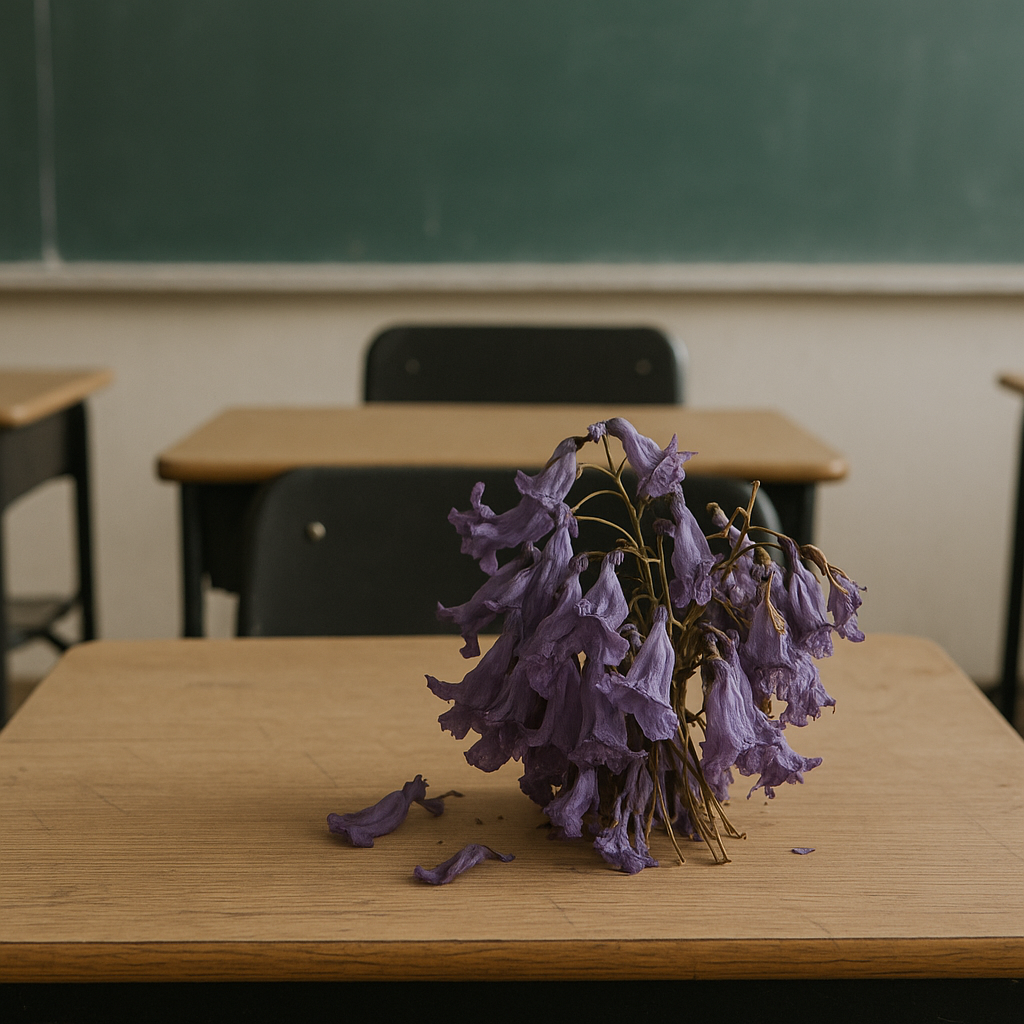
Durbanville is rocked by the death of 14-year-old Zac Barends, sparking community grief, school reform, and a national mental health debate.
The town of Durbanville is rocked by the sudden death of 14-year-old Zac Barends, a vibrant Grade 9 student whose laugh was legendary. His passing sparked deep grief and forced everyone to look hard at youth mental health and the stress kids face. From school crying rooms to community-led support, Durbanville is trying to heal and make sure no other child feels alone. They are finding new ways to listen and care, hoping to build a kinder future for their young people.
What happened in Durbanville on March 12, 2026?
On March 12, 2026, Durbanville was deeply affected by the sudden death of Zac Barends, a 14-year-old Grade 9 student. His passing led to an outpouring of grief, community initiatives, and a collective re-evaluation of youth mental health and academic pressures in the affluent suburb.
Get Cape Town news in your inbox
Stay updated with the latest stories from the Mother City.
1. A Purple Morning That Broke the Suburban Spell
The jacarandas along Durbanville’s avenues were only halfway through their annual shrug toward winter when 12 March 2026 cracked open like a faulty school bell. Winter’s first drizzle whispered through the Tygerberg pines, yet no one noticed the weather. Every phone screen, every classroom corridor at Hoërskool Stellenberg, every kitchen table buzzed with the same sentence: Zac Barends - fourteen, Grade 9, owner of a laugh classmates swear “started in his toes and ricocheted off the clouds” - had slipped beyond reach overnight. His bedroom alarm shrieked unanswered; paramedics arrived to a house already folded into silence. By breakfast, the intersection of Langeberg and Oxford Streets had become an impromptu shrine of parked cars and disbelief.
Isabel Barends, the brisk yet affable face of VIA’s property show My plek of joune, cracked the front door only long enough to whisper, “He left no clue. Not one.” Camera crews withdrew - an unheard-of courtesy from Cape Town’s usually ravenous lens pack - proof of how thoroughly the news gut-punched even the most hardened journos. Into that respectful vacuum rushed timelines of remembrance: hockey-field selfies, cricket-pitch banter, voice-notes replayed until batteries sobbed. Anonymous fingers pointed, debated, pleaded: had the modern classroom become a blast furnace for teenage souls? The suburb’s neatly trimmed hedges suddenly looked like stage props in a drama no one had auditioned for.
Wednesday’s assembly began with the anthem and ended in a collective gasp. Principal Peet de Jager climbed the wooden stage, flanked by counsellors, and released two sentences that felt like stones dropped into a still pond: “We bid Zac Barends goodbye today. Words are few, tears are many.” Maths staff abandoned analytical geometry; instead they opened “crying rooms” where 1,200 adolescents wept in chorus. A teacher later said the combined sound resembled “a hive mourning its queen.” Sports fixtures evaporated; the rugby captain asked to open the season in white armbands - request granted before the echo died.
2. Paper Planes, Psychology Pods and a Google Doc That Crashed
Gene Louw Primary, Zac’s alma mater, beat the education department to the punch. Their trauma unit rolled up to Stellenberg within hours, commandeering the pepper-bean shade for “memory circles.” Kids scribbled condolences on plantable paper, folded them into planes, and sailed messages toward the rugby posts until the goal area looked snowed under by albino butterflies. Narrative-therapy tricks borrowed from the 2018 Spier youth-suicide cluster proved instantly deployable; grown-ups simply had to keep the ink flowing.
Across town, the Facebook group “Durbanville & Surroundings – Let’s Talk” froze its usual crime alerts and birthed thread #Zac. Six hours later 3,400 comments stacked up: casserole schedules, babysitting rosters, free therapy vouchers, and - unexpectedly - demands for later bell times and lighter backpacks. A matric learner named Aimee launched a Google Doc bluntly titled “We are not OK.” Anonymous northern-suburb pupils pasted in capital-letter confessions, rage and fear in equal measure. Midnight saw 1,800 entries; moderators fought to strip teachers’ names before the file imploded - twice. The data crash felt emblematic: a community shouting into a shared drive because real life had run out of space.
Stellenberg’s governing body cancelled sport, but it could not cancel the academic treadmill. WCED spokesperson Bronagh Hammond reminded parents that 38 % of Grade 8–10 pupils in well-heeled quintile-5 schools already tick “high to very high” on stress inventories, yet barely one in ten ever sees a counsellor. Two extra psychologists were promised for the district - welcome, except the old waiting list already snaked fourteen weeks long. The stat became a rallying cry: if help arrives only after the storm, is it help or history?
3. From Feather Market to Policy Papers - A Town Re-engineers Compassion
Private psychologist Dr. Nizaam Hartley flung open his Bellville rooms after dusk, offering half-hour “stabilisation chats” gratis. He calls the queue “an avalanche of high-vis kids” - colours holders, A-average faces - who confess existential vertigo. Their vocabulary centres on burnout, but the subtext is identity: “If my average drops, do I still count?” Hartley is compiling anonymous quotes for provincial parliament; one already inked reads: “We aren’t helicoptered - we’re droned, surveilled and corrected in real time.” The line travelled WhatsApp like wildfire, sealing itself into local legend.
Down the road, SADAG repurposed two shipping containers behind Tyger Valley library as “teen pods.” Beanbags, noise-cancelling headsets, and peer counsellors await anyone older than fourteen - parental permission optional, privacy guaranteed. Calls from the 7550 prefix spiked eight-fold; Afrikaans-speaking counsellor Riana Stander says most kids ask, “How do I tell Mom I’m not fine without starting war?” The containers, once destined for cheap storage, now store fragile hope instead.
Even commerce bent the knee. Village Square Pick n Pay relocated razor blades and certain OTC meds behind the pharmacy counter; explanatory signs appeared overnight. Woolworths slid pocket editions of The Velveteen Rabbit between the energy bars - bibliotherapists applaud the choice for bypassing teen cynicism. Durbanville Wine Valley estates received briefings on spotting distress during school tasting tours. The market, usually tone-deaf to sorrow, learned new choreography within forty-eight hours.
Religious anchors recalibrated too. Logos Christian Church dominee Hendrik van der Merwe deleted “suicide” from his sermon template, opting for “sudden death” until pathology reports speak. Youth band scrapped the hymn Skep in my ’n skoon hart - its self-blame lyrics deemed risky - and rehearsed Foo Fighters’ Times Like These. Conservative eyebrows shot up, but teen leadership council outvoted them: faith must meet feeling where it stands. On street level, white ribbons bloomed on the Barends palisade; drivers slow to 30 km/h at 15h30, forming an unchoreographed honour guard. One pavement now insists, in aerosol zen, “You matter” - graffiti the sanitation crew mysteriously “forgets” to scrub.
4. Balloons, Cranes and a Future Still Loading
Stellenberg’s inter-house athletics meet will proceed on 20 March, but starter’s gun will follow sixty seconds of silence and fourteen purple balloons - Zac’s chosen hue. The art foyer is birthing 1,000 beetroot-dyed cranes folded from photocopied maths worksheets, unintentionally shading from baby-pink to wound-red - what teacher Mari Venter calls “the visible gradient of grief.” Ritual meets routine because teenagers crave both: a lap lane back to normalcy dotted with unmistakable punctuation marks.
Forecasters warn of an Atlantic cold front the night of the memorial, promising rain that scrubs clean by Wednesday. Some clergy see providence; grade-nine Twitter calls it cliché. Regardless, Logos’ corrugated roof will shelter LED candles bought bulk from China Mall, and a YouTube live-stream (comments disabled) will beam the farewell beyond the valley. The URL has already been opened, closed, forwarded, bookmarked - 4,700 times and climbing - because screens are the new stained glass.
Counsellors whisper the real aftershock lands in three to six weeks, when flowers wilt and cameras migrate. To pre-empt the vacuum, matrics are building “Zac’s List,” volunteering weekly check-ins at primary schools, copying Australia’s Big Buddies model. SADAG training slots filled in hours; clearly yesterday’s kids are tired of waiting for adults to design tomorrow. Meanwhile, Dr. Terblanche at UTC reminds the country that “affluent anomie” is not a Durbanville monopoly but a Gini-coiled national knot. Stories of “advantaged despair” feel illegitimate until we decide pain is not a competition.
No policy, balloon, or beetroot crane can replace a fourteen-year-old laugh that began in his shoes. Yet the town keeps inventing small answers to an unanswerable loss: later bells, listening pods, cranes dipped in kitchen dye, speed-bump vigils. In that fragile layering, Durbanville hopes to re-negotiate the contract it writes with its young - one ribbon, one shared playlist, one 30 km/h crawl past a gate that will never again open to Zac Barends, but might, one day, open wider to every kid still searching for permission to say, “I’m not OK.”
[{"question": "
What tragic event occurred in Durbanville?
\nDurbanville experienced the sudden and deeply saddening death of 14-year-old Zac Barends, a Grade 9 student whose vibrant laugh was well-known throughout the community. His passing has profoundly impacted the town, prompting a re-evaluation of youth mental health and the pressures young people face.
\n","answer": null},{"question": "How did the community react to Zac Barends' death?
\nThe community reacted with deep grief and a collective effort to support one another. Schools implemented 'crying rooms' for students, and community-led initiatives, such as the Facebook group 'Durbanville & Surroundings – Let’s Talk,' quickly formed to offer support, therapy vouchers, and advocate for changes like later school bell times. There was an outpouring of tributes, including a Google Doc where students shared their feelings anonymously, and informal memorials across the town.
\n","answer": null},{"question": "What steps are being taken to address youth mental health in Durbanville?
\nDurbanville is implementing various measures to support youth mental health. These include 'crying rooms' at schools, trauma units from primary schools assisting high school students, and private psychologists offering free 'stabilisation chats.' SADAG repurposed shipping containers into 'teen pods' for confidential peer counseling, and even local businesses adjusted their practices to be more supportive. There's also a push for more psychologists in the district and a 'Zac’s List' initiative where older students will mentor primary school children.
\n","answer": null},{"question": "What specific changes have schools implemented or are considering?
\nSchools, particularly Hoërskool Stellenberg, immediately opened 'crying rooms' for students and cancelled sports fixtures to allow for grieving. There's a strong community demand for later school bell times and lighter academic workloads to reduce stress on students. Gene Louw Primary's trauma unit assisted Stellenberg, demonstrating inter-school cooperation, and there's an ongoing discussion about the academic pressures faced by students in affluent schools.
\n","answer": null},{"question": "How are businesses and local organizations contributing to the healing process?
\nLocal businesses and organizations have shown remarkable sensitivity. Village Square Pick n Pay relocated certain items like razor blades, and Woolworths started stocking comforting books. Durbanville Wine Valley estates received briefings on how to spot distress in young people. Religious institutions also adapted, changing sermon content and music to be more supportive and less judgmental, and even repurposing spaces like the SADAG shipping containers for youth support.
\n","answer": null},{"question": "What is the long-term goal for Durbanville in the wake of this tragedy?
\nThe long-term goal for Durbanville is to ensure that no other child feels alone and to build a kinder future for its young people. This involves finding new ways to listen and care, re-evaluating academic pressures, increasing access to mental health support, and fostering a community where young individuals feel comfortable expressing when they are 'not OK.' The town aims to create a more compassionate and understanding environment, learning from this tragic loss to better support its youth.
\n","answer": null}]
Oliver Daniels is a Cape Town journalist who chronicles the intersection of food, migration and identity in South Africa's kitchens—from wood-fired Gugulethu braai spots to Constantia vineyards. Born and raised on the slopes of Devil’s Peak, he still starts each week with a dawn walk across Table Mountain to catch the first Atlantic light before filing copy.
View all articles →