
3 dead in suspected hantavirus outbreak on cruise ship en route to Cape Verde
A rare hantavirus outbreak on a cruise ship. Learn about the MV Hondius incident, the virus's science, and quarantine at sea.
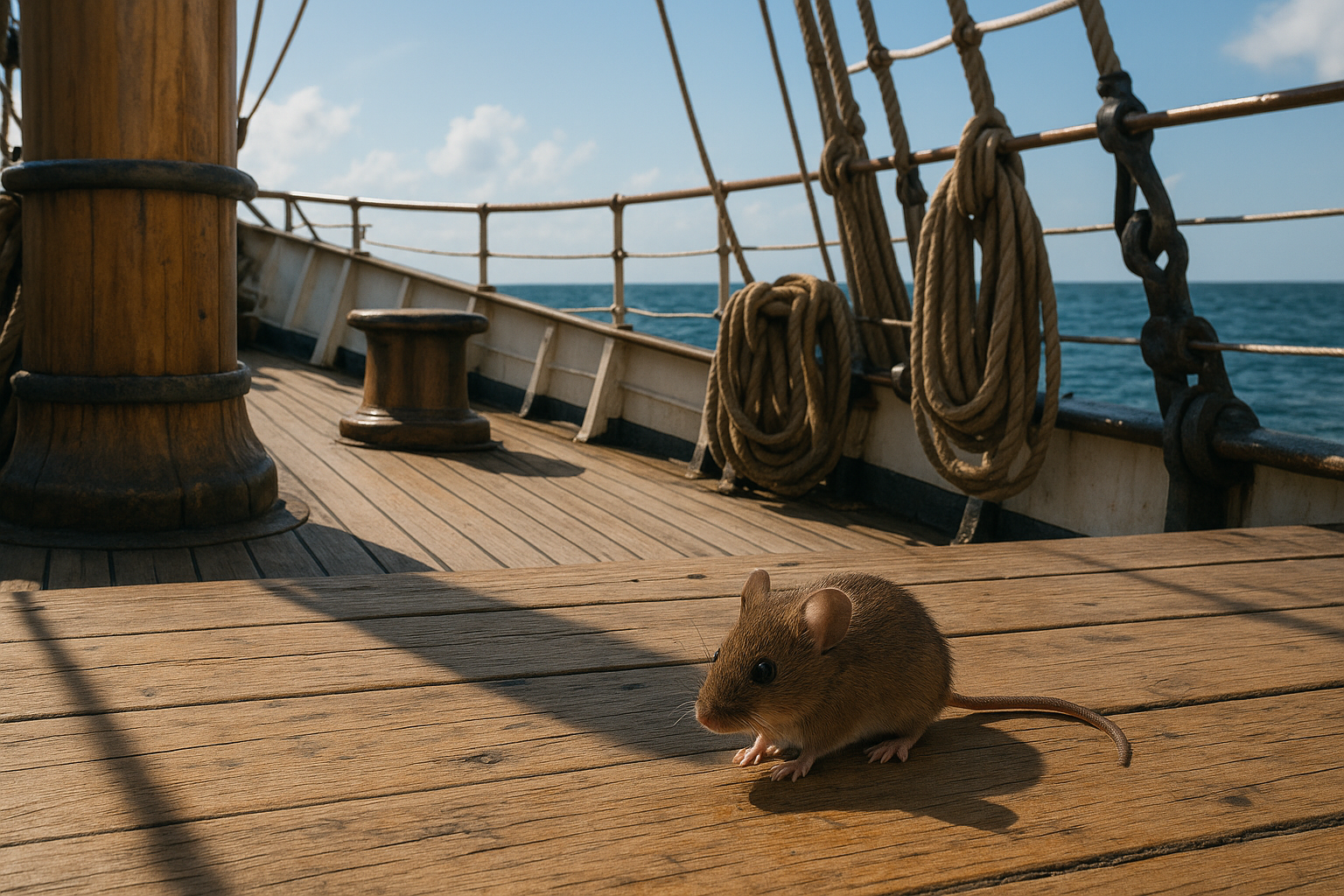
A fancy cruise to the Atlantic turned into a nightmare when a hantavirus outbreak struck, killing passengers. The virus came from infected mice that sneaked onto the ship from flood-hit Argentina. These tiny rodents, hidden in camping gear, spread the deadly virus through the ship's air, turning a dream trip into a medical emergency.
What caused the hantavirus outbreak on the cruise ship?
The hantavirus outbreak on the Atlantic odyssey cruise ship was caused by infected rodents, specifically Calomys laucha, that likely boarded the vessel via contaminated food palettes from a flood-hit Argentine depot. The stressed mice, possibly nesting in rental camping gear, escaped once at sea and spread viral particles through the ship's air ducts, leading to human infections.
Get Cape Town news in your inbox
Stay updated with the latest stories from the Mother City.
1. From Antarctic Splendour to Mid-Ocean Emergency
The first whiff of trouble rose when the 107-metre Polar Class 6 vessel slipped her lines in Ushuaia on 25 April. What should have been a routine repositioning cruise - Antarctica’s winter draws few tourists - morphed into a medical thriller. Eighty-two travellers and sixty-eight seafarers set course for the distant Cape Verde archipelago, lured by unusually spacious cabins and the promise of inflatable-boat outings in calm Atlantic swells.
Everything changed on 3 May. A 70-year-old Swiss man was found lifeless after a day-and-a-half of spiking fever and breathless nights. Five days later a medevac helicopter lifted his widow toward Johannesburg; she too ultimately died. A third victim, a 62-year-old German naturalist who had led bird-watching sessions, succumbed on 12 May. At least five more passengers remain symptomatic - two of them fighting for their lives in intensive-care units on Santiago Island.
On 11 May, Cape Verde’s National Institute of Public Health confirmed the culprit: Sin Nombre hantavirus. Gene sleuths at South Africa’s NICD are now racing to learn whether this sample matches the notorious Andes lineage - until now never detected beyond the Americas.
2. How Rodents Sneaked Aboard a Floating Hospital
Hantaviruses rely on rodents, not people, as their permanent address. Humans inhale the virus when mouse droppings, urine or saliva become airborne in confined, poorly ventilated spaces - think silos or remote cabins. Cruise ships are the opposite: hospital-grade filtration, bleach-clean corridors, daily audits. Yet accidents have long fuses.
After her Antarctic season, the Hondius lingered first in Montevideo and then in Buenos Aires to reload fresh stores. On 20 April two refrigerated palettes of frozen fruit and two sealed containers of rental camping gear rolled aboard. Argentine investigators now link those palettes to a flood-hit Ezeiza cold-storage depot where rodent sightings surged in March. Insurer data reveal grainy night-vision footage showing mice scurrying along Deck 3’s starboard passage directly above the stowage hold.
The working theory: stressed mice, possibly infected, nestled among the rolled tents before pallets were fumigated. Once the ship sailed south into warmer latitudes, the animals escaped, excreted viral particles, and contaminated air ducts that serve nearby cabins.
3. Twenty-Four Hours to Acute Respiratory Distress
Day One – Flu or Foreshadow?
At 06:15 on 2 May the Swiss passenger knocked at the infirmary door with “terrible sea-flu”: fever 38.9 °C, body aches, slight shortness of breath. Oxygen saturation at 94 % on room air seemed adequate. The doctor isolated him immediately and started oseltamivir as a broad-coverage antiviral precaution.
Day One – Rapid Collapse
By twilight the same day, the patient’s breathing had doubled to 32 shallow gasps per minute. A portable chest X-ray beamed to a tele-radiology hub in Lisbon revealed the tell-tale interstitial pulmonary oedema of hantavirus cardiopulmonary syndrome. Despite high-flow oxygen and intravenous dobutamine, he died at 03:40.
Incubation Echo
Five days later his wife entered the ship’s tiny ICU with identical symptoms. The incubation gap matches household secondary transmission first noted during the 1996 Andes outbreak but still regarded as uncommon.
4. Pinprick Diagnostics Amid Atlantic Waves
A palm-sized Abbott ID NOW machine on board can flag influenza or COVID in minutes, yet hantavirus demanded more elaborate assays. After docking at Porto Grande on São Vicente, samples embarked on a relay: coast-guard Dornier to Dakar, commercial cold-box to Johannesburg’s NICD. First molecular sketches already display 97 % similarity to the Andes Nort-Centre strain - famous for human-to-human spread. Confirmation would mark the lineage’s first Atlantic crossing.
5. Red Zones, Blue Zones and Cabin-Side Chemistry
Transforming a boutique polar cruiser into an ad-hoc containment ward required improvisation:
- Red Zone: Deck 5 forward, cabins 501-510 sealed, air vents closed, sewage routed directly overboard.
- Traffic Flow: Tyvek-clad stewards created a one-way circuit - clean corridor → suit-up alcove → patient alley → decon shower → waste hold - limiting cross-traffic.
- Housekeeping : FFP2 masks on every balcony; disposable plates in the dining room; seawater mist twice a day to settle any drifting aerosols.
The greatest logistic nuisance was human waste. Cape Verde forbids discharge within 12 nautical miles; vacuum tanks ballooned to 92 % full before a shore-side tanker jury-rigged a custom flange.
6. Medical Evacuation: A €340,000 Trans-African Gamble
Two of the sickest passengers - both German, both with PaO₂/FiO₂ ratios below 70 - needed extracorporeal membrane oxygenation. Lisbon (3,100 km) turned them away, citing limited infectious-disease air-crew training. South Africa eventually accepted the risk, but only if the pair travelled in Trexler isolators and touched down on a remote apron. A Learjet whisked them 5,800 km to Johannesburg; one survived, the other succumbed 36 hours later.
7. Rodents, Reservoirs and Rising Seas
Maritime health officers have long fretted about “Trojan” rats. Argentina’s national surveillance programme detected a 30 % surge of hantavirus-seropositive mice after 2023 El Niño floods; DNA bar-coding confirms the ship-captured mice were Calomys laucha, a species that flourishes in grain depots. Investigators hypothesize that adult rodents, distressed during onshore fumigation, shed higher viral loads - turning a single contamination event into a superspreader scenario.
8. Smartphones, Seat Maps and the Digital Contact Trail
GOARN epidemiologists compiled a 150-person line-list bursting with frequent-flyer data and Bluetooth handshakes from the ship’s app. Kernel-density mapping pinpoints the riskiest zone to a 12-metre radius beside the starboard gear-storage hatch - an elegant endorsement of aerosol over fomite transmission.
9. Crew Immunity Puzzle: Past Exposure or Lucky Break?
Of 68 crew members, none fell ill. Rapid serology on 30 volunteers uncovered only one boatswain with Sin Nombre IgG, tracing back to rural Chile rather than the current episode. The absence of fresh infections hints at either sub-infectious exposure levels or cross-protective immunity - a conundrum Cape Verde hopes to explore with peptide micro-arrays.
10. Flags, Courts and Insurance Chessboards
The Hondius sails under Dutch registry; her operator, Oceanwide Expeditions, resides in Vlissingen. Deaths occurred in international waters; passengers were disembarked in an ECOWAS port; one fatality happened in South Africa. Maritime lawyers anticipate a “mosaic” of jurisdictions: emotional-distress suits in the Netherlands under EU Package Travel rules, wrongful-death claims in Germany and Switzerland under consumer statutes. Oceanwide’s Swedish Club P&I policy has already activated a dedicated hantavirus claims cell.
11. Stock Slump: When Niche Cruising Meets Niche Pathogens
Polar expedition cruising was clawing back from COVID-19’s abyss, selling “wide horizons, no crowds.” News of the outbreak shaved 6–9 % off shares of Lindblad, HX and Viking. Analysts caution that boutique operators lack the balance-sheet bulk of mega-lines to swallow charter cancellations. Oceanwide postponed Hondius’s next two Arctic voyages; 480 passengers get 120 % future-cruise credits - a liquidity squeeze estimated at €8 million.
12. Asian Ports on Alert
The same Buenos Aires vendor supplies fruit to Singapore and Yokohama. Singapore’s AVA has quarantined the MS Seaventure and MS Hamburg for heightened rodent patrols; Tokyo’s National Institute of Infectious Diseases is deploying sticky-trap sentinel stations. Should Andes virus plant a foothold in Asian ports, the striped field mouse - East Asia’s dominant hantavirus vector - could open a Pandora’s box of reassortment events.
13. CRISPR in a Lunchbox
Conventional RT-PCR demands refrigerated reagents and bulky thermocyclers. Researchers at Dakar’s Institut Pasteur are trialling a saliva-based CRISPR-Cas13 kit that glows bright after 35 minutes at body temperature. The pocket-sized 400 g device powered by a USB power bank yielded 94 % concordance with NICD’s gold-standard PCR. Imagine future ship clinics stocking “hanta-sticks” next to COVID antigen cassettes.
14. Vaccines on the Horizon
No hantavirus vaccine is commercially available, but Chile’s Public Health Institute has a live-recombinant Andes-vaccinia hybrid in Phase II. Meanwhile, the U.S. Army has shifted to an mRNA platform encoding the nucleocapsid and glycoprotein precursor - mice survive lethal challenge 90 % of the time. Oceanwide’s underwriters have quietly approached USAMRIID about compassionate-use access if the crew seroconverts.
15. Passengers in Limbo: Miles, Memories and Mental Scars
Fifty-four of the 82 passengers have boarded embassy-chartered flights home. Many describe night terrors triggered by corridor sirens. Germany’s ADAC air-ambulance dispatched a three-person psychosocial team for eye-movement desensitisation sessions in a Praia hotel. Health psychologists foresee 15–20 % of travellers developing travel-related PTSD - an emerging front for insurance bean-counters.
16. Rodent Alerts Across Maritime History
- 1974: A New Orleans-to-Hamburg freighter suffered leptospirosis traced to rat-infested bilge water.
- 1998: Six murine typhus cases aboard a Mediterranean cruise linked to infected fleas.
Each incident tightened International Health Regulations. The WHO is now drafting an appendix titled “Guidelines for Rodent Detection and Management on Passenger Vessels,” advocating monthly chew-card surveys and infrared motion sensors in cargo holds.
17. Climate Change Footnote
Argentina’s 2023 floods were super-charged by a South Atlantic marine heatwave. Models predict a 25 % rise in extreme rainfall over the Plata Basin by 2050, enlarging rodent breeding grounds. Cruise operators may need pre-loading fumigation certificates for every palette - an annual cost hike of US$4–6 million per 150-berth expedition ship.
18. Open Data and Real-Time Evolution
NICD has uploaded raw Ct values and partial S-segment reads to GISAID’s Zoonosis-RNA portal. Within 18 hours, São Paulo bioinformaticians flagged a 15-nucleotide insertion unique to the 2023 Argentine clade - evidence the outbreak strain is evolving faster than historical Andes lineages. For tomorrow’s cruise ships, genomic surveillance may become as routine as ballast-water testing.
[{"question": "
What caused the hantavirus outbreak on the cruise ship?
\nThe hantavirus outbreak on the Atlantic odyssey cruise ship was caused by infected rodents, specifically Calomys laucha, that likely boarded the vessel via contaminated food palettes from a flood-hit Argentine depot. The stressed mice, possibly nesting in rental camping gear, escaped once at sea and spread viral particles through the ship's air ducts, leading to human infections.
\n","answer": "The hantavirus outbreak on the Atlantic odyssey cruise ship was caused by infected rodents, specifically Calomys laucha, that likely boarded the vessel via contaminated food palettes from a flood-hit Argentine depot. The stressed mice, possibly nesting in rental camping gear, escaped once at sea and spread viral particles through the ship's air ducts, leading to human infections.
\n"},{"question": "How did the hantavirus spread on the ship?
\nThe hantavirus spread through the ship's air system. Infected mice, which are reservoirs for the virus, excreted viral particles in their droppings, urine, and saliva. These particles became airborne in the confined, poorly ventilated spaces of the ship, particularly once the mice escaped their initial hiding spots in rental camping gear. The contaminated air was then circulated through the ship's air ducts, leading to human infections.
\n"},{"question": "What were the initial symptoms and progression of the disease among passengers?
\nThe initial symptoms were described as a 'terrible sea-flu,' including fever (around 38.9 \u00b0C), body aches, and slight shortness of breath. However, the disease progressed rapidly to acute respiratory distress. For one passenger, breathing doubled to 32 shallow gasps per minute within hours, and a portable chest X-ray revealed interstitial pulmonary oedema, characteristic of hantavirus cardiopulmonary syndrome. Death could occur within a day and a half of symptom onset.
\n"},{"question": "Was there any evidence of human-to-human transmission?
\nYes, there was evidence of human-to-human transmission. The wife of the first victim developed identical symptoms five days after her husband's death, matching an incubation gap noted during the 1996 Andes hantavirus outbreak, where secondary household transmission had been observed. Gene sequencing later indicated a 97% similarity to the Andes Nort-Centre strain, which is known for human-to-human spread.
\n"},{"question": "How were the hantavirus cases diagnosed and confirmed?
\nWhile the ship had rapid diagnostic tools for influenza or COVID-19, hantavirus required more complex assays. Samples were transported from Cape Verde to Johannesburg's NICD for molecular analysis. Initial gene sleuthing displayed a 97% similarity to the Andes Nort-Centre strain. Further research revealed a 15-nucleotide insertion unique to the 2023 Argentine clade, confirming the specific outbreak strain.
\n"},{"question": "What measures were taken to contain the outbreak on the ship?
\nTo contain the outbreak, the ship was transformed into an ad-hoc containment ward with designated zones. Deck 5 forward was declared a 'Red Zone,' with cabins sealed, air vents closed, and sewage routed directly overboard. Tyvek-clad stewards implemented a one-way 'clean corridor' system to limit cross-traffic. Housekeeping measures included FFP2 masks on balconies, disposable plates, and daily seawater misting to settle aerosols. Medical evacuations for critically ill patients were also arranged to specialized facilities.
\n"}]
Aiden Abrahams is a Cape Town-based journalist who chronicles the city’s shifting political landscape for the Weekend Argus and Daily Maverick. Whether tracking parliamentary debates or tracing the legacy of District Six through his family’s own displacement, he roots every story in the voices that braid the Peninsula’s many cultures. Off deadline you’ll find him pacing the Sea Point promenade, debating Kaapse klopse rhythms with anyone who’ll listen.
View all articles →