
Ambassador Bozell: Media watchdog and activist
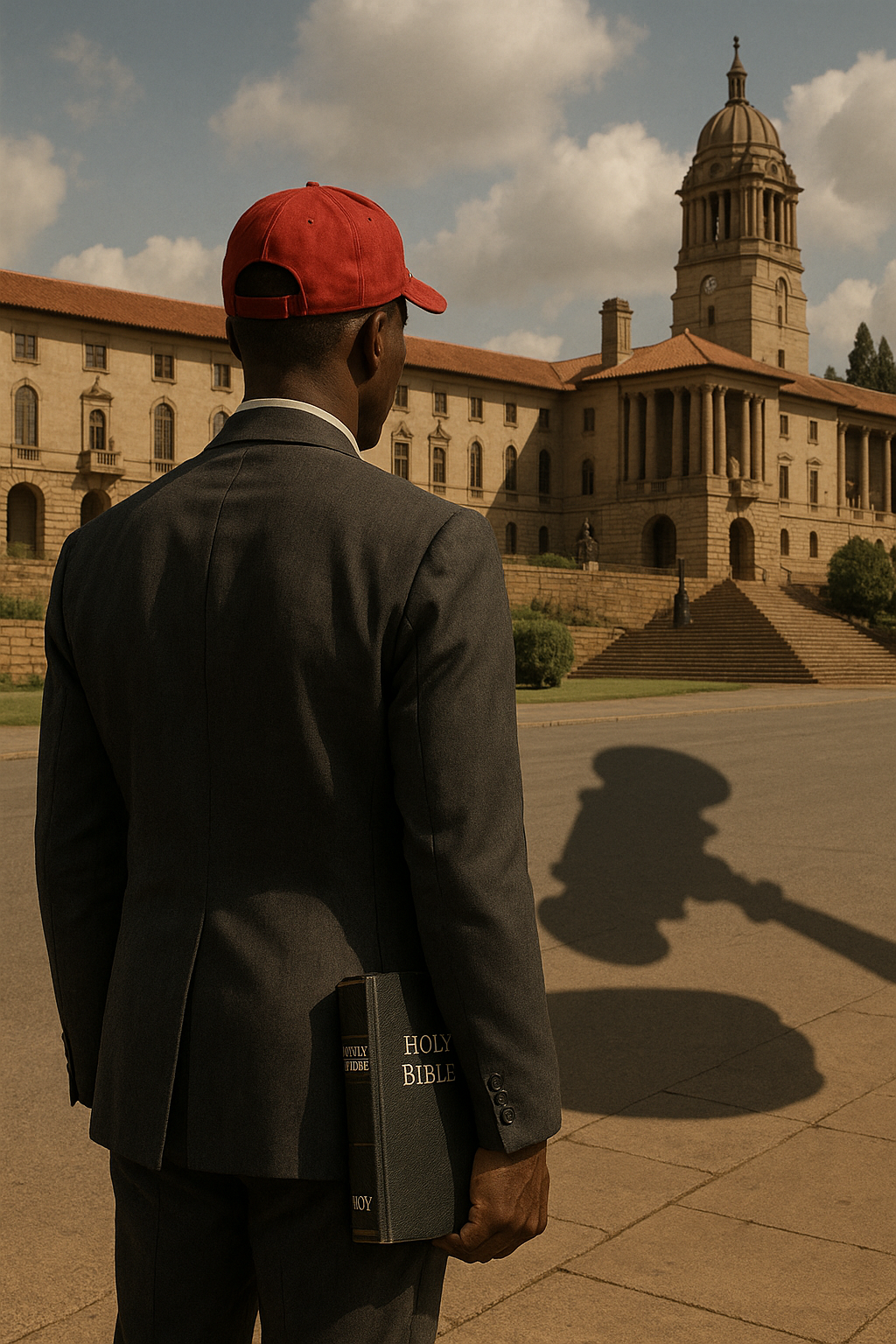
L. Brent Bozell III, a controversial figure, arrives in Pretoria as the new US envoy, armed with a culture war agenda set to reshape US-SA relations.
God, Ghostwriters & Gold: The Bozell Doctrine Lands in Pretoria
L. Brent Bozell III, a fiery conservative and media critic, has landed in Pretoria as the new U.S. Ambassador, instantly shaking up diplomacy. He arrived carrying a Bible and a MAGA hat, signaling a bold new approach. His appointment, driven by his family's powerful political connections and his history of 'culture-war' battles, has raised eyebrows in South Africa. Bozell immediately laid down tough demands on trade and foreign policy, making it clear that the U.S. is taking an aggressive stance, much to Pretoria's dismay. This signals a future filled with diplomatic fireworks as he pushes conservative agendas in a geopolitically sensitive region.
Who is L. Brent Bozell III?
L. Brent Bozell III is the new U.S. Ambassador to Pretoria, known for his conservative activism and media criticism. Nephew of William F. Buckley Jr., he founded the Media Research Center and is recognized for his role in culture-war debates and his family's political background. His appointment signals a new, assertive diplomatic approach.
Get Cape Town news in your inbox
Stay updated with the latest stories from the Mother City.
I. A Suit, a Bible and a Red Cap: The Arrival That Reset Diplomacy
On the final Tuesday of January 2026, a silver-and-blue U.S. Air Force Clipper taxied to the VIP apron of Waterkloof airbase. Out stepped L. Brent Bozell III, 70, charcoal suit still crease-sharp after the 17-hour hop from Andrews. In his left hand he carried a King James Bible; in his right, a crimson MAGA hat he did not tuck away when the brass band struck up the American anthem. Every local channel broadcast the moment live - commentators agreed the refusal to pocket the cap was not stagecraft but a neon warning that the old State Department rulebook had been tossed.
Three weeks earlier the Senate had squeezed him through 53-43, the thinnest margin for any ambassador since Bolton’s 2005 UN tour. Vice-President J.D. Vance flew home early from Munich in case a tie-breaker was needed; it wasn’t, but the symbolism lingered. Democrats took turns quoting Bozell’s 2013 Obama slur; Republicans countered with clips of ANC officials chanting “Kill the Boer.” The roll-call felt less like vetting and more like a cable-news segment - exactly the arena where Bozell has always thrived.
No one disputes the pedigree: nephew of William F. Buckley Jr., son of the man who ghost-wrote McCarthy and His Enemies, heir to a donor Rolodex that stretches from Rupert Murdoch’s yacht to the Coors ski slopes. What baffled Pretoria was how a professional outrage merchant - whose last private-sector gig involved tallying “liberal bias” minutes on cable chyrons - was entrusted with Africa’s most geopolitically fraught embassy. The answer lies in a White House memo that lists Pretoria as a “Tier-1 culture-war battlespace,” equal to Manila and Tegucigalpa in importance but with better wine.
II. The Making of a Culture-War Envoy: Money, Media and a Family Feud
In 1987 Bozell parked himself in a Reston basement with a single Apple IIe and a Scaife Foundation cheque for $25,000. The Media Research Center now owns a $18 million campus, employs 120 staffers and logs more Fox hits than most congressmen. The secret: he never typed the copy. Former lieutenant Tim Graham told The Washington Post he churned out four columns a week from Bozell’s voice memos - headlines, jokes, outrage cadence included. When the ghostwriting story broke, syndication clients dipped 12 %; donations rose 18 %. The base, it turned out, cared less about authorship than about owning the libs.
The only real scar came from wrestling. In 2002 the Parents Television Council - Bozell’s side hustle - sent an email blast blaming WWE for the deaths of four children who imitated body-slams. WWE sued; the council wired $3.5 million and apologised in open court. The payout forced layoffs, but Bozell himself never signed the mea culpa. Instead he doubled down on “media accountability,” a phrase that would later decorate his embassy business cards.
Family drama followed him aboard the Clipper. Son Leo Brent IV accepted a pardon after 38 months in federal prison for his role on 6 January. City Press greeted the new envoy with a front-page mash-up: Leo inside the Capitol rotunda, father clutching the Bible at Waterkloof, headline “Insurrectionist Bloodline in Pretoria.” Bozell’s only reply so far: “I believe in redemption, and I believe in property rights - in that order.”
III. The Five-Page Shock: AGOA, BRICS and the Rand
Before the jet engines cooled, Bozell’s team handed DIRCO a five-page “non-paper” now nicknamed the December Demands Reloaded. Item one: kick the Russian spy ship Sparta-III out of Simon’s Town within 90 days or watch South African citrus, wine and BMW parts slapped with 35 % tariffs under a snap AGOA review. The rand dropped 4.2 % before close of trade; Impala Platinum warned shareholders of a 9 % earnings hit.
Item two demands Pretoria withdraw its ICJ genocide case against Israel and file an amicus brief for Jerusalem instead. The carrot is $1.8 billion in military finance - previously dangled before Nigeria and Kenya. The stick: a U.S. veto on any future IMF special drawing rights for the Common Monetary Area. ANC secretary-general Fikile Mbalula called the offer “economic blackmail”; Western Cape citrus growers formed Citrus for Growth and booked flights to Dallas, hoping Texas evangelicals will soften the envoy.
Item three targets the mooted BRICS settlement currency. Treasury has drafted language that would label any multilateral unit as “sanctionable sabotage of U.S. seigniorage.” Bozell’s job is to secure a written Reserve Bank veto before the July summit in Durban. Chinese ambassador Wu Peng answered with an op-ed praising “mutual respect among civilisations,” while Russia’s chargé hosted a braai for local journalists and handed out “Multipolarity Over Imperialism” T-shirts.
IV. Fireworks Ahead: Land, Elections and the Embassy Barricades
Parliament is rewriting Section 25 of the constitution to allow land expropriation without compensation. Bozell wants wording that “explicitly safeguards existing agricultural titles,” a phrase read locally as code for white farmers. The carrot: reinstatement in the Millennium Challenge Corporation for a $480 million energy grant. The stick: Treasury could park the Ramaphosa family’s Zimbabwean platinum holdings on the SDN list. The rand wobbles every time the parliamentary speaker posts a committee schedule.
Next comes the August local polls. Bozell has asked USAID to reroute democracy-promotion cash toward the Democratic Alliance, a shift that would trigger tit-for-tat scrutiny of ANC-linked nonprofits operating in the United States. The ruling alliance is split: the Zuma-aligned RET faction wants Bozell expelled and Ford plants nationalised; moderates warn 300,000 export jobs hang in the balance. For now, DIRCO has chosen symbolism over rupture: every provincial premier received a quiet memo instructing them to RSVP “yes” to the July 4 garden party at the Waterkloof Ridge residence - already billed as the most exclusive braai of the year.
Between now and the BRICS summit three tripwires dominate: the May budget speech (will VAT hikes hurt U.S. car exporters?), the June land vote (cameras are booked for CNN), and the August ballot (expect donor lists to leak). The State Security Agency has raised the threat level outside the embassy; vendors selling bead giraffes have been moved two blocks away, their absence another reminder that the culture wars no longer stop at the water’s edge.
[
{
"question": "Who is L. Brent Bozell III and why is his appointment as U.S. Ambassador to Pretoria significant?",
"answer": "L. Brent Bozell III is the new U.S. Ambassador to Pretoria, a fiery conservative, and media critic known for founding the Media Research Center. His appointment is significant due to his strong conservative views, his family's powerful political connections (nephew of William F. Buckley Jr.), and his history of engaging in 'culture-war' battles. His arrival in Pretoria with a Bible and a MAGA hat signals a bold and aggressive new approach to U.S. diplomacy in the region, immediately laying down tough demands on trade and foreign policy."
},
{
"question": "What was the nature of L. Brent Bozell III's arrival in Pretoria?",
"answer": "L. Brent Bozell III arrived in Pretoria on the final Tuesday of January 2026, stepping off a U.S. Air Force Clipper. Notably, he carried a King James Bible in one hand and a crimson MAGA hat in the other, refusing to tuck it away even during the American anthem. This gesture was widely interpreted as a deliberate signal that the traditional State Department rulebook would be disregarded, indicating an assertive and unconventional diplomatic style. His appointment was narrowly confirmed by the Senate (53-43), underscoring the contentious nature of his selection."
},
{
"question": "What are some of the key 'demands' L. Brent Bozell III has made upon his arrival?",
"answer": "Upon his arrival, Bozell's team presented a five-page 'non-paper' outlining several significant demands. These include: 1. Demanding South Africa expel the Russian spy ship Sparta-III within 90 days, threatening 35% tariffs under AGOA review. 2. Insisting Pretoria withdraw its ICJ genocide case against Israel and file an amicus brief for Jerusalem, with a carrot of $1.8 billion in military finance or a stick of a U.S. veto on IMF special drawing rights. 3. Pushing for a South African Reserve Bank veto on any mooted BRICS settlement currency, labeling it 'sanctionable sabotage of U.S. seigniorage'."
},
{
"question": "How has L. Brent Bozell III's past influenced his current role as ambassador?",
"answer": "Bozell's past as a 'professional outrage merchant' and founder of the Media Research Center, which he built from a small operation into a large organization, has heavily influenced his current role. His experience in media and 'culture-war' debates has prepared him for what the White House reportedly views as a 'Tier-1 culture-war battlespace' in Pretoria. His history of using ghostwriters for his columns and his family's controversial past, including his son's involvement in January 6th and subsequent pardon, further define his public persona and diplomatic approach."
},
{
"question": "What are the potential impacts of Bozell's demands on South Africa's economy and politics?",
"answer": "Bozell's demands have already had significant impacts: the rand dropped 4.2% after his AGOA threat, and Impala Platinum warned of a 9% earnings hit. His insistence on safeguarding agricultural titles in the land expropriation debate (Section 25) could lead to the reinstatement of a $480 million energy grant from the Millennium Challenge Corporation but also risks Treasury parking the Ramaphosa family's Zimbabwean platinum holdings on the SDN list. Politically, his request to reroute USAID democracy-promotion funds to the Democratic Alliance could cause rifts within the ruling ANC, with some factions calling for his expulsion."
},
{
"question": "What key events and issues are anticipated during L. Brent Bozell III's ambassadorship in the near future?",
"answer": "Several key events and issues are anticipated to dominate Bozell's ambassadorship in the near future. These include the May budget speech (with potential VAT hikes affecting U.S. car exporters), the June land vote in Parliament (regarding expropriation without compensation), and the August local polls. Additionally, the July BRICS summit in Durban, where the issue of a BRICS settlement currency will be debated, is a major focus. The State Security Agency has already heightened the threat level outside the embassy due to these diplomatic fireworks."
}
]

Sarah Kendricks is a Cape Town journalist who covers the city’s vibrant food scene, from township kitchens reinventing heritage dishes to sustainable fine-dining at the foot of Table Mountain. Raised between Bo-Kaap spice stalls and her grandmother’s kitchen in Khayelitsha, she brings a lived intimacy to every story, tracing how a plate of food carries the politics, migrations and memories of the Cape.
View all articles →