
Bravery and quick response save drowning woman in Gordon’s Bay
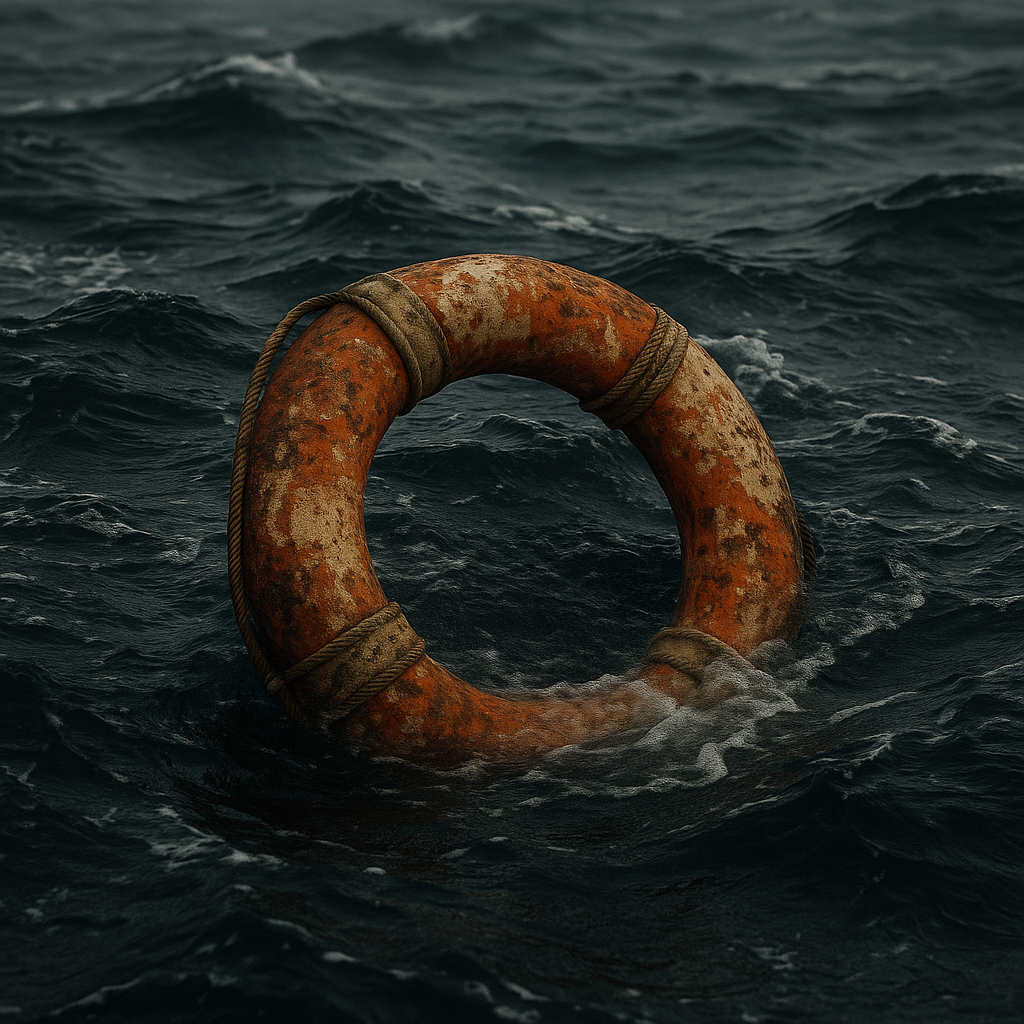
Woman swept into the Atlantic at R44 Lookout Point. NSRI's rapid response, advanced tech, and skilled team race against time to rescue her.
One evening, a woman was pulled into the icy Atlantic Ocean by a rogue wave while taking a photo. Her friend quickly called for help, and a rescue team sprang into action. They found the woman floating calmly, just as instructed, and pulled her from the water. Back on shore, she received urgent medical care to warm her freezing body. This amazing rescue, driven by quick thinking and teamwork, saved her life from the ocean's grasp.
What should you do if you fall into cold ocean water?
If you fall into cold ocean water, conserve energy by floating on your back with arms out and feet up. This 'star-float' position, as advised by rescue services, helps you stay afloat and makes you easier to spot, increasing your chances of survival while awaiting rescue. Your clothes will become heavy, but floating is crucial.
Get Cape Town news in your inbox
Stay updated with the latest stories from the Mother City.
Golden Hour Gone Wrong
Tuesday, 18:18.
The sun had already dipped behind the Kogelberg ridge, painting the horizon the colour of a fading bruise. From the roadside pull-off on Clarence Drive the ocean looked almost polite, but a low south-easter slid across the rocks and flicked salt spray into the faces of two women who had parked to watch the light die. The older of the two - 47, a weekend trail-runner who could knock out a 21 km before breakfast - stepped onto the barnacled ledge locals nickname “the amphitheatre” to frame a final photograph. One rogue wall, thicker and darker than its cousins, reared, slapped the shelf and vacuumed her into 14 °C water. Jeans and fleece drank in the sea and turned to anchors; the cold hijacked her diaphragm within seconds.
Her friend’s shriek caromed off limestone cliffs and punched straight through the open window of Roan Strydom’s bakkie at NSRI Station 9, Gordon’s Bay. The duty coxswain was still buttoning his shirt when the ops-room phone rang. By 18:20 he had a name, clothing colours, a live GPS pin in WhatsApp and - crucially - an open voice line to the frantic witness on the rocks. “Tell her to lie back, arms out, feet up,” he barked. The instruction is drilled into every surf-skier and sea-swimmer in the province, yet obedience is hard when your clothes weigh twice what they did on land and every gasp tastes like icicles.
The friend obeyed, phone wedged between shoulder and ear, repeating the single Afrikaans word “Toe!” every thirty seconds - float, float, float - while the loudspeaker in the rescue station turned her panic into a human pulse chart the crew could steer by.
The Pink-Zone Playbook Unfolds
18:22.
Strydom hit the “Pink Zone” trigger - NSRI code for a single, witnessed immersion inside the surf line. The rulebook demands two assets - boat and shore - plus a medic, all wheels rolling within fifteen nautical miles. Gordon’s Bay is the only South African station that keeps a 5.5 m Gemini surf-rescue craft fuelled, oxygen-strapped and trailer-ready 24/7. While the tractor reversed the Spirit of Surfski into the slip, an automated cascade fired 160-character SMS blasts to Cape Town’s Water Rescue Network, provincial EMS, police sea-border unit, a private medical team and even the Transnet helicopter normally reserved for port pilots: “Pink Zone, R44 Lookout, 1 POB in water, 18:18.”
At 18:27 the boat skipped down the slip with four crew: Strydom on throttle, two apprentices logging sea-hours and veteran rescue swimmer Pieter van Rensburg zipped into a 3 mm shortie, fins clipped to his belt. Night was erasing the last orange streak, replacing it with a metallic violet that made black neoprene and black water indistinguishable. Strydom ignored the textbook “search parallel to reef” line and aimed straight for the impact zone where most passive swimmers wash; he shoved the throttles to 32 knots, kidney-jarring but second-shaving.
Four minutes later Van Rensburg’s eye caught two reflective stripes on a running shoe. The woman lay 80 m beyond the breakers, star-floated exactly as ordered, lips the colour of blueberries but eyes tracking the hull. Strydom nudged the Gemini into the wind-shadow of the cliff, idled the motors and let a swell lift her toward the starboard tube. Van Rensburg rolled over the side, slid an arm under her shoulders and clipped the integrated lifting harness sewn into his own life-vest - eleven seconds, no stretcher, no lines, just torque and timing. Aboard, they cocooned her in a Blizzard bag pre-warmed with two litres from the medic’s flask, cranked oxygen at 15 l min⁻¹ and watched the oximeter flicker at 82 % while the boat wheeled toward home.
Rewarming at 25 Knots
Back in the ambulance bay the scene resembled a miniature NASA countdown. GB Med had idled a CEN-spec vehicle at 28 °C; paramedics slammed a 14-gauge intra-osseous needle into the woman’s humeral head - faster than hunting a vein shrunk by vasoconstriction - and began 38 °C Hartmann’s. Defib pads landed prophylactically on a chest whose heart ticked at a sludgy 42 bpm, still in sinus. Cape Town’s new “Hypothermia Pathway” meant straight-shot triage to Vincent Pallotti’s cardiothoracic ICU where extracorporeal rewarming waits for any core temp that slides below 28 °C en route.
On the boat-rinse deck Strydom completed the NSRI incident form, clicking SurfSAFE boxes that feed UCT’s emergency-medicine database. Patterns jump out: Pink-Zone patients who tilt head-back inside sixty seconds enjoy a ninety-three percent no-deficit discharge rate; those who try to claw forward drop to sixty-seven. The numbers quietly steer school syllabi, clothing design, even the new rescue shorts with built-in buoyancy panels sewn above the glutes.
While paperwork dried, a gap-year volunteer unscathed a DJI M30T thermal drone and launched above the reef. The victim was safe, yet the infrared feed picked a second heat signature: a black Labrador that had chased gulls and gone in further up the coast, now paddling in shrinking circles. The drone relay guided a stand-by jetski; the dog was hauled out by its collar, another heartbeat saved by the same ripple of tech and volunteerism that had already rewritten one woman’s night.
Footprints on Dry Rock
By 20:00 the station lights dimmed but the crew stayed put - Tuesdays mean Flat-Water Drills. A dummy nicknamed “Bob,” tonight wearing the victim’s still-dripping shoes, was tossed overboard again and again while trainees rotated through the helm every five minutes. Strydom barked vignettes - “Engine failure, two-metre swell, thirty knots, GO!” - grading answers on brevity; at sea, any sentence longer than six words is a luxury.
Out beyond the breakers the same moon that had silvered the rescue now lit squid-boats heading for the canyon, their deck lamps flickering like low constellations. None of those trawler crews would ever know how close they came to sharing their shift with a body bag rather than a recovering runner, yet the membrane is shared: same water, same risks, same human vigilance stretched across an indifferent vastness.
At midnight Clarence Drive belonged only to the occasional trucker bypassing the Huguenot tunnel. The QR code laminated to the railing glinted under LED floodlights, waiting for the next passer-by to scan, auto-dial 112 and drop latitude and longitude into the keypad. Six kilometres away, under a Bair Hugger blanket, a woman slept with a core temperature climbing toward thirty-seven degrees, dreaming - perhaps - of footprints on dry rock and the instant the sky folded into the sea before strangers in orange jackets snatched her back.
What should you do if you fall into cold ocean water?
If you fall into cold ocean water, conserve energy by floating on your back with arms out and feet up. This 'star-float' position, as advised by rescue services, helps you stay afloat and makes you easier to spot, increasing your chances of survival while awaiting rescue. Your clothes will become heavy, but floating is crucial. Trying to swim or claw forward against the cold and currents can quickly lead to exhaustion and hypothermia.
How quickly can cold water affect your body?
Cold water can affect your body very rapidly. As seen in the incident, the cold can hijack your diaphragm within seconds, making it difficult to breathe. The body's core temperature can drop quickly, leading to vasoconstriction and a sludgy heart rate. Within minutes, hypothermia can set in, making physical and mental functions severely impaired.
What is a 'Pink Zone' incident in rescue operations?
A 'Pink Zone' incident is an NSRI (National Sea Rescue Institute) code for a single, witnessed immersion inside the surf line. This designation triggers a rapid and specific rescue protocol, demanding the immediate deployment of two assets (boat and shore), plus a medic, all within a short radius from the incident location.
What advanced medical procedures are used for severe hypothermia?
For severe hypothermia, advanced medical procedures like those described in Cape Town's 'Hypothermia Pathway' are crucial. This includes rapid rewarming techniques such as using intra-osseous needles to administer warm fluids (e.g., 38 °C Hartmann's solution) and possibly extracorporeal rewarming for core temperatures below 28 °C. The goal is to safely and quickly raise the body's core temperature while monitoring vital signs.
How does teamwork and technology aid in ocean rescues?
Teamwork and technology are vital for successful ocean rescues. In this case, quick thinking from the friend, immediate communication with rescue services, and the use of a live GPS pin via WhatsApp significantly reduced response time. Rescue assets like specially designed boats, automated SMS alerts to a wide network of emergency services, and even thermal drones for locating victims (and in this case, a dog) demonstrate how integrated systems and coordinated efforts are critical for saving lives.
What safety measures are in place for individuals near dangerous coastal areas?
Safety measures near dangerous coastal areas include clear instructions for what to do in case of falling into the water (like the 'star-float' position), and, in some locations, technology like QR codes laminated to railings. Scanning these codes can auto-dial emergency services (like 112) and transmit precise latitude and longitude, significantly speeding up the rescue response for those who might be unfamiliar with the area or in distress.

Isabella Schmidt is a Cape Town journalist who chronicles the city’s evolving food culture, from Bo-Kaap spice merchants to Khayelitsha microbreweries. Raised hiking the trails that link Table Mountain to the Cape Flats, she brings the flavours and voices of her hometown to global readers with equal parts rigour and heart.
View all articles →