
Cape Town taxi driver arrested over R220 000 warrants
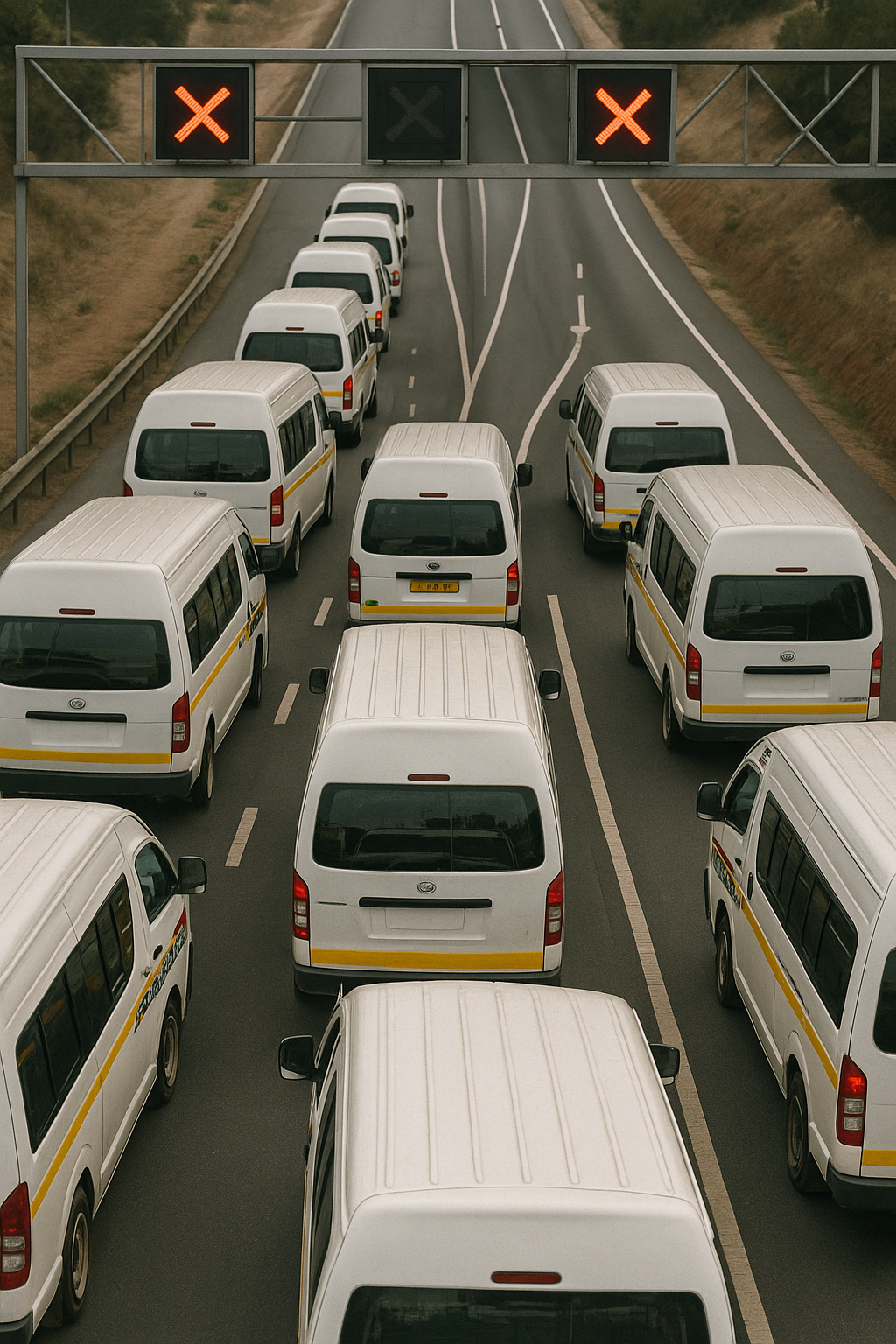
Cape Town's traffic blitz nets R220k in fines from one taxi, revealing a high-tech, integrated enforcement strategy targeting road safety.
Cape Town recently held a week-long traffic crackdown, netting a massive R220,150 fine from one taxi driver with 18 outstanding warrants! This blitz, which used new tech and targeted hotspots, aimed to clear old fines and make roads safer. The city hopes to collect millions from similar efforts, proving that even small traffic violations can lead to big consequences.
What is the "BackOffice" data sink?
The "BackOffice" data sink is a municipal vault where all traffic-related data, such as speed-camera snapshots, e-tickets, and paper summons, are stored. After 32 days, an algorithm generates an electronic warrant that is then added to a national database, enabling law enforcement to identify drivers with outstanding warrants.
Get Cape Town news in your inbox
Stay updated with the latest stories from the Mother City.
The Taxi That Cost More Than a Degree
On an otherwise grey Friday the 13th, a weather-beaten white Toyota Quantum - number plates 143-B - blended into the morning crawl along Jakes Gerwel Drive. Beads of paint had peeled off its panels, the windshield carried a lightning-shaped crack, and a string of rosary pearls danced from the mirror. At 07:44 that image shattered: the driver, 54, was told his licence disc check had flashed crimson. Eighteen outstanding warrants - some stretching back to 2019 - landed him in cuffs and left commuters gawking at a R220 150 price tag, the steepest single-vehicle haul the city has logged this year. Within minutes a relief taxi sped the passengers away while officers impounded the Quantum, turning an ordinary commute into headline news.
The arrest crowned a seven-day city-wide dragnet: 204 by-law busts, 116 Metro Police detentions, 40 straight traffic arrests and 1 713 warrants punched out across the grid. Officers scribbled 45 756 citations, towed 145 public-service vehicles and issued 4 900 drug-linked tickets. Simultaneously, the Public Emergency Communication Centre fielded 1 490 calls - 81 assaults, 51 domestic-violence reports, 46 collisions, 363 by-law gripes and 501 medical maydays. Cape Town, it appears, had swapped coffee-break roadblocks for a calculated saturation play.
How a Quantum Driver Ends Up Owing R220k
Welcome to the "BackOffice" data sink. Every speed-camera snapshot, e-ticket and paper summons pours into this municipal vault; after 32 silent days an algorithm mints an electronic warrant, magistrate-stamped and beamed to a national hit-list. Until recently those entries gathered digital dust; today peak-hour choke points are used to flush them into daylight. Handheld scanners pair a licence plate to the cloud in under two seconds, a trick Cape Town borrowed from Gauteng’s rapid-response eNaTIS crews. Once pinging red, the driver’s odds of slipping away evaporate.
Pick Friday the 13th and you raise the odds further. Superstition keeps private cars in driveways, leaving the asphalt to professionals - taxis, panel vans, rig trucks - who cannot afford a day off. Enforcement commanders therefore seed "saturation nodes" along commuter funnels. Jakes Gerwel Drive, feeding Langa, Bontehuewel and Gugulethu straight onto the N2, offers few bolt-holes, making it the perfect dragnet runway. The Quantum owner banked on holiday-thinned traffic; instead he met the full might of the blitz.
Money makes the risk tempting. Every extra body crammed into a 16-seater earns about R12; squeeze in four more and the driver pockets an instant R48. Do that on the morning and afternoon runs for a week and you are looking at R1 800 - enough to pay the helper’s wage. Now factor in a R7 000 over-loading fine per surplus commuter, multiply by twenty-five trips, and you understand why a R220 150 bill is treated as a deferred expense rather than a moral barrier.
The Machinery Behind the Numbers
Storage yards in Athlone are swelling. Owners who want a seized taxi back must clear every outstanding warrant, hand over R1 800 in release fees and parade a fresh roadworthy certificate. With a Quantum capable of earning R3 500 a day, each 24-hour lock-up costs roughly R5 300 in lost income plus penalties. The queue for redemption snakes around the block, creating a captive market for the City’s next move: a Traffic Fine Roadshow offering 30 % discounts and on-the-spot payment plans for card or cash. Officials quietly predict a three-day harvest of R2 million - almost enough to bankroll the overtime bill of the entire operation.
Artificial intelligence watches from patrol-car dashboards. Since January, 47 cruisers have carried licence-disc firmware cooked up by a Stellenbosch start-up. The system colour-tags discs by expiry month; a red box flashes on the officer’s tablet when a disc lapses. During the blitz, 1 214 cars were stopped purely on AI nudges, translating into 847 fines and 11 arrests. The cameras never blink, and they remember every detail.
Drink-driving statistics reveal a loophole. Thirty-four DUI collars dominated the traffic docket, yet only one vehicle was impounded for negligence. The 2008 National Road Traffic Act amendment lets officers seize a car only when booze is coupled with "reckless driving as to constitute further danger." Pure alcohol means a night in the cells, but a sober companion can still drive the vehicle home. Critics insist this keeps repeat offenders in circulation; the City replies it keeps already-bursting pounds from clogging further.
Narcotics and traffic offences increasingly share the same breath. Metro Police lifted Mandrax worth R45 000, 115 g of tik and 2.3 kg of compressed dagga. Tik is the stand-out: Cape Flats usage has surged 40 % since 2021. Side-effects - twitches, paranoia, red-light roulette - feed directly into the offence pipeline, blurring the line between drug squad and traffic service.
The Economics, Loopholes and Nudges Shaping the Future
Purchase price of a new Toyota Quantum: R680 000. Add finance, insurance, fuel, wages and maintenance and an operator needs 4 417 paying passengers a month just to break even. Overload by four commuters and you net an extra R7 200 - enough to bankroll the driver’s salary. From a ledger perspective fines are simply an uncertain future cost, not an ethical wall. Insurers are piling on; Discovery’s new "VitaDrive Sentinel" policy hikes premiums 2 % for every open warrant above R5 000. Had the Athlone driver been covered, his bill would have jumped by 90 % - more than the fines themselves - turning the private sector into an enforcement multiplier.
South African statute lets a motorist "reset" a warrant by filing a written intention to contest, forcing the court to re-issue paperwork. Attorneys advertise the service for R300, franchising delay. The City wants legislation that suspends the reset once an arrest has already been made; the National Taxi Alliance counters the move tramples due process. Until Parliament picks a side, the conveyor belt of warrants will keep churning.
Behavioural science is barging in. SMS reminders dispatched seven days before a warrant activates prompt 34 % of recipients to pay within 48 hours, double the baseline. A pilot QR-code coupon offering 15 % off if settled within six hours is on the drawing board, cloned from Colombia’s "Pico y Placa" rebate that trimmed repeat offences by 22 %. The City bets that shrinking the payment window will shunt fines from the balance-sheet footnotes into real-time pain.
Globally, Cape Town’s tactic mirrors New York’s "Scofflaw Towing," where chronic ticket dodgers lose their cars at random checkpoints. London relies on number-plate exile from the congestion zone, a luxury South Africa cannot replicate; impoundment therefore becomes spatial banishment by other means. Historians recall Johannesburg’s 1975 "Squadron 33" road-blocks that trapped petrol-crisis scofflaws, sparking cries of revenue farming. Today’s messaging weds every arrest number to a safety outcome - drunk drivers removed, overloaded taxis halted - to keep the optics clean.
What It All Means for the Everyday Commuter
Jakes Gerwel Drive, the 12 km artery linking the N2 to Mitchells Plain, hosts 3 200 minibus trips a day and moves 48 000 passengers - roughly the population of Grahamstown. Each arrest there ripples through WhatsApp voice notes warning drivers to "avoid the white robot" (traffic camera). Within fifteen minutes of the Quantum cuffs clicking shut, 42 such voice notes were circulating, proof that enforcement data now travels faster than the offenders themselves.
During impound week, MyCiTi bus ridership leapt 28 %, evidence that commuters will switch modes when taxi supply tightens. Urban planners spy an opening: convert seized-yards into temporary park-and-ride hubs, compelling associations to ink integration contracts with the BRT network. They cite Bogotá, where confiscated jitneys were re-licensed as TransMilenio feeder buses, formalising chaos into schedule.
The Traffic Fine Roadshow is coming to township malls with card machines, affidavit officers and 30 % discounts. City bean-counters expect R2 million to flow back in three days - almost enough to pay the overtime tab and keep the blitz cycle spinning. Until economics shift harder than enforcement, the cat-and-mouse saga along Jakes Gerwel Drive will stay forever on edge, one overloaded seat away from another record-breaking receipt.
[{"question": "What was the recent traffic crackdown in Cape Town, and what was its primary goal?", "answer": "Cape Town recently conducted a week-long traffic crackdown that resulted in significant fines, including a massive R220,150 fine from a single taxi driver with 18 outstanding warrants. The primary goal of this blitz, which utilized new technology and targeted hotspots, was to clear old fines and enhance road safety. The city aims to collect millions through these efforts, highlighting that even minor traffic violations can lead to substantial consequences."}, {"question": "What is the 'BackOffice' data sink and how does it contribute to identifying traffic offenders?", "answer": "The 'BackOffice' data sink is a municipal repository where all traffic-related data, such as speed-camera snapshots, e-tickets, and paper summons, are stored. After 32 days, an algorithm generates an electronic warrant that is then added to a national database. This process enables law enforcement to quickly identify drivers with outstanding warrants, especially during roadside stops using handheld scanners that link license plates to the cloud in under two seconds."}, {"question": "How did one taxi driver accumulate a R220,150 fine with 18 outstanding warrants?", "answer": "A 54-year-old taxi driver was apprehended during the crackdown on Jakes Gerwel Drive. His license disc check revealed 18 outstanding warrants, some dating back to 2019, leading to the record-breaking R220,150 fine. This accumulation is often due to drivers prioritizing immediate earnings from overloading passengers (earning about R12 per extra body) over paying fines, treating them as a deferred expense rather than an immediate concern, despite potential fines of R7,000 per surplus commuter."}, {"question": "What technological advancements did Cape Town utilize in this traffic blitz?", "answer": "Cape Town employed new technologies to enhance the effectiveness of the crackdown. This included handheld scanners that can pair a license plate to the cloud in under two seconds to identify outstanding warrants. Additionally, patrol cars were equipped with AI-powered license-disc firmware developed by a Stellenbosch start-up. This system color-tags discs by expiry month, flashing a red box on the officer's tablet when a disc has lapsed. These AI nudges led to 1,214 stops, 847 fines, and 11 arrests during the blitz."}, {"question": "What happens to impounded vehicles, and what incentives are offered for fine payment?", "answer": "Owners seeking to reclaim seized taxis must clear all outstanding warrants, pay R1,800 in release fees, and provide a new roadworthy certificate. Given that a Toyota Quantum can earn R3,500 daily, each 24-hour impoundment costs approximately R5,300 in lost income and penalties. To encourage payment, the City is organizing a 'Traffic Fine Roadshow' that offers 30% discounts and on-the-spot payment plans for card or cash, with officials anticipating R2 million in collections over three days."}, {"question": "How does the traffic crackdown impact everyday commuters and urban planning strategies?", "answer": "The crackdown significantly impacts commuters, with enforcement data spreading rapidly through platforms like WhatsApp, warning drivers of roadblocks. During the impoundment week, MyCiTi bus ridership increased by 28%, indicating that commuters will switch transportation modes when taxi supply is disrupted. Urban planners see this as an opportunity to potentially convert seized-vehicle yards into temporary park-and-ride hubs and encourage taxi associations to integrate with the Bus Rapid Transit (BRT) network, drawing inspiration from cities like Bogotá where confiscated vehicles were re-licensed as feeder buses."}]

Michael Jameson is a Cape Town-born journalist whose reporting on food culture traces the city’s flavours from Bo-Kaap kitchens to township braai spots. When he isn’t tracing spice routes for his weekly column, you’ll find him surfing the chilly Atlantic off Muizenberg with the same ease he navigates parliamentary press briefings.
View all articles →