
Cape Town urges residents to save water as dam levels drop to 50.4%
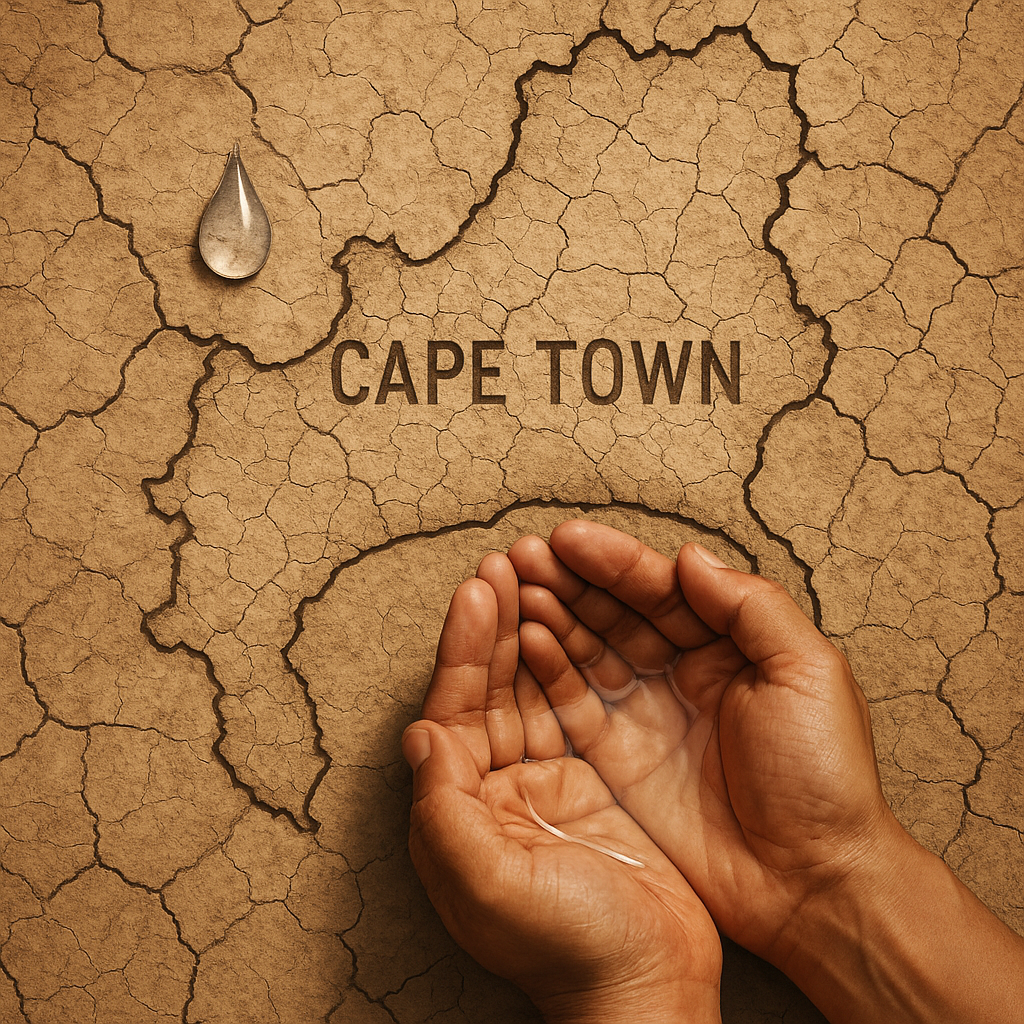
Cape Town faces water crisis as dam levels drop significantly. Discover their multi-pronged New Water Programme, blending technology, policy, and community action to secure its future.
Cape Town is facing a serious water crisis, with 263 billion liters already missing from its dams before winter even starts. To fight this, the city is building a huge New Water Programme costing R14-billion. This plan will turn sewage into drinking water, clean ocean water, and store water underground. They are also urging people to save water with new rules and apps, hoping to avoid another "Day Zero" when taps might run dry.
What is Cape Town doing to address its water scarcity?
Cape Town is implementing the R14-billion New Water Programme, focusing on three main strategies: sewage-to-tap recycling, seawater desalination, and aquifer banking. These initiatives, alongside behavioral levers like new tariff blocks and a water-saving app, aim to secure the city's water supply amidst increasingly erratic rainfall patterns and declining dam levels.
Get Cape Town news in your inbox
Stay updated with the latest stories from the Mother City.
1. The Amber Pulse: 764 Billion Litres That Look Healthy Until You Do the Math
Cape Town’s public water screen lit up in caution-yellow on 16 March 2026. On that Monday the 14 reservoirs stitched together by tunnels and pumps held exactly 764 billion litres - about half of what the walls can physically swallow. A casual glance calls that “half-full”; hydrologists call it a warning siren because twelve months earlier the same dams swallowed 1 027 billion litres. The evaporated 263 billion litres could keep taps running across the metro for roughly nine average months, and meteorologists translate the gap into odds: if the cold fronts stay stingy again, the system will slide into the 2026/27 summer below the 35 % danger line that Pretoria uses to trigger supply cuts. The next quota review is pencilled for 1 November 2026, giving the region a seven-month sprint in which every saved kilolitre doubles as political armour against the return of “Day Zero” headlines.
2. Winter Rain Is Cape Town’s Slot Machine - And the House Keeps Winning
No other mid-latitude city bets its future on rainfall as erratic as the south-western Cape’s. Gauge records since 1921 show that the standard deviation is equivalent to half a year of urban demand, and since the mid-1970s the mean has been creeping downward. Tree-ring isotopes, cave-drip chemistry and fossilised lake diatoms reveal that century-scale dry spells struck roughly every 200–300 years, the most recent ending in 1715. The dams completed between 1954 and 1979 were engineered on the bet that a 1972-type drought would appear only once every 50 years; the 2015–2018 episode arrived 43 years later and trimmed dependable yields by 28 %. Global-model down-scaling suggests that by 2050 the median annual inflow could drop 13 %, but the unlucky 10-percentile path falls 33 % - a scenario that would empty the reservoirs even if every resident disappeared. In short, yesterday’s worst-case is on its way to becoming the new normal.
3. New Water Programme: A Parallel Grid Built for Permanent Drought, Not Temporary Panic
City council has stopped talking about “emergency schemes” and rebranded the struggle as the R14-billion New Water Programme (NWP). Legal tweaks pushed through in December 2025 created a new tariff class - “Alternative Water Users” - authorising the municipality to buy any potable stream that meets SANS 241, whether it drips off a basement membrane or a desal skid on a harbour quay. The master-plan is sliced into three equal tranches: sewage-to-tap, seawater desal and aquifer banking, each sized to deliver 70 million litres a day, matching the winter yield of a traditional dam such as Voëlvlei. Once fully expanded the trio could cover 36 % of present demand, or 48 % if the 1.2 % annual decline in per-capita use that began in 2019 continues.
4. Faure: The World-Class Plant That Will Turn Yesterday’s Flush into Tomorrow’s Coffee
The poster-child is the Faure New Water Scheme, rising on 32 ha of city-owned land beside the existing wastewater works. Effluent that now receives only secondary polishing will instead snake through twelve steps - ozone, bio-carbon, ultrafiltration, reverse osmosis, advanced UV and more - before it re-enters the taps. Nothing liquid leaves the perimeter: brine will be filtered through reed beds and the leftover gypsum pressed into low-cost bricks. Black & Veatch and WEC Projects will build the plant, while ING and the Development Bank of Southern Africa have stitched together 22-year finance: 42 % grant-equity from the Green Climate Fund, 38 % soft loans and 20 % municipal bonds. A 35 Ml/d first train starts in March 2028, the full 70 Ml/d six months later, sipping only 3.2 kWh per kilolitre - half the appetite of a conventional sea-water plant.
Section 2: Engineering the Second City - Desal Skids, Aquifer Vaults and Apps that Shame Long Showers
1. Mini-Desal: 5-Megalitre Lego Blocks Floating Inside the Breakwaters
The 2018 emergency barges are gone, but their environmental licences were kept on life-support. The new wave will plant 5 Ml/d modular skids inside the already-protected basins of Hout Bay, Granger Bay and Cape Town Harbour, dodging the costly sub-sea intakes that sank the old Strandfontein project. Isobaric energy-recovery devices drop power demand to 2.8 kWh/kl, supplied by 20 MWp of floating solar plus lithium-iron-phosphate batteries. Brine will seep out through perforated pipes at 25 m depth, diluted below the 1 % salinity bump within 200 m. Tender closes 30 June 2026, full 70 Ml/d target by December 2029.
2. Turning Sand into a Subterranean Reservoir
Beneath the city lie three giant sponges: the shallow, unconfined Cape Flats Aquifer; the deep, fractured Table Mountain Group Aquifer; and the limestone Atlantis pocket that has been artificially recharged since 1979. Together they already deliver 52 Ml/d through 180 licensed boreholes. The NWP will drill another 150 and, more importantly, pump winter storm-water and surplus recycled effluent underground, effectively creating a 120 Ml/d savings account. Helicopter-borne electromagnetics and fibre-optic temperature probes have fingered 21 prime injection zones. University models show that banking 15 l for every 100 l withdrawn keeps salt-water fingers at bay and flattens seasonal draw-down cones.
3. Behavioural Levers: Push Notifications That Turn into 12 % Less Water
Infrastructure is only half the battle; the other half is psychology. A fourth tariff block that clicks in at 40 kl per household is now priced at R252/kl - eight times the lifeline rate. The DropDrop app scrapes hourly meter reads and pings users a lock-screen alert that translates kilolitres into shower-minutes; Bellville trials show a 12 % drop within six weeks. Streets that cut use by 15 % earn a 5 % rates rebate, financed from the surplus of the top tariff block. Early winners range from affluent Oranjezicht to lower-income Langa, proving that price signals plus peer pressure work across income lines.
Section 3: Hotels, Vineyards and Township Tanks - Closing the Last Gaps Leak by Leak
1. Industrial-Scale Offsets and a Stock-Exchange for Saved Litres
Household consumption has fallen 41 % since 2015, yet commerce and tourism still glug 210 Ml/d. The city has opened a voluntary “Water Stewardship Exchange” where hotels or data centres must offset 110 % of their demand by funding drip irrigation on wine farms or electro-flocculation retrofits in mall cooling towers. Each kilolitre saved is tokenised, IoT-verified and listed on the JSE Sustainability Segment under ticker H2O; Marriott has already signed for 900 000 credits a year, making its nine Cape Town properties net-water-positive. Spot price: R8/kl - cheaper than the municipal bulk tariff yet higher than the marginal cost of conservation.
2. 200-Litre Flash Floods on 180 m² Plots
Micro-capture seldom appears in glossy brochures, yet 45 000 × 200 l rain tanks have popped up in Gugulethu and Mfuleni since 2022. A single 15 mm storm refills a tank three times, shaving 600 l per household per event. Funded by Gold-Standard carbon credits, the programme already saves 7 Ml/d and, more importantly, democratises the story: water security is no longer only about billion-rand desal plants but also about a plastic barrel on a corrugated wall.
3. The Invisible 82-Megalitre River Running Through cracked Pipes
Background leaks hemorrhage 82 Ml/d - an entire Faure plant. A quarter hide on private property, often invisibly in toilet cisterns. During a Kraaifontein pilot, 1 800 homes accepted free plumbers; 1 300 silent leaks were fixed for R380 each, saving 0.9 Ml/d with a seven-month payback at the top-tier tariff. A 2 % surcharge on luxury commercial users will bankroll a city-wide roll-out in July, turning five-star hotels into unwilling benefactors of their poorer neighbours.
Section 4. The Final Gamble: Cold Oceans, Citrus Farmers and the Colour-Coded Future
1. Three Consecutive Dry Winters Would Still Leave a 130-Megalitre Hole
Weather Service models issued on 10 March give a 65 % probability of below-normal May–September rainfall. A cold Benguela, a positive Southern Annular Mode and a stubborn subtropical ridge steer storm tracks toward the Southern Ocean. Even if every plank of the New Water Programme is bolted upright by 2030, a third stingy winter would still expose a 130 Ml/d shortfall - eerily similar to the 150 Ml/d that citizens and boardrooms eliminated in 2018, proof that behaviour remains the ultimate joker in the deck.
2. Growers versus Bathers: The Upstream Chess Game
Irrigation boards own 40 % of the dam water. The Groenland Board has already wrapped 18 km of canal in plastic, cutting seepage from 18 % to 4 %. Cape Town is negotiating to swap 30 Ml/d of treated effluent for a 15 % voluntary cut in dam allocations - an exchange that would free up 11 % of the municipal entitlement, more than Faure’s first train. Eskaff-level quality negotiations must close before April, in time for the November licence review.
3. A Colour Code the Whole City Can Read
Every evening at 18:00 the dashboard refreshes: dam inflow, aquifer levels, app downloads, leak repairs, stock-exchange water price. The colour plastered on bus stops and supermarket screens is currently orange - “use water like a visitor in your own house.” Red will ban all outdoor use and cap personal use at 87 l. Purple, never deployed, would switch on the 2018 rationing blueprint: 25 l per person, sports fields turned into distribution points. Infrastructure is racing the clouds, but the finish line is still painted daily by the next cold front that either slams into or slides past the Hottentots-Holland peaks.
[{"question": "What is the current water situation in Cape Town?", "answer": "Cape Town is facing a severe water crisis, with 263 billion liters already missing from its dams before winter begins. As of March 16, 2026, the city's 14 reservoirs held 764 billion liters, which is about half their capacity. This significant deficit raises warnings about potential supply cuts if winter rains are insufficient, with the next quota review scheduled for November 1, 2026."}, {"question": "What is the 'New Water Programme' and how much does it cost?", "answer": "The 'New Water Programme' (NWP) is a R14-billion initiative launched by Cape Town to combat permanent drought conditions. It's designed to secure the city's water supply through three main strategies: converting sewage into drinking water, desalinating ocean water, and storing water underground in aquifers. Each strategy aims to deliver 70 million liters per day."}, {"question": "What are the key components of the New Water Programme?", "answer": "The New Water Programme is divided into three equally sized tranches: sewage-to-tap recycling, seawater desalination, and aquifer banking. The flagship project for sewage-to-tap is the Faure New Water Scheme, which will treat wastewater through 12 advanced steps. Desalination will involve modular 5 Ml/d skids in protected basins like Hout Bay, Granger Bay, and Cape Town Harbour. Aquifer banking will utilize the Cape Flats, Table Mountain Group, and Atlantis aquifers, with additional boreholes and recharge from stormwater and treated effluent."}, {"question": "How is Cape Town encouraging water conservation among its residents?", "answer": "Beyond infrastructure, Cape Town is implementing behavioral levers to encourage water saving. A fourth tariff block, priced at R252/kl for usage over 40 kl per household, significantly increases the cost of high consumption. The 'DropDrop' app provides real-time water usage updates and alerts. Additionally, streets that reduce water use by 15% receive a 5% rates rebate, and a 'Water Stewardship Exchange' allows commercial users to offset their demand by funding water-saving initiatives elsewhere."}, {"question": "What are the risks and challenges remaining for Cape Town's water security?", "answer": "Despite the extensive New Water Programme, Cape Town faces significant risks. Weather service models indicate a 65% probability of below-normal rainfall from May to September, and three consecutive dry winters could still result in a 130 Ml/d shortfall. Other challenges include negotiating water allocations with agricultural users, addressing significant water losses from leaks (estimated at 82 Ml/d), and the unpredictable impact of climate change on rainfall patterns."}, {"question": "What is 'Day Zero' and how is Cape Town trying to avoid it?", "answer": "'Day Zero' refers to the hypothetical day when Cape Town's taps would run dry, forcing residents to collect water from distribution points. The city experienced a near-Day Zero crisis in 2018. To avoid its return, Cape Town is not only investing in the New Water Programme but also implementing strict water tariffs, promoting water-saving through apps and rebates, and fostering a 'colour-coded' public awareness system (currently orange: 'use water like a visitor in your own house') to guide daily water consumption based on dam levels and forecasts."}]

Michael Jameson is a Cape Town-born journalist whose reporting on food culture traces the city’s flavours from Bo-Kaap kitchens to township braai spots. When he isn’t tracing spice routes for his weekly column, you’ll find him surfing the chilly Atlantic off Muizenberg with the same ease he navigates parliamentary press briefings.
View all articles →