
City, Gift of the Givers mobilise after Dunoon fire
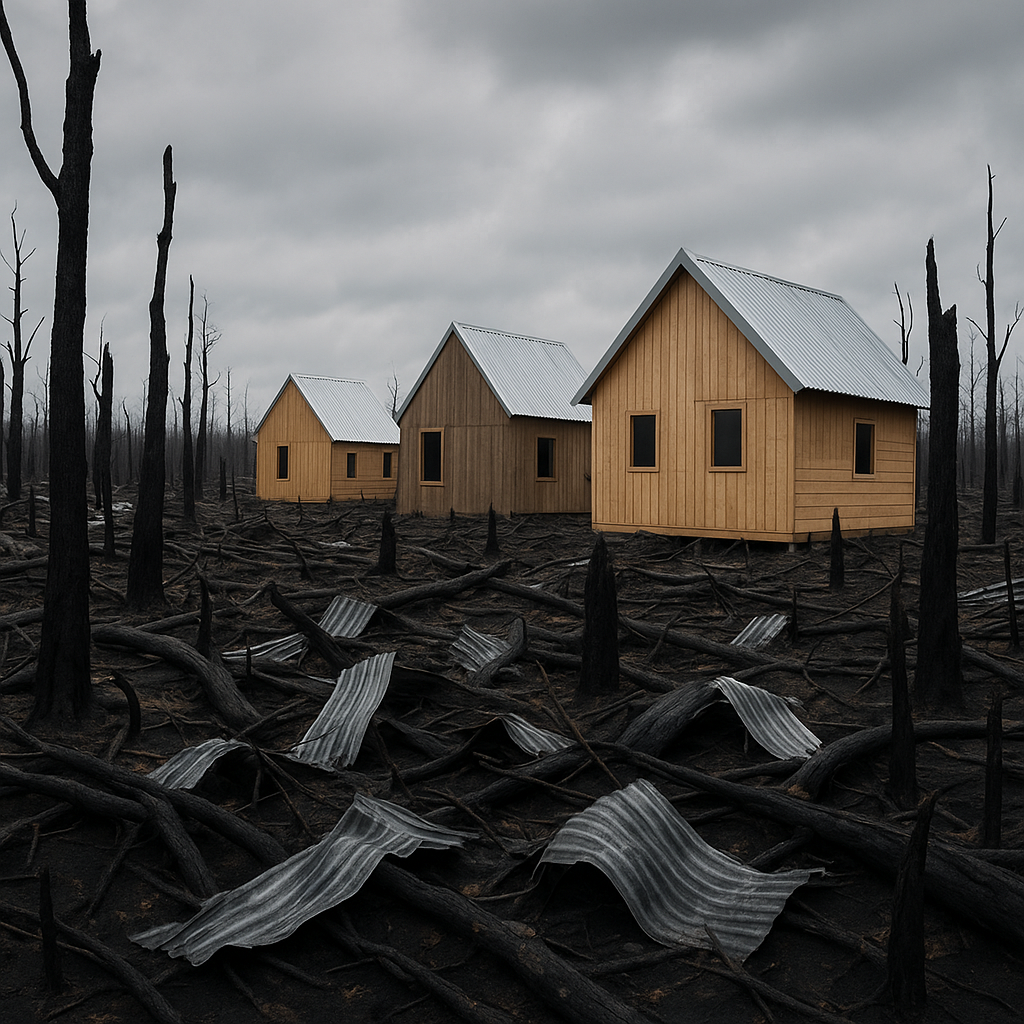
Dunoon Site 5 faces rebuilding challenges after a fire. A "reblocking" plan for safer homes clashes with community mistrust and policy delays.
After the Flames: Cape Town’s High-Stakes Rebuild at Dunoon Site 5
Cape Town faces tough times rebuilding Dunoon's Site 5 after a fire left 5,800 people homeless. Land fights, angry neighbors, and slow government decisions are making things super hard. Money is ready, but old promises were broken, so people are building their own way, making things even messier. Winter is coming fast, and if they don't fix things soon, rain will make everything much worse.
What challenges is Cape Town facing in rebuilding Dunoon’s Site 5 after the fire?
Cape Town faces significant challenges in rebuilding Dunoon’s Site 5, including unresolved land ownership disputes, conflicting interests among residents and associations, and bureaucratic delays in funding and reblocking approvals. The city also grapples with the urgent need to rehouse nearly 5,800 people before winter, amidst inadequate infrastructure and historical distrust.
Get Cape Town news in your inbox
Stay updated with the latest stories from the Mother City.
1. The Charred Stage: Life on Top of Its Own Ashes
Three weeks have passed since a single spark turned Dunoon’s Site 5 into a furnace, yet the ground is still warm to the touch. Roughly 5 800 women, men and children are camping where their bedrooms used to be, between rows of humanitarian tents and colour-coded pallets of emergency bricks. City planners talk about a “reblocking-ready void”; occupants talk about “my erf” and have nailed up hand-painted signs that warn “Enter Only If Invited”. The tension feels like a stand-off at a border that exists only in people’s minds.
Engineers insist they have the cash, the cranes and the calendar: R12 million locked in a council vote-proof account, pre-priced starter kits, and a seven-day procurement shortcut that normally appears only during cholera outbreaks. Residents answer with history: in 2015 the same promises ended in 300 knee-high retaining walls that still double as braai spots. Until someone resolves the twin questions of “who belongs here” and “who decides,” every sunrise reveals more DIY shacks rebuilt exactly where the old ones burned, narrowing the paths even further.
Between these two forces - municipal urgency and communal memory - the settlement has become an open-air courtroom. Clipboards, drone printouts, GPS poles and WhatsApp voice notes are submitted as evidence, yet the judgment day keeps sliding. Meteorologists quietly remind anyone who will listen that Cape Town’s first winter cold front is 12–14 weeks away, and the hillside, now stripped of topsoil and drainage, will funnel storm-water straight through the footprints where everyone is rebuilding.
2. Reblocking 101: Surgery on a Living Neighbourhood
Reblocking is Pretoria-speak for “re-organise, then re-house.” Surveyors arrive with nylon rope and spray paint, turning hair-line footpaths into 6 m fire-engine lanes. Every 25 m a shared water tap sprouts; every 50 m a container toilet arrives. Each “verified” household is promised a 3 m × 8 m rectangle - 30 % fewer plots on the same patch of earth, yet every plot addressable, meterable and insurable. The 2018 pilot in nearby Site B trimmed fire-truck arrival from 42 minutes to 8 and slashed service-connection costs from R12 500 to R7 300 per erf. Those numbers have since become the City’s favourite PowerPoint slide.
Site 5, however, is not Site B. Backyard sub-letting is the norm, original plot sizes are smaller, and the civic association that orchestrated the 2004 land invasion has splintered into three rival lists, each waving a different tally of “legitimate” fire victims. When officials produced a drone orthophoto on 10 January, they discovered 300 extra names on one handwritten roll, 300 missing from the next. Verification stalled, and with it the entire programme.
The City says the money is bullet-proof this time: an adjustment budget line that needs a two-thirds council vote to be redirected, a separate NGO purse for trauma counselling and stove replacement, and a treasury deviation that lets contractors start within a week. Yet South Africa’s Disaster Management Act draws a bright line: municipalities may spend only R5 million on “immediate relief” without ministerial sign-off. Anything that moves soil or re-draws erf boundaries is classified as “early recovery” and demands a signature from the national Human Settlements minister. Four months after the general election the ministry still has no permanent political head; the acting director-general’s desk holds a draft memo that no one wants to sign first. Until the lawyers decide whether reblocking is “emergency housing” or “disaster recovery,” the R12 million earns R1 800 a day in interest while paths remain shoulder-width wide.
3. Residents, Rivalries and the Humanitarian Underground
Opinion on the ground is anything but unanimous. The Dunoon Crisis Committee (DCC), born the night of the blaze, wants a written guarantee of formal subsidised houses within two years before a single peg is planted. Their fear: reblocking will freeze families in magnesium-oxide panels forever. The Site 5 Landlords Association - about 180 people who collected monthly rent from multiple shacks - hired a private planner to draft a double-storey “in-situ upgrade” that keeps the old lanes; City fire engineers reject the narrow grid as unsafe. Meanwhile a youth movement calling itself Dunoon Phoenix has gathered 742 signatures begging the metro to start immediately “so our children sleep under a roof before winter.” They have already persuaded Gift of the Givers to donate fire-retardant paint for any resident who builds on the new lines.
That NGO arrived six hours after the flames died and has never left. First came blankets, food parcels and 1 000-litre water bladders; second came solar lights, a tented crèche and - most importantly - a small factory producing 600 compressed-earth bricks daily. The bricks cost less than factory panels and feel familiar: residents can slap on cement later. Tests show 7.2 MPa strength, enough for a single storey but shy of the 14 MPa required for the official modular units. The result is a tacit humanitarian compromise: earth bricks are tolerated for “self-builds” yet banned from the formal budget, leaving families to choose between legal zinc or illegal clay.
Parallel money flows are already reshaping the terrain. Scrap kings from Montague Gardens sell salvaged zinc at half price; a Somali spaza has extended R50 000 in nail-and-hinge credit; a WhatsApp stokvel rotated R200 000 in zero-interest loans collateralised against soon-to-arrive SASSA disaster grants. Each dawn sounds like a hardware aisle - circular saws, hammers, supermarket-trolley wheelbarrows - while dusk reveals a denser, ghostly replica of the original settlement. Every day the bulldozer route becomes politically dearer, and the meteorological clock ticks louder.
4. Borrowed Time, Borrowed Templates: Ways Out of the Maze
Other cities have danced around similar legal landmines. After the 2010 “Barrio Pablo Escobar” fire, Medellín issued a one-page “disposition certificate” signed by mayor, governor and housing agency that suspended zoning for 120 days; 80 % of the transitional two-room units were later absorbed into formal subsidies. Recife’s 2019 Mangueira blaze prompted a state decree reclassifying 2.5 m alleys as “fire-adequate” for three years, provided each dwelling installed a radio-linked smoke alarm; insurers eventually underwrote contents policies once compliance hit 90 %. New Delhi’s 2021 Govindpuri slum fire used a two-signature “intent to regularise” between the district magistrate and the slum-dwellers federation, unlocking micro-loans for fire-proof roofing and cutting approval time from eleven months to six weeks.
Cape Town could splice any of these hacks: a local “disposition certificate” co-signed by the City manager and provincial MEC could legalise compressed-earth bricks for 18 months, after which layouts must be regularised or removed. The manoeuvre would shift legal risk from the vacant ministerial post to local shoulders - exactly what the City’s lawyers have vetoed so far, but precisely what unlocked progress elsewhere.
Few residents know that every shack already lives in a drone-scanned shapefile captured by UCT students in October 2023. Overlaying the burn scar shows 94 % accuracy; the dataset could auto-generate an agreed grid tomorrow. Yet the portal remains password-protected - the City worries the same map documents informal electricity ties that could trigger prosecutions. Handing community leaders a laminated A0 plot might convert abstract suspicion into measurable angles and areas, but someone must first decide that transparency outweighs the threat of court summons.
Winter is the final negotiator. With a 60 % chance of above-average May–July rainfall, the ash-clogged 1:12 slope toward the N7 will turn into a gutterless sluice. Reblocked neighbours such as Masiphumelele saw flood damage drop 70 % once storm-water channels were cut, but Site 5 currently has none. In effect, the calendar has granted all parties a 12-week mediation period before meteorology renders every legal opinion moot.
Until then, the GPS pole stays locked in a church storeroom, the R12 million accrues its daily interest, and another 30 fire extinguishers could have been bought with the last 48 hours of earnings. The bricks keep rising, the paths keep narrowing, and the only thing thicker than the smell of wet ash is the collective realisation that the real deadline is not political - it is the first cold front, and it is on its way.
What challenges is Cape Town facing in rebuilding Dunoon’s Site 5 after the fire?
Cape Town faces significant challenges in rebuilding Dunoon’s Site 5, including unresolved land ownership disputes, conflicting interests among residents and associations, and bureaucratic delays in funding and reblocking approvals. The city also grapples with the urgent need to rehouse nearly 5,800 people before winter, amidst inadequate infrastructure and historical distrust from broken promises.
How many people were displaced by the Dunoon Site 5 fire, and what are their immediate living conditions?
Approximately 5,800 people (women, men, and children) were displaced by the fire. They are currently camping directly on the charred ground where their homes once stood, often between humanitarian tents and emergency brick pallets. The living conditions are precarious, with the ground still warm in some areas and people attempting to rebuild their own shacks, leading to narrow pathways and increased density.
What is "reblocking" and why is it crucial for Dunoon Site 5?
Reblocking is a process of reorganizing and rehousing residents in informal settlements by creating planned layouts with wider lanes, proper infrastructure like water taps and container toilets, and standardized plot sizes. It is crucial for Dunoon Site 5 to improve safety (especially for emergency vehicle access and firebreaks), enhance service delivery, and make plots addressable and insurable. A successful pilot in Site B demonstrated significant improvements in emergency response times and reduced service connection costs.
What are the main obstacles to implementing reblocking in Dunoon Site 5?
The main obstacles include disagreements over who constitutes a "legitimate" fire victim due to conflicting resident lists, the complexities of backyard subletting, and internal rivalries among community associations. Furthermore, bureaucratic hurdles and legal interpretations regarding the Disaster Management Act mean that significant reblocking efforts, involving moving soil or redrawing boundaries, require ministerial sign-off, which is currently delayed due to a lack of a permanent political head in the national Human Settlements ministry.
How are residents and various organizations responding to the rebuilding efforts?
Residents are divided. The Dunoon Crisis Committee (DCC) demands guarantees for formal subsidized housing before reblocking, fearing permanent magnesium-oxide panel homes. The Site 5 Landlords Association proposes a double-storey "in-situ upgrade." A youth movement, Dunoon Phoenix, advocates for immediate reblocking. NGOs like Gift of the Givers are providing immediate relief and supporting self-builds with compressed-earth bricks, which are tolerated but not officially budgeted. Parallel informal economies, such as scrap material sales and community-based loans, are also facilitating self-rebuilding efforts.
What is the critical deadline for rebuilding efforts, and what are the potential consequences of delays?
The critical deadline is the imminent arrival of winter, estimated to be 12-14 weeks away with a 60% chance of above-average rainfall. Delays in reblocking mean that the stripped hillside, lacking topsoil and drainage, will funnel stormwater directly through the rebuilt areas, leading to severe flooding. The meteorological clock is the ultimate negotiator, making every legal and political delay more consequential as the window for effective intervention shrinks.

Sizwe Dlamini is a Cape Town-based journalist who chronicles the city’s evolving food scene, from boeka picnics in the Bo-Kaap to seafood braais in Khayelitsha. Raised on the slopes of Table Mountain, he still starts every morning with a walk to the kramat in Constantia before heading out to discover whose grandmother is dishing up the best smoorsnoek that day.
View all articles →