
Deadly federal shooting ignites fury on Minneapolis streets
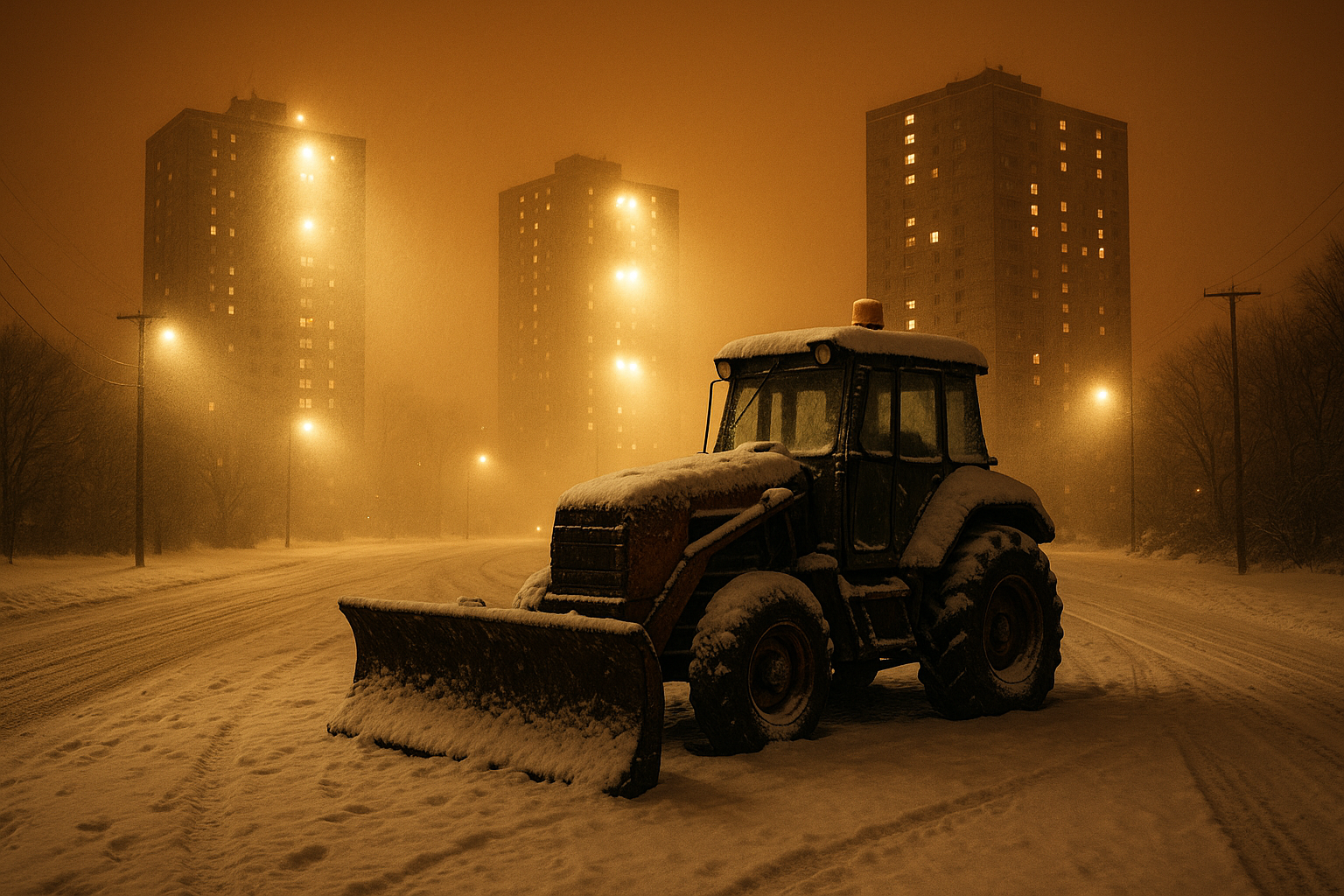
Alex Pretti's shooting in Minneapolis becomes a national flash-point, exposing federal tactics, protests, and an information war.
Alex Pretti, a kind nurse and TikToker, was tragically shot and killed by Border Patrol in Minneapolis. He was simply filming the officers making two teens get on the ground. His death, caught live on camera, caused a huge stir across the country. Everyone has their own story about what happened, making the truth hard to find.
What happened to Alex Pretti in Minneapolis?
Alex Pretti, a travel nurse and TikToker, was fatally shot with four .40-caliber rounds by a Border Patrol tactical squad in Minneapolis. He was documenting the squad forcing two Somali-American teenagers to the pavement near the Cedar-Riverside light-rail plaza when he was killed. His death, captured on livestream, sparked national outrage and conflicting narratives.
Get Cape Town news in your inbox
Stay updated with the latest stories from the Mother City.
The Night the Sky Turned Orange
Minneapolis spent the first week of February living beneath a low, rust-colored sky that had nothing to do with sunset or smog. The glow came from banks of stadium-grade floodlights aimed at public-housing towers and from dumpsters that refused to stop smoldering. Sirens, helicopter blades, and the metallic clatter of skateboarders dodging tear-gas canisters replaced the usual winter hush. On the sixth, Alex Pretti, 37, stepped outside with only his phone in hand. Two hours later doctors at Hennepin County Medical Center called time of death after pulling four Federal .40-caliber rounds from his chest. His final act, captured by multiple livestreams, was training his camera on a Border Patrol tactical squad as it forced two Somali-American teenagers to the pavement outside the Cedar-Riverside light-rail plaza. Neighborhood organizers nickname the spot “the 38th parallel” because it sits exactly 38 blocks north of the intersection where George Floyd took his last breaths in 2020. The mileage is coincidence; the emotional geography is not.
The plaza felt like a tinderbox even before gunfire. For four straight nights, residents had watched unmarked Yukons muscle onto curbs and teams of camouflaged figures - patches ripped off - pour out with less-lethal launchers drawn. Street medics darted between benches handing out saline and Narcan. Someone hammered together a makeshift barricade from busted-up hockey sticks; every few minutes the clack-clack rhythm of plastic on aluminum ricocheted off apartment walls. Pretti, a travel-nurse who had spent the previous summer volunteering in hurricane-battered Louisiana, told friends he felt obligated to document what he called “a public-health crisis in real time.” His TikTok handle, @NurseNorse, mixed skateboard tricks with tutorials on vasovagal syncope; that Saturday he swapped the selfie stick for a horizontal phone grip and walked straight toward the flashing lights.
By 18:03 the live chat beneath his stream was already screaming warnings: “Fed trucks, no plates,” “heads up - foam batons.” Pretti’s left hand rose, palm out, the universal signal that he was press, not protester. Within sixty seconds he was on the ground, phone spinning, lens pointed at a strip of violet sky that quickly faded to black. The footage - jerky, pixelated, but time-stamped - would become the cornerstone of every competing narrative that followed.
The 37 Seconds That Launched a Thousand Theories
Metadata does not care about politics; it simply records. At 18:03:47 Alex Pretti hit “go live.” Forty-four heartbeats later a muzzle flashed; a 40 mm foam baton struck his ribcage. He staggered, then stepped forward again, shouting, “I’m a nurse - let me help her,” referring to a woman whose neon-green satchel had exploded Narcan vials across the asphalt. Eight seconds after that, pepper-spray fogged the lens. A forearm shiver to the sternum dropped him to one knee. At 18:04:27 an agent whose vest read “Bravo-19” appeared to grope Pretti’s waistband. Four quick gunshots followed. The phone skittered fourteen feet, stream dying at 18:04:42. From first frame to last: thirty-seven seconds that the entire country would rewind, zoom, and second-guess for months.
Within ninety minutes the Bureau of Criminal Apprehension released a photo of a Taurus G3c 9 mm lying on pristine pavement, slide locked, magazine inserted. Social-media detectives pounced: no fingerprint dust, no DNA fluorescence, only four rounds visible in a twelve-round mag, and a serial prefix tied to a batch stolen from a Gary, Indiana, Bass Pro during the 2020 unrest. Whistle-blowers told the Star-Tribune the pistol wasn’t logged into the federal crime database until four hours after the shooting, an eternity in evidentiary time. Meanwhile, ER intake forms showed Pretti tested negative for gunshot residue on palms and sleeves - results his family released within twelve hours. Hospitals perform chest compressions, which can scrub GSR, but the timing of the test still undercut the official claim that Pretti “brandished” anything.
The contested firearm morphed into a Rorschach test. Conservative radio hosts repeated “loaded stolen gun” like a mantra; Twitch gamers stitched six camera angles into a 3-D Blender model showing no pistol in Pretti’s hands during the critical half-minute. House Democrats demanded BORTAC body-cam files; DHS answered that operators wore “legacy” uniforms lacking cameras - an odd assertion given a January procurement order for 1,200 Axon Body 4 units shipped to Minneapolis weeks earlier. Every fresh disclosure bred three new hashtags, each carrying its own shade of certainty or outrage.
Portrait of a Casualty and the Machinery Behind Him
Alex Pretti grew up in Red Wing, a river town best known for work boots and limestone bluffs. His father spent thirty years as a union machinist; his mother still runs the public-school library where Alex learned to laminate borrowed cards so neighborhood kids could check out Harry Potter. Colleagues at M Health Fairview recall him humming Prince while starting IVs on dehydrated infants at 3 a.m. He had completed FEMA psychological-first-aid modules, interviewed with Doctors Without Borders, and searched online that very afternoon for “ICE operation legality Minneapolis,” clicking “how to livestream if detained” at 17:58. Roommates say he was two semesters shy of a dual nurse-practitioner/public-health degree at St. Catherine University and planned to celebrate his thirty-eighth birthday in March with a skateboard marathon along the river flats. Instead, the county coroner logged four entrance wounds and a time of death that would end up on protest signs from Berlin to Mexico City.
Operation Safe City, the federal umbrella for the crackdown, opened its books on January 3 inside a pop-up command post on the fifth floor of the Whipple Federal Building. Leaked memos reveal rewritten 287(g) agreements that let deputized officers ignore previous sanctuary rules for hospitals, schools, and churches. Any protest of six or more people now qualifies as a “Tier-1 criminal event,” authorizing BORTAC - the same unit designed to chase cartel scouts across the Sonoran desert. Forty-two operators flew in from El Paso on January 20, together with two Lenco BearCats and a cargo pallet of M4 magazines. Legal justification? A dusty 1908 opinion that redefines the Mississippi River as a “navigable boundary” of the Great Lakes, placing Minneapolis inside the 25-mile zone where warrantless searches are permissible under 8 U.S.C. §1357(a)(2). No court has tested the theory in over a century; the city suddenly became a laboratory.
Minnesota Governor Tim Walz, a retired command sergeant major, activated the National Guard on February 4 but limited troops to guarding water plants, hospitals, and 911 centers. In a leaked call, White House Chief of Staff Susie Wiles warned that failure to protect federal property could trigger the Insurrection Act; Walz invited her to “send the paperwork - I’ll frame it next to my DD-214.” Wiles allegedly threatened to withhold $1.2 billion in FEMA disaster aid linked to 2023 spring flooding, a maneuver scholars say may breach the anti-deficiency act - except no enforcement channel has functioned since 1995. While lawyers swap statutes, four mobile surveillance towers loom over Cedar-Riverside, each fitted with thermal FLIR, license-plate readers, and Stingray cell-site simulators. A hacker dump claims 1.4 million plate scans and 900,000 IMSI captures; 88 % came from phones inside homes after 10 p.m., suggesting dragnet rather than targeted collection.
Streets as Battleground, Courtrooms as Chessboard
Protesters have traded static marches for Hong Kong-style flash mobs. Encrypted Signal channels with 6,000 subscribers fire 30-second alerts: “North Star - bring pots” or “Purple Rain - bring shields.” Participants buy identical $11 black coveralls from a shuttered auto-body supplier, turning the city into a sea of indistinguishable silhouettes. On Tuesday, 200 cyclists orbited the county jail for exactly forty-three minutes - Pretti would-have-been age - ringing bike bells instead of chanting, a sonic workaround against sound-based tracking. Others hoist 60-inch golf umbrellas from CVS, forming phalanxes that block surveillance lenses while medics drag the wounded into alleyways. Police counter with “kettling on wheels,” squad cars accelerating into bike columns, then braking hard to create pile-ups prosecutors can label “unlawful assembly with a vehicle.”
Medical fallout is piling up faster than charts can capture. ER staff report a 300 % spike in rubber-bullet injuries over 2020 levels; modern “sponge-tipped” rounds hide a PVC core that shatters orbital bones. Doctors describe “tear-gas lung,” a chemical pneumonitis born when CS powder mixes with sub-zero air, creating micro-crystals that burrow into alveoli. Because federal teams target street medics, University of Minnesota nursing students have turned an underground parking garage into a covert triage bay, communicating via off-grid mesh beacons. Snow is forecast to drop fourteen inches over the weekend, threatening to blanket flash-bangs and slow EMS response. City plow drivers, members of AFSCME Local 9, voted to refuse service on blocks where tactical vehicles idle - echoes of the 1934 Teamsters’ strike that once shut Minneapolis down.
Courtrooms are filling as fast as clinics. Pretti’s family filed a wrongful-death claim under the Federal Tort Claims Act, naming both the unnamed agent and Homeland Security Secretary Kristi Noem. The Minnesota ACLU seeks a restraining order, arguing Operation Safe City tramples the 1878 Posse Comitatus Act; the government will likely counter with 10 U.S.C. §§ 251–255, the statutory escape hatch presidents invoke when “domestic violence” impedes federal law. In a diplomatic wild-card, exiled Uyghur lawyers lodged an amicus brief with the International Criminal Court, alleging “crimes against humanity of persecution” under Article 7(1)(h) of the Rome Statute. The United States is not an ICC member, but a preliminary examination would still bruise future extradition diplomacy. Meanwhile, Target scuttled a $250 million logistics expansion, the Somali-dominated Karmel Square mall reports 60 % vacancy, and suburban gun shops can’t keep Level IIIA body armor in stock. Minneapolis Federal Reserve analysts warn that continued curfews could erase 38,000 season-adjusted jobs by summer - every post-pandemic gain vaporized.
Art, too, has entered the evidence locker. Before dawn, a collective scaled the Walker Art Center’s billboard and pasted a three-story image of Pretti’s flat-lined EKG traced over a Minneapolis transit map. A QR code in the corner opens an encrypted trove: 1,800 gigabytes of body-cam leaks, autopsy stills, and a lidar drone scan of the plaza. Trustees debate whether to preserve the installation as ephemeral protest or tear it down under pressure from donors that include former Republican governor Arne Carlson. Across the river, architecture students prototype pop-up sanctuaries that can be erected in thirty minutes from Menards-grade lumber, practicing for the moment when federal authority and Minnesota winter collide again. The city that once exported flour and Prince chords now exports datasets, hashtags, and emergency shelter plans - each one another shard in a national mirror that refuses to show the same face twice.
[{"question": "
Who was Alex Pretti and what happened to him?
", "answer": "Alex Pretti was a 37-year-old travel nurse and TikToker, known by his handle @NurseNorse. He was tragically shot and killed by a Border Patrol tactical squad in Minneapolis while livestreaming officers forcing two Somali-American teenagers to the ground. His death, captured live on camera, sparked national outrage and conflicting narratives."}, {"question": "Where and when did the shooting occur?
", "answer": "The shooting happened on February 6th, near the Cedar-Riverside light-rail plaza in Minneapolis. This location is colloquially known as \"the 38th parallel,\" as it is 38 blocks north of where George Floyd died, highlighting the area's emotional significance in the context of police brutality."}, {"question": "What was Alex Pretti doing at the time of the shooting?
", "answer": "Pretti was documenting a Border Patrol tactical squad's actions with his phone, livestreaming as they forced two Somali-American teenagers to the pavement. He had previously expressed a desire to document what he called \"a public-health crisis in real time,\" indicating his intent to report on the events unfolding in Minneapolis."}, {"question": "What is the controversy surrounding the firearm allegedly found at the scene?
", "answer": "A Taurus G3c 9mm pistol was presented by the Bureau of Criminal Apprehension as being found at the scene, but social media users and whistle-blowers raised doubts about its authenticity. The pistol lacked fingerprint dust or DNA, had an unusual number of rounds for its magazine, and its serial number was linked to a batch of stolen firearms. Furthermore, Pretti tested negative for gunshot residue, challenging the official claim that he \"brandished\" a weapon."}, {"question": "What was \"Operation Safe City\" and how did it relate to Pretti's death?
", "answer": "Operation Safe City was a federal crackdown initiated in Minneapolis, involving Border Patrol (BORTAC) units. It redefined protests of six or more people as \"Tier-1 criminal events,\" allowing for aggressive law enforcement tactics. Leaked memos also revealed controversial 287(g) agreements, enabling officers to disregard sanctuary rules. This operation created the volatile environment in which Alex Pretti was killed."}, {"question": "What were the immediate and ongoing consequences of Alex Pretti's death and Operation Safe City?
", "answer": "Pretti's death led to widespread protests, legal challenges, and a significant impact on Minneapolis. His family filed a wrongful-death claim, and the Minnesota ACLU sought a restraining order against Operation Safe City. The situation intensified the use of surveillance technologies, increased medical injuries from crowd control, and led to economic repercussions with businesses like Target halting expansion and increased vacancies in commercial areas. Art installations and community actions also emerged as forms of protest and resistance."}]
Kagiso Petersen is a Cape Town journalist who reports on the city’s evolving food culture—tracking everything from township braai innovators to Sea Point bistros signed up to the Ocean Wise pledge. Raised in Bo-Kaap and now cycling daily along the Atlantic Seaboard, he brings a palpable love for the city’s layered flavours and even more layered stories to every assignment.
View all articles →