
East London becomes KuGompo City, consultations come under scrutiny
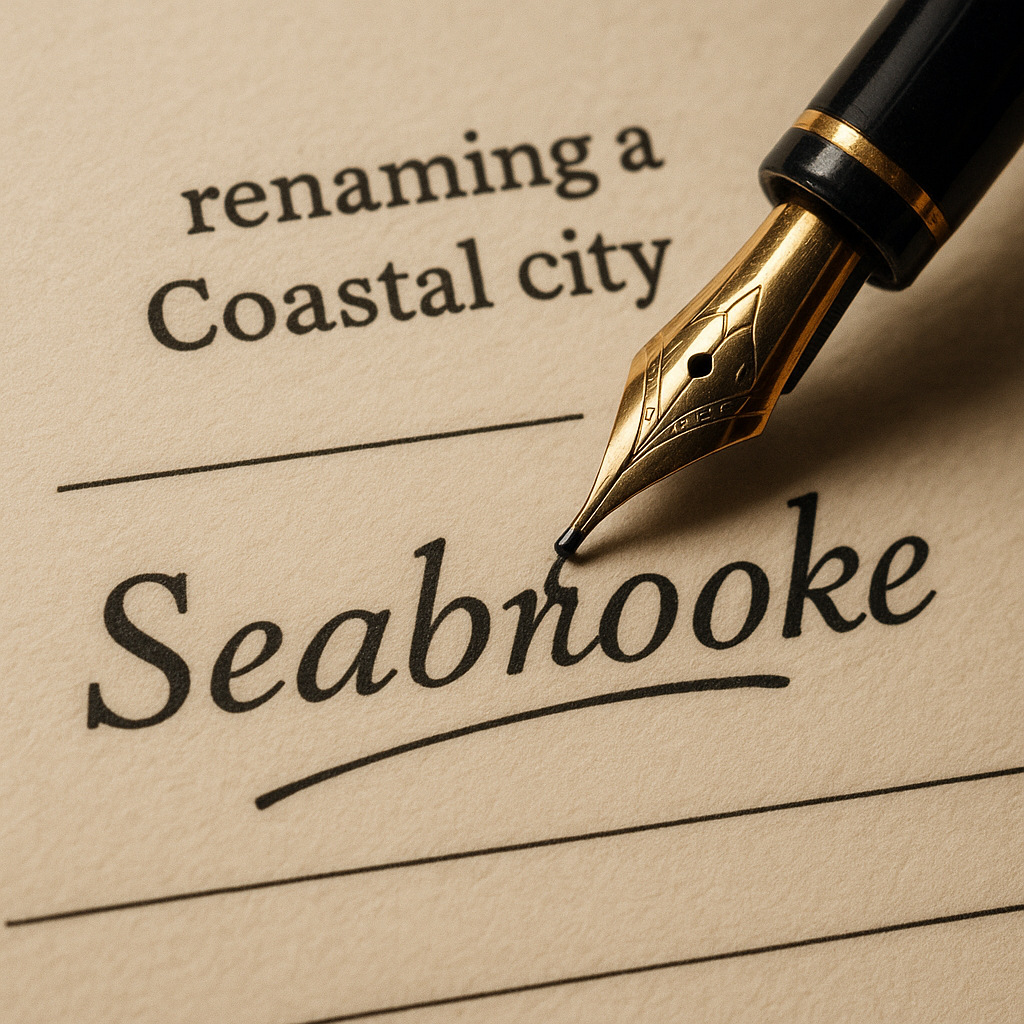
East London renamed KuGompo City: A single signature rewrites a map, ignites debate, and shifts the Eastern Cape's identity.
East London was renamed KuGompo City in a quick, surprising move. The name, suggested by Bonisile Grey, comes from the sound of waves at Cove Rock. Linguists say "-gompo" describes booming sounds, making the city's new name a "renaissance of memory." This change aims to bring back an old, natural name for the city.
Why was East London renamed KuGompo City?
East London was renamed KuGompo City following a petition by Bonisile Grey, who argued the name reflected the sound of waves at Cove Rock and reclaimed an older, sonic atlas. Linguists supported this, noting "-gompo" is an ideophone describing booming sounds. The renaming was seen as repatriation, not invention, aligning with a "renaissance of memory" initiative.
Get Cape Town news in your inbox
Stay updated with the latest stories from the Mother City.
Dawn Ink: A Minister, a Pen and a City That Vanished
At 09:42 SAST on 26 January 2026, Gayton McKenzie uncapped a vintage fountain pen filled with green ink and scrawled his name across the last of 21 certificates. The pen once belonged to ANC veteran Duma Nokwe; the document it touched rebranded 175-year-old East London as KuGompo City. By 09:43 the scan was already gliding down the Government Gazette pipeline. By 10:03 the arts ministry’s Twitter feed had cropped and posted the signature; by 10:17 Wikipedia editors were locked in their third revert war over the title. In little more than half an hour, South Africa’s second-busiest coastal metropolis after Durban slipped into linguistic limbo, its harbour, airport, rugby stadium and 810 000 residents suddenly tethered to a word most of the planet had never seen.
The minister had not visited the coast since childhood, but he had promised voters a “renaissance of memory.” The pile of paperwork on his Pretoria desk carried the slogan “Restoration, not erasure,” and the final page carried a red “URGENT” tag placed there by a junior director who grew up in Mdantsane. No drums rolled, no cameras flashed; only the soft click of a smartphone shutter marked the moment the Buffalo River city was reborn.
Within the hour, border-region logistics firms were forwarding the news to fleet controllers in Durban and Johannesburg. Hauliers who had spent years typing “East London” into GPS units now stared at dispatch boards flashing an unfamiliar syllable pair. Truck-stop cashiers began practising the pronunciation; container-terminal planners pulled up spreadsheets to budget for stencil paint. A single stroke of ink had detonated a chain reaction that would ripple from Berlin travel blogs to Buffalo River breakwaters.
Why KuGompo? A Sound That Refused to Die
Tour guide Bonisile Grey, 58, claims he first heard the word while collecting mussels at Cove Rock with his grandmother in 1976. “She told me to listen between waves,” he remembers. “The water hits those lava tubes and goes gmm-po, gmm-po. That heartbeat is the city’s real name.” Grey’s petition to the South African Geographical Names Council (SAGNC) argued that colonial cartography had simply overwritten an older, sonic atlas. His great-grandmother, Nofinishi Dywili, an uhadi bow-player famed along the Wild Coast, was buried in dunes erased by the 1913 Land Act; reclaiming the name, Grey insisted, was repatriation, not invention.
Linguists at Rhodes University backed him up. Their 42-page advisory note showed that “-gompo” functions as an ideophone in both isiXhosa and isiMpondo, describing anything that booms: a blacksmith’s hammer, a ceremonial drum, or surf cannonading through a gulley. Ideophones are untranslatable onomatopoeia that compress action, sound and emotion into a single vivid burst. By adopting KuGompo, the city would literally speak the dialect of the sea.
Tourism marketers now toy with slogans such as “Visit the place that answers back” and “Where the ocean drums your name.” Whether German backpackers or cruise-ship day-trippers will embrace the mouthful remains to be seen, but early analytics show Google searches for “KuGompo” doubling every six hours since the ministerial tweet. The word, it seems, carries its own PR department hidden in its syllables.
Paper Mountains: How a Village Petition Conquered Pretoria
Grey filled out the one-page SAGNC form in March 2019, paid the R165 deposit slip, and assumed his idea would drown in bureaucracy. Instead it joined 643 other renaming bids nationwide, then inched up the queue propelled by a 30-day newspaper notice, a modest public hearing at the Orient Theatre, and a flood of supporting emails from oral-history societies. Only 14 letters of objection arrived, half originating from a stationery firm in Bedfordview that had trademarked “East London” on executive diaries. Their lawyer argued “irreparable harm,” but the council’s legal team found the claim too narrow to trump constitutional imperatives of redress.
Municipal planners, heritage agencies and transport economists added annexures until the dossier resembled a tertiary thesis: 1 800 pages, 17 spreadsheets, three linguistic studies, two maritime-cost models and a cultural-impact comic strip for schoolchildren. By late 2025 the file carried the bureaucratic nickname “Gompo-klip” – too heavy to lift, too colourful to ignore. When McKenzie’s political advisers went hunting for a quick win ahead of local elections, the klip was wheeled into his in-tray and the pen was unscrewed.
The unpublished sixteen companion renamings remain locked in a password-protected PDF labelled “N-CONFIDENTIAL.” Insiders hint that King William’s Town may salute prophet Ntsikana, Queenstown could slide into KwaKhubusi, and the beach hamlet of Cintsa might drop the colonial “C.” If half the rumours survive the 30-day objection window, the 2026 Gazette will redraw a land area larger than Belgium. For now, all eyes rest on KuGompo, the first domino.
Euros, Bytes and Road Signs: The Price of a New Name
Border-Kei Chamber of Commerce crunched same-day numbers: R3.2 million for new freeway exit boards, R1.4 million to retool vehicle-licence discs, R12 million for business stationery. Add GPS-map lag, website rewrites, manhole-cover collectors on eBay, and the bill tops R100 million before the first tourist selfie. SMEs feel the sting hardest. A Southernwood dry-cleaner must bin 30 000 tags; an Esplanade guest-house tosses 8 000 branded shower caps. Yet sign-fabricators in Mdantsane quote for 5 000 aluminium sheets, and a Durban digital-mapping start-up saw its JSE Alt-X shares spike 17 % within 24 hours. Creative destruction, KwaZulu-style.
Ride-hailing algorithms already duel over the label. Uber’s database accepts both names, so drivers toggle depending on surge; passengers watch fares yo-yo as the app struggles to decide whether “KuGompo Stadium” is closer than “East London Stadium.” TomTom promises updates “next quarter,” but freight companies cannot wait. One logistics coordinator admits he now books trucks to “Buffalo River Port” just to keep GPS units calm. Meanwhile, a Berlin blogger swapped her bio to “Bound for KuGompo – where waves pronounce you welcome,” collecting 2 000 likes before supper.
Night settles over the harbour where a municipal crew bolts the first neon-green “KuGompo City” plaque to the breakwater railing. Each swell slaps the pylons with that ancestral beat – gmm-po, gmm-po – as if rehearsing for Bonisile Grey’s walking tours. Container ships blink morse back, taxis rehearse the new name on winter manifests, and somewhere a teenager updates her dating profile to “proud daughter of KuGompo.” The city has not moved an inch, yet every map in the world is already one step behind the tide.
[{"question": "Why was East London renamed KuGompo City?", "answer": "East London was renamed KuGompo City following a petition by Bonisile Grey, who argued the name reflected the sound of waves at Cove Rock and reclaimed an older, sonic atlas. Linguists supported this, noting \"-gompo\" is an ideophone describing booming sounds. The renaming was seen as repatriation, not invention, aligning with a \"renaissance of memory\" initiative."}, {"question": "When did the renaming of East London to KuGompo City officially happen?", "answer": "The renaming officially occurred on January 26, 2026, at 09:42 SAST, when Minister Gayton McKenzie signed the final certificate. The document was then swiftly processed, appearing in the Government Gazette and on social media within minutes."}, {"question": "What is the meaning behind the name KuGompo?", "answer": "The name KuGompo originates from the sound of waves hitting lava tubes at Cove Rock, described as 'gmm-po, gmm-po'. The '-gompo' part is an ideophone in isiXhosa and isiMpondo, representing booming sounds, like a blacksmith's hammer or a ceremonial drum. It's intended to reflect the city's natural 'heartbeat' and connection to the sea."}, {"question": "Who initiated the renaming process?", "answer": "The renaming process was initiated by tour guide Bonisile Grey, 58, who filed a petition with the South African Geographical Names Council (SAGNC). He claimed to have first heard the word from his grandmother in 1976 and advocated for reclaiming this older, indigenous name."}, {"question": "What was the cost and impact of the renaming?", "answer": "The immediate costs were significant, including R3.2 million for new freeway exit boards, R1.4 million for vehicle license discs, and R12 million for business stationery. The total bill was estimated to exceed R100 million, affecting SMEs who had to replace branded items. However, it also created opportunities for sign fabricators and digital mapping companies. The change also caused temporary logistical challenges for hauliers and ride-hailing services."}, {"question": "Are there other cities in South Africa expected to be renamed?", "answer": "Yes, the renaming of KuGompo City is considered the 'first domino' in a series of potential renamings. There are hints that King William's Town may be renamed to honor prophet Ntsikana, Queenstown to KwaKhubusi, and Cintsa might drop its colonial 'C'. A password-protected PDF details sixteen companion renamings that could redraw a significant land area if approved."}]

A Russian-Spanish journalist and Cape Town native, channels his lifelong passion for South Africa into captivating stories for his local blog. With a diverse background and 50 years of rich experiences, Serjio's unique voice resonates with readers seeking to explore Cape Town's vibrant culture. His love for the city shines through in every piece, making Serjio the go-to source for the latest in South African adventures.
View all articles →