
Firefighters battle major blaze in Hout Bay’s Imizamo Yethu
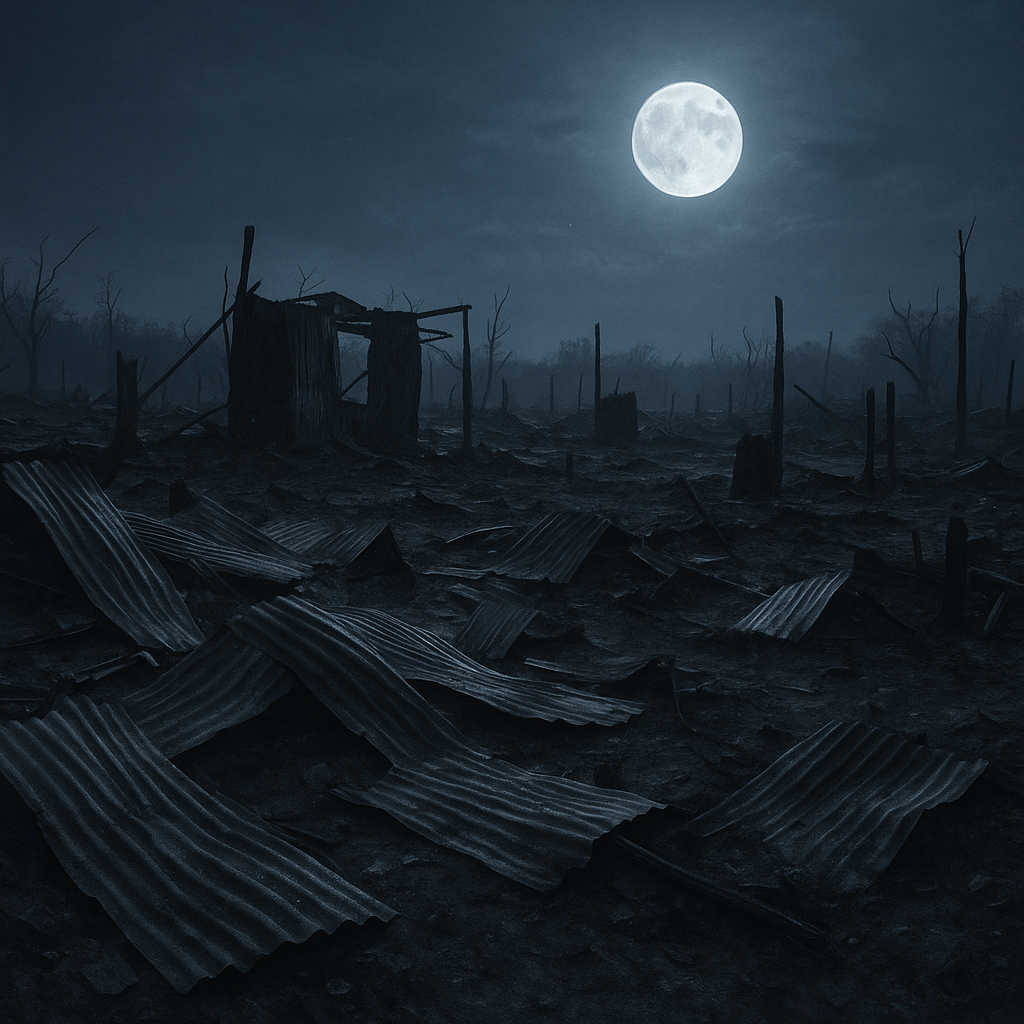
A devastating fire sweeps through Imizamo Yethu's Dontse Yakhe, displacing families and testing the community's resilience and innovative disaster response.
One Saturday night, a fire roared through Imizamo Yethu, turning homes into ash. Firefighters bravely faced huge challenges like steep hills and live wires. But the community and aid groups quickly jumped in to help, showing amazing strength. Now, people are working hard to rebuild, learn from the disaster, and plant new hope for the future.
What challenges do firefighters face when combating blazes in informal settlements?
Firefighters face numerous challenges in informal settlements, including steep, unstable terrain, live wires, loose gas lines, and narrow access. The rapid spread of fire through densely packed shacks, often constructed from combustible materials and storing flammable liquids like paraffin, further complicates efforts, making direct attacks difficult and requiring innovative strategies like creating firebreaks.
Get Cape Town news in your inbox
Stay updated with the latest stories from the Mother City.
Inferno on the Ridge
Saturday evening in Dontse Yakhe began with silver moonlight and ended in twin glows: the steady lunar disk and a rampaging orange ribbon that sprinted uphill faster than any human could follow. At 20:17 a single lick of fire slipped through the pallet-wood planks of a one-room shack; nine minutes later the whole spur crackled like dry thatch, heat so fierce that corrugated sheets curled, snapped their nails and cart-wheeled into the dark like razors. Neighbours strung themselves into bucket brigades from the lone communal tap, but water flashed to vapour the instant it left the containers. Toddlers on grandmothers’ hips clutched plastic bags stuffed with ID books; teenagers hammered empty Coke bottles against sheet-metal to wake those napping deeper in the maze. A rooftop solar panel popped with an electric-blue flash, freezing the chaos into a single silhouetted tableau.
By 20:31 the City of Cape Town’s switchboard lit up. Forty-seven calls arrived inside nine minutes; the dispatch computer stamped every one “Priority Red – Informal Settlement.” Thirteen vehicles rolled: pumpers, water tankers, a hydraulic platform and a foam unit sped out of Hout Bay, Sea Point, Wynberg and Salt River. Sixty firefighters, four of them facing their very first informal-settlement fire, stepped down into radiant heat that blistered the reflective strips on their coats. Incident Commander Wayne van Niekerk claimed the only open patch big enough for a command post: a kids’ soccer field marked by two driftwood goals. From there he ordered a second alarm - 1.2 million extra litres of water, lighting towers and an EMS bus for mass-casualty triage.
Advancing up a 35-degree slope threaded with live wires and loose gas lines is like climbing a ladder set on marbles. Crews worked eight-minute rotations because uphill sprints drained SCBA cylinders twice as fast as on level ground; two rookies keeled over with heat exhaustion before the first hose-line even hissed. Aerial jets could not squeeze into gaps that averaged less than a metre and a half, so 200 metres of 45-mm lay-flat hose were snaked through “Snake Alley,” ducking sagging washing lines still heavy with Saturday’s laundry. Every fifth shack doubles as a spaza shop storing paraffin in 25-litre “chicken” drums; when one drum failed, a molten river of fuel surged downhill and crews had to abandon the direct attack. Instead they ripped apart twelve shacks downslope by hand, forging a firebreak. Home-owners who first swore at the strangers soon grabbed crowbars and joined in once they realised the move would spare the lower lanes.
By 22:04 the main wall of flame lay dead, but the night stayed restless. Thermal cameras revealed pockets of 300 °C hiding under collapsed tin; each puff of Hout Bay’s katabatic wind threatened another spark. Twenty firefighters marched until sunrise, backpack extinguishers on their shoulders, glow-sticks lashed to sticks leading the way - an improvisation born during the 2017 Knysna inferno.
Counting Spoons and Dreams
Ward councillor Roberto Miguel Quintas reached the ridge at 23:15, voice hoarse, a borrowed Nomex hood pulled low. Standing beneath the whirr of a drone, he tapped a GIS tablet painted red across 1.8 hectares. Inside that polygon sat 340 rooms that had sheltered roughly 420 adults and 190 children. Astonishingly, the only medical intervention required was a nebuliser for a toddler who had inhaled smoke; no one suffered burns or crush injuries. Yet the absence of death does not erase trauma. While hose teams still drenched hotspots, a second mobilisation spun into motion inside the Hout Bay Community Hall. Disaster Risk Management officers fanned out with “Rapid Assessment Form A,” a double-sided sheet asking how many mattresses, sanitary packs, baby kits and food parcels each family needed.
At 04:00 the first Gift of the Givers truck idled at the gate - its cargo bankrolled by a WhatsApp blast that raised R1.2 million in four flat hours. Volunteers formed a human conveyor, stacking 600 blankets, 1 000 hygiene packs, 500 school uniforms and 120 “kid comfort” boxes. Each box held a teddy, crayons and a palm-sized solar projector pre-loaded with bedtime stories, a tool first tested after the 2021 Durban unrest to let children re-script catastrophe through play.
Sunday morning unveiled a charcoal diorama: beams bowed like question marks, blobs of melted plastic frozen into surreal sculptures. SASSA officials pitched a gazebo and pressed fingerprints with a portable biometric kit so social-grant payments could be rerouted to cash-send vouchers within 24 hours. Human Settlements teams popped up 150 “H-Shelters” - canvas-walled, aluminium-framed cubes four people can erect in twelve minutes - aligned along the old footpaths so social GPS remains intact. Every shelter carries a solar bulb that moonlights as a phone-charger; the diode blushes red when the battery sinks below 20 %, a gentle nudge to save power.
Data among the Ashes
Before the ridge had cooled, researchers from the University of Cape Town’s Fire Engineering division strapped on LIDAR backpacks, scanning the slope into a three-dimensional model. Early numbers show the inferno sprinted 0.9 metres per second, shoved by a 22 km/h south-easter funnelled through tin canyons. Doctoral student Nombulelo Makhanya scoops ash into glass vials, hunting polycyclic aromatic hydrocarbons - carcinogens that seep into garden soil and later into tomatoes and spinach. “Informal-settlement fires are climate events,” she explains, “releasing more black carbon per square metre than savannah blazes.” Her data will feed an early-warning algorithm that blends weather forecasts, shack density and material heat-release rates; a beta rollout is slated for next summer.
Meanwhile, the Metro’s new “Fire Buddy” programme - conceived after last month’s neighbouring blaze - has enrolled 30 residents armed with beaters, knapsack sprayers and heat-sensitive armbands that vibrate at 80 °C. Pairs patrol hourly during red-flag weather, earning R1 500 monthly via e-vouchers redeemable at local spaza shops, injecting resilience cash straight into the micro-economy. Early field notes indicate the buddies can shave four minutes off initial response - lab tests suggest that alone could trim structural loss by 38 %.
On the slope, a teenage girl named Aphiwe combs debris in grey school socks, hunting a flash-drive that held her matric IT project. She salvages only the metal USB plug, its plastic body vaporised. A firefighter loans her gloves; she pockets the sliver like jewellery. A few metres away an elderly barber erects his chair between two H-Shelters, clips a sheet to a line and reopens for trade - R20 a cut, R10 a shave - “because hair keeps growing even when the roof burns.”
Green Shoots in a Charcoal Landscape
By mid-afternoon the air turns from acrid to earthy as volunteers scatter gypsum to neutralise acid ash. A church-based mobile kitchen dishes 1 400 plates of samp and beans flavoured with smoked paprika donated by a restaurant that can no longer serve the batch - fire-smoke seasoning for fire-relief food. Children queue twice: first for lunch, then for the “Play-in-a-Box” tent where drama students re-enact last night’s horror with glove puppets, letting youngsters rewrite the ending so a benevolent dragon douses the flames and becomes rain.
Logistics soon pivot from relief to recovery. A blockchain ledger - first coded to track rhino horn DNA - now registers every mattress and spoon, preventing the “second disaster” of duplicated hand-outs. QR-coded wristbands link each household to a cloud folder stuffed with ID copies, SASSA forms and a voice-note from a counsellor explaining trauma responses. A WhatsApp chat-bot asks families whether they want to stay near the site, move to Hangberg’s transitional camp, or accept a travel grant to relatives in the Eastern Cape; a dashboard refreshes every ten minutes like a humanitarian Bloomberg terminal.
Night ushers in a different vigil: not against fire but against metal looters. The neighbourhood watch - bolstered by off-duty firefighters - strings caution tape daubed with daylight-charging, night-glowing paint. Portable floodlights hum on circuitry harvested from the community’s home-grown e-bike conversion trade, a cottage industry born when commuters sought cheaper rides than minibus taxis.
Far from the flicker of floodlights, policy cogs grind. A task-force memo already suggests carving a 6-metre terraced “fire-break greenway” planted with aloes and sour figs whose succulent leaves bank water and whose roots knit sandy soil. The idea riffs on 17th-century Japanese yakihata lanes, refreshed by local botanists who note that winter-flowering aloes feed sunbirds when fynbos rests - biodiversity profit from disaster prevention. Funding remains the perennial choke: the city’s informal-settlement upgrade budget languishes 40 % below the national benchmark, and Green Climate Fund grants drown in proposal loops. Yet every charcoal beam is a data point, every twisted spoon a lobbying lever, prising open fiscal valves one calculation at a time.
And so the ridge stands - bald, steaming, yet already reassembling inside spreadsheets, seedlings, a barber’s stubborn chair and Aphiwe’s half-melted flash drive destined for a university resilience exhibition. The sky tonight wears only moonlight, but the scent of gypsum and smoked paprika hangs in the air, whispering that the next blaze is a matter of when, not if - and that the architecture of response keeps iterating, like aloes on a blackened slope, tough, defiant, improbably flowering.
[{"question": "
What challenges do firefighters face when combating blazes in informal settlements?
", "answer": "Firefighters face numerous challenges in informal settlements, including steep, unstable terrain, live wires, loose gas lines, and narrow access. The rapid spread of fire through densely packed shacks, often constructed from combustible materials and storing flammable liquids like paraffin, further complicates efforts, making direct attacks difficult and requiring innovative strategies like creating firebreaks. They also contend with limited water access, difficulty in deploying aerial equipment, and the risk of heat exhaustion due to intense conditions and uphill work."}, {"question": "How quickly did the fire spread in Imizamo Yethu?
", "answer": "The fire spread with alarming speed. A single lick of fire slipped through a shack's planks at 20:17, and just nine minutes later, the entire spur was engulfed. The inferno sprinted approximately 0.9 meters per second, propelled by a 22 km/h south-easterly wind funnelled through the dense settlement."}, {"question": "What immediate community and aid responses were observed after the fire?
", "answer": "The community and aid groups demonstrated immense strength and rapid response. Neighbors formed bucket brigades from communal taps, and within minutes, the City of Cape Town's switchboard received dozens of emergency calls. Aid organizations like Gift of the Givers mobilized quickly, raising R1.2 million in four hours via WhatsApp and delivering essential supplies like blankets, hygiene packs, and school uniforms. Disaster Risk Management officers conducted rapid assessments to determine needs, and SASSA officials facilitated immediate social grant payments."}, {"question": "What innovative solutions are being implemented for rebuilding and future disaster prevention?
", "answer": "Rebuilding efforts include the rapid deployment of 150 'H-Shelters' \u2013 canvas-walled, aluminum-framed cubes that are easy to erect and designed to maintain social GPS. For disaster prevention, researchers are developing an early-warning algorithm that combines weather forecasts, shack density, and material heat-release rates. The 'Fire Buddy' program empowers residents with beaters and knapsack sprayers, aiming to reduce initial response times and structural loss. There's also a proposal for a 6-meter terraced 'fire-break greenway' planted with water-retaining aloes and sour figs."}, {"question": "How is technology being used to assist in the aftermath and recovery?
", "answer": "Technology plays a crucial role in recovery. Drones and GIS tablets were used for rapid assessment of the affected area. A blockchain ledger, originally for tracking rhino horn DNA, now meticulously registers aid distribution to prevent duplication. QR-coded wristbands link households to cloud folders containing important documents and counseling voice-notes. A WhatsApp chatbot assists families in deciding on relocation options, and a dashboard provides real-time humanitarian data. LIDAR backpacks are used by researchers to create 3D models of the slope for fire dynamics analysis."}, {"question": "What long-term implications and lessons are being drawn from this event?
", "answer": "The event highlights that informal-settlement fires are significant 'climate events' due to their black carbon release. The disaster is serving as a data point for lobbying for increased funding for informal settlement upgrades, as the current budget is significantly below the national benchmark. The community's resilience and innovative spirit, from home-grown e-bike conversions to floodlight power, demonstrate a capacity for self-reliance. The ongoing efforts are focused on iterating and improving the 'architecture of response' for future incidents, emphasizing preparedness, community involvement, and sustainable solutions like fire-break greenways that also profit biodiversity."}]
Kagiso Petersen is a Cape Town journalist who reports on the city’s evolving food culture—tracking everything from township braai innovators to Sea Point bistros signed up to the Ocean Wise pledge. Raised in Bo-Kaap and now cycling daily along the Atlantic Seaboard, he brings a palpable love for the city’s layered flavours and even more layered stories to every assignment.
View all articles →