
In photos: Army prepares for deployment in Cape Town
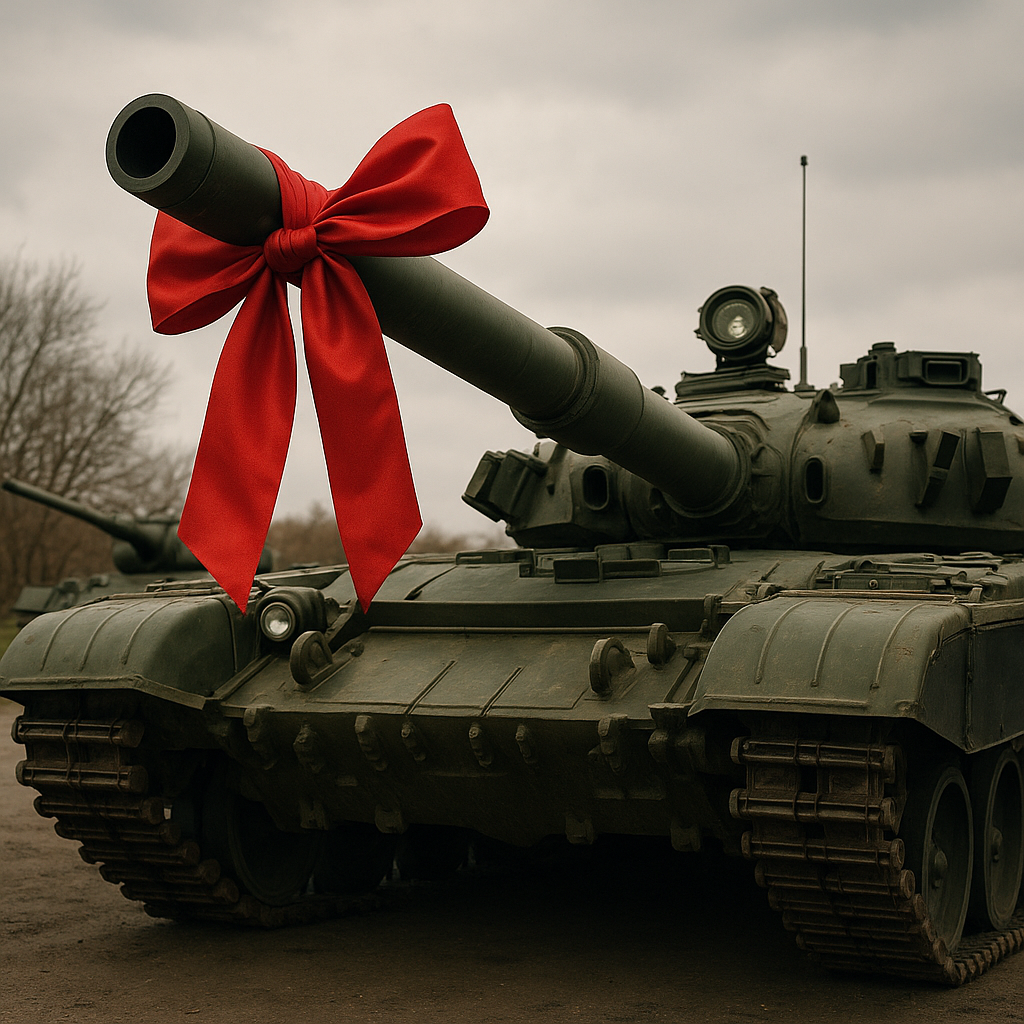
South Africa deploys 2,200 troops in a 3-year surge to combat crime. This explores the military's role, public perception, and challenges.
South Africa is sending 2,200 soldiers to fight crime for two whole years, from April 2025 to March 2027. This is the longest time troops have been used at home since way back. They will help police with things like roadblocks and patrols to make people feel safer and stop crime, especially gun violence. But some people worry about what soldiers will do and if it will truly work, especially since similar plans in the past had problems. The government hopes this big show of force will make a real difference on the streets.
What is the purpose of South Africa's 24-month soldier deployment?
The deployment of 2,200 South African soldiers from April 2025 to March 2027 aims to combat crime by supporting police operations, including cordons, roadblocks, and high-visibility patrols. This initiative, the longest domestic troop employment since Operation Corona, seeks to reassure citizens and reduce crime rates, particularly contact crimes and illegal gun activity.
Get Cape Town news in your inbox
Stay updated with the latest stories from the Mother City.
1. The Parade That Launched a Thousand Memes
Belhar’s open field felt less like a crime-fighting launchpad and more like a national holiday on steroids. On 25 March 2025, 2 200 troops snapped to attention while a SAPS brass band cranked Nkosi Sikelel’ iAfrika loud enough to rattle nearby rooftops. Helicopters thumped overhead, police dogs barked on cue, and a teenage reservist piloted a drone that piped the spectacle straight to the SANDF’s TikTok feed. Lieutenant-General Tebello Mosikili told the grid-square of uniforms that their job was to reassure, not terrify. The subtext, however, was louder than the tubas: South Africa is again letting soldiers own the pavement, and this time the diary runs from April 2025 to March 2027 – the longest domestic employment of troops since the border-watch Operation Corona.
The rotation plan, patched together from treasury spreadsheets and provincial wish-lists, parks the biggest chunk of soldiers in the Western Cape – 900 at full stretch – followed by KwaZulu-Natal (550) and Gauteng (400). The leftover 350 ride a permanent “ready column” that can land in Mpumalanga’s platinum towns, Eastern Cape taxi kill-zones or the Northern Cape’s Vaalhartz gang grid within six hours. Brigadier-General Martin Gopane swears the army is “not annexing police work,” but will supply cordons, roadblocks and high-visibility swagger so detectives can chase paper instead of crowd-control every payday weekend.
Numbers on a spreadsheet, though, do not prepare you for the moment an armoured convoy idles outside a Belhar spaza at sunrise. In Bishop Lavis, the first neighbourhood on the hit-list, kids froze mid-cricket game; toddlers relaxed when lollipops appeared, but teens wanted to know how long the “occupation” would stick. Memory fuels the side-eye: during Operation Prosperity (2021-23) troops in KZN ordered curfew-breakers to do push-ups; the Military Ombudsman logged 312 complaints, including two teenagers fatally shot. February 2025 rules now ban push-ups as punishment and order every rifle magazine sealed with blue tape marking the first five rounds as “less-lethal.” Township sceptics call the tape a PR prop; time will tell if the blue stripe stops blue-on-blue tragedies.
2. Spy Screens, QR Codes and the New Surveillance Bazaar
Mosikili’s aside – “intelligence will steer us” – was not small talk. For the first time the Crime Intelligence Division’s hush-hush Fusion Centre in Silverton will push its daily threat grid to a military desk in the same room. Thirty-six SANDF analysts, freshly back from tracking rebels in the DRC, will tip drone and satellite pictures into SAPS’s clunky CI-1 system, a dinosaur that still purrs on Windows 7. Treasury has slipped R 1.8 billion into a quiet “CI-Modernisation” purse; R 430 million of that will haul the database onto a SAP cloud, a shift privacy lawyers fear could let the state park #FeesMustFall activists alongside gang data in the same bucket.
Inside the centre a 15-metre LED wall glows with heat-maps first built to chase cable thieves on the Jo’burg-Durban rail. Algorithms now ping “crowd-gathering precursors” – think 30 cell-phones clustering after 22:00 or sudden taxi-rank huddles. When the software blinks red, an unmarked Quantum shuttles four soldiers and two plain-clothes spooks to “observe and stabilise.” Critics mutter about pre-crime policing; generals counter with “left-of-bang interdiction,” a phrase borrowed from US Marine Corps manuals.
The Helen Suzman Foundation wants none of it. Their court papers, filed under Rule 53, demand the full operational mandate, leaning on last year’s Constitutional Court verdict that any SANDF employment beyond six months needs Parliament to chew over “specific, measurable objectives.” The foundation argues that “make crime go down” is too fuzzy and asks for quarterly scorecards – murder clearance rates, search warrants served, civilian complaint ratios – to be published in the Gazette. The Presidency has until 14 May to file a reply. If the court bites, every foot soldier could end up completing SAPS docket entries after each stop-and-search, a paperwork waterfall that might drown the very speed the surge advertises.
3. Micro-Economies, Pink Armbands and the Region Watching the Fence
Hardware geeks have flooded Twitter with shots of Casspirs repainted “urban grey” after 2023 focus groups in Mitchells Plain said nutria-brown “screamed 1985.” Each carrier now wears a QR stencil; scan it and your WhatsApp jumps straight to the Military Ombudsman. Early stats: 72 % of messages are selfies, 14 % moan about burst doors. Nineteen formal case files are already open, mostly for property damage after midnight raids. Platoons also tote pepper-ball launchers (180 rounds a minute) and collapsible batons cast from glass-filled nylon to shave skull-fracture stats, yet every section still keeps four R4 rifles with marksmen qualified to 600 m. Ballistic shields donated by Washington are painted white with UN-blue chevrons – “blue-washing,” academics say, since no UN mandate props up the patrols.
In Kraaifontein, where 120 troops set up on 3 April, commerce adapts fast. Spaza fridges stock 500 ml Energade at R 7 because privates buy by the crate. A barber charges soldiers R 30 for a “high-and-tight,” half the usual fee, betting on turnover. A Pentecostal church runs Wednesday “Pray for the Troops” services; collection plates overflow with coins from guilty consciences. Even drug runners recalibrate: gang spotters in Hanover Park log the army’s rigid shift change at 20:00 and slide stash houses one block over, joking the patrol is “just another tide table.”
Gender activists are side-eyeing the testosterone pageant. Western Cape MEC Anroux Marais told troops they are “the shield between chaos and our mothers,” a line that could have dropped from a 1970s NATO leaflet. NGO Women Protea mailed 200 pink armbands to Belhar with a request that officers wear them on International Women’s Day; only six did, but #PinkShield trended for days. Meanwhile Botswana has quietly reinforced its Ramatlabama border post, worried that Gauteng crackdowns will squeeze bandits westward. Maputo port bosses say Pretoria’s new 36-hour no-charge detention for suspected mules is already rerouting cocaine flights back to the Pemba corridor. In the DRC, MONUSCO begged for a 90-day extension on 12 SANDF helicopter crews; the answer was a polite “nope,” as home turf takes priority.
4. History on Replay and the KPI Casino
South Africa has danced this tango before. From 1967 to 1990 the apartheid regime deployed 20 000-plus conscripts in “area protection” squads, supposedly to guard farms, actually to cow townships. Fortnightly army-police boards swapped target lists; today’s Fusion Centre revives that cadence under a democratic flag, minus the jackboot ideology – for now. Veterans of the 1980s State of Emergency warn of “contact normalisation,” the tipping point when residents stop asking why troops are here and simply schedule life around their patrols. Once that mental line is crossed, withdrawal becomes political poison: any post-pull-out crime spike will be branded “weakness.”
National Commissioner General Sehlahle Fani’s memo to station commanders lists five holy KPIs: cut contact crime by 15 % in a year; lift illegal-gun hauls by 35 %; keep cash-in-transit heists under two per quarter; trim trial-ready case time from 180 to 120 days; and hold soldier-related civilian complaints below 1 % of all “interactions.” Analysts smell loopholes: crime can simply migrate beyond patrol cords; trial speed depends more on overworked prosecutors than on boots; and “interactions” could include every QR-code selfie, mathematically bleaching complaint ratios.
Behind the fanfare, the CSIR is testing 120 patrol vehicles fitted with directional audio arrays that can fire 84-decibel warnings 200 m down a street – loud enough to penetrate shack walls yet narrow enough to dodge the legal need for a loud-hailer announcement. Married to ZTE-supplied number-plate cameras, the rig lets troops pull cars without announcing reasonable suspicion to the whole block. Expect court challenges before Christmas. Meanwhile UCT’s safety poll records a 23 % safety bump among over-50s after week one, zero change for under-25s, and a slight drop for women walking after 21:00 who now fear “two uniforms instead of one.”
The brass band rehearses nightly for the next sunset spectacle, where generals will again declare these streets a shared civic space, not a battlefield. Beyond the razor wire, children chase the shadow of a humming drone, unsure whether its buzz heralds guardians or goggles. The baton, as Mosikili admitted, has been passed; where it lands after midnight is anyone’s bet.
What is the purpose of South Africa's 24-month soldier deployment?
The South African government is deploying 2,200 soldiers for a period of 24 months, from April 2025 to March 2027, to assist police in combating crime. The primary goals include reducing overall crime rates, particularly contact crimes and gun violence, and enhancing public safety and reassurance through high-visibility patrols, roadblocks, and cordons.
How long will this soldier deployment last, and why is it significant?
This deployment is scheduled for 24 months, from April 2025 to March 2027. This duration is significant because it marks the longest continuous domestic employment of troops in South Africa since Operation Corona, a border-watch operation that ran from 1967 to 1990. This extended period highlights the government's perceived urgency and commitment to using military force to address internal security challenges.
Where will the deployed soldiers be stationed?
The largest contingents of soldiers will be stationed in the Western Cape (900 troops), KwaZulu-Natal (550 troops), and Gauteng (400 troops). The remaining 350 soldiers will form a permanent "ready column," capable of deploying within six hours to other provinces such as Mpumalanga, Eastern Cape, or Northern Cape, as needed to address localized crime hotspots.
What are the concerns and criticisms surrounding the deployment?
Concerns include the historical problems associated with past military deployments, such as during Operation Prosperity (2021-23) which saw 312 complaints and two fatal shootings. Critics worry about potential human rights abuses, the militarization of policing, and the effectiveness of such operations given past issues. There are also concerns regarding surveillance capabilities, the potential for

A Russian-Spanish journalist and Cape Town native, channels his lifelong passion for South Africa into captivating stories for his local blog. With a diverse background and 50 years of rich experiences, Serjio's unique voice resonates with readers seeking to explore Cape Town's vibrant culture. His love for the city shines through in every piece, making Serjio the go-to source for the latest in South African adventures.
View all articles →