
Iran strikes back with deadly missiles targeting Israel
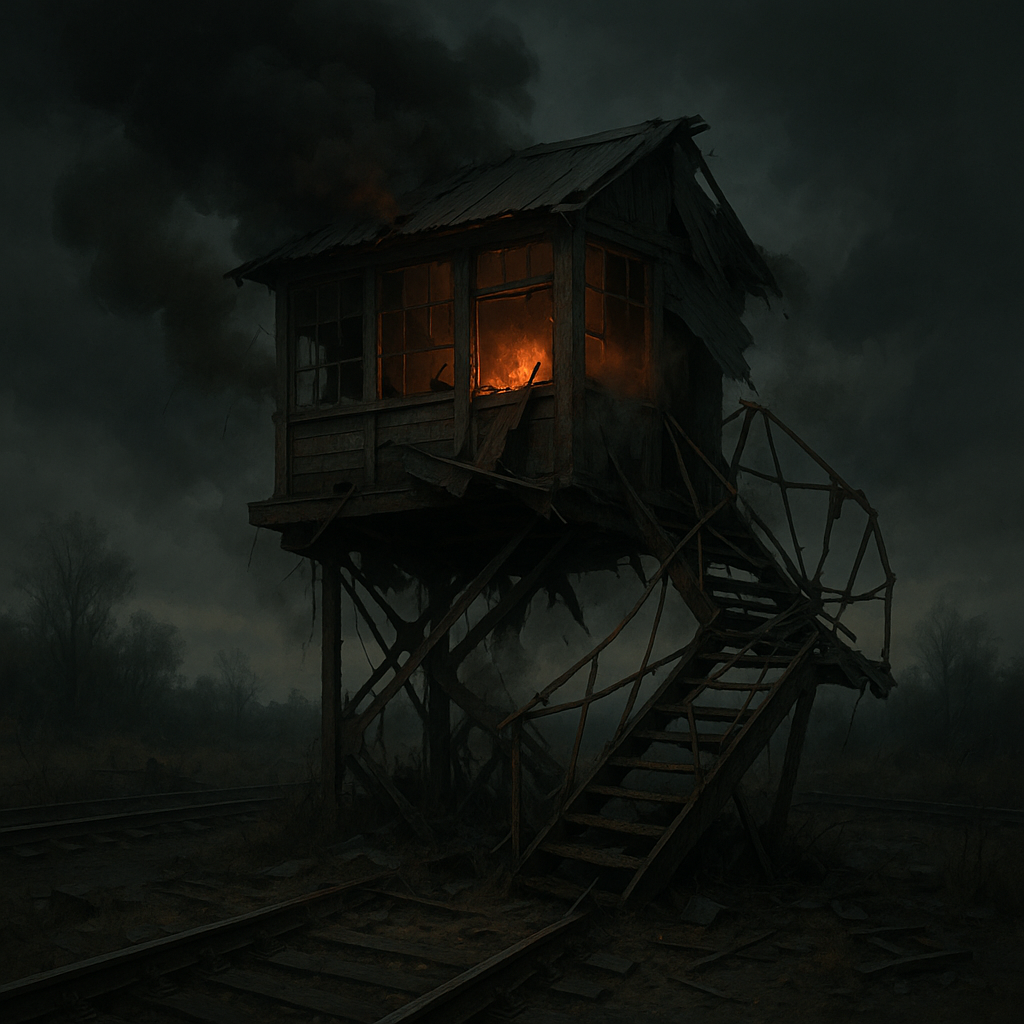
A Tel-Aviv night attack sparks a rapid cycle of Israeli-Iranian retaliation, escalating into a cyber and military conflict.
The "90-second war" was a super-fast and really scary fight between Iran and Israel. It started when Iran shot missiles at Tel Aviv because Israel killed an important Iranian guy. Israel hit back right away, bombing Iran's military and nuclear spots. It was like a lightning-fast duel where both sides used powerful weapons, causing lots of damage and fear in just a blink.
What was the "90-second war" about?
The "90-second war" was a rapid, intense, and highly destructive exchange of military actions between Iran and Israel. It began with Iran's retaliatory missile strike on Tel Aviv, following Israel's assassination of Ali Larijani, and was met with an immediate, sophisticated Israeli counter-attack targeting Iranian military and nuclear facilities.
Get Cape Town news in your inbox
Stay updated with the latest stories from the Mother City.
The Sky Opens First
At 02:14 on a sticky Tel-Aviv night, a Shahab-3 core clawed through low cloud eighty kilometres west of Hadera. Forty-five seconds later its upper stage spun off six grenades the size of grapefruits, twirling like maple seeds and shrieking at 2.4 kHz - an octave Israeli acousticians label “the death-whistle.” One burst above the Ramat Gan rail viaduct, spraying three thousand tungsten dice that shredded signal cables and torched a south-bound freight engine. On the twelfth floor of a nearby tower, Yosef and Malka Cohen walked onto their balcony to watch interceptors climb; a single cube punched the ballistic glass, ending both lives instantly. Their daughter told Army Radio that the last item her mother forwarded was a Rosh Hashanah GIF of a pomegranate, dispatched sixty seconds before impact.
The IRGC’s 03:02 communiqué was curt even by Persian war-bulletin standards: “Operation Ya-Ali has sown revenge in the Zionist heart.” State TV aired a loop in which a digital Ali Larijani - rendered in the white shroud of a Shiʿi martyr - morphed into a blazing missile crossing an animated Fertile Crescent. Viewers never saw the engineering miracle behind the spectacle. Debris sifted by Unit 8200 revealed that the Guard had grafted a cluster-dispenser, normally hauled by the heavier Khorramshahr, onto the slimmer Shahab-3 frame. The swap shaved 180 km off the range yet let the capsule open at 70 km - higher than David’s Sling can breathe. Every bomblet packed a dual-mode infrared/radar eye and 900 g of RDX; the goal was never maximum body-count but a “steel rain” tableau that would drown civil-defence computers and flood social feeds with panic clips.
Inside Israel, Red Color sirens wailed 87 seconds after launch - textbook for a 600-km ballistic arc, yet hopeless for citizens who had stashed their safe-room kits in basement cages after fifteen straight nights of false alarms. WhatsApp groups pulsed with panting voice-notes and barking dogs; on Ibn-Gvirol a yoga influencer sprinted to a shelter clutching a half-eaten mango. At sunrise the IDF quietly stripped geolocation data from its intercept videos, an admission that Tamir interceptors had downed just two of six incoming “buses” - a 33 % score that rattled export clients from Baku to Mumbai.
Calendar of Blood: From Elahiyeh to the Golan
Tehran choreographed its reply around funeral symbolism. Ali Larijani - once the smiling nuclear negotiator, later the invisible secretary of the Supreme National Security Council - was eliminated, said Iranian media, by a JDAM-ER that sliced through an Elahiyeh safe-house roof. The timing matched the anniversary of the 2006 Damascus drone strike that erased Hezbollah logistician Imad Mughniyeh; IRGC psy-ops wanted Israelis to “taste the Shiʿi calendar.” Analysts were startled by the fourteen-hour turnaround from roof collapse to launch order, a sign that missiles had been pre-mated and targets pre- plotted, ditching the old “launch-on-intel” protocol that once demanded days of radar knitting.
While Tel-Aviv fire-teams washed soot off the Ramat Gan depot, three F-35Is were already northwest of Larestan, skimming civilian air lanes at Flight Level 350. They released Spice 250 gliders that dove onto a Revolutionary Court archive, pulverising 300 protester dossiers and, according to opposition Telegram rooms, killing Judge Majid Khorshidi - the man who had handed rapper Toomaj Salehi his death sentence. A second wave of F-16s cratered the Dorud cement works, long suspected of hiding a uranium-ball-mill; Tasnim cried “dozens of workers,” but satellite shots show the main kiln untouched - either a miracle of precision fuzing or another lesson in Iranian Photoshop. The oddest episode unfolded in the Chegeni mountains at 05:40, where a double thunder-clap and a violet flash lit up snow patches. Blogger Ehsan Qara posted a radiation-monitor snap: 0.9 µSv for 120 seconds - within background jitter, yet enough to ignite gossip of 20 % enriched UF6 cylinders buried nearby.
Before coffee cooled in Vienna, an IAEA emergency call crackled: an Israeli MPR-500 penetrator had skidded across Bushehr’s asphalt, stopping 150 m from the VVER-1000. The reactor was already shut for refuelling, core temp below 150 °C, yet Rosatom roared about “a Gulf-spanning Chernobyl.” Jerusalem offered no denial, only a half-smile reminder of the Begin Doctrine: “A reactor is just a kettle; we care about the ingredients that might one day flavour a smaller kettle.”
Markets, Memes and the Invisible Front
Financial algorithms digested the mayhem faster than any human. Brent jumped $4.30 in the first hour of Asia trade, then shed half when whisper-talk promised another 20 million barrels from the U.S. reserve. Tehran’s TEDPIX dipped 2.8 %, yet Saipa - maker of both hatchbacks and 107 mm rocket hulls - hit limit-up. The shekel slid 1.1 % despite a $2 B Bank of Israel swap-line; crypto shops sold a record cache of hardware wallets, veterans of 1991 Scud days unwilling to relive capital-flight nightmares.
Beneath the visible battlefield, ghost satellites stirred. Minutes after the rail viaduct strike, Israeli cyber-ops pushed a silent firmware patch to 2 400 Iranian-made CCTV cameras in Haifa cafés, turning every latte-foamed lens into a passive acoustic node that now listens for drone propellers. Iran replied with a deep-fake of Defence Minister Katz urging reservists to “prepare for nuclear release”; iodine tablets vanished from Hadera shelves before the 30-minute debunk. A European intel brief claims both fleets have hijacked decommissioned cubesats, firing hidden thrusters to deliver last-second aim-corrections while staying absent from NORAD’s guest list.
Humanitarian corridors shrank in real time. WFP halted Lebanon convoys after two trucks were holed by dud sub-munitions; deminers guess 4 500 unexploded toys litter a 30 km ribbon once home to 90 000 Shiʿi villagers. In Isfahan, Red Crescent blood tents line Chahar-Bagh, yet donors stay away, remembering 2020 crowds that turned into targets. Israel quietly reopened Kerem Shalom for 120 Iranian-date lorries stockpiled in Gaza - war produce rebranded as mercy, proof that siege calculus still leaves room for spectacle.
Counting to Ninety: Memorials, Missiles and the Next Run
Wednesday afternoon fused mourning with mobilisation. In Tehran’s Grand Mosalla, Larijani’s coffin wore both the national tricolour and the Karbala shroud; the state cantor intoned not poetry but GPS strings - Tel Aviv, Haifa, Netanya - turning grief into cartographic chant. Across 17 provincial capitals, processions for Basij commander Gholamreza Soleimani (no blood relation) paraded open trucks carrying fresh Zolfaghar missiles stencilled “5 October” in Hebrew. At Kiryat-Shaul cemetery, the Cohens were lowered into dust before sundown; Ramat Gan’s mayor vowed to keep the melted signal box as art, a sculpture titled “Count to Ninety” - the new shelter-window for residents who once thought sixty seconds generous.
Behind blackout curtains, engineers revise the ladder. IRGC crews have reportedly dragged ten Qiam-2s into Tangeh-Sabz limestone quarries south of Kashan; the tunnels hug 18 °C year-round, cloaking thermal bloom. Israel has answered with three Dolphins - one already through Suez - each cradling Popeye-Turbo cruise rounds of ambiguous yield, the atomic cat that refuses to leave the bag. A former U.S. NSC director whispers the next escalation may target chlorination PLCs: no corpses, just taps spewing brown water, disruptive enough to hurt yet shy of the red line that would haul Washington into the ring.
The lone diplomatic spark flickered in Geneva, where Oman’s foreign minister lugged a blank-page “non-paper” sketching a 72-hour leadership cease-fire. The offer: Tehran claims it avenged Larijani, Jerusalem claims it set back the nuclear clock, and civilians breathe. Even the mediator admits the draft is weather-language - good for orientation, powerless against the approaching storm.
What was the "90-second war"?
The "90-second war" was a rapid, intense, and highly destructive exchange of military actions between Iran and Israel. It began with Iran's retaliatory missile strike on Tel Aviv, following Israel's assassination of Ali Larijani, and was met with an immediate, sophisticated Israeli counter-attack targeting Iranian military and nuclear facilities.
Why did the "90-second war" start?
The war was ignited by Israel's assassination of Ali Larijani, an important Iranian figure. In retaliation, Iran launched missile strikes against Tel Aviv. Israel then responded immediately with bombings of Iranian military and nuclear facilities.
What kind of weapons were used in this conflict?
Both sides employed powerful and advanced weaponry. Iran used Shahab-3 missiles, some modified with cluster-dispensers, delivering bomblets designed for a "steel rain" effect. Israel deployed F-35I and F-16 jets, using Spice 250 gliders and possibly MPR-500 penetrators. There are also mentions of Popeye-Turbo cruise rounds from Dolphin submarines, and sophisticated cyber warfare tactics were extensively used.
What were the immediate impacts of the attacks?
In Tel Aviv, an Iranian missile strike caused significant damage, shredding signal cables, torching a freight engine, and resulting in civilian casualties. Israel's counter-attacks targeted a Revolutionary Court archive, a suspected uranium-ball-mill, and potentially a nuclear facility in Bushehr, causing damage and raising concerns about nuclear safety. Economically, oil prices surged, and both the Iranian and Israeli stock markets were affected, alongside a rush for crypto hardware wallets.
How did cyber warfare play a role in the conflict?
Cyber operations were a significant aspect of the "90-second war." Israeli cyber-ops hijacked Iranian-made CCTV cameras in Haifa to use them as acoustic nodes. Iran retaliated with a deep-fake video of Israel's Defence Minister, spreading misinformation about nuclear release. Both sides also reportedly used hijacked decommissioned cubesats for aim-corrections, indicating a sophisticated and covert cyber-front.
What were the diplomatic and humanitarian consequences?
Diplomatically, efforts for a ceasefire were initiated by Oman, proposing a 72-hour leadership truce. However, the prospect of peace remained fragile. Humanitarian aid convoys were halted due to unexploded ordnance, and public fear in affected cities led to a decline in blood donations. Despite the conflict, Israel reopened a crossing for Iranian-date lorries into Gaza, showcasing a complex interplay of conflict and limited humanitarian gestures.

Amanda Wilson is a Cape Town-born journalist who covers the city’s evolving food scene for national and international outlets, tracing stories from Bo-Kaap spice shops to Khayelitsha micro-breweries. Raised on her grandmother’s Karoo lamb potjie and weekend hikes up Lion’s Head, she brings equal parts palate and pride to every assignment. Colleagues know her for the quiet warmth that turns interviews into friendships and fact-checks into shared laughter.
View all articles →