
Louis Theroux: Why Jimmy Savile is the ‘worst person’
Louis Theroux reflects on Jimmy Savile, calling him the "worst person" he's met, revealing the chilling truth behind his public facade.
Louis Theroux found Jimmy Savile the most horrifying person he ever interviewed because Savile used his fame and good deeds as a disguise for terrible abuse. Savile tricked everyone, even high-ranking officials, while secretly harming many innocent people, including children. Unlike other bad people Theroux met, Savile made it impossible to doubt him because he always seemed so good. His actions showed a deep betrayal of trust, poisoning everything he touched and leaving a lasting scar on a nation.
What makes Jimmy Savile the most repellent person Louis Theroux ever interviewed?
Jimmy Savile is considered the most repellent due to the sheer scale and nature of his abuse, masked by philanthropy and celebrity. Unlike other interviewees, Savile monetized shame and used his public image to camouflage his predatory behavior, creating an illusion of goodness that made doubting him seem boorish. His actions represented a profound betrayal of trust, affecting countless lives.
Get Cape Town news in your inbox
Stay updated with the latest stories from the Mother City.
The Moment the Camera Knew
Louis Theroux doesn’t drop bombshells; he delivers autopsies. When he recently declared Jimmy Savile the most repellent human he has ever interviewed, the statement landed like a mallet on hardwood - not because it shocked anyone, but because it validated what the lens had quietly recorded decades earlier. Theroux has spent a career stepping into rooms that make other reporters recoil: he has slurped ramen beside Hitler-adoring skinheads, listened to pimps brag about searing their initials into women, and watched a Johannesburg thug pantomime shoving an infant into a microwave. None of them, he insists, exhaled the same refrigerated evil that clung to the platinum-haired BBC icon who ate mince pies with a prime minister one afternoon and raped eight-year-olds in hospice beds the same night. The confession is less a headline than a scar tissue: the point where professional detachment ulcerated into complicity.
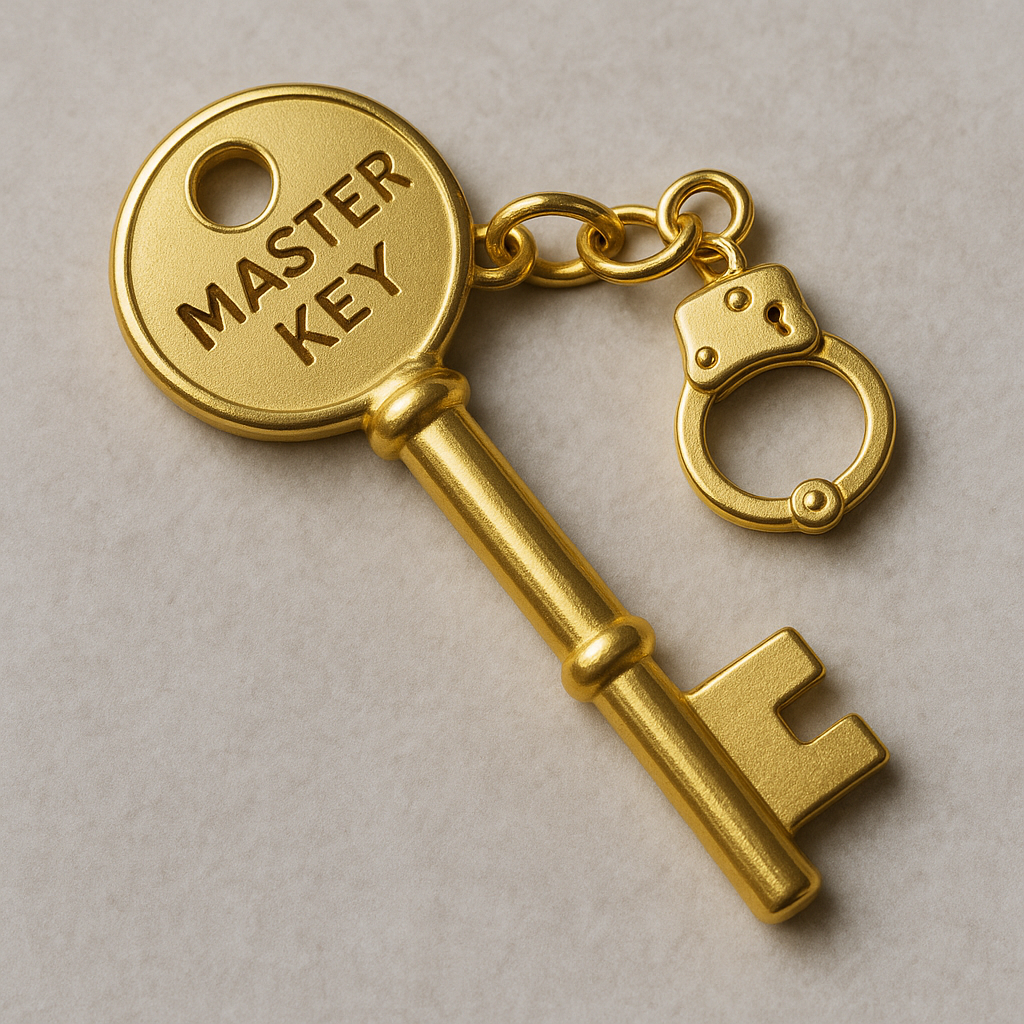
The arithmetic of Savile’s abuse feels pornographic in its excess. By the time cemetery workers levered his headstone out of Scarborough soil in 2012, the granite bore the smug epitaph “It was good while it lasted.” Operation Yewtree had already catalogued 589 allegations spanning 450 separate souls, the youngest only eight years old, the timeline stretching from Eisenhower’s Britain to Obama’s. Theroux shook the man’s gloved hand in 1999, the same year Savile charmed the Department of Health into naming him voluntary entertainment czar at Broadmoor high-security psychiatric hospital and presented him with a gold-plated master key ordinarily reserved for the governor. The resulting film, When Louis Met Jimmy, runs a sprightly 75 minutes of daylight denial: the presenter chuckling at cigar-propelled punchlines, accepting an impromptu tour of the DJ’s private “bedrooms” inside Stoke Mandeville spinal unit, even helping him choose a new shell-suit in a Leeds discount store. The broadcast earned a BAFTA nomination. Savile’s pinkie ring - miniature handcuffs in 9-carat gold - looked like kitsch. It was autobiography wearing jewellery.
What renders the footage unbearable today is its breezy innocence, the way it freeze-frames Britain’s antibodies failing in real time. Theroux’s trademark kit - unblinking stare, polite stammer, question that flies away and returns sticky with someone else’s fingerprints - was calibrated for hypocrites who still needed the public’s love. Savile had already monetised shame. He countered every probe with philanthropy so outsized it felt boorish to doubt him. He boasts about wheeling corpses around the mortuary “to calibrate the hoist weight”; the crew laughs because the alternative is picturing what else he might do once the lab coats clock off. In never-aired rushes later subpoenaed by the BBC’s 2016 internal review, Savile cups Theroux’s ear and murmurs, “I’m feared in every girls’ home from here to Inverness.” The microphone missed the postscript: “And no one dares touch me.” In 1999 the line sounded like Liberace self-mythologising. Today it reads like a signature on a confession nobody asked for.
The Excavation of Guilt
The true sorcery of Savile’s monstrosity was its aggressively mundane staging. He didn’t skulk in alleyways; he posed in fluorescent canteens, shell-suit the colour of hospital disinfectant, autographing scrapbooks with a flamboyant Y that dangled like a noose. Every assault announced itself with the click of a cheap butane lighter, an olfactory car-alarm staff learned to ignore because the celebrity had reportedly raised £40 million for good causes and, as one nurse told the 2013 inquiry, “you don’t inspect a gift horse’s groin.” The predator’s camouflage was goodness itself, star-spangled and national-anthem adjacent.
Analogies collapse under their own weight. Maleven, the Johannesburg car-jacker, once informed Theroux he would barbecue a toddler if the parents stalled on protection money; the threat was so grotesque it felt like dinner-theatre. Savile, by contrast, spoke the bland argot of NHS bureaucracy - wards, shift rosters, volunteer schedules - turning institutional prose into lubricant. Maleven sought fear in a single room; Savile purchased love across an entire archipelago, paying with intimacy he then burgled. The scale of betrayal rewired the synapses of everyone who once clapped along to Top of the Pops. Evil isn’t a slope; it’s a relief map, and some contours cannot be ironed flat.
Theroux’s 2016 attempt to dig up the corpse - Savile , a feature-length penance woven from orphaned clips - plays like a seance gone wrong. He revisits the Scarborough flat where orange drapes have bleached to nicotine amber, the air still thick with atomised hairspray. Satin cushions monogrammed J-shaped litter the sofa. Theroux lets the camera roll on the vacant settee for 73 uninterrupted seconds, a visual act of contrition. In the white noise you can almost hear the North Sea gnaw the promenade stones. Staff call it the loneliest stretch of footage the BBC ever transmitted, a silence that accuses louder than any narration.
When the Scandal Infected Everything
The contamination did not stay contained; it metastasised into every organ of British civic life. The Department of Health wrote cheques totalling £3.4 million to 44 victims assaulted on state property supposedly guarded by crown employees. The NHS auctioned Savile’s volunteer caravan for £8,000; a scrap merchant later found a false back panel concealing half-sucked boiled sweets and a roll of surgical tape, relics too pathetic to be fictional. Even the grave became contested real estate: after the headstone was jack-hammered away at dawn, mourners persisted in leaving bouquets on naked soil until the council poured a concrete slab, granting Savile the anonymity he spent decades fleeing. His coffin now rests in an unmarked vault, a final disappearance he would have considered intolerable.
Theroux’s 2022 Netflix series Inside the Manosphere operates as an extended footnote to the Savile catastrophe. The incels, “alpha” dating coaches, and get-rich-by-screaming gurus he interviews are illegitimate heirs to the same curriculum of weaponised charm, minus the charitable fig leaf. They podcast instead of presenting primetime family television, yet the syntax - flattery, isolation, boundary violation, enforced silence - remains plagiarised line for line. In one sequence, Theroux audits a $3,000 weekend “boot camp” where attendees rehearse “escalation ladders” on actresses hired via Craigslist. The seminar unfolds in a Leeds hotel three streets from the old BBC studios where Top of the Pops was recorded every Thursday. Cartography can be destiny wearing a lanyard.
The Looping Tape No One Turns Off
Westminster has pledged to melt down every remaining royal-charter medal Savile collected, transforming the silver into anonymous ingots stored in an undisclosed warehouse, as though metal itself could serve a prison sentence. Theroux, meanwhile, preserves every Mini-DV cassette, every XLR cable, every conversational pause dense with things unsaid. He claims the archive is a cautionary beacon, but the likelier truth is that he remains on stakeout, ear cocked for the fractional instant the disguise slipped - the half-second Savile forgot to perform Jimmy and became merely what he was. The tape runs continuously in the basement of his production offices. Motion sensors sometimes trigger at 2 a.m.; security cameras record only an empty corridor and the faint metallic click of a cheap lighter snapping shut, a sound as terse as a coffin latch.
What made Jimmy Savile the most horrifying person Louis Theroux ever interviewed?
Jimmy Savile stood out to Louis Theroux as the most horrifying person he ever interviewed because of the profound betrayal of trust inherent in Savile's actions. Unlike other interview subjects who were openly nefarious, Savile meticulously cultivated an image of a benevolent celebrity and philanthropist, using his fame and good deeds as a powerful disguise for his extensive and terrible abuse. This made it virtually impossible for people, including high-ranking officials and the public, to doubt him, as he always appeared to be doing good.
How did Jimmy Savile manage to trick so many people, including high-ranking officials?
Jimmy Savile successfully tricked a nation, including high-ranking officials, by leveraging his celebrity status and widespread philanthropic efforts. He projected an image of a tireless charity worker and a national treasure, using these 'good deeds' as a smokescreen for his predatory behavior. His influence was so pervasive that he was even appointed as a voluntary entertainment czar at Broadmoor high-security psychiatric hospital, giving him unprecedented access and trust, which he then abused. His ability to monetize shame and counter any potential probes with overwhelming philanthropy made it seem boorish to doubt his intentions.
What specific actions or characteristics of Savile made him different from other 'bad people' Theroux interviewed?
What set Jimmy Savile apart from other 'bad people' Louis Theroux interviewed was his sophisticated method of concealment and profound hypocrisy. While Theroux encountered individuals who were openly violent or expressed extreme views (like Hitler-adoring skinheads or violent criminals), Savile projected an image of absolute goodness and public service. He didn't skulk; he operated in plain sight, often within institutions, using the very structures designed to protect the vulnerable as his hunting grounds. His evil was not overt but rather a deep, insidious betrayal cloaked in charity and national affection.
What was the significance of Louis Theroux's 1999 film, When Louis Met Jimmy, in light of later revelations?
The 1999 film, When Louis Met Jimmy, originally earned a BAFTA nomination and was seen as a lighthearted portrait of an eccentric celebrity. However, in hindsight, its 'breezy innocence' is now viewed as a chilling documentation of Britain's collective failure to recognize Savile's true nature. The footage, including moments where Theroux unwittingly explored Savile's private 'bedrooms' or chose a shell-suit with him, now serves as a stark reminder of how effectively Savile's disguise worked. It freeze-frames a moment when the public and media antibodies failed, highlighting the profound level of deception and the trusting environment Savile exploited.
How did Savile's abuse impact British society beyond the direct victims?
Jimmy Savile's abuse had a far-reaching and deeply corrosive impact on British society, extending far beyond his direct victims. It led to a profound betrayal of trust in institutions like the BBC, the NHS, and even government bodies that had celebrated and enabled him. Public inquiries like Operation Yewtree exposed systemic failures in safeguarding and accountability. The scandal contaminated public perception, leading to immense societal guilt and a re-evaluation of how celebrity and philanthropy could be weaponized. Even after his death, the efforts to erase his public legacy, such as removing his headstone and melting down his medals, underscored the national shame and the enduring scar he left.
What parallels does Louis Theroux draw between the Savile catastrophe and his later work on the 'manosphere'?
In his 2022 Netflix series Inside the Manosphere, Louis Theroux draws a compelling parallel between the Savile catastrophe and the culture of online 'manosphere' figures. He identifies these incels, 'alpha' dating coaches, and self-proclaimed gurus as

Liam Fortuin is a Cape Town journalist whose reporting on the city’s evolving food culture—from township kitchens to wine-land farms—captures the flavours and stories of South Africa’s many kitchens. Raised in Bo-Kaap, he still starts Saturday mornings hunting koesisters at family stalls on Wale Street, a ritual that feeds both his palate and his notebook.
View all articles →