
May 4 national shutdown raises alarm in South Africa
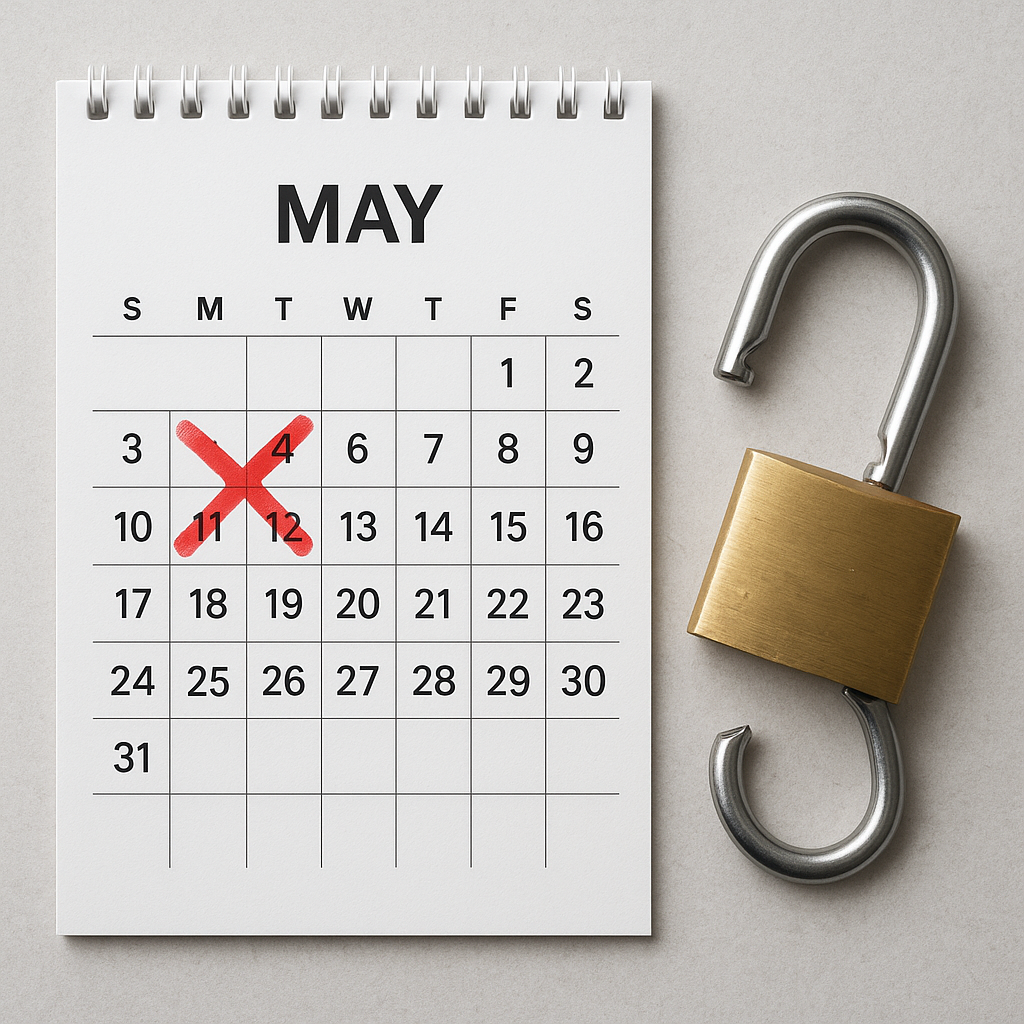
How a WhatsApp forward became a South African "calendar hack," sparking xenophobic shutdowns and revealing deep societal fault lines.
A single WhatsApp voice note in isiXhosa sparked a national shutdown in South Africa on May 4th, replacing official plans with a call to protest against foreigners. This message, quickly spread through taxi chats and social media, led to widespread fear and preparation for unrest across the country. Businesses braced for impact, with some even activating 'Ghost Protocol' for civil unrest. The incident showed how easily a digital rumor can hijack a nation's calendar, bypassing traditional media and leaders.
What caused the South African May 4th shutdown?
A single WhatsApp voice note, widely circulated via taxi industry chat groups, called for a national shutdown on May 4th to protest against foreigners. This quickly spread through social media and physical posters, overriding official calendars and compelling businesses and citizens to prepare for widespread disruption and potential unrest.
Get Cape Town news in your inbox
Stay updated with the latest stories from the Mother City.
1. The 02:17 Voice Note That Replaced the Government’s Calendar
A single 17-second voice message, recorded in isiXhosa with a Soweto twang, arrived in a Cape Town taxi chat at 02:17 on Sunday 14 April. “People of Mzansi, we drive on 4 May - close your shops, don’t go out, send the foreigners home.” By sunset on Monday the clip had been re-dubbed in Afrikaans, captioned in English and forwarded 3,800 km from Polokwane to Plett, elbowing #Loadshedding out of the top-trend slot for three straight days. No union, church or party had called the stay-away; instead, a scatter-map of drivers, spaza owners and neighbourhood-watch admins simply agreed that 4 May now belonged to them. Analysts call the trick “calendar hacking”: the moment a loose network overwrites the official diary faster than ministers can update theirs.
The speed was made possible by South Africa’s most reliable information highway - taxi-industry WhatsApp groups. Messages jump from driver to rank marshal, then into grocery stokvels, prayer chains and stokvel savings clubs without ever touching Facebook’s slower public squares. Once the poster appeared - red-black-green map, bold white letters: “SHUTDOWN 4 MAY – NO WORK, NO SCHOOL, NO FOREIGNERS” - the date felt fixed. By the time radio stations phoned the Minister, the original SIM had been dissolved and the phrase “send them home” was living rent-free in every major language group.
Legacy gate-keepers discovered they were spectators. Unions distanced themselves, churches pleaded for calm, but the diary had already been rewritten in commuter taxis, hair salons and taverns. The lesson: if you want to schedule a national event, a R20 data bundle beats a press conference every time.
2. Hashtag Supply-Chain: From Forgotten Furniture Page to Lamp-Pole Banner
Researchers at UCT’s Centre for Analytics and Behavioural Change followed the first public Facebook post to a dormant account that had spent eight years hawking used couches. At 05:40 on 15 April the page woke up, dumped the shutdown graphic, then vanished again. Within four minutes the same picture surfaced on a soccer-gossip Twitter handle, then leapt to a Zimbabwean news group, then into five provincial taxi forums. By 18 April photocopied A4 sheets were taped to spaza shutters in Gugulethu; two days later Rustenburg lamp-posts wore laminated versions; by 22 April vendors at Bree Street taxi rank were selling pop-up banners for R80 each.
The economics are cottage-industry simple: R40 colour print becomes a R200 taxi-door sticker, becomes a R500 T-shirt, each sale convincing buyers the protest is already visible fact. No mastermind is required - just a handful of micro-entrepreneurs who understand that fear and solidarity are impulse purchases.
CABC’s heat-map reveals the supply-chain is self- financing. Poster sales finance louder posters; the louder the posters, the more certain bystanders become that “everyone” will stay home. By the time analysts publish a report, the messaging has already moved from screen to street to wardrobe, turning a rumour into uniform.
3. Retailers, Rails and Ransom-Grade Scenarios
Big-box stores keep a 72-hour civil-unrest stopwatch. On 17 April Massmart, Shoprite and Pick n Pay flipped to “Ghost Protocol,” a checklist ironed out after the July 2021 looting. Algorithms weigh SAPS sector reports, private intel and Telegram keyword counts; when the dial hits red, plywood arrives and security companies switch to wartime billing. In KwaZulu-Natal alone, 42 stores slid from amber to red on 23 April, pre-booking boards and armed-response teams.
Gautrain moved its 18 May maintenance window forward so every set can sleep inside a guarded depot rather than in the open at Pretoria station. MyCiTi buses loaded detour maps onto electronic boards, ready to deploy if tyre-fires blossom on the N2. PRASA, down to 54 working long-distance trains, briefs drivers to abort trips at the first stone-throwing because one lost set knocks an entire corridor offline for weeks.
A leaked security-industry slide-deck prices three futures: low uptake - R250 m GDP loss; medium - 1,800 shops hit, R1.8 bn gone, twelve dead; high - warehouse raids, R6 bn vapourised, 45 fatalities and soldiers within 72 hours. Lloyd’s of London has already baked scenario two into political-violence premiums for the week beginning 29 April. Corporate South Africa is quietly spending more on contingency than many provinces allocate to school books.
4. Invisible Organisers, Foreign Diplomats and the Rumour After-Market
Journalists hunting for “Bhungane Ndlovu” discover seven SIM cards scattered across three provinces, all registered to the same name - an impossibility that screams borrowed identity. More telling is the metadata tucked inside two high-resolution posters: both exported from the same cracked Photoshop build whose default language is Romanian, hinting at either outsourced design or a prankish red herring. Whoever is paying for the prints deals strictly in cash: R1,600 for 200 laminated sheets, no digital trail.
Foreign missions are no longer willing to rely on South African assurances. Nigeria advised citizens to stock two weeks of supplies; Bangladesh asked for a police escort for thirty-five garment trucks stranded at Durban port; Rwanda reopened its 2008 xenophobia shelter map, while the Ethiopian Orthodox Church in Yeoville turned its basement into a sharp-object-free safe zone streamed live to the consulate.
Whatever happens on 4 May, an after-market is already under construction. July 2021 produced 1,400 looting clips that still circulate as meme templates; expect a fresh batch to be monetised by fringe blogs earning Google cents per view. Within 48 hours someone will snap up shutdownmay4.co.za and flip it a month later. A spaza owner will stencil “Survivor Supermarket” on his scorched container and attract sympathetic customers, while psychologists prepare for a secondary wave of PTSD among migrants too scared to restock. Somewhere in the corner of a poster PDF, the Romanian Photoshop stamp will wait for the next anxious calendar to be hacked.
What caused the South African May 4th shutdown?
A single WhatsApp voice note, widely circulated via taxi industry chat groups, called for a national shutdown on May 4th to protest against foreigners. This quickly spread through social media and physical posters, overriding official calendars and compelling businesses and citizens to prepare for widespread disruption and potential unrest.
How did the shutdown message spread so rapidly?
The message, initially a 17-second isiXhosa voice note, spread rapidly through South Africa's highly efficient taxi-industry WhatsApp groups. From there, it moved into various community groups like grocery stokvels and prayer chains, bypassing traditional media and faster than government communications. The message was also quickly translated and circulated on social media and as physical posters.
What is "calendar hacking" in this context?
"Calendar hacking" refers to the phenomenon where a decentralized network, often through digital rumors, successfully redefines a national event or date, overriding official government or organizational calendars. In this case, a loose network of drivers, spaza owners, and neighborhood-watch administrators effectively claimed May 4th for a national protest, despite no official body calling for it.
How did businesses prepare for the potential unrest?
Major retailers like Massmart, Shoprite, and Pick n Pay activated "Ghost Protocol," a contingency plan developed after the July 2021 looting, which includes a 72-hour civil-unrest stopwatch. This involved pre-booking plywood for storefronts, increasing security, and employing algorithms to track potential hotspots. Transport services like Gautrain and MyCiTi buses also made preparations, such as securing trains in guarded depots and preparing detour maps.
Were there visible signs of the protest's legitimacy before May 4th?
Yes, the protest gained visible legitimacy through a "hashtag supply-chain." The initial digital graphic, after being posted on a defunct Facebook page, quickly spread to various online forums and ultimately transformed into physical posters taped to spaza shutters, laminated on lamp-posts, and even sold as pop-up banners and T-shirts. This widespread physical presence convinced many that the protest was a certainty.
Who were the organizers behind the May 4th shutdown?
The organizers remained largely invisible. Attempts to trace the origin of the message led to dead ends, such as SIM cards registered to borrowed identities and posters designed with a cracked Photoshop version with a Romanian default language, suggesting either outsourced design or an intentional misdirection. The funding for physical prints was also exclusively cash-based, leaving no digital trail. This incident highlights the difficulty of identifying central organizers in digitally-driven, decentralized movements.

Amanda Wilson is a Cape Town-born journalist who covers the city’s evolving food scene for national and international outlets, tracing stories from Bo-Kaap spice shops to Khayelitsha micro-breweries. Raised on her grandmother’s Karoo lamb potjie and weekend hikes up Lion’s Head, she brings equal parts palate and pride to every assignment. Colleagues know her for the quiet warmth that turns interviews into friendships and fact-checks into shared laughter.
View all articles →