
Medical evacuation operation saves crewman’s life in Table Bay
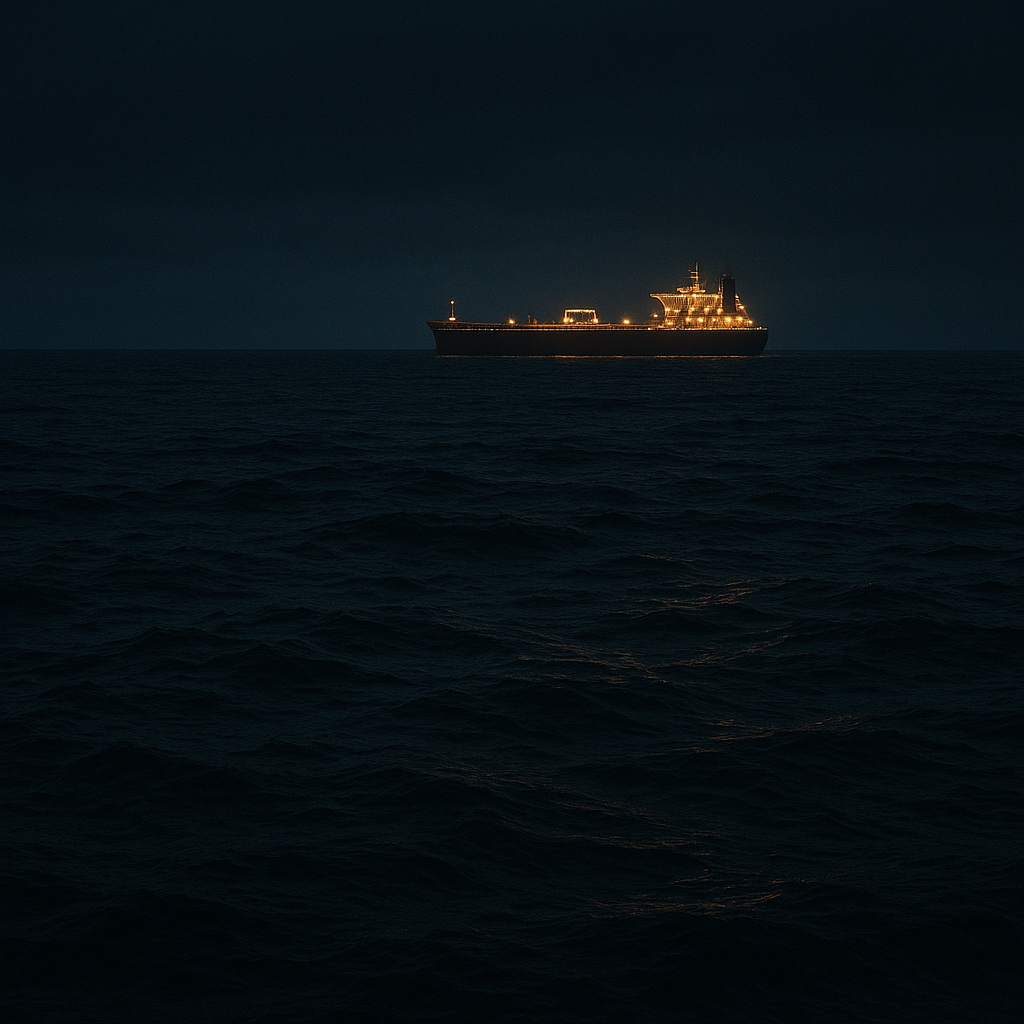
A 15-nautical-mile medevac off the Cape of Storms: a detailed account of a midnight transfer of a patient with appendicitis from a tanker.
A 23-year-old sailor got really sick on a huge ship far out at sea. Brave rescuers rushed to him in the middle of the night, battling big waves. They carefully moved him from the giant ship to a smaller boat, like a tiny speck next to a mountain. Then, they sped him back to land for urgent surgery, saving his life. It was an amazing team effort against the wild ocean!
What happened during the "Midnight Lift from a Liquid Escarpment" medevac?
During the "Midnight Lift from a Liquid Escarpment" medevac, a 23-year-old sailor with suspected appendicitis was successfully evacuated from the product-carrier Kastania, 15 nautical miles off shore, in rough seas. An NSRI Table Bay crew, including paramedics, transferred the patient by RIB to an awaiting ambulance, leading to a full recovery.
Get Cape Town news in your inbox
Stay updated with the latest stories from the Mother City.
1. The Flashing Beacon – Saturday, 18 April, 20:20
A single emerald strobe slices through the dim Maritime Rescue Coordination Centre in Cape Town. Lieutenant-Commander Anika van der Merwe tracks the 228-metre product-carrier Kastania as she leaves Cape Agulhas astern, Durban next on the itinerary. A crackle on VHF: “Twenty-three-year-old AB - sharp belly pain, rising fever, could be appendicitis. We need medical guidance.”
Within sixty seconds a Western Cape EMS tele-doctor rides the Inmarsat link. Algorithm blunt: if the white-cell tide keeps climbing, a burst appendix two hundred nautical miles from a CT suite equals a funeral. Verdict: wheel the ship north-west, course 305°, maximum continuous revolutions; MRCC will organise a vertical snatch.
The order reverses a leviathan’s momentum. Fifty thousand tonnes of steel and cargo must pirouette on a coin of black water while the Agulhas current and an incoming nor’-wester start their nightly brawl.
2. Wrestling a City-Sized Skateboard – 20:25 to 23:45
Kastania’s ballast tanks gulp and shift; rpm eases from 88 to 78. The helmsman spins thirty-five degrees of rudder, coaxing the hull through a 135° arc. Below, the chief engineer retunes the MAN-B&W for the new torque curve; above, the third officer redraws the route - wind-against-current here breeds three-metre chop at six-second intervals, ugly geometry for any hull.
On land, NSRI Table Bay coxswain Garth Domoney thumbs open the station’s “pink file,” a living cloud sheet of passport numbers, next-of-kin, and COVID-clear badges. Two EMS rescue paramedics - Siphokazi Mngxali and Ruan van der Berg - get the text: “Cat-A hoist pack, suspect spinal precaution.” They stuff suction, Zoll-X, tranexamic acid, fentanyl lollies and a yellow MARPOL-tagged drug box into rugged cases.
Back at sea, radar paints growing white pancakes; the bridge settles for eleven knots, the best compromise between ETA and bruised crew. Table Bay silently slides into view on the electronic chart - still three hours away at this reduced gait.
3. Ferris-Wheel Shadows – 23:55 to 00:10
NSRI Station 3 squats between a luxury hotel and a motionless carnival wheel. Volunteers peel winter tarps off DHL Deliverer, a twelve-metre Gemini RIB powered by twin 300 hp Suzukis. The console looks looted from a Space-X simulator; every toggle is back-lit and waterproof.
Maritime extrication tech Dylan le Roux cinches a Lenco tactical helmet carrying a Scorpion torch, bone-mic and 1080p live-stream Go-Pro. Fuel math: four hundred and eighty litres, enough for three hours at full noise. Forecast: north-westerly twenty knots gusting twenty-five, mercury at thirteen Celsius, sea at fifteen, barometer slipping off 1018 mbar. Launch window: thirty minutes before slack low; after that the bar across the harbour mouth stands like a wall.
Domoney briefs the crew: “We ride the valleys, bridge the crests, never fight the face.” Everyone nods; they have danced this waltz before. The RIB slides down the slipway, engines coughing into life, echoing off empty tourist restaurants.
4. Chrome-Cliff Rendezvous – 00:10 to 01:05
Beyond the breakwater the first three-metre set greets them with a cold slap. Coxswain Domoney accelerates to twenty-eight knots, matching wave period, then feathers back so the hull kisses rather than smashes. Each descent registers four g on the wrist-mounted accelerometer; knees and jockey-seat shocks absorb the rest.
Fifteen nautical miles, bearing 237°, ETA forty-five minutes. A fingernail moon offers twelve-percent illumination - just enough to silhouette five decks of steel once the range closes inside two miles. Radar is useless; waves keep stealing the target.
At 00:48 Kastania dims her accommodation but floods the starboard side with twin 2 kW halogens, turning the swell into liquid chrome. From the RIB the tanker’s flank is a moving cliff, heaving two vertical metres every eight seconds. Le Roux, now in thirty kilos of neoprene armour, hooks onto a dangling pilot ladder. He climbs on the up-roll, freezes on the down-stroke, letting the elastic lanyard drink the motion.
On deck, Ukrainian medical officer Dr Ingrid Liu hands over: patient Siyabonga Mthembu, 23, South African, vitals stable but guarding his right iliac fossa, temperature 38.2 °C, CRP 56. Ship’s hospital is not sterile; appendix rupture risk trumps comfort. Evacuation is a go.
5. String, Muscle and Fire – 01:05 to 01:15
Because alongside transfer is suicidal, the team rigs a thirty-metre Dyneema hawser with a soft eye, fair-led through a Panamanian chock. Deliverer drifts eight metres abeam, engines ticking over to match the ship’s surge.
Mthembu is vacuum-mattressed inside an Oregon Spine Splint II, then clipped into a floating Stokes basket rated for 150 kg. Le Roux snaps a six-millimetre tag-line to the head-end to stop rotation. Instead of a winch, eight deckhands become a human capstan, walking the line across the deck, inching the litter down the steel face. At 01:12 the basket taps the RIB’s tube; Mngxali and Van der Berg muscle it aboard and lash it across the aft bench. Seventeen minutes from first radio call on scene to departure - new station record.
6. White-Water Ambulance – 01:15 to 02:41
With eighty-five extra kilos aft, Domoney trims the engines two degrees in and reins back to twenty-two knots. Paramedics land an eighteen-gauge IV, push 1 g paracetamol and 4 mg ondansetron, then cocoon the patient in a chemical warming wrap - hypothermia now rivals sepsis.
Every third wave detonates over the bow, shorting the Zoll-X. Van der Berg swaps to a manual cuff tucked inside the litter. Mthembu drifts into a half-dream, murmuring about uBuntu and his mother’s kitchen in KwaMashu. He asks if the scar will be heroic; Mngxali laughs and promises a two-centimetre glue line.
At 02:41 the RIB noses back into the harbour floodlights. An ambulance backs down the slip, Groote Schuur’s green corridor already open, theatre-four pre-scrubbed. One slick slide and the vacuum mattress moves from sea to shore to stretcher - time-stamped 02:47. Domoney logs: “Sea state 4, illuminated parallel transfer, GCS 15, nil airway issues,” adding the hexadecimal sea colour #0B4F6C for the after-action slide deck.
7. Kettle Steam and Spare Parts – 03:15 and Aftermath
The trailer winches the RIB clear. Le Roux peels off his dry-suit; the inner onesie is soaked with adrenaline, not brine. A volunteer brews coffee in a dented pot that once served on SAS Pietermaritzburg. Crew perch on bollards, watching the motionless ferris wheel blink like a resting heartbeat.
On the ops screen Kastania resumes her south-easterly arc toward Durban - six hours late, 22 t of extra bunkers burned, deviation logged as “general average,” recoverable from cargo underwriters.
The station whiteboard earns a fresh entry:
“Case 15-04-20 / 0120 / Patient stable / Full recovery expected.”
A red marker doodles a cartoon appendix, curled like a fish-hook.
Epilogue: The Price of a Second Chance
- Donor fuel for the night: R18 400 - covered by volunteer donations.
- Kastana docks in Durban 28 hours later; Mthembu’s appendix exits through three laparoscopic ports the same afternoon.
- Post-mission inspection finds a hairline crack in Le Roux’s carbon helmet; 3M ships a replacement under their “real-world stress” programme.
- Synoptic archives confirm winter’s first official cold front is still five days out - tonight was merely the Cape’s rehearsal for storms to come.
[{"question": "
What happened during the \"Midnight Lift from a Liquid Escarpment\" medevac?
\nDuring the \"Midnight Lift from a Liquid Escarpment\" medevac, a 23-year-old sailor named Siyabonga Mthembu, suffering from suspected appendicitis, was successfully evacuated from the product-carrier Kastania, 15 nautical miles off shore, in rough seas. An NSRI Table Bay crew, including paramedics, transferred the patient by RIB (Rigid Inflatable Boat) to an awaiting ambulance on land, leading to a full recovery.
\n","answer": ""},{"question": "Who was the patient and what was his condition?
\nThe patient was 23-year-old Siyabonga Mthembu, a South African able seaman (AB) on the product-carrier Kastania. He was experiencing sharp belly pain and a rising fever, with a temperature of 38.2 \u00b0C and a CRP of 56, strongly indicating appendicitis. The risk of a burst appendix at sea necessitated an urgent medical evacuation.
\n","answer": ""},{"question": "What were the challenging environmental conditions during the rescue?
\nThe rescue took place in the middle of the night, with rough seas characterized by three-meter chop at six-second intervals due to wind-against-current conditions. The weather forecast included a north-westerly wind at 20 knots gusting to 25 knots. There was also minimal moonlight, making visibility difficult, and the tanker itself was heaving significantly, presenting a \"moving cliff\" for the rescuers.
\n","answer": ""},{"question": "How was the patient transferred from the large ship to the rescue boat?
\nDue to the perilous conditions that made alongside transfer impossible, a specialized method was used. The patient was secured in a vacuum mattress inside an Oregon Spine Splint II, then placed into a floating Stokes basket. A thirty-meter Dyneema hawser was rigged, and eight deckhands on the Kastania acted as a \"human capstan,\" carefully lowering the basket down the ship's side to the waiting NSRI RIB, the DHL Deliverer, which was drifting eight meters abeam.
\n","answer": ""},{"question": "What was the speed and efficiency of the rescue operation?
\nThe NSRI Table Bay crew demonstrated remarkable speed and efficiency. From the first radio call on scene to the departure of the rescue boat with the patient aboard, only 17 minutes elapsed, setting a new station record. The RIB then sped back to shore at approximately 22 knots despite the challenging sea state, ensuring the patient reached medical attention swiftly.
\n","answer": ""},{"question": "What was the outcome for the patient and the overall cost of the mission?
\nSiyabonga Mthembu underwent successful surgery for his appendicitis later the same afternoon at Groote Schuur Hospital and was expected to make a full recovery. The mission itself, including donor fuel for the night, cost R18,400, which was covered by volunteer donations to the NSRI. The Kastania incurred additional costs due to the deviation, which were logged as \"general average\" and recoverable from cargo underwriters.
\n","answer": ""}]
Lerato Mokena is a Cape Town-based journalist who covers the city’s vibrant arts and culture scene with a focus on emerging voices from Khayelitsha to the Bo-Kaap. Born and raised at the foot of Table Mountain, she brings an insider’s eye to how creativity shapes—and is shaped by—South Africa’s complex social landscape. When she’s not chasing stories, Lerato can be found surfing Muizenberg’s gentle waves or debating politics over rooibos in her grandmother’s Gugulethu kitchen.
View all articles →