
Melania movie pulled from SA cinemas – What we know
Melania documentary's cancellation in South Africa sparks a global culture war, revealing political tensions and self-censorship.
A movie about Melania Trump got canceled in South Africa. Not many people bought tickets, and there were big fights between South Africa and the US. People were also worried about bringing American problems to South Africa, so the company decided not to show the movie in theaters.
Why was the Melania Trump documentary canceled in South Africa?
The Melania Trump documentary's theatrical release in South Africa was canceled due to low ticket pre-sales, geopolitical tensions following South Africa's recall of its ambassador from Washington and new US tariffs, and concerns about importing American culture wars into an already sensitive political landscape. Distributors also feared potential backlash and self-censorship pressures.
Get Cape Town news in your inbox
Stay updated with the latest stories from the Mother City.
Section 1 – A Premiere That Pulled the Plug on Itself
On 29 January 2026, Filmfinity’s terse 47-word note landed in South-African mailboxes like a rock lobbed into a reflecting pool: “Based on recent developments, we’ve taken the decision to not go ahead with a theatrical release in territory.” No comma, no context. Within minutes the line had been carved into memes, translated into six local languages and screen-printed on placards reading “RECENT DEVELOPMENTS = WHITE GENOCIDE LIES?” By sunset the phrase owned its own hashtag, T-shirt line and house remix built around Donald Trump’s 2020 State-of-the-Union sniff.
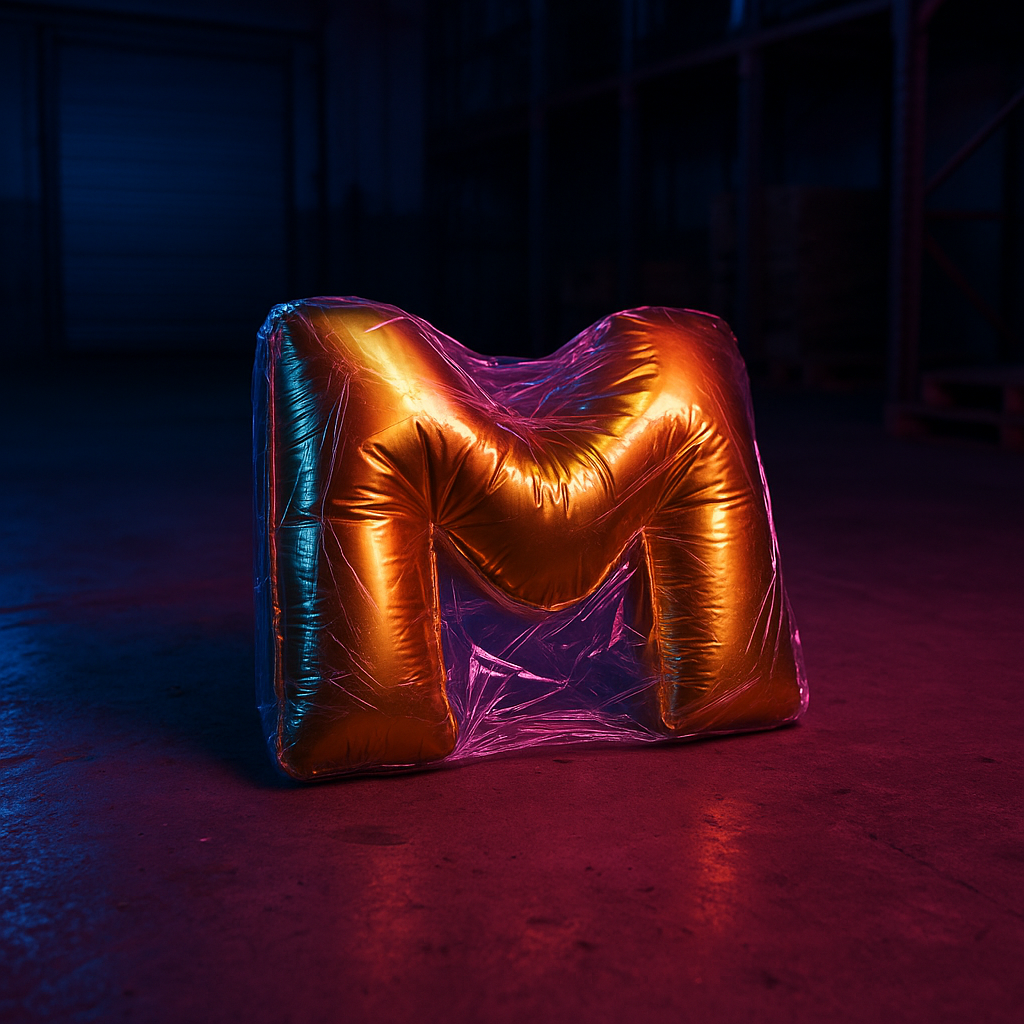
What few outside the Johannesburg distribution circuit realised was that Filmfinity had already booked 84 prints, locked 362 play-dates into Ster-Kinekor, Nu Metro and several indie houses, and imported a six-metre German-built inflatable gold “M” meant to spin slowly above Sandton City’s food court. The prop never left its shipping crate; warehouse staff rolled the deflated monument into storage bay C11, where a guard swears it still shrinks and swells under flickering neon “like an abandoned spaceship.”
The decision arrived without official explanation, yet its timing - four days after Pretoria recalled its ambassador from Washington - turned a marketing U-turn into geopolitical Rorschach test. Overnight, every faction saw proof of its own grievance: farmers detected “land expropriation” dread, students smelt “imperial” arrogance, analysts blamed citrus tariffs, and meme lords simply laughed all the way to the timeline.
Section 2 – A Disgraced Director Bets on Rehabilitation
Brett Ratner had not placed a film in commercial cinemas since misconduct allegations torpedoed his $450-million Warner deal in 2017. When Amazon Prime Video bought worldwide rights to Melania for $40 million, the cheque doubled as a re-entry visa. Jeff Blackburn, then Amazon’s entertainment chief, reportedly rammed the acquisition through a 48-hour loophole before Andy Jassy’s tougher content code took effect. Ratner’s edit bay moved into the 11th-floor ex-newsroom of the old Times Mirror building, ring-fenced by NDAs and fuelled by a private chef who once cooked for Michael Jackson.
The movie’s skeleton is modest: 73 November-to-December days with Melania Trump shot largely on 35 mm to give what cinematographer Dante Spinotti calls a “Chanel-powder grain.” Amazon’s internal memos list three competing versions: the 104-minute “Europa cut” with an 11-minute silent rose-arranging meditation; a 78-minute “Heartland” build scored with country ballads; and Ratner’s 94-minute assembly narrated by Laura Dern and climaxing to Ippolitov-Ivanov’s “Caucasian Sketches.”
Test runs in Phoenix, Cincinnati and Denver yielded a 42 % “definite recommend” from Republican women over 55 but a meagre 8 % from the 18-34 crowd Amazon needed to justify ad spend. One card pleaded: “Feels like a perfume ad that won’t end.” Another asked: “Where is she? All I see are drapes, horses and a handbag.”
Section 3 – Ticket Sales Fall Off an Invisible Cliff
South Africa’s cinema market is tiny - about 220 million rand ($11.5 million) a year - but it punches above its weight in symbolic skirmishes. Filmfinity launched pre-sales on 15 January, four days after Trump’s second swearing-in. Ten days later only 1,987 tickets had moved: 1,400 in the Afrikaner-dominated Pretoria belt, 23 in Durban’s waterfront complex, 11 at Cape Town’s V&A. By contrast, the Indian rom-com Kho Gaye Hum Kahan clocked 18,000 advances in 24 hours the previous month.
Ster-Kinekor’s internal “buzz index” weighs trailer completions, social chatter and credit-card pre-auths; Melania registered 17/100, miles below the 55-point threshold for wide play. CEO Mark Sardi claims the numbers were “academic” because Filmfinity yanked the title before escape clauses could be triggered. Still, mall landlords fretted that the gold inflatable would morph into an EFF photo target, recalling the 2018 H&M march that trashed stores over a hoodie fiasco. The prop, once intended as selfie-bait, became a security hot potato.
Even right-wing Afrikaners could not tilt the math. AfriForum booked 60-seat club sessions promising “koffie en koeksusters,” but their 300,000-rand ceiling fell short of the inflatable’s DHL freight bill. Filmfinity needed township screens, Durban’s Indian houses and Observatory’s cine-literati, most of whom either loathe Trump or draw a blank on Melania. In township slang she is “Mama Trump, the lady who jacked Michelle Obama’s speech,” punch-line fodder whenever memes need comic relief.
Section 4 – Self-Silence, Tariffs and the Ghost Premiere
President Trump’s 21 January tweetstorm revived the “white genocide” trope, followed two days later by a 30 % tariff on SA citrus, wine and BMW kits - enough to trim 0.4 % off GDP. Cyril Ramaphosa cancelled upcoming naval drills with AFRICOM and recalled his ambassador. Into this tinderbox floated a soft-focus ode to the one Trump who once called Mandela her “inspiration,” footage the film underscores with lingering shots of Robben Island’s prison corridor.
Filmfinity boss Thobashan Govindarajulu won’t confirm whether the tariff bombshell triggered the withdrawal, citing “commercial confidentiality.” Yet staff recall a 27 January Zoom in which he asked: “Do we want to be the company importing American culture war into a 30 % tariff battlefield?” No vote occurred; the next morning the infamous email was drafted.
The Film & Publications Board had already cleared the doc for 13-year-olds, but the absence of state censorship merely sharpened the spectre of retail self-censorship. A draft “hate-advocacy” amendment - so loosely worded it could trap any film that “undermines dignity in light of historical oppression” - has distributors spooked. Why gamble on a test case when audiences stay away?
Amazon Prime Video could still drop the title directly; lawyers insist it is legally safe. Yet Pretoria’s looming local-content quota plus the risk of review-bombed TVs - Amazon’s top-selling category in the region - keeps the platform’s Cape Town manager preaching “invisibility over infamy.”
Meanwhile, Ster-Kinekor’s call-centre fields daily queries; operators repeat the script: “We await a new date from the distributor.” No date exists. The prints slumber in their tins, the inflatable “M” gathers dust, and an art collective promises a clandestine Valentine’s rooftop screening of the Heartland cut inside a derelict grain silo within sight of the Zeitz MOCAA. Whether police or seagulls shut the projector first is anyone’s guess. Until then, the only guaranteed hit is the meme parade - because in the attention economy, disappearance itself plays to a packed house.
[{"question": "What led to the cancellation of the Melania Trump documentary in South Africa?", "answer": "The documentary's theatrical release in South Africa was canceled due to a combination of factors: exceptionally low pre-sales (only 1,987 tickets sold), heightened geopolitical tensions between South Africa and the US following South Africa's recall of its ambassador and new US tariffs, and a strong desire to avoid importing American cultural and political conflicts into the local landscape. Distributors also feared potential backlash and self-censorship pressures."}, {"question": "When was the decision made to cancel the film's release?", "answer": "The decision to cancel the theatrical release was formally announced on January 29, 2026, by Filmfinity, the distributor. This came shortly after South Africa recalled its ambassador from Washington, adding a geopolitical dimension to the cancellation."}, {"question": "Who is the director of the \"Melania\" documentary?", "answer": "The documentary is directed by Brett Ratner, who had not had a film in commercial cinemas since 2017 due to misconduct allegations. The acquisition of worldwide rights by Amazon Prime Video for $40 million was seen as his re-entry into the film industry."}, {"question": "What were the different versions or 'cuts' of the documentary?", "answer": "There were three competing versions of the film: the 104-minute 'Europa cut' which included an 11-minute silent rose-arranging meditation; a 78-minute 'Heartland' build featuring country ballads; and Brett Ratner's 94-minute assembly, narrated by Laura Dern and climaxing to Ippolitov-Ivanov's 'Caucasian Sketches.'"}, {"question": "How did test screenings perform in the US?", "answer": "Test screenings in Phoenix, Cincinnati, and Denver showed a 42% 'definite recommend' from Republican women over 55. However, it only garnered a meager 8% from the crucial 18-34 demographic, which Amazon needed to justify its advertising spend. Audience feedback included comments like 'Feels like a perfume ad that won’t end' and 'Where is she? All I see are drapes, horses and a handbag.'"}, {"question": "Will the documentary ever be released in South Africa, perhaps on streaming?", "answer": "While the theatrical release is indefinitely postponed, Amazon Prime Video could still release the title directly on its platform. However, concerns about South Africa's looming local-content quotas and the risk of 'review-bombing' (negative reviews impacting other Amazon products in the region) are making Amazon's Cape Town management prioritize 'invisibility over infamy.' There's also a rumor of a clandestine rooftop screening of the 'Heartland' cut by an art collective."}]

Zola Naidoo is a Cape Town journalist who chronicles the city’s shifting politics and the lived realities behind the headlines. A weekend trail-runner on Table Mountain’s lower contour paths, she still swops stories in her grandmother’s District Six kitchen every Sunday, grounding her reporting in the cadences of the Cape.
View all articles →