
Menstrual products found to contain hormone disrupting chemicals nationwide
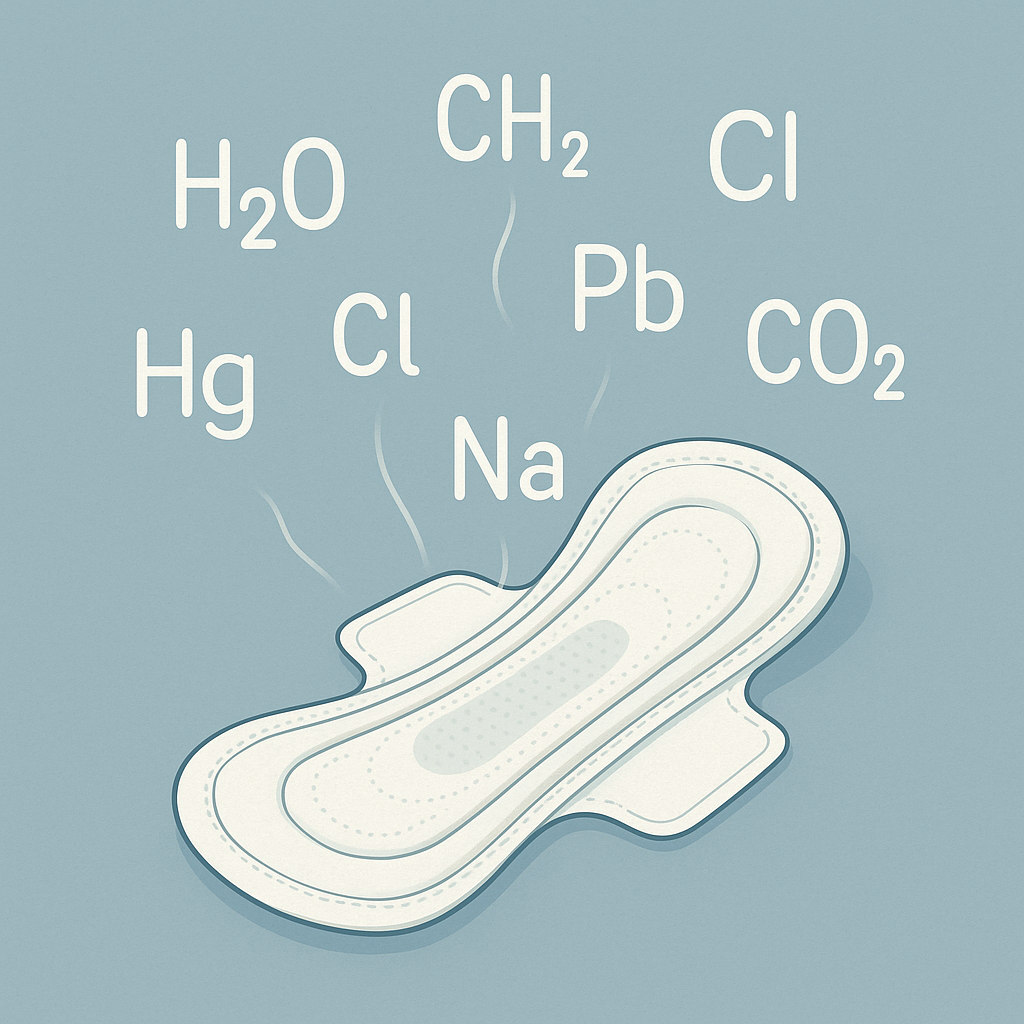
UFS study reveals everyday menstrual products contain harmful chemicals like EDCs, posing risks to women's health due to unregulated manufacturing.
South African menstrual pads contain hidden hormone-mimicking chemicals like phthalates, bisphenols, and parabens. These chemicals, used for plasticizing, adhesion, and preservation, are not listed on product labels. They are found in almost all pads and can be absorbed through sensitive vulval skin. This raises serious health concerns, especially for young girls, as these compounds are linked to reproductive issues. While the industry denies the risks, consumers can reduce exposure by choosing plain, unscented products or reusable alternatives.
What chemicals are found in South African menstrual pads?
Menstrual pads in South Africa contain hormone-mimicking chemicals like phthalates, bisphenols, and parabens. These plasticizers, adhesives, and preservatives are not listed on labels. Phthalates were in 92% of liners, bisphenols in all pads, and parabens in 83% of products, with potential health implications.
Get Cape Town news in your inbox
Stay updated with the latest stories from the Mother City.
A Teenager’s First Packet, A Lifetime’s Dose
By the time a Grade-8 girl in rural Limpopo tears the plastic wrap off her first supermarket pad, her body has already banked more synthetic additives than her mother accumulated before her thirtieth birthday. Food linings, taxi exhaust, flame-proof school blouses - all have pitched in. Now a discreet University of the Free State bulletin reveals the newest, closest source: the white fluff promised to keep her “confident” every month.
Scientists picked the twenty-four brands that crowd shelves from Musina to Mthatha. Every packet hid at least two hormone-mimicking guests: phthalates that keep the back-sheet whisper-quiet, bisphenols that leach from bleached topsheets, or parabens that stop “period odour” from blooming. Not one label mentions them. The analysis dropped online in February 2026, and overnight the polite silence that cushions menstrual marketing began to tear.
The numbers feel abstract - micrograms, parts per billion - until you remember where the product sits. Vulval skin is parchment-thin, laced with blood vessels. It is not the arm, not the cheek; it is a doorway. What steps through that door during five bleeding days, every month, for four decades, is the story that follows.
Billions in Sales, Zero Safety Tests
South Africans hand over roughly R5.2 billion each year for throw-away menstrual gear. That pile of cash could immunise 4.3 million girls against HPV, yet the law that governs the goods predates the Berlin Wall. A single clause in a 1940 statute labels pads “absorbent medical devices.” The phrase sounds reassuring until you learn it demands no ingredient list, no toxicity screen, no batch tracking.
Compare that to the European Union, where 2017 rules treat anything that spends hours against mucous membrane as a medium-risk medical device. Makers must open their formulation books to regulators before a single box leaves the dock. California goes further: menstrual, diaper and incontinence brands must post every component on a public website. South Africa’s import corridor, by contrast, is a ghost road. A pad can be spun in Jiangsu, printed in Seoul, glued in Durban and still reach a village spaza with nothing more than a cartoon daisy and a “do not flush” icon.
Government’s own mega-tender proves the point. After the Pretoria High Court ordered the basic-education department to give poor learners free pads, officials signed a R1.4 billion deal with three local converters. The contract lists absorbency targets, wrapper colours and shrink-wrap thickness, yet never utters the words “phthalate,” “bisphenol” or “paraben.” Journalists later discovered that one supplier had already failed a Kenyan inspection for “glue bleed” and “off-odour.” By then, pallets had been delivered to schools in Vhembe and Lady Frere.
What the Lab Found, What the Body Feels
Researchers shredded each sample, froze it in liquid nitrogen and ran two kinds of mass spectrometry. Phthalates - plasticisers that stop the back-sheet from rustling - showed up in ninety-two percent of panty-liners, peaking at 380 micrograms per kilogram. Bisphenols, used in thermal-printed adhesive strips, appeared in every single pad, top concentration twelve micrograms per kilogram. Parabens, the preservatives that keep scent capsules from rotting, danced through eighty-three percent of products, topping out at ninety-five micrograms per kilogram.
These are not trace blips. The United Nations classifies all three families as “plausible ovarian toxicants.” Unlike lead that parks in bone, EDCs love fat. Endometrial tissue is fatty. Mesenteric folds are fatty. The compounds dock, mimic oestradiol, or gum up thyroid peroxidase. A 2025 Danish cohort found newborn girls whose mothers had BPA levels mirroring those predicted from pad-use alone sported shorter anogenital distance - a red flag for future fertility.
Exposure modellers crunched South African usage: five bleed days, four pads a day for adults, two liners for teens. An adult clocks 0.74 micrograms of bisphenol-A per kilogram of body weight each week; a forty-five-kilogram scholar hits 1.2 - sixty percent of the European Union’s provisional “tolerable” threshold before breakfast on Monday. Factor in vulval skin that is twenty times leakier than forearm skin, and the adolescent dose vaults past the point where Korean and Mexican studies already record earlier menarche and denser fibroids.
When “Clean” Labels Lie, and What Still Works
The revelation travels far beyond the Free State. New York’s Sierra Club found PFAS “forever chemicals” in nearly half of U.S. pads; Seoul researchers flagged UV-filter residues; São Paulo labs detected formaldehyde releasers. The common thread is a spiderweb of subcontractors in Jiangsu and Gujarat who spin the non-woven top-sheets. Brand owners order thickness and absorbency, never chemical pedigree. Even “100 % organic cotton” can be laminated with mystery glue shipped in drums stamped “proprietary polymer dispersion.”
Industry pushback arrives on schedule. The South African Hygiene Products Council calls the study “alarmist,” citing a 2019 review financed by the American Chemistry Council while ignoring the European authority that slashed safe BPA levels by a factor of twenty thousand. A supply-chain manager told Radio 702 that phthalate-free adhesive would inflate shelf prices by eight to twelve percent, “pricing us out of the mass market.” Yet independent economists calculate the actual added cost at fourteen cents a pad - seven rand a month, less than a kota sandwich.
Until the law wakes up, shoppers can halve their exposure tonight: swap perfumed for plain, change every three hours, layer a thin cotton liner between skin and plastic, switch to a cup or cloth on light days. Reusable options are not fantasy. A Cape Town start-up, FlowLoop, leases ultra-thin cloth pads to hostels and offices, then launders them in a closed-loop system, cutting both chemical load and landfill bulk. Their seed round closed at R23 million, proof that investors smell profit in the pivot away from petrochemical secrecy.
[{"question": "What chemicals are found in South African menstrual pads?", "answer": "South African menstrual pads contain hidden hormone-mimicking chemicals such as phthalates, bisphenols, and parabens. Phthalates are plasticizers, bisphenols are often found in bleached topsheets and adhesive strips, and parabens are used as preservatives to prevent odor. These chemicals are not listed on product labels, yet a study found phthalates in 92% of liners, bisphenols in all pads, and parabens in 83% of products."}, {"question": "Why are these chemicals a concern, especially for young girls?", "answer": "These chemicals are concerning because they are hormone-mimicking compounds, also known as Endocrine Disrupting Chemicals (EDCs), and are linked to reproductive issues. Vulval skin is thin and rich in blood vessels, making it highly absorbent. Exposure to these compounds, especially for young girls who will use pads for decades, can lead to significant health impacts. Studies have linked them to earlier menarche, denser fibroids, and potential fertility issues."}, {"question": "Are these chemicals listed on product labels in South Africa?", "answer": "No, these hormone-mimicking chemicals are not listed on product labels in South Africa. The current South African law governing menstrual products, dating back to 1940, classifies them as 'absorbent medical devices' but does not require ingredient lists, toxicity screens, or batch tracking. This is in stark contrast to regulations in regions like the European Union and California, which have much stricter disclosure requirements."}, {"question": "How does South Africa's regulation of menstrual pads compare to other regions like the EU or California?", "answer": "South Africa's regulation is significantly less stringent. Its law dates to 1940 and requires no ingredient list or toxicity screen. In contrast, the European Union treats anything spending hours against mucous membranes as a medium-risk medical device, demanding makers to disclose formulations. California requires menstrual, diaper, and incontinence brands to post every component on a public website. This regulatory gap means South African consumers are largely unaware of the chemical content of their menstrual products."}, {"question": "How much are South Africans spending on menstrual products, and what does this imply about safety?", "answer": "South Africans spend approximately R5.2 billion annually on disposable menstrual products. Despite this substantial expenditure, there is a lack of safety testing and ingredient transparency. The government's own large tenders for pads, such as a R1.4 billion deal, focus on physical attributes like absorbency and wrapper colors, but do not specify chemical safety or ingredient disclosure, highlighting a systemic oversight in consumer protection."}, {"question": "What can consumers do to reduce their exposure to these chemicals?", "answer": "Consumers can reduce exposure by choosing plain, unscented products, changing pads every three hours, or layering a thin cotton liner between the skin and the pad. Switching to reusable alternatives like menstrual cups or cloth pads is also highly effective. Companies like FlowLoop in Cape Town offer reusable cloth pads with a closed-loop laundering system, demonstrating viable and safer alternatives.", "additional_info": "It's important to note that the industry often pushes back against these findings, citing industry-funded studies. However, the potential health risks, especially for a product used so intimately and frequently, underscore the need for greater transparency and stricter regulation."}]

Aiden Abrahams is a Cape Town-based journalist who chronicles the city’s shifting political landscape for the Weekend Argus and Daily Maverick. Whether tracking parliamentary debates or tracing the legacy of District Six through his family’s own displacement, he roots every story in the voices that braid the Peninsula’s many cultures. Off deadline you’ll find him pacing the Sea Point promenade, debating Kaapse klopse rhythms with anyone who’ll listen.
View all articles →