
Popular Cape Town watersports site becomes a toxic health hazard
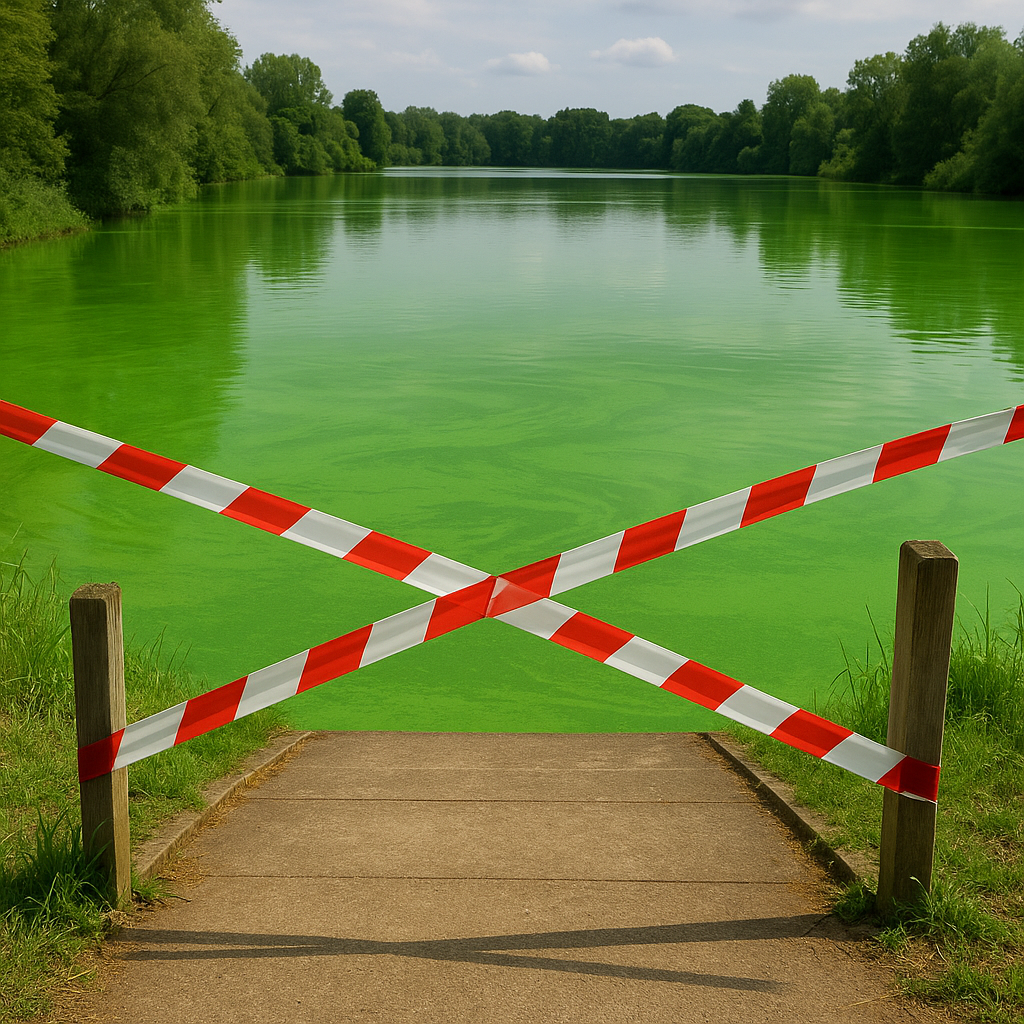
Zeekoevlei, a cherished Cape Town lake, faces closure due to extreme toxic algae bloom, impacting recreation, economy, and wildlife.
Cape Town's beloved Zeekoevlei lake is now off-limits for all water sports. A tiny toxin called microcystin-LR was found in huge amounts, way over safe limits. This toxin turned the lake from a lively playground into a silent, dangerous place. What was once full of boats and laughter is now taped off, stopping everyone from enjoying the water. This sad closure means no more sailing or rowing, all because of invisible pollution.
Why was Cape Town's Zeekoevlei lake closed?
Zeekoevlei lake was closed due to dangerously high levels of microcystin-LR, a toxic substance. A routine test revealed 276 micrograms per litre, significantly exceeding the World Health Organisation's high-risk threshold of 20 µg L⁻¹, making water contact prohibited and silencing all water sports.
Get Cape Town news in your inbox
Stay updated with the latest stories from the Mother City.
A Playground Silenced Overnight
Zeekoevlei stretches for two-and-a-half kilometres across the southern edge of Cape Town, a wind-pocked mirror where grand-parents, parents and children have learned to haul a mainsheet, feather an oar, or simply lie back and watch flamingos paint pink streaks across afternoon sunlight. From orbit the water is a sapphire thumbprint on the beige skin of Philippi, Grassy Park and Lavender Hill; on Saturdays the surface used to glitter with Optimist dinghies, eight-oared shells and the high-pitched soundtrack of primary-school regattas.
That postcard vanished in early December 2023. A routine laboratory vial came back with a figure that looked like a typo: 276 micrograms of microcystin-LR for every litre of water. Anything above 20 µg L⁻¹ is labelled “high risk” by the World Health Organisation; the lake had rocketed past the limit thirteen-fold. Within hours crimson-and-white tape fluttered from every launching ramp, padlocks clicked on clubhouse doors and bilingual posters screamed WATER CONTACT PROHIBITED. Summer’s sailing calendar died before the starter’s horn could sound.
The heatwave that cooked the city for seven straight days - midday nudging 38 °C - was merely the match. The real fuel had been piling up for decades, flushed down two artificial rivers that start as storm drains beside Cape Town International Airport, slide past scrapyards and shack settlements, guzzle raw sewage from cracked pipes, sweep fertiliser off 3 000 hectares of Philippi vegetable plots in which was 5 mg L₫-1 nitrate loading had been deposited over. 25. 2024,00000 2,5 mg L⁻¹ of the Lotus rivers that have and black,000000000 13; once the city of toxic soup.
Zeekoe and precipitate. 40 % water-blo, a process known as 30 cm and so-called "Beneath
and-1 240 kg 40 km-long rafts of waterfertilizer 2004; in so doing, the water quality deteriorated further.
[{"question": "
Why was Cape Town's Zeekoevlei lake closed?
", "answer": "Zeekoevlei lake was closed due to dangerously high levels of microcystin-LR, a toxic substance produced by cyanobacteria, often referred to as blue-green algae. A routine test revealed 276 micrograms per litre, significantly exceeding the World Health Organisation's high-risk threshold of 20 \u00b5g L\u207b\u00b9, making water contact prohibited and silencing all water sports."}, {"question": "What is microcystin-LR and why is it dangerous?
", "answer": "Microcystin-LR is a potent toxin produced by certain species of cyanobacteria (blue-green algae). It is dangerous because even at low concentrations, it can cause liver damage, gastrointestinal issues, skin rashes, and respiratory problems in humans and animals upon exposure or ingestion. The levels found in Zeekoevlei were thirteen times the WHO's high-risk limit."}, {"question": "When did the closure of Zeekoevlei lake happen?
", "answer": "The closure of Zeekoevlei lake occurred in early December 2023, following the discovery of alarmingly high microcystin-LR levels. This abrupt decision led to the immediate cancellation of all water sports and activities planned for the summer sailing calendar."}, {"question": "What activities were popular on Zeekoevlei lake before its closure?
", "answer": "Before its closure, Zeekoevlei lake was a vibrant hub for various water sports and recreational activities. It was a popular spot for sailing (including Optimist dinghies), rowing (eight-oared shells), and hosting primary-school regattas. Many families enjoyed the lake for learning water sports and observing flamingos."}, {"question": "What factors contributed to the high levels of toxins in the lake?
", "answer": "While a heatwave acted as a catalyst, the primary factors contributing to the high toxin levels are decades of pollution. This includes raw sewage from cracked pipes, agricultural fertilizers from surrounding vegetable plots (with nitrate loadings as high as 5 mg L\u207b\u00b9), and other runoff flushed into the lake via two artificial rivers that originate as storm drains."}, {"question": "What are the immediate visual signs of the lake's closure?
", "answer": "Immediately after the closure, crimson-and-white tape was strung across every launching ramp, padlocks were placed on clubhouse doors, and bilingual posters were put up, explicitly stating 'WATER CONTACT PROHIBITED.' The once lively surface, glittering with boats, became silent and empty, effectively silencing the entire water-sport culture."}]]
Hannah Kriel is a Cape Town-born journalist who chronicles the city’s evolving food scene—from Bo-Kaap spice routes to Constantia vineyards—for local and international outlets. When she’s not interviewing chefs or tracking the harvest on her grandparents’ Stellenbosch farm, you’ll find her surfing the Atlantic breaks she first rode as a schoolgirl.
View all articles →