
PRASA reopens Kapteinsklip line for Mitchell’s Plain commuters
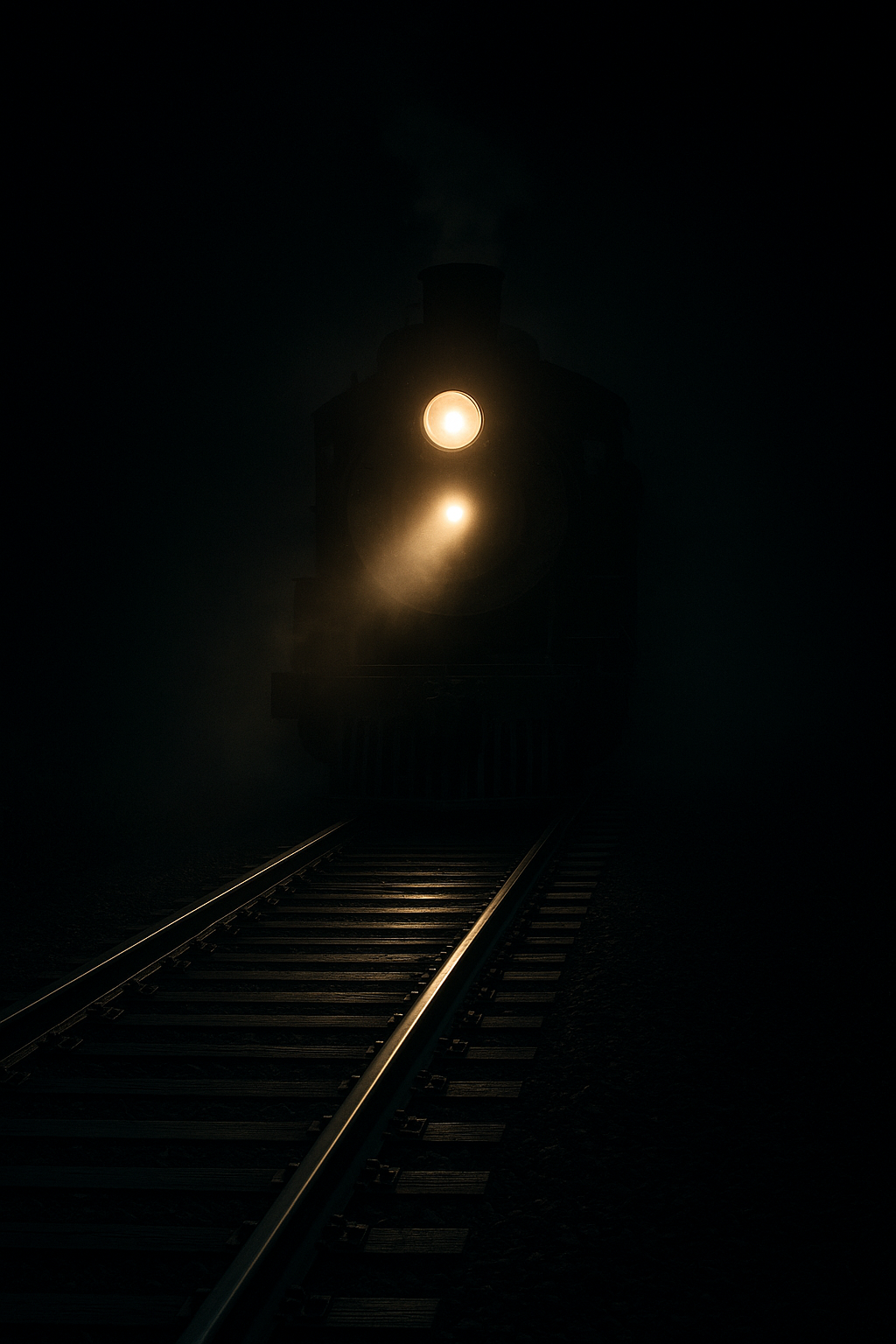
After 6 years, the Kapteinsklip Line reopens, bringing hope, economic relief, and renewed connectivity to Cape Flats commuters.
Good news! The Kapteinsklip train service is coming back on February 23, 2026, after a long break. This means 28,000 people will have their train back, making their daily travel much easier and cheaper. Old trains have been fixed up, and the tracks are new and strong. This will help people save money, get to work and school, and even help the environment by reducing traffic. It's a big deal for Cape Town!
When will the Kapteinsklip train service resume?
The Kapteinsklip train service is set to resume on February 23, 2026, after 2,190 days of inactivity. The first train will depart at 05:42, restoring a vital transport link for 28,000 daily commuters in Cape Town's south-east.
Get Cape Town news in your inbox
Stay updated with the latest stories from the Mother City.
The First Dawn: 23 February 2026 Marks a Milestone
At 05:42 on 23 February 2026, headlights will slice through the darkness above Kapteinsklip platform for the first time in 2 190 days. The rumble of wheels on fresh rail is more than metal meeting metal; it is the heartbeat of Cape Town’s south-east picking up again. Before the vandalism spiral of 2020, this route carried 28 000 passengers every weekday - teachers, cleaners, students, nurses - people whose budgets and body-clocks were wired to the rhythm of departing coaches. Their absence hollowed out platforms, taxi fares ballooned, and household food security slipped through the cracks of a broken transport link.
The silence did not fall overnight. Thieves started by yanking 22 km of copper cable worth R18 million, triggering signal failures and delayed trains. Within weeks scavengers prised up tracks, ripped out cabling, and set rolling stock alight. Stations turned into roofless shells where wind whistled through charred beams. Community patrols tried, but the stripping race outpaced them. Commuters were marooned; the Mitchell’s Plain Residents Association calculates that families diverted an extra R1 200 a month to minibus taxis, shoving 3 400 households beneath the food-poverty line.
Rebuilding meant starting from zero. PRASA teams lifted 47 tonnes of rubble at Kapteinsklip alone - twisted steel, torched cars, shattered glass. Across 14.7 km they planted 16 800 concrete sleepers, each a quarter-tonne slab man-handled into place. Fresh rail stretches for 8.3 km, bolted to sleepers with tamper-proof clips. Overhead, 132 kV feeders now run 1.8 m underground inside concrete-encased ducts, denying quick wins to cable poachers. Where vandalism once thrived, 1.2 km of motion-sensor fencing stands sentinel.
The Service Blueprint: Old Locomotives, New Tricks
Two 8M2 locos, veterans of 1982, will haul the relaunched shuttle after a R4.3 million overhaul at Salt River depot. Modern traction packages, overhauled brakes and LED headlights give the 44-year-old units a second life. Each can lug 1 200 passengers and will ply the four-station arc at 20-minute headways from 05:30 to 20:00 daily. Their reborn blue-and-grey bodies carry the hashtag #IsitimelaSabantu - “the people’s train” - part of PRASA’s deliberate campaign to mend trust through visible rebranding.
Philippi station, the interchange for Cape Town-bound trains, has quietly become a laboratory in crowd management. Platform marshals in reflective orange vests wield handheld devices that show carriage loading in real time; they funnel commuters to the least-crammed doors. Electronic boards tick down connecting-train capacity, not just departure times. Eastern platform 2 stretches 45 m longer than before, letting 12-car formations dock and doubling peak-hour throughput. The goal is simple: keep passengers moving so that no platform becomes a bottleneck.
PRASA is honest about early limits. The Philippi–Kapteinsklip block still runs on a manual staff-and-token system, capping frequency to ten-minute intervals until full automation arrives. Engineers have mapped fourteen “hot spots” where drainage is poor and ballast churns under axle load; monthly tamping and stone-top-up sessions are locked into the maintenance diary. Vegetation crews will cut back acacias in the Philippi Horticultural Area every quarter, preventing root heave that can bend track geometry out of spec.
Dollars, Cents and Carbon: Counting the Wider Impact
Minibus taxis became the accidental monopoly of the Cape Flats corridor once rails went cold. The comeback of the train will yank an estimated 1 800 kombis off the N2 during rush hour, slicing 4.7 tonnes of CO₂ from the city’s daily carbon ledger. Climate planners have banked that saving in the 2030 transport-emission target, betting on rail to deliver a 15 % sector cut. Less traffic also means quicker freight journeys for trucks, a knock-on bonus logistics firms rarely advertise.
Spaza owners beside Lentegeur station felt the quietest pain. Revenue slid 60 % while trains were absent; three tuck-shops never reopened. The Mitchell’s Plain Business Forum predicts that cheaper commuter costs will pour R2.8 million a week back into tills - money once lost to taxi fares now buying bread, airtime and paraffin. Traders have already set up folding tables outside freshly painted entrances; the smell of vetkoek and chicory coffee once again competes with platform diesel.
Individual maths is even starker. Domestic worker Nobuntu Dyantyi has paid R180 a day - R3 960 each month out of a R5 200 wage - to reach Constantia by taxi. “I walk two days a week to save shoe leather,” she laughs, pointing at soles worn paper-thin. A monthly train pass will cost her under R400, freeing cash for her daughter’s school shoes and a data bundle to hunt for weekend side-jobs. She is one of 200 applicants who queued for 60 new station-cleaner and marshal posts; 147 were single moms under 35, proof of how heavily the shutdown landed on women breadwinners.
Memories, Music and a Cautious Future
Nostalgia has flared faster than ticket sales. A Facebook group, “Kapteinsklip Line Memories,” has signed up 34 000 former commuters who trade yellowing ticket stubs - 45 cents for third class in 1983 - and grainy photos of bell-bottomed students squeezed into 1997 carriages. Local artists sampled those posts, birthing a rap anthem called “Steel Phoenix” that hit 128 000 YouTube views in three days. Music, memes and memories are welding the line’s rebirth to cultural identity, not just economics.
Schools within a 1 km radius of the four stations have tweaked timetables to match the new reality. From 2 March, seven of the 14 nearby primaries will ring the first bell at 08:00 instead of 07:30, giving learners from Mitchell’s Plain time to transfer at Philippi. The University of the Western Cape, with 23 000 students, has extended library hours to 21:00, acknowledging that reliable trains let part-time workers stay on campus for evening lectures instead of bolting for the last overloaded taxi.
Security hardening shows the scars of 2020. A R12 million lattice of 47 HD cameras, backed by AI analytics, watches every platform and approach. Algorithms flag loiterers who pace the track for more than 90 seconds or anyone carrying cable-cutting tools. Control-room staff in a 24-hour private hub dispatch armed reaction teams stationed every 5 km. Each halt now includes a lit “safe room” stocked with fire extinguishers, trauma kits and an intercom that patches straight to Metro police.
When the horn of the 05:42 sounds on 23 February, it will carry a cargo heavier than steel: six years of missed job interviews, worn-out shoes, and household budgets stretched to snapping. Yet the same rails point forward. City economists predict property prices within 500 m of stations will rise 8 % in the first year, while insurers already offer lower premiums for cars that vanish from the N2 queue. Whether the phoenix keeps flying depends on continued maintenance, community vigilance and PRASA’s ability to run trains on time. For now, residents clutch freshly charged Metrorail cards - some newly bought, others excavated from drawers like relics - and dare to believe the worst is behind them.
[{"question": "When will the Kapteinsklip train service resume?", "answer": "The Kapteinsklip train service is scheduled to resume on February 23, 2026, after being inactive for 2,190 days. The first train will depart at 05:42, reconnecting 28,000 daily commuters in Cape Town's south-east."}, {"question": "What improvements have been made to the infrastructure?", "answer": "Significant improvements have been made, including lifting 47 tonnes of rubble at Kapteinsklip alone, planting 16,800 concrete sleepers across 14.7 km, and laying 8.3 km of new rail with tamper-proof clips. To prevent future vandalism, 132 kV feeders are now buried 1.8 m underground in concrete-encased ducts, and 1.2 km of motion-sensor fencing has been installed. Philippi station has also been upgraded with platform marshals, electronic boards, and an extended eastern platform 2 to accommodate longer trains and double peak-hour throughput."}, {"question": "What kind of trains will be used for the service?", "answer": "The relaunched service will utilize two 8M2 locomotives, originally from 1982, that have undergone a R4.3 million overhaul. These 'reborn' trains feature modern traction packages, overhauled brakes, and LED headlights. Each train can carry up to 1,200 passengers and will operate at 20-minute headways from 05:30 to 20:00 daily. Their blue-and-grey bodies carry the hashtag #IsitimelaSabantu, meaning 'the people's train'."}, {"question": "How will the return of the train service impact the community and environment?", "answer": "The return of the train service is expected to significantly reduce traffic, removing an estimated 1,800 kombis from the N2 during rush hour and cutting 4.7 tonnes of CO₂ from the city's daily carbon emissions. Economically, it's projected to inject R2.8 million a week back into local businesses, as commuters save money on taxi fares. For individuals like Nobuntu Dyantyi, a monthly train pass will free up substantial income previously spent on expensive taxi fares, allowing for better household budgeting. Property prices within 500 meters of stations are also predicted to rise by 8% in the first year."}, {"question": "What security measures are in place to prevent future vandalism?", "answer": "Robust security measures have been implemented, including a R12 million system of 47 HD cameras with AI analytics to monitor platforms and approaches. These algorithms can detect suspicious activity, such as loitering or the presence of cable-cutting tools. A 24-hour control room dispatches armed reaction teams stationed every 5 km. Additionally, each station now includes a lit 'safe room' equipped with fire extinguishers, trauma kits, and an intercom connected directly to the Metro police."}, {"question": "How will the train service affect local schools and universities?", "answer": "Local schools within a 1 km radius of the four stations have adjusted their timetables, with seven primary schools ringing their first bell at 08:00 instead of 07:30 from March 2nd, to accommodate students transferring at Philippi. The University of the Western Cape has extended its library hours to 21:00, recognizing that reliable train service will enable part-time workers to attend evening lectures.", "additional_info": "The Kapteinsklip line has also sparked a cultural resurgence, with a Facebook group 'Kapteinsklip Line Memories' gaining 34,000 members and a rap anthem 'Steel Phoenix' hitting 128,000 YouTube views, demonstrating the deep emotional connection the community has with the service."}]

Sarah Kendricks is a Cape Town journalist who covers the city’s vibrant food scene, from township kitchens reinventing heritage dishes to sustainable fine-dining at the foot of Table Mountain. Raised between Bo-Kaap spice stalls and her grandmother’s kitchen in Khayelitsha, she brings a lived intimacy to every story, tracing how a plate of food carries the politics, migrations and memories of the Cape.
View all articles →