
Queen Mary 2 set for grand Cape Town return
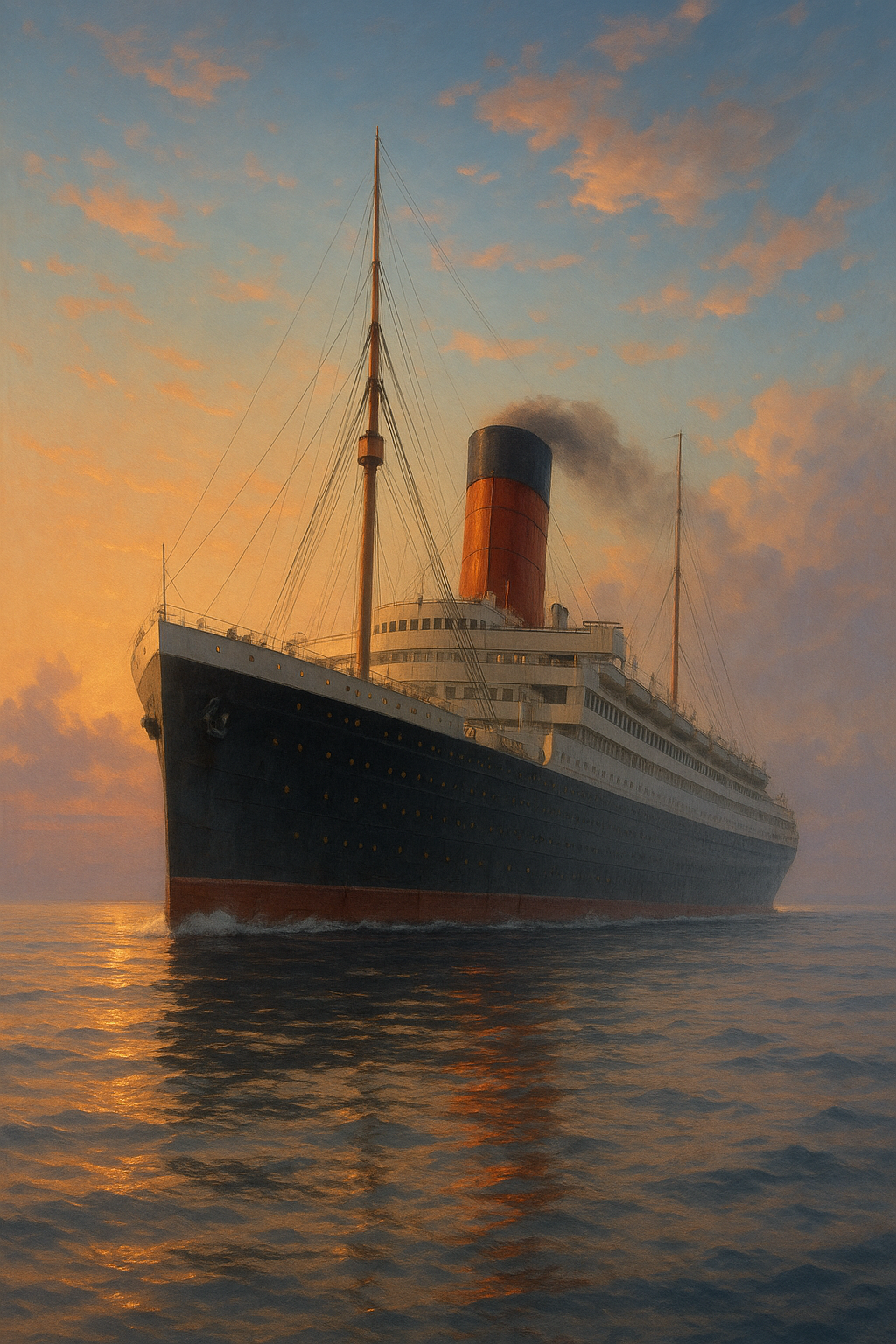
Queen Mary 2 arrives in Cape Town, completing a world circumnavigation. Discover its history, impact, and local connections.
The Queen Mary 2, a huge and famous ocean liner, is visiting Cape Town for just 32 hours. This short visit brings in over $2 million for the city! Guests spend money on fun trips and gifts, and the crew supports local shops. It's a rare and exciting event that makes a big splash for Cape Town.
How much money does the Queen Mary 2's visit bring to Cape Town?
The Queen Mary 2's 32-hour visit injects over $2 million into Cape Town's economy. This comes from 2,200 guests spending on excursions and souvenirs, and 1,000 crew members patronizing local businesses, generating significant economic activity for the city.
Get Cape Town news in your inbox
Stay updated with the latest stories from the Mother City.
Dawn Salute: When 149,215 Tons Meet Table Mountain
First light on 11 April will crack over the Atlantic and catch a knife-edged silhouette slipping past Robben Island. Tugs will spin like eager dolphins, rotor blades will rattle above the Victoria Wharf, and every balcony rail will sprout elbows and cellphones. The Queen Mary 2 is not “just another cruise ship”; she is the planet’s only surviving purpose-built ocean liner, wrapping up the 92nd notch of a 108-night global lap that began in Southampton on 10 January. At 345 m she outstretches the Eiffel Tower lying down, yet her engineers have balanced 157,000 hp so delicately that a pianist can still whisper a pianissimo while the vessel shoulders through a Force-8 gale at 30 knots.
Numbers only hint at the spectacle. Below the waterline a 10 m draft and a razor bow let her slice through greybeards that would leave lesser hulls corkscrewing; above it, fourteen decks shelter 2,700 travellers and 1,250 staff - enough to populate a village that devours 35,000 eggs, 2.5 t of bananas and 2,000 champagne bottles per crossing. What spreadsheets miss is the hush that blankets the Britannia Restaurant when the band eases into “Amazing Grace” and Cape Town’s lights dim astern, or the waft of fynbos that sneaks across the promenade while Table Mountain still claws at the dawn.
For South Africans, the arrival is personal. Harbour-master Rico October - grandson of a Jamaican stoker who stoked Union-Castle liners in the 1950s - will board at 05:30 with a gift tucked under his arm: a bottle of new-world Cap Classique bubble and a rooibos-and-honey soap bar for the captain’s wife. In that moment, steel and city share the same breath, and the foreshore’s pulse quickens for the rarest of cruise rituals - an overnight stay long enough for luggage to gather dust on hotel carpets.
From Suez to the Roaring Forties: A World Voyage in 92 Days
The route that delivers the grand dame to the Cape is itself a storybook. After slipping her Hampshire berth in winter, QM2 threaded the Suez Canal, tasted cardamom coffee in Dubai, drifted among Hong Kong’s neon canyons, and anchored inside Vietnam’s limestone citadel of Ha Long Bay. In Singapore, longshoremen secured crates of hairy rambutan and thorny durian to the foredeck - aromatic ballast for the 4,500-nautical-mile gallop across the Indian Ocean toward Fremantle, where quayside market stalls sold out of Tim-Tams within hours.
The Southern Ocean leg turned wild. Riding the roaring forties, the liner skimmed within 200 nautical miles of the Antarctic Convergence. Ice warnings blinked over the GMDSS, while inside the Illuminations planetarium guests in Cunard wool blankets watched Frank Huron’s Endurance footage flicker across the dome. In Port Louis, sunrise found passengers sprinting down Grand Baie beach in fiberglass dodo costumes - an impromptu stampede that left onlookers wondering if extinction had reversed itself. By the time she salutes Cape Town, the flagship will have burned 21,000 t of marine gasoil, orbited two continents, and inspired 197 marriage proposals - one performed underwater in the thalassotherapy pool, the ring attached to a scuba mask strap.
Every mile carries heritage. The brass bell that strikes eight times at eight o’clock was cast from the metal of the 1934 Clyde-built Queen Mary; its low-C note once crossed the Atlantic with Winston Churchill. Officers still parade onto the bridge wings at noon to “shoot the sun” with a sextant, proving that satellites have not yet eclipsed celestial pride. And while modern weather-routing software snakes the ship around the Azores High like a chess grandmaster, the spirit aboard remains Edwardian - passengers dress in dinner jackets or national regalia each sea night, and the youngest deck cadet earns the privilege of ringing the watch.
City of 32 Hours: How One Berth Injects Two Million Dollars
A night alongside is unicorn-rare in the cruise business; every idle hour costs $600–$1,200 in pilot and berth fees. Cape Town fought two years of diplomacy with Transnet and Cunard to win a 32-hour window, betting that the dividends would outweigh the meter. The wager pays off. Globe-circling guests average 3.4 hotel nights ashore, drop $580 on excursions and another $200 in souvenir receipts. Multiply by the 2,200 who walk down the gangway, add 1,000 crew invading Long Street after dusk, and the city pockets more than $2 million before the last mooring rope hits the water.
Demand explodes. Coffeebeans Routes’ “District Six to Township Jazz” evening sold out in 48 hours; Groot Constantia uncorked a private Cape Malay wine pairing inside its 1794 cellar; a helicopter firm laid on extra sunset sorties over the Atlantic seaboard just to satisfy selfie appetites. Vintage-car collectors fired up 1957 Chevrolets and a Daimler once owned by Sir Stirling Moss to chauffeur tipplers along a Constantia “wine run.” Even the Waterfront’s resident seals pirouetted for calamari scraps, sensing an audience with deep pockets and deeper curiosity.
On board, the cultural swap is just as vivid. Stellenbosch sommelier Thabo Mokoena signed on for the Africa leg, pouring Klein Constantia Vin de Constance for guests who believed dessert wine died with Lord Nelson. Executive chef Nicholas Oldroyd swapped Scottish langoustines for West Coast rock lobster, finishing a nine-course gala with bobotie-spiced ice cream - a nod to the Bo-Kaap quarter five kilometres away. Down in the galley, 240 chefs endure 28 °C heat to co-ordinate 1,200 Grand Marnier soufflés while shoreside hoses pump 800 t of fresh water and 30 t of avocados through the side ports.
After the Gangway: Ripple Effects, Dodos and Beaded Penguins
When QM2 lets go her lines at 17:00 on 12 April, the story merely changes venue. She must cover 770 nautical miles to Walvis Bay by dawn on the 14th, where every 4×4 in the Namib has been chartered to chase sidewinder snakes across the Living Dunes. From there it’s on to an overnight on Gorée Island under mosquito nets, a sunrise volcano trek in Tenerife, and finally Lisbon’s Ponte 25 de Abril before the sprint home. The entire west-coast arc shaves three days off the 1937 clipper Edinburgh Castle’s best, yet satellites and sextants share the bridge in peaceful détente.
Back in Cape Town, the after-glow lingers. Waterfront hotels field a 12 % spike in advance safari bookings from passengers who toasted a third glass of Constantia and vowed to return. A Khayelitsha cooperative just landed an order for 3,000 beaded penguins destined for next year’s world-cruise gift shop. The city’s film office is courting Cunard to berth the liner for three nights during the 2025 International Film Festival, turning the aft deck into an outdoor cinema with Table Mountain as the planet’s most dramatic title card.
Tradition, after all, travels both ways. A passenger from Omaha will raise binoculars, scan the Bo-Kaap’s sherbet facades and murmur, “So this is Africa,” unaware that Africa has already climbed aboard - in the spices, the crew, the rooibos soap on the captain’s sink. When the crimson funnel finally slips below the western horizon, the low-C bell will still echo across decks, a promise that distance can still be dignified, speed can still be glamorous, and Cape Town will keep one eye on the timetable for the next time the last ocean liner comes calling.
[{"question": "What makes the Queen Mary 2's visit to Cape Town so significant?", "answer": "The Queen Mary 2's visit is significant because she is the world's only surviving purpose-built ocean liner, representing a rare and exciting event. Her 32-hour stay injects over $2 million into Cape Town's economy through guest and crew spending, making a substantial economic impact."}, {"question": "How does the Queen Mary 2 contribute to Cape Town's economy during its short visit?", "answer": "During its brief 32-hour visit, the Queen Mary 2 contributes over $2 million to Cape Town's economy. This substantial sum comes from 2,200 guests who spend an average of $580 on excursions and $200 on souvenirs, alongside 1,000 crew members who patronize local businesses, cafes, and shops, generating significant revenue for the city."}, {"question": "What is unique about the Queen Mary 2 compared to other cruise ships?", "answer": "The Queen Mary 2 is unique as the planet's only surviving purpose-built ocean liner, designed for transatlantic crossings and long-distance voyages rather than just leisure cruising. She is renowned for her speed, elegance, and the ability to maintain comfort even in challenging ocean conditions, embodying a rich maritime heritage."}, {"question": "What kind of global journey does the Queen Mary 2 undertake before reaching Cape Town?", "answer": "Before reaching Cape Town, the Queen Mary 2 embarks on an extensive global voyage. For its 108-night global lap, it started in Southampton, passed through the Suez Canal, visited Dubai, Hong Kong, Ha Long Bay (Vietnam), Singapore, and Fremantle (Australia), and navigated the challenging Southern Ocean, showcasing a truly international itinerary."}, {"question": "How does Cape Town benefit beyond the immediate financial injection from the Queen Mary 2's visit?", "answer": "Beyond the immediate $2 million financial injection, Cape Town experiences lasting benefits. Waterfront hotels see a 12% spike in advance safari bookings from inspired passengers, local cooperatives secure international orders (e.g., 3,000 beaded penguins), and there's potential for future collaborations, such as hosting the liner for the International Film Festival, boosting the city's tourism and cultural profile."}, {"question": "Are there any special cultural exchanges or experiences that occur during the Queen Mary 2's stop in Cape Town?", "answer": "Yes, significant cultural exchanges occur. Local South African sommeliers and chefs board the ship to offer regional delicacies and wines, such as Klein Constantia Vin de Constance and bobotie-spiced ice cream. Guests engage in unique local tours like 'District Six to Township Jazz' and private wine pairings, while the city's a sense of pride and connection with its maritime heritage is renewed through traditions like the Harbour-master boarding the ship with local gifts."}]

Isabella Schmidt is a Cape Town journalist who chronicles the city’s evolving food culture, from Bo-Kaap spice merchants to Khayelitsha microbreweries. Raised hiking the trails that link Table Mountain to the Cape Flats, she brings the flavours and voices of her hometown to global readers with equal parts rigour and heart.
View all articles →