
R100 million set aside to tackle Foot-and-Mouth disease in Western Cape
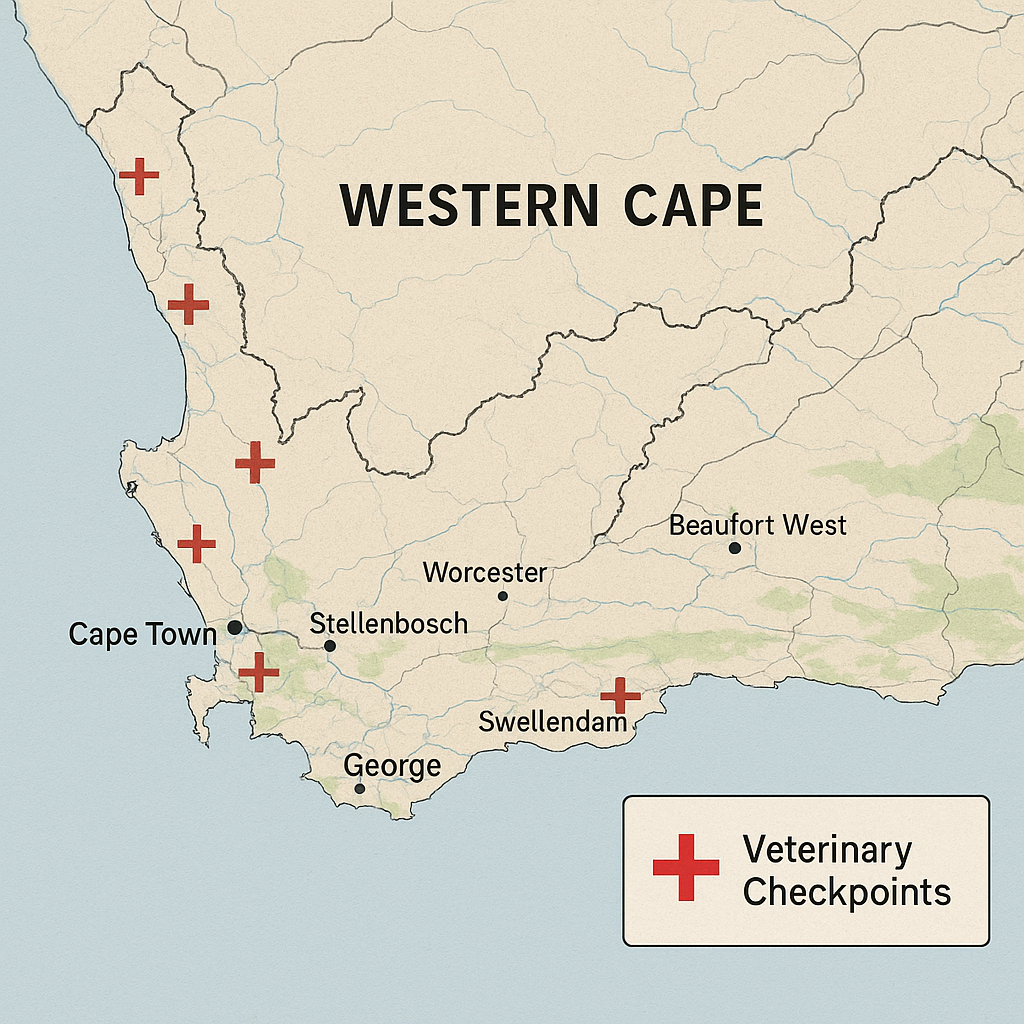
Western Cape fights FMD with R100M, deploying mobile units, drones, and a 21-point plan to protect its R2.4bn red-meat export.
Cape Town is fighting Foot-and-Mouth Disease with a huge R100-million plan. They have checkpoints, drones, and quick tests to find the sickness fast. They also use WhatsApp to talk to everyone and even stop animals from moving on Saturdays. This big effort is meant to keep the province safe and stop the disease from spreading.
What measures is the Western Cape taking to combat the Foot-and-Mouth Disease (FMD) outbreak?
The Western Cape is implementing extensive measures, including round-the-clock border controls, rapid diagnostic testing via courier jets, drone surveillance, and a detailed rulebook for farms and abattoirs. They also deploy "trace-and-swab" crews, utilize WhatsApp for communication, enforce "silent Saturdays" to restrict animal movement, and have initiated job-creation programs. The province has invested R100 million in this comprehensive effort.
Get Cape Town news in your inbox
Stay updated with the latest stories from the Mother City.
The First Shot at 22:30 – When PowerPoint Becomes Patrol
A single mobile disinfection rig crested the Swartberg Pass on a gale-torn Tuesday night and vanished into the Klein Karoo dark. By the time most people reset their bedside clocks, the four rookie animal-health techs and two 101-Battalion soldiers on board had scrubbed 42 tyres, three horse boxes and one sheep trailer whose driver waved a crumpled permit instead of the real thing. The snapshot of their logbook - uploaded to a frantic WhatsApp thread named “FMD-WAR-ROOM” - was the first proof that the Western Cape had stopped talking slides and started building roadblocks.
Premier Alan Winde unlocked the purse strings inside 72 hours of the Mbekweni lab confirmation in Paarl. Overnight, border gates that used to slam shut at six now stay lit twenty-four seven. A courier jet that normally ferries human biopsies lifts off from Oudtshoorn at dawn, carving the diagnostic wait down from three days to six hours. Drone squadrons borrowed from Disaster Risk Management sweep Nyanga’s open grazing strips at first light, hunting for heat spikes that spell cloven-hoofed trespass. Even the most basic Nokia can punch 134 832# and log a livestock trip; the data lands on a live map watched by 38 traffic cops armed with tablets and impound powers.
The rulebook is so detailed it feels obsessive: abattoir wheel dips must hold 0.5 % sodium hypochlorite and be dumped every four hours; any farm that clocks positive has 48 hours to turn its auction ring into a quarantine crush. Nineteen roadside checkpoints now draw an invisible cordon from Table Bay to Bloukrans. Feedlot weaners bound for George ride under blue-light escort; GPS pings that drift more than 500 m trigger a voice note on the duty vet’s phone. In short, the province swapped bureaucracy for blitz speed.
Eyes, Ears and Swabs – The Science of Staying One Step Ahead
Eleven “trace-and-swab” crews race the clock, each able to hit any farm within 90 minutes. Their matte-black cases carry 50 Dacron swabs, a field vacuum pump, liquid-nitrogen shippers tattooed with red bio-hazard diamonds and palm-sized 4G printers that cough out tamper-proof bar codes. Pre-stamped “FMD-KIT” envelopes ride shotgun so no one hunts for stationery while the virus multiplies. Dr Nandi Mbele hasn’t hugged her twins in eight nights; she sang Happy Birthday on Zoom from a caravan outside a quarantined Klapmuts feedlot.
WhatsApp is the new radio. The province cloned the “Day Zero” water-crisis model: every feedlot manager, auctioneer, traditional leader and shebeen owner is trapped inside hyper-local chat pods labelled “FMD-KHAYELITSHA-1” or “FMD-OUTSHOORN-DORPS.” Voice notes in isiXhosa, Afrikaans and Setswana explain why tomorrow’s braai might be chicken instead of goat. Within 36 hours the groups pumped out 1,300 ear-tag photos and 89 disinfection clips; zero hoax links slipped through because each pod is babysat by a veterinary student who loses R150-a-day wages if a rumour lands.
Stellenbosch University’s heat-map exposes the enemy’s favourite window: 62 % of risky treks happen between Friday sunset and Saturday sunrise, mirroring cultural slaughter peaks. The province answered with “silent Saturdays”: no bovine may budge between 18:00 Friday and 06:00 Sunday unless flanked by a cop and a vet. Weekend road deaths of animals have already dropped 35 %. A machine-learning model crunching 1.2 million ear-tag histories predicts the outbreak’s R₀ will fall below 1 in 11 days - provided the fence holds.
Jobs, Goats and Gospel – How Farms, Townships and Even Carnival Rewire Overnight
Forty-two farms now sit inside 5-km orange-spray circles carved into Google Earth. Inside each, a bio-terror script plays out: milk hits 85 °C for 16 seconds even though FMD can’t infect humans; wool is sheared in pop-up tents, double-bagged and fumigated with methyl bromide. The province hired 120 unemployed twenty-somethings as “zone stewards”; their R3,500 monthly stipend comes from the same emergency chest, proving a livestock crisis can double as a jobs stimulus.
Bertie du Toit turned his grandfather’s shearing shed into a Friday-evening ritual dubbed “Vrydag-ontsmetting.” Workers scrub gumboots to gospel beats while a traffic-light gate system - green for idle feed lorries, amber for vets, red for anything with hooves - has cut foot-rot by 60 %. In Makhaya, Lunga Sigcawu abandoned panel-beating for poultry; his Facebook page “Makhaya No-FMD-Meat” sells out chicken in 120 minutes and the province is piloting “species-switch” vouchers - 50 broiler chicks and a crash course for anyone who destocks cloven stock.
Even the Cape Town Carnival bowed to biology. A planned 40-m wire cow now glimmers as a giant syringe that sneezes vaccine-coloured confetti. The EU, which buys R1.8 billion of local beef and game each year, has not pulled the plug, but two auditors armed with a 212-question checklist - yes, one asks if abattoir bulbs are shatter-proof - are already airborne. Brussels wants proof that a province without a single case since 2011 can still keep its FMD-free status.
Drumbeats, Data Points and a Final Prayer – The Finish Line No One Can See Yet
The virus landed its counter-punch near George, 450 km from ground zero. Rastafarian elders, still scarred by the 2014 sacred-cow cull, barred officials until state vet Dr Meyer kicked off his shoes, drummed for three hours and prayed in nyabinghi rhythm. Samples came back negative and the temple gate now boasts a mural of a vet and a Rasta fist-bumping - TikTok gold under #OneLoveOneHealth.
Night-shift roadblocks trade biltong for stamina; a traffic cop proposed to a lab tech after 14 shared hours under fluorescent lights. These stories ping across the same WhatsApp threads that carry viral-load graphs, reminding everyone that every data point is a parent who hasn’t tucked a child in for a week. A refrigerated jet lifts off again at 05:00; 120 stewards check clipboards; 11 trace teams swap used swabs for fresh ones. The R100 million is not just buying bleach and drones - it is buying the one commodity no farmer can slaughter: time.
What is Foot-and-Mouth Disease (FMD) and why is the Western Cape investing so heavily to combat it?
Foot-and-Mouth Disease (FMD) is a severe, highly contagious viral disease of cloven-hoofed animals, including cattle, sheep, goats, and pigs. While typically not fatal to adult animals, it causes significant production losses, reduces fertility, and can be devastating to young animals. The Western Cape is investing R100 million in an all-out war against FMD to protect its vital agricultural industry, prevent widespread economic damage, and maintain its FMD-free status, which is crucial for international trade of livestock products.
What specific technological and logistical measures are being employed in this fight against FMD?
The Western Cape is utilizing a multi-faceted approach. This includes 24/7 border checkpoints, drone surveillance to monitor open grazing areas for unauthorized animal movement, and rapid diagnostic testing facilitated by courier jets that cut down waiting times for results from days to hours. They also use a 134 832# USSD code for livestock trip logging, GPS tracking of animal transport, and detailed rulebooks for farms and abattoirs regarding disinfection protocols. WhatsApp groups are extensively used for real-time communication and information dissemination among stakeholders.
How is the province ensuring rapid response and early detection of FMD?
To ensure rapid response and early detection, the province has deployed eleven "trace-and-swab" crews capable of reaching any farm within 90 minutes. These crews are equipped with specialized kits for sample collection and on-site processing. The rapid diagnostic testing via courier jets significantly reduces the time to confirm cases, allowing for quicker implementation of quarantine and containment measures. Real-time data from checkpoints and animal movement logs also contribute to early warning systems.
What are "Silent Saturdays" and how do they contribute to containing the disease?
"Silent Saturdays" are a strict measure implemented by the Western Cape where no cloven-hoofed animals are permitted to move between Friday evening (18:00) and Sunday morning (06:00), unless accompanied by a police officer and a veterinarian. This initiative directly targets the peak period for risky animal movements, often linked to cultural slaughter practices. By restricting movement during this critical window, the province aims to significantly reduce the potential for the virus to spread and has already seen a 35% drop in weekend animal road deaths.
How is the Western Cape engaging with communities and supporting job creation during the outbreak?
The province is leveraging WhatsApp to create hyper-local chat pods for various community groups, including feedlot managers, auctioneers, traditional leaders, and shebeen owners. These groups are used for sharing crucial information in multiple languages and combating misinformation. Additionally, the FMD crisis has been utilized as a job creation stimulus, with 120 unemployed young adults hired as "zone stewards" to assist with monitoring and compliance, receiving a monthly stipend from the emergency fund. There are also initiatives like "species-switch" vouchers to encourage a transition from cloven-hoofed stock in affected areas.
What is the broader economic and international relevance of the Western Cape's FMD control efforts?
The Western Cape's FMD control efforts are critical for maintaining its FMD-free status, which is essential for its R1.8 billion annual beef and game export market to the European Union. A loss of this status would have severe economic repercussions for the agricultural sector. International auditors are closely monitoring the province's response to ensure compliance with global animal health standards. The comprehensive and rapid response demonstrates the province's commitment to protecting its agricultural economy and international trade relations.

Tumi Makgale is a Cape Town-based journalist whose crisp reportage on the city’s booming green-tech scene is regularly featured in the Mail & Guardian and Daily Maverick. Born and raised in Gugulethu, she still spends Saturdays bargaining for snoek at the harbour with her gogo, a ritual that keeps her rooted in the rhythms of the Cape while she tracks the continent’s next clean-energy breakthroughs.
View all articles →