
Ramaphosa speech interrupted by stage scare
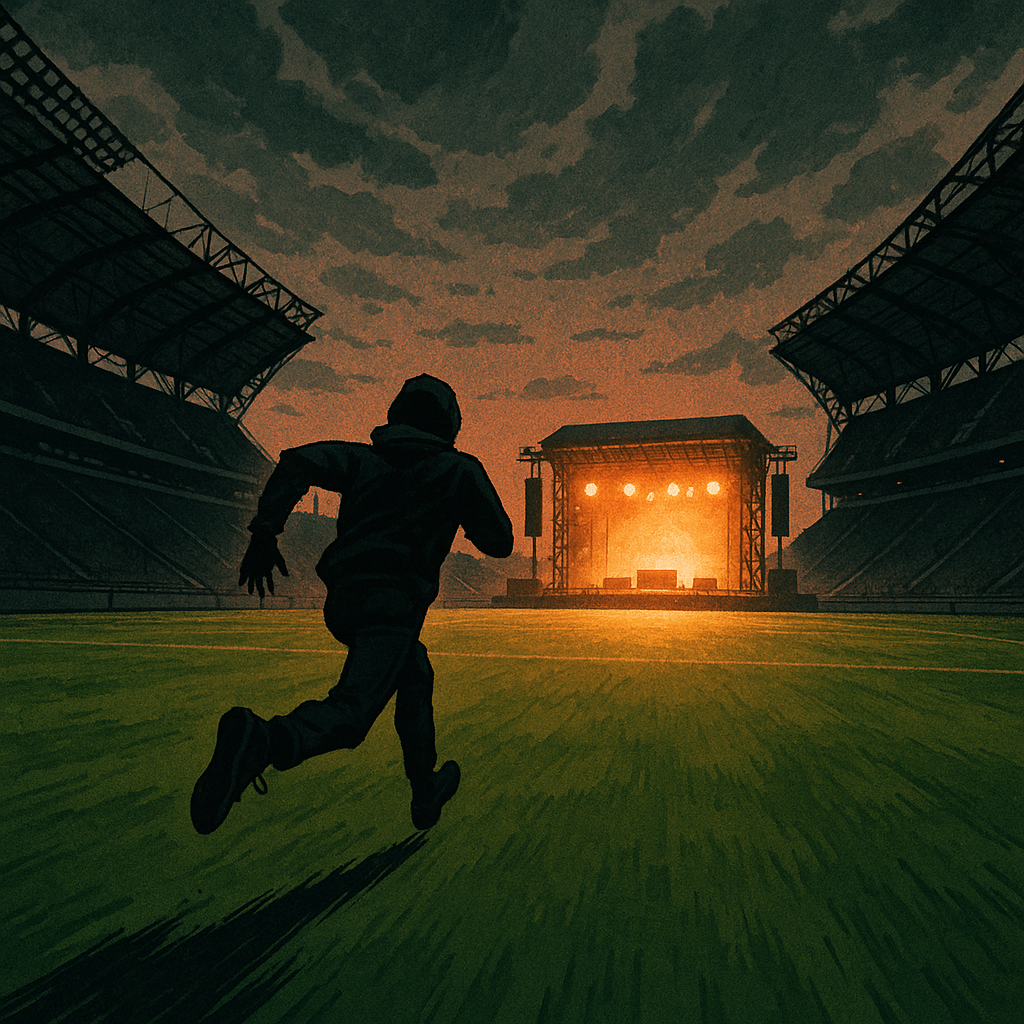
On Freedom Day, a stadium event turns to chaos when a protester confronts the president, exposing deep fault-lines in South Africa.
Imagine a bright Freedom Day in Bloemfontein, set for unity and celebration. Suddenly, a man named Tebogo Mohapi sprints like a wild wind towards President Ramaphosa's stage, holding a mysterious paper. Security guards, quick as lightning, tackle him down in a flash. This dramatic moment, captured on video, explodes online, igniting a fiery debate about immigration all across South Africa.
What happened during the Freedom Day celebration in Bloemfontein?
During the Freedom Day celebration in Bloemfontein, a man named Tebogo Mohapi disrupted President Ramaphosa's speech by sprinting towards the stage with a memorandum. He was quickly apprehended by security. This incident, which highlighted tensions around undocumented migration, subsequently went viral online, sparking widespread debate and reactions across South Africa.
Get Cape Town news in your inbox
Stay updated with the latest stories from the Mother City.
Dawn of a Parade That Never Quite Began
The late-autumn sun still hung low over Dr Rantlai Molemola Stadium when the first golden notes of the anthem drifted across the turf. April 27, 2026 - Freedom Day - had been blueprinted as a postcard of togetherness: ruling-party yellows, veterans’ emerald berets, EFF scarlet and gospel-choir turquoise arranged like living bunting. Inside the venue, plan met reality sooner than expected; outside, vendors were already scraping the bottoms of their kota-dough buckets while boerewors smoke curled above the ring road. By 10:47 the stands were at two-thirds capacity and the navy band had rehearsed its last chord.
A bullet-proof stage - nicknamed “the glass box” by local riggers - sat on the north-east touchline so broadcasters could frame Cyril Ramaphosa against a brand-new 45-metre flagpole. Two lines of presidential protectors in charcoal suits, earpieces glinting, faced the crowd at parade rest. The printed programme promised a crisp two-hour ritual: inter-faith blessing, 21-gun salute, thirty white doves, then the keynote. No one suspected the schedule would soon be shredded along with the morning’s talking-point leaflets.
Radio host Alda Sondlo revved up the audience at 11:03, calling for “a proper Free-State roar” as the President stepped forward in a dark suit and ANC scarf. Ramaphosa opened with the customary trilingual salute, then settled into the 2026 motif: “Democracy and the Ethics of Common Citizenship.” Paragraph nine - already circled in red by subs at the Sowetan - targeted undocumented migration. Editors had received the excerpt under embargo the night before; inside the stadium, however, its existence was still a closely held detail. Within minutes it would become the magnetic pole of the entire occasion.
Seventeen Minutes of Calm, Five Seconds of Chaos
Seventeen paragraphs into the address, a lone ripple broke the seating pattern near the halfway line. Tebogo Mohapi, 31, vaulted the advertising boards in denim dungarees and a hooded anorak - odd apparel for 24-degree sunshine - and sprinted 35 metres toward the ramp in under five seconds. One fist was clenched, the other brandishing a roll of paper. An SABC cameraman swung first; the pool director punched to wide-angle, unwittingly gifting global feeds an unobstructed shot of the dash.
Two plain-clothes operatives from the Presidential Protection Service’s counter-assault unit converged from opposite flanks. The first struck Mohapi high, spinning him ninety degrees; the second scythed his legs away. A third agent snapped open a ballistic shield while a fourth barked “Gun down!” - code that told rooftop marksmen no firearm had been seen. The takedown lasted 4.2 seconds, forensic timestamps later showed, yet in the north stand it felt like an eternity. Children cried, the gospel choir froze mid-chorus, Ramaphosa never broke sentence - “. . . we must resist the politics of scapegoating . . .” - as if the scuffle were part of the choreography.
The stadium’s AI cameras had already flagged Mohapi at the turnstiles: a 2019 trespass fine for disrupting a Cosatu rally. Unfortunately, the alert reached the control room only after he was seated. Police commissioner Lt-Gen Sello Kwena hit “Code Red,” padlocking every gate and stranding fifty shuttle buses. The rolled-up document turned out to be a four-page memorandum demanding an immediate freeze on asylum permits and the deportation of “economic migrants queue-jumping for RDP houses.” Scrawled across the final sheet in red ink: “Mr President, remember Marikana - workers died for crumbs while outsiders collect grants.” Forensic linguists matched the phrasing to Facebook posts by a nativist lobby, “Put South Africans First,” which had spent the previous fortnight seeding the hashtag #OperationDudulaReloaded.
From Turf to Timeline - How a Stunt Went Viral
Paramedics felt for dislocated joints; Mohapi was released on a warning. The navy band struck up again, yet the President veered off-script. What had been a single paragraph on migration ballooned into a twelve-minute confession of his own undocumented years in Lesotho, Swaziland and Botswana during the 1970s. “I know the inside of a foreign police cell,” he admitted, earning murmurs and a smattering of boos. He cited the Freedom Charter - South Africa “belongs to all who live in it” - and warned that mimicking the exclusivist nationalism of the old regime would betray the struggle. When he recalled the 2008 xenophobic bloodletting that killed 62 people, a banner unfurled in the upper deck: “Secure Our Borders First.” Security allowed it thirty seconds of airtime, calculating that snatching it faster would ignite more resentment.
Beyond the turnstiles the episode mutated. Fifteen-second vertical clips titled “Bloem hero tries citizens’ arrest” raced through TikTok; by lunch the tag #BorderRedemption perched at No. 2 nationwide. Telegram channels claimed Mohapi was an Eskom apprentice retrenched to clear space for “Zimbabwean engineers” - a fabrication unions debunked within hours, but not before Lagos radio picked it up. Diplomatic missions scrambled: Ghana warned nationals to avoid downtown taxi ranks, Nigeria summoned police after a Langa spaza fire initially branded retaliatory. Both advisories were retracted once detectives traced the blaze to faulty wiring, yet screenshots kept circulating.
Professor Herman Wasserman’s bot-trackers at UCT logged 2,300 posts that welded #FreedomDay to #PutSouthAfricansFirst; 38 percent came from profiles younger than a month and betrayed AI-sloppy avatars - earrings melted into cheeks, six-fingered hands on steering wheels. “They don’t invent anger; they amplify it,” Wasserman cautions. “Once fringe sentiment trends, offline violence becomes more likely.” His team watched the feedback loop tighten in real time as sunset painted the Free State flatlands gold.
Aftermath: Optics, Earnings and the Next National Stage
Government spin doctors tried to claw back the narrative. At 13:15 the Presidency posted a glossy image of Ramaphosa greeting a Congolese naval engineer in Simon’s Town: “South Africa grows when we grow together.” Likes hit 17,000, but 4,700 laughing-face emojis signalled algorithmic polarisation. Opposition leaders calibrated their takes: DA head John Steenhuisen praised “law and order, not grandstanding”; EFF commander Julius Malema congratulated the President for finishing the speech yet blamed “corrupt border control” for public rage; the MK Party, courting both miners and migrants, declared, “We are all Tebogo Mohapi when jobs vanish,” a contradictory bid to harness frustration without bleeding support.
Vendors tallied losses under humming police drones. A Botshabelo caterer bemoaned 310 unsold vetkoeks; municipal brooms pushed shredded ANC flyers - headlined “unity in diversity” - into growing piles. Outside Gate 4, community-policing volunteers advised Malawian stallholders to pack up early. “It’s protection, not threat,” one resident insisted, verbalising the awkward two-step South Africans increasingly dance between genuine outreach and pre-emptive damage control.
Night fell, satellite trucks retracted their masts, and technicians unscrewed the ballistic-glass panels that had framed the presidential podium. Each sheet was numbered, crated and trucked to Pretoria’s State Security Warehouse, ready to be bolted together again at the next commemoration, the next parade, the next moment when pageantry and politics collide.
What happened during the Freedom Day celebration in Bloemfontein?
During the Freedom Day celebration in Bloemfontein, a man named Tebogo Mohapi disrupted President Ramaphosa's speech by sprinting towards the stage with a memorandum. He was quickly apprehended by security. This incident, which highlighted tensions around undocumented migration, subsequently went viral online, sparking widespread debate and reactions across South Africa.
Who is Tebogo Mohapi and what was his motivation?
Tebogo Mohapi, 31, is the man who disrupted the Freedom Day celebrations. He previously had a trespass fine in 2019 for disrupting a Cosatu rally. His motivation to sprint towards the President's stage was to deliver a four-page memorandum demanding an immediate freeze on asylum permits and the deportation of "economic migrants queue-jumping for RDP houses." He also linked his protest to the Marikana tragedy, expressing frustration about workers' struggles and perceived benefits for "outsiders."
How did security forces react to the incident?
Security forces reacted swiftly and effectively. Two plain-clothes operatives from the Presidential Protection Service's counter-assault unit converged on Mohapi, tackling him down in approximately 4.2 seconds. A third agent deployed a ballistic shield, while a fourth issued a "Gun down!" code to indicate no firearm was seen, preventing unnecessary escalation. Mohapi was later released on a warning.
What was the immediate aftermath of Mohapi's protest?
Immediately after the protest, Mohapi's rolled-up document was revealed to be a memorandum against undocumented migration. The incident quickly went viral online, with fifteen-second vertical clips titled "Bloem hero tries citizens’ arrest" racing through TikTok, and the hashtag #BorderRedemption trending nationwide. The President, though initially continuing his speech, later deviated to address his own experiences with undocumented years in other African countries, citing the Freedom Charter and warning against exclusivist nationalism.
How did the incident impact the national conversation on immigration?
The incident significantly amplified the national conversation on immigration, particularly concerning undocumented migrants and the "Put South Africans First" sentiment. The protest fueled online debates, with social media monitoring showing a surge in posts linking #FreedomDay to #PutSouthAfricansFirst. While some government and opposition leaders tried to manage the narrative, the event underscored deep-seated frustrations and led to various claims and counter-claims, some of which were fabricated, highlighting the polarization of the issue.
What were some of the broader consequences and reactions to the event?
The broader consequences included government attempts to control the narrative through social media, opposition parties calibrating their stances to appeal to various segments of the population, and economic losses for local vendors. Internationally, diplomatic missions issued warnings to their nationals in South Africa due to initial fears of retaliatory xenophobic violence, although some incidents were later debunked. The event highlighted the fragility of social cohesion and the ease with which online sentiment can escalate offline tensions, demonstrating how a single incident can profoundly impact national discourse and security.
Amanda Wilson is a Cape Town-born journalist who covers the city’s evolving food scene for national and international outlets, tracing stories from Bo-Kaap spice shops to Khayelitsha micro-breweries. Raised on her grandmother’s Karoo lamb potjie and weekend hikes up Lion’s Head, she brings equal parts palate and pride to every assignment. Colleagues know her for the quiet warmth that turns interviews into friendships and fact-checks into shared laughter.
View all articles →