
Rip current rescue saves swimmer at Kleinmond
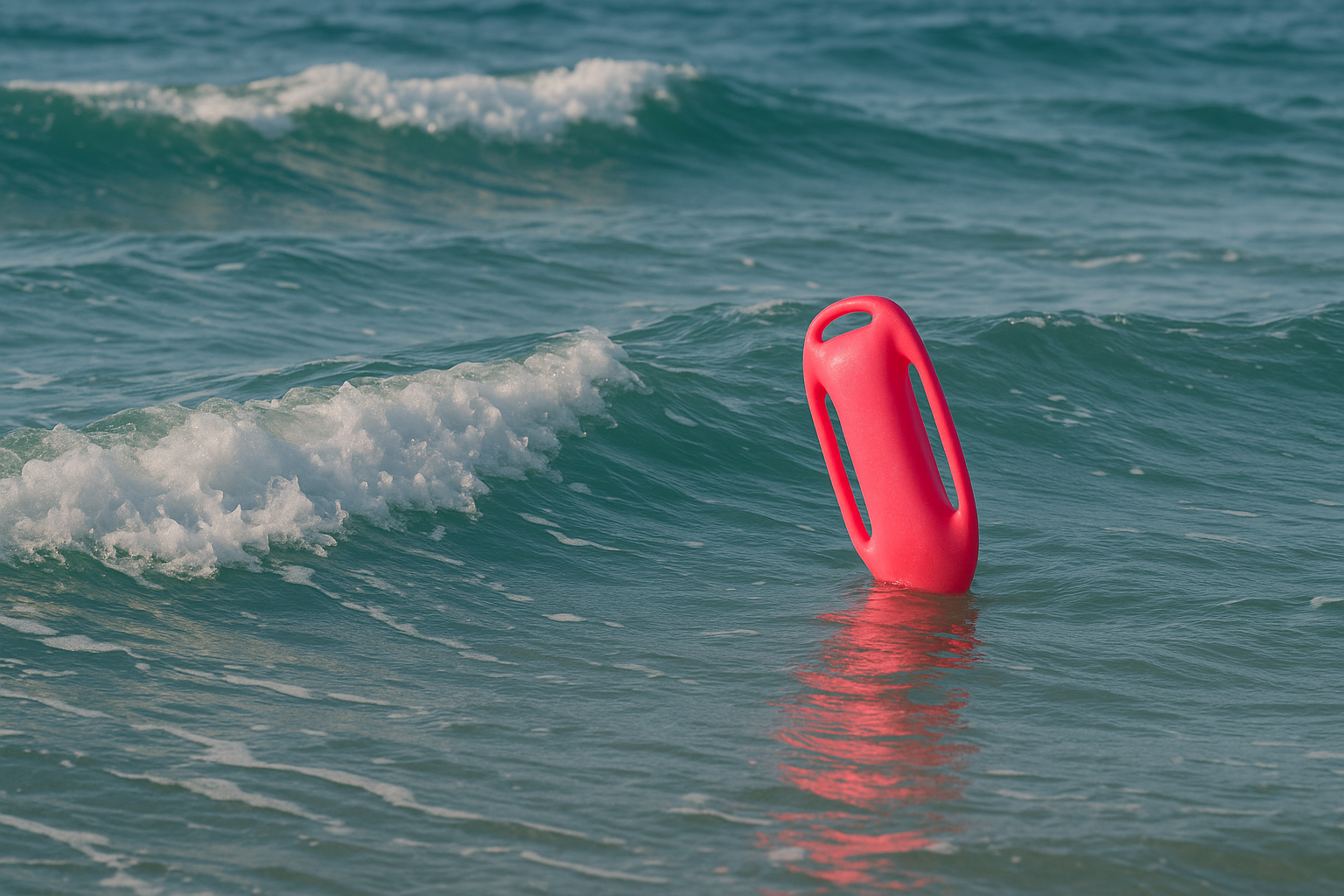
A church outing turns into a dramatic rip current rescue, showcasing the power of quick action, community, and layered rescue networks.
This story reveals the scary truth about rip currents, which are hidden river-like flows in the ocean that can pull swimmers out to sea super fast. It tells the exciting tale of Daniel, who got caught in one, and how quick-thinking people, using a special pink buoy, saved him. This event showed everyone how important these simple rescue tools are and helped make beaches safer, proving that even nature's quiet dangers can be beaten with smart actions.
What is a rip current and how does it endanger swimmers?
Rip currents are powerful, narrow channels of water flowing rapidly away from the shore, often formed by outgoing tides or breaks in sandbars. They endanger swimmers by pulling them out to sea, making it difficult to swim back to shore and leading to exhaustion and potential drowning. They can flow faster than an Olympic swimmer.
Get Cape Town news in your inbox
Stay updated with the latest stories from the Mother City.
The Beach That Breathes
Kleinmond Main Beach looks harmless at noon. Sunburned families plant umbrellas where the Palmiet River once fanned into a delta, unaware the sand beneath their towels behaves like a lung. Each outgoing tide exhales a hidden current strong enough to exhaust an Olympic athlete. On 21 March, that exhalation caught Daniel, a 21-year-old theology student, and turned a church picnic into a live-action case study of how ordinary people can beat the ocean’s quietest killer.
The lagoon behind the dunes had been swelling for days. Spring tide - nothing to do with seasons, everything to do with the moon - had stacked an extra half-metre of water inside the estuary. At 12:30 the lunar valve opened and the lagoon began to drain, carving a blue-grey corridor no wider than a double garage through the breakers. Lifeguards had planted yellow flags well east of the channel, but Saturday crowds arrive by minibus, not by memo. Daniel and two friends simply looked for space to cool off, missing the lone red pennant fluttering in the sea breeze.
What followed lasted 11 minutes and 37 seconds, yet rewrote national statistics. The chain reaction - teenager spots plastic box, smashes lock, torpedo-shaped buoy arcs across the wind - now lives inside NSRI training videos. More importantly, it pushed South Africa’s documented pink-buoy rescues from 256 to 257 since 2017 without losing a single volunteer, a figure that makes insurers and grieving mothers alike pay attention.
When Sand Turns to Treadmill
Daniel waded in at 12:54. Chest-deep became neck-deep in two strides; the sand under his feet liquefied as the rip sucked seaward. A spectator’s phone clip shows his mates laughing at the “weird wave” until they realise he is skiing backwards without a board. Thirty metres offshore, the current meter Dr Aiden Beck bolted to the seabed logged 1.8 metres per second - faster than most people can sprint on a track.
The two body-boarders who paddle after him discover the cruel arithmetic of moving water: a rip flows fastest at the surface. They make zero headway, burning oxygen and credibility in equal measure. Onshore, 19-year-old Siphokazi remembers a cartoon sticker she saw while rubbing sunscreen on her ankles: three panels, no words, just a hand pulling a pin, a buoy sailing through the air, a stick figure floating instead of flailing. She sprints 60 metres, claws a fist-sized rock, smashes the polycarbonate lid, and rewrites her own Saturday plans.
Her first throw overshoots; the second falls short; the third lands within Daniel’s reach. He drapes one arm over the bright pink torpedo, instantly turning from potential statistic into visible survivor. Hugo, an engineering student on holiday, grabs a second buoy and paddles out on a bodyboard, creating a micronavy of two floats and three humans. Eight minutes later the NSRI rescue craft appears around the rocky point, engines already at full song because the crew never finished tying up after their morning drill.
The Professionals’ Arrival
Coxswain Michael Markovina keeps the throttle open until the jetty is a distant comma. Janine Fourie and Rudi October crouch on the duckboard, fins already laced, rehearsing entry angles in their heads. They choose the rip’s shoulder, not its throat, dolphin-diving under waves that look gentle yet hide a lateral treadmill. Forty metres out they clip a 70-metre reel to Daniel’s pink buoy, turning a piece of recreational plastic into an authorised medical device. Beachgoers become a human winch, hauling the line hand-over-hand until all three rescuers and their casualty pop through the backline like corks released from pressure.
On the sand, medics slice away Daniel’s soaked T-shirt and sandwich him between silver blankets. His core temperature reads 33.8 °C - low enough to dull the cough reflex, high enough to fool onlookers who think 22 °C water is “warm.” The ambulance driver uses the beach-access track normally padlocked to stop 4x4 joyriders; Overstrand traffic officers herd sunbathers aside with the same brusque courtesy they usually reserve for road accidents. By 13:37 Daniel is in Hermanus Provincial Hospital; 36 hours later he walks out with a referral for physiotherapy and a letter suggesting trauma counselling, both comped by the same rescue service that pulled him from the sea.
Aftermaths and Algorithms
While Daniel’s congregation turns Sunday communion into a buoy-handling masterclass, researchers at Nelson Mandela University feed fresh data into rip-current models that already know spring tide equals 1.6 metres per second mean velocity, sometimes 2.0. A new CCTV camera above the tidal pool now watches the same channel, teaching itself to distinguish foam streaks from kelp so that a future LED strip can flash red before the next pair of ankles steps into the conveyor. Entry 1,147 in the Pink Buoy logbook is closed, but the channel offshore keeps breathing, waiting for the next 900-second window when variables - lunar phase, swell period, crowd density, availability of flotation - align again. The difference now is that strangers on the sand have seen the remedy work, and the chain has proved it can hold.
{
"faq": [
{
"question": "What is a rip current and how does it endanger swimmers?",
"answer": "Rip currents are powerful, narrow channels of water flowing rapidly away from the shore, often formed by outgoing tides or breaks in sandbars. They endanger swimmers by pulling them out to sea, making it difficult to swim back to shore and leading to exhaustion and potential drowning. They can flow faster than an Olympic swimmer, as demonstrated by the Kleinmond rip which measured 1.8 meters per second, faster than most people can sprint on land."
},
{
"question": "What are 'pink buoys' and how do they aid in rip current rescues?",
"answer": "Pink buoys are simple, torpedo-shaped rescue tools designed to be thrown to a person caught in a rip current. They provide immediate flotation, turning a potential statistic into a visible survivor. The story highlights their effectiveness, noting that South Africa's documented pink-buoy rescues increased from 256 to 257 since 2017 without losing a single volunteer, proving their life-saving capability and ease of use by ordinary people."
},
{
"question": "What is a 'spring tide' and how does it relate to rip currents?",
"answer": "A spring tide is a phenomenon related to the moon's gravitational pull, not the season. During a spring tide, the gravitational forces of the sun and moon combine to create exceptionally high and low tides. In the context of rip currents, a spring tide can significantly increase the volume of water in an estuary or lagoon. When this large volume of water drains, it can carve out powerful rip channels, as seen in the Kleinmond incident where the lagoon's draining during a spring tide created a strong rip current."
},
{
"question": "How quickly can a rip current pull someone out to sea?",
"answer": "Rip currents can pull swimmers out to sea incredibly fast. In Daniel's case, he went from chest-deep to neck-deep in two strides as the sand liquefied beneath him, and the rip current was measured at 1.8 meters per second (approximately 4 miles per hour). This speed is faster than most people can sprint, making it almost impossible to swim against and highlighting the immediate danger they pose."
},
{
"question": "What should you do if you get caught in a rip current?",
"answer": "If caught in a rip current, the primary advice is NOT to fight against it by swimming directly back to shore. Instead, conserve your energy and swim parallel to the shore until you are out of the current's pull. Once free, you can then swim back to shore at an angle. If you cannot swim out of the current, float on your back and wave your arms to signal for help, as Daniel did before the pink buoy reached him."
},
{
"question": "How are authorities improving beach safety against rip currents?",
"answer": "Authorities are implementing a multi-faceted approach to improve beach safety. This includes deploying rescue tools like pink buoys, as well as ongoing research and technological advancements. For example, researchers at Nelson Mandela University are feeding data into rip-current models, and new CCTV cameras are being used to distinguish foam streaks from kelp, aiming for future LED strips to flash red as a warning before people enter dangerous rip channels. This proactive approach combines readily available rescue tools with advanced monitoring to prevent incidents and ensure quicker responses."
}
]
}

Liam Fortuin is a Cape Town journalist whose reporting on the city’s evolving food culture—from township kitchens to wine-land farms—captures the flavours and stories of South Africa’s many kitchens. Raised in Bo-Kaap, he still starts Saturday mornings hunting koesisters at family stalls on Wale Street, a ritual that feeds both his palate and his notebook.
View all articles →