
Roadworks hit Mouille Point,District Six and more
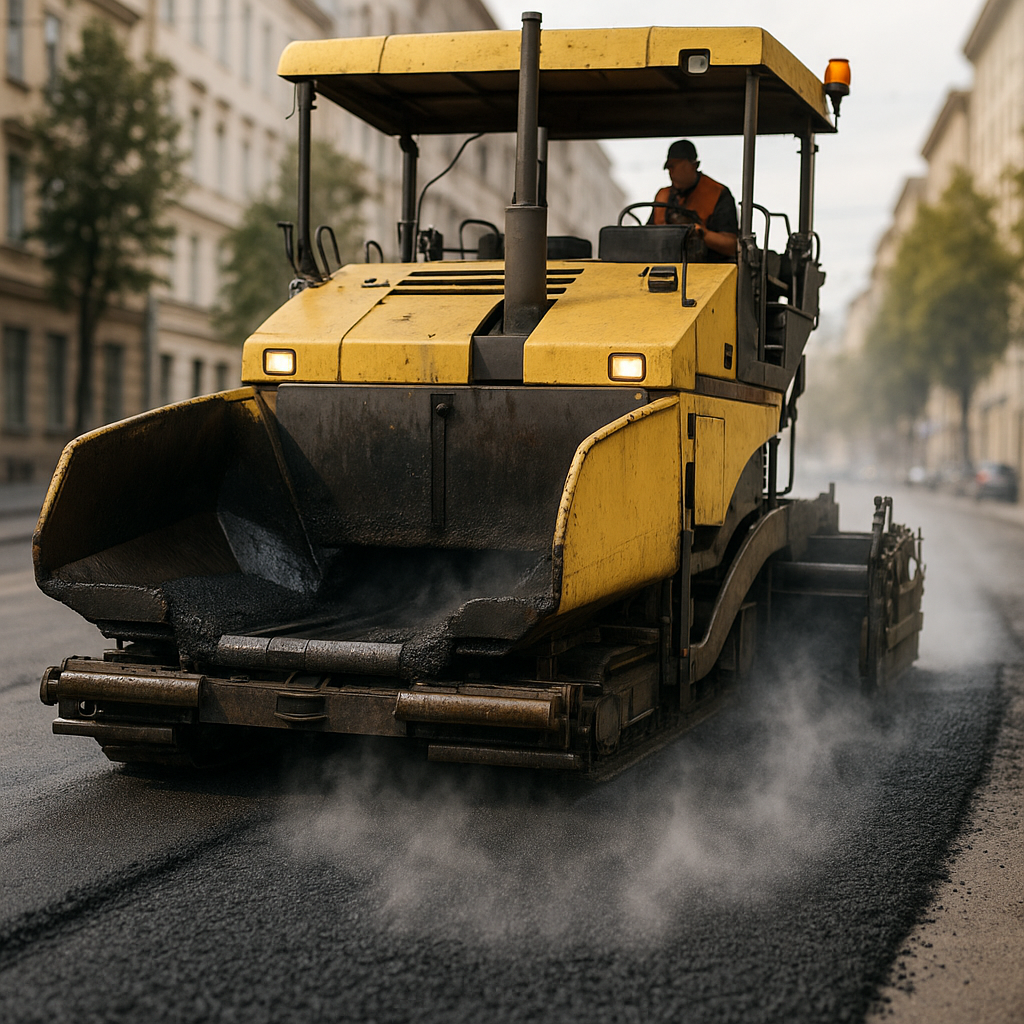
Cape Town's massive 26-month road resurfacing project tackles flood damage, future-proofs for electric vehicles, and boosts the economy.
Cape Town is fixing its roads in a big way! They're resurfacing 1,300 kilometers by 2026, using special asphalt for different areas. They even work at night to avoid traffic jams. This huge project will make roads safer, smoother, and save money in the long run. It's like giving the city a brand new skin, layer by layer.
What is Cape Town doing to improve its roads?
Cape Town is undertaking an extensive 26-month project to resurface 1,300 lane-kilometres of roads by June 2026. This initiative involves using specialized asphalt blends tailored to specific environmental conditions, advanced night-time construction logistics to minimize disruption, and innovative materials to reduce environmental impact. The project aims to enhance road quality, improve safety, and save on long-term maintenance costs.
Get Cape Town news in your inbox
Stay updated with the latest stories from the Mother City.
I. A City Re-Stitched in Hot Mix
The salt-laden south-easter that scours Mouille Point now carries a second scent: virgin bitumen riding on the breeze. From the Art-Deco warehouses of lower Woodstock to the rail-side factories of Epping, the metro is pasting a new skin over its own scar tissue - flood-scoured, diesel-battered, budget-starved. What began as a two-line maintenance notice in April has swollen into the most watched infrastructure spectacle in the province: 1 300 lane-kilometres of asphalt, 1,2 million litres of road paint, all before the fiscal curtain drops on 30 June 2026.
Cape Town’s grid is a geological palimpsest: colonial wagon ruts, Apartheid buffer strips, post-’94 retrofit. Crews now grind away that archaeology, suburb by suburb. On the Atlantic shoreline, standard-grade tar lasts barely five seasons; engineers have switched to a high-modulus rut-resistant blend first cooked for Abu Dhabi corrosive corniches. Inland, District Six’s landfill sandwich demands a gap-graded mix that flexes without shearing. Over the old Woodstock marsh, groundwater still percolates through Victorian brick drains; there contractors lay a permeable friction course so rain tyres bite instead of hydroplane.
A laboratory in Ndabeni never sleeps. Technicians match nine quarries’ mineralogy - Malmesbury hornfels, Table Mountain sandstone - to traffic counts and micro-climates, designing a bespoke mattress for every neighbourhood instead of rolling out a monotonous carpet.
II. The Shift the Public Never Sees
Official hours read 07:00–17:00, yet a ghost crew clocks in at 20:00 and clocks out at 04:15, the window between the last MyCiTi bus and the first commuter cough. Entire intersections are rebuilt under amber hazard lights: kerbs laser-scanned to the millimetre, 40-ton pavers crawl like glowing arthropods.
Night work is pure logistics. Lower Main Road doubles as a freight spine for 18-wheelers feeding the V&A Waterfront; daylight closure would ripple congestion into Langa. Instead, engineers choreograph “accordion lanes”: inbound lanes shut at 21:00, resurfaced by 02:00, reopened by 04:00; outbound repeats the ballet. Thermal drones hover, broadcasting asphalt temperature; if a cold joint forms, a GPS ping lands on the foreman’s phone before dawn commuters ever know.
The asphalt is only half the theatre. Paint crews follow with glass-bead loads of 600 g m⁻², retro-reflectivity dialed so high lane lines ignite in weak halogen. The beads sit in a titanium-dioxide matrix that uses morning dew to wash diesel soot away. Every 120 m along Beach Road a “wet-night” cycle logo blooms - colour-shift pigment, grey at noon, icy-blue under LED headlights, giving riders a ghost lane without extra streetlights.
III. Ledger Lines: Cost, Carbon, Community
Roadworks talk is never GDP talk, yet the figures scream. A 2022 WWF study tallied R1,3 billion in vehicle repairs traceable to poor roads - tyres, shocks, lost productivity. Every resurfacing rand saves R4,60 in user costs, CSIR economists calculate. Since Gunners Circle reopened in Epping, warehouse vacancy has tightened 14 %. Woodstock landlords along the Chester–Worcester spine now advertise “dock-level friendly” bays; articulated trucks no longer tear mufflers on shattered edge drains.
Asphalt production is energy-hungry: roughly 45 kg CO₂ per tonne laid. Cape Town’s climate action plan demands a 30 % cut. Reclaimed asphalt pavement now substitutes 15 % of base-layer aggregate, juiced with a bio-rejuvenator distilled from sugar-cane bagasse. Warm-mix additives drop plant thermometer from 160 °C to 130 °C, trimming fuel burn 11 %. Aggregate arrives by revived rail siding into Paarden Eiland, deleting 4 200 truck journeys. Even so, the campaign will exhale 52 000 t CO₂. The city bundles voluntary offsets - indigenous dune planting in Atlantis, Philippi biodigesters - but keeps the ledger public for audit.
Disruption is inevitable. Observatory’s civic forum live-streamed a 4 m water jet when contractors struck an 1898 Royal Engineers main. Within 24 h, risk managers triggered a make-good clause: prepaid electricity vouchers and a month of free refuse removal. In Mouille Point, residents crowd-source decibel data; when readings top 70 dB(A) contractors swap to mini-mills, shaving 8 dB.
IV. Night Shift Humans: Skills, Gender, Real-Time Maps
Peak payroll clocks 2 200 people - paver pilots, flaggers, geotech interns, even mobile kitchens that fry 4 000 vetkoek before sunrise. Thirty-eight percent are women, a municipal record, enabled by onsite crèche containers and an independent ombud with a zero-harassment mandate.
Skills transfer is contractual: 120 emerging contractors enter a “plant-to-pavement” learnership, operating million-rand pavers under mentorship, then bid for future patches. Nombulelo Nyoka, 26, from Langa, heads a crew responsible for 4 km of Mountain Road: “When my daughter scoots here next year she’ll know women who look like her built the way.”
To keep rage off timelines, the city and Code for Africa launched “RoadResurf,” an open-layer map that ingests Tom-Tom probes, scheduled closures, crowd-sourced hazard pins. Residents filter by date, vehicle type, decibel threshold; delivery firms plug the API into route algorithms that automatically divert couriers around curing tar. Since launch, 1,8 million page views; Capetonians would rather refresh a screen than sit bumper-to-bumper guessing.
Infrastructure is the slowest news genre: nothing happens, then everything does. A commuter glancing at her phone in 2025 will register only that the ride feels quieter, the markings sharper. She will not see the 200 °C mix cooling beneath tyres, nor the hollow fibre waiting for 5G radios, yet every kilometre is an entry in the city’s future ledger - lower maintenance, fewer claims, faster freight, softer neighbourhoods, perhaps even a dip in the accident-fatality curve. Between now and June 2026 the rollers keep circling - day, night, drizzle shift when the sky allows. The smell of bitumen will drift into coffee shops and courthouse corridors, a visceral reminder that cities are never finished; they are only ever re-surfaced.
What is Cape Town doing to improve its roads?
Cape Town is undertaking an extensive 26-month project to resurface 1,300 lane-kilometres of roads by June 2026. This initiative involves using specialized asphalt blends tailored to specific environmental conditions, advanced night-time construction logistics to minimize disruption, and innovative materials to reduce environmental impact. The project aims to enhance road quality, improve safety, and save on long-term maintenance costs.
How much road is being resurfaced and by when?
Cape Town is resurfacing 1,300 lane-kilometres of roads. This ambitious project is scheduled to be completed by June 30, 2026.
Why is Cape Town using different types of asphalt?
Cape Town is using specialized asphalt blends because different areas have unique environmental conditions and traffic demands. For example, high-modulus rut-resistant blends are used on the Atlantic shoreline due to salt exposure, while gap-graded mixes are applied where ground instability is a concern. Permeable friction courses are used in areas with high groundwater to improve grip and prevent hydroplaning. This tailored approach ensures the longevity and effectiveness of the road surfaces.
How is Cape Town minimizing disruption during roadworks?
To minimize disruption, especially traffic congestion, Cape Town's road resurfacing crews often work at night, between 8 PM and 4:15 AM. They implement 'accordion lanes' to manage traffic flow efficiently, closing and reopening sections of road in carefully choreographed sequences. Additionally, technologies like thermal drones monitor asphalt temperatures, and a public-facing app, "RoadResurf," provides real-time information on closures and hazards, allowing residents and delivery companies to plan routes accordingly.
What are the environmental considerations of this project?
The project aims to reduce its environmental impact by substituting 15% of base-layer aggregate with reclaimed asphalt pavement, using bio-rejuvenators from sugar-cane bagasse, and employing warm-mix additives to reduce asphalt plant temperatures by 30°C, cutting fuel consumption by 11%. Aggregate is transported by rail to reduce truck journeys, saving 4,200 trips. Despite an estimated 52,000 tonnes of CO2 emissions, the city is implementing voluntary offsets, including indigenous dune planting and biodigesters.
What are the economic and social benefits of this project?
Economically, the project is expected to save R4.60 in user costs for every rand spent on resurfacing, significantly reducing vehicle repairs (estimated at R1.3 billion in 2022 due to poor roads) and improving productivity. Socially, the project is creating jobs, with a peak payroll of 2,200 people, and has a strong focus on gender inclusivity, with 38% women in the workforce, supported by onsite crèches and an ombud. It also includes skills transfer programs for 120 emerging contractors, fostering local talent and economic empowerment.

Kagiso Petersen is a Cape Town journalist who reports on the city’s evolving food culture—tracking everything from township braai innovators to Sea Point bistros signed up to the Ocean Wise pledge. Raised in Bo-Kaap and now cycling daily along the Atlantic Seaboard, he brings a palpable love for the city’s layered flavours and even more layered stories to every assignment.
View all articles →