
Salt River market families told to leave
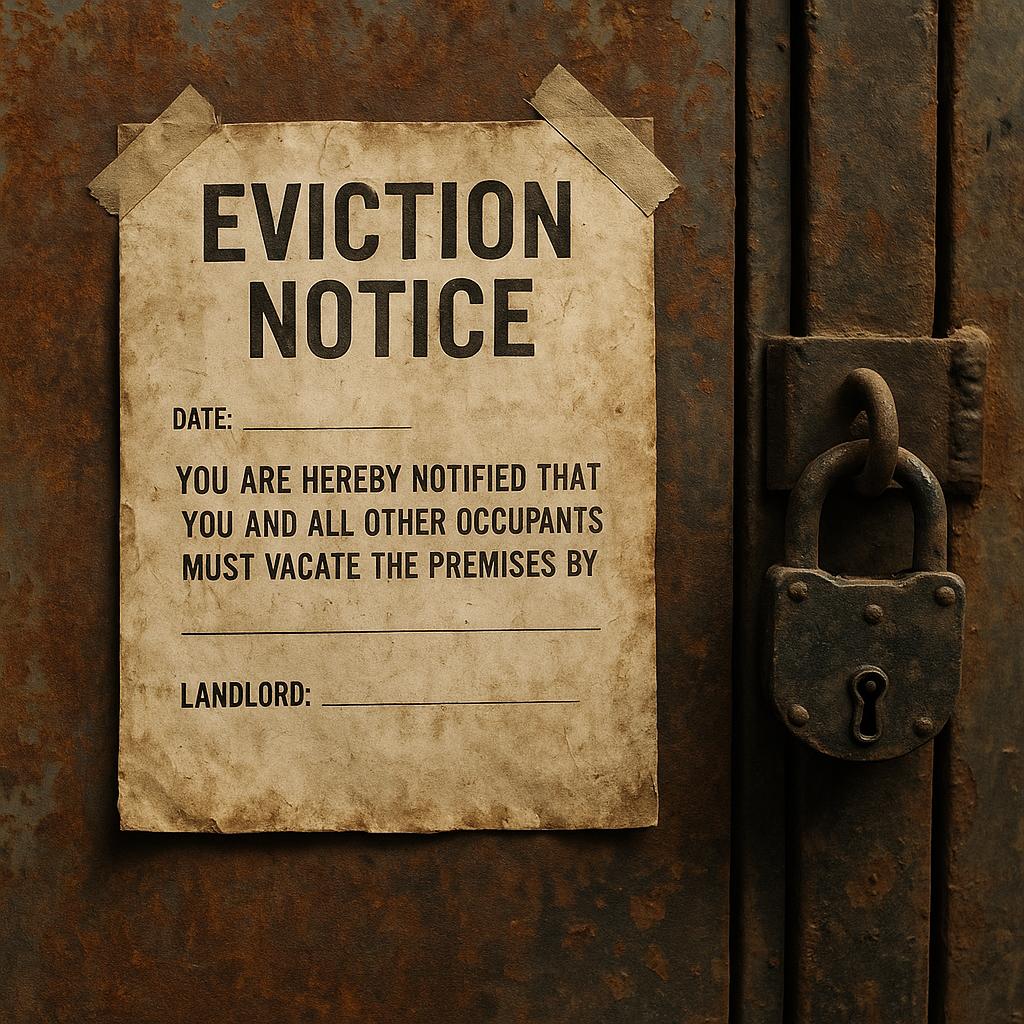
Cape Town's Salt River stables residents face eviction for a new development, highlighting the struggle between affordable housing and community ties.
In Salt River, Cape Town, a big fight is happening. People living in old stables are being told to leave so new, affordable homes can be built. But the homes they are offered are far away in a place called "Ghost Town," which many say is unsafe and too far from their schools and jobs. This means families will lose their community and face new dangers, making them wonder if the new homes are worth losing their old lives.
What is the Salt River’s Midnight Deadline about?
The Salt River’s Midnight Deadline concerns the eviction of twenty-one households from a historic stable yard in Salt River, Cape Town. The City plans to redevelop the site into affordable housing, but residents face relocation to "Ghost Town," a temporary settlement 4.6 km away, raising concerns about community displacement, safety, and access to essential services.
Get Cape Town news in your inbox
Stay updated with the latest stories from the Mother City.
1. A Letter in the Wind – How 14 April Became Doomsday
A single sheet of paper, date-stamped 31 March, caught the breeze blowing through shattered panes of the disused Salt River stables and landed like a match in a tinder-box. The message: twenty-one households have a fortnight - until 14 April - to climb aboard a municipal truck bound for “Ghost Town” on the edge of Maitland cemetery or wait for the Sheriff to arrive with a court order. Outside, plastic latrines sway in the Cape southeaster; one tap splutters for forty souls; kids weave through horse rings that last echoed to hooves sometime in the previous century. Indoors, grannies tally cans of pilchards, neighbours swap legal tips harvested from WhatsApp voice notes, and every thud on the door after dark sparks the same whisper: “Have the Red Ants clocked in?”
City Hall claims it has exhausted every softer option. Residents reply that no one sat down with them before the clock started ticking. Between those two certainties stretches a gap wide enough for a life to fall through. The stand-off turns a crumbling heritage yard into the newest flash-point in Cape Town’s perpetual tug-of-war between the glossy promise of subsidised apartments and the ragged safety nets poor communities knit for themselves.
Salt River smells of yeast, rust and horsehair memory. For the families camped here, the neighbourhood is more than a roof - it is a calendar of weddings, funerals, first days at Holy Cross Primary, and the corner bakkie that still sells single cigarettes. A move of 4.6 kilometres can feel like exile when every rand counts and every kilometre multiplies like bread gone stale.
2. From Haylofts to Hard Hats – The R55-Million Paper Trail
August 2022 birthed the sale deed that lit the fuse. The City off-loaded the 1.7-hectare plot to Communicare, the venerable social-housing landlord, for R55 million, a figure discounted on the understanding that 30 % of the 970 planned flats - about 300 - would target households earning between R1 850 and R22 000 a month, the bracket that unlocks a national SHRA subsidy. Heritage Western Cape stamped the demolition permit after inspectors concluded that a century of patch-ups had hollowed out the 1892 structure’s historic bones. Bulldozers can therefore advance once the August tender window slams shut.
SVA International’s drawings reveal five-storey walk-ups framing a public square, stitched to the Salt River Market by a pedestrian spine. Rooftop solar arrays, grey-water drums and an on-site crèche will tick the green boxes required for SHRA’s R252-million grant. All that blocks the pour of first concrete is the removal of roughly eighty residents the municipality quietly tolerated after 2014. Officials brand the relocation an administrative footnote; occupants call it the erasure of a village.
Communicare’s waiting list already cradles 8 000 pre-approved applicants who have queued, fingerprinted and budgeted for “opportunity-based” letting. CEO Anthea Houston argues that 900 construction jobs and 150 permanent retail posts outweigh the trauma of twenty-one displaced households. The moral ledger is brutal: one present community versus 300 future families promised fitted cupboards, gas hobs and fibre-ready living rooms.
3. Ghost Town – A “Temporary” Address with Permanent Scars
Ghost Town, the City’s relocation address, sits wedged between the N2 highway and a manganese-ore siding, 4.6 kilometres away by crow but a lifetime away by foot. In 2021 officials sank R5.8 million into levelling dunes, erecting 120 prefab cabins, drilling boreholes and ringing the perimeter with diamond-mesh. Each 12 m² cabin offers a window, solar lamp and Yale lock - palaces compared with tin shanties - yet a two-metre sand berm swallows both sunlight and screams. Within weeks of the first intake last September, WhatsApp groups pulsed with smash-and-grab reports, toilet-row muggings and, in December, the rape of a fourteen-year-old walking to the nearest spaza. Six households quietly hitched Metrorail taxis back to Salt River, calculating that familiar dangers beat unknown ones.
Marina Harris, 76, born in Kent Street when the Group Areas Act still dictated street lists, keeps vigil with a cane whittled from blue-gum bark. She knows the yeasty scent of the long-closed Avalon bakery where her late husband loaded ovens at 3 a.m. “If they dump me in Ghost Town, who will walk my grandson to Holy Cross when my knees buckle?” she asks. The boy’s daily commute would balloon from five minutes on foot to fourteen rand by taxi - money that competes with bread.
Natasha Deane, chair of the ad-hoc Residents’ Committee, thumbs a folder of minutes whose pages curl like autumn leaves. She quotes the City’s own 2020 Street Homelessness Policy: relocation “as close as possible to existing support networks.” Officials pledged a participation hearing within thirty days of the 2022 sale; residents still nurse the empty promise. A two-page FAQ now describes the journey to Maitland as “a short fifteen-minute cycle ride,” a cartographic fiction that wilfully ignores missing bike lanes and the spectral stretch of highway off-ramp.
4. Courts, Spreadsheets and Bulldozers – The Endgame
The Legal Resources Centre has fired back with a 37-page affidavit crammed with fourteen resident statements, a criminologist’s heat-map logging forty-two assaults within 500 metres of Ghost Town, and satellite shots of unlit access roads. The City’s counter-plan promises high-mast lights, a satellite police container and monthly “social crime walks,” but budget approval sits in the 2025/26 bracket - eighteen security vacuums away. Judges have seldom blocked evictions when rudimentary shelter is on offer, yet the Helen Bowden Nurses’ Village ruling of 2022 gives hope: the court scuppered eviction after the City ignored safety concerns at the proposed site.
Carl Pophaim, mayoral committee point-man for Human Settlements, brandishes internal spreadsheets listing three closer inner-city parcels - an Observatory bus depot, a disused Maitland hostel, a Black River strip - as “GAP or FLISP opportunities,” therefore off-limits for emergency moves. Activists retort that a six-month delay of one middle-income scheme could have absorbed stable residents without shredding school routes or clinic access. Municipality lawyers counter that any reprogramming would breach the SHRA timetable and risk the R252-million grant, which evaporates if shovels do not turn by December 2024.
Inside the yard, teenagers turn a moss-coated horse-trough into an evening debating pit, weighing title deeds against tenure security. A Somali barber clips hair inside a loose-box; Eastern Cape neighbours rotate stokvel pots under stars perfumed by braai smoke and horse-bone dust. Someone has spray-painted: “We are not illegal, we are pre-market,” a sardonic nod to the post-94 maxim that property value outranks habitat. As 14 April looms, the community fractures into three camps - litigation warriors, phased-move negotiators and zinc-sheet scavengers selling panels for sixty rand apiece. Whichever faction prevails, the chalk hopscotch grid will be redrawn by morning, and another set of memories will scatter like stable dust across a suburb whose future arrives faster than justice can run.
[{"question": "
What is the Salt River\u2019s Midnight Deadline about?
", "answer": "The Salt River\u2019s Midnight Deadline concerns the eviction of twenty-one households from a historic stable yard in Salt River, Cape Town. The City plans to redevelop the site into affordable housing, but residents face relocation to \"Ghost Town,\" a temporary settlement 4.6 km away, raising concerns about community displacement, safety, and access to essential services."}, {"question": "Why are residents being evicted from the Salt River stables?
", "answer": "Residents are being evicted because the City of Cape Town sold the 1.7-hectare plot to Communicare for R55 million to develop new affordable housing. The plan involves demolishing the old stable structures, which Heritage Western Cape has approved for demolition, to build 970 new flats, with 300 designated for social housing. The eviction is seen as an administrative step to clear the site for construction."}, {"question": "What is \"Ghost Town,\" and why are residents concerned about moving there?
", "answer": "\"Ghost Town\" is a temporary relocation settlement established by the City, located 4.6 kilometres from Salt River, between the N2 highway and a manganese-ore siding. Residents are deeply concerned because it is perceived as unsafe, with reports of smash-and-grabs, muggings, and even rape. Additionally, the distance from Salt River disrupts their established community, access to schools like Holy Cross Primary, jobs, and essential services, making daily commutes expensive and challenging, especially for the elderly and children."}, {"question": "What are the alternative housing options or solutions being discussed?
", "answer": "While the City claims it has exhausted softer options, residents argue that no proper consultation occurred before the eviction deadline. Activists suggest that other closer inner-city parcels, currently designated for middle-income housing (GAP or FLISP opportunities), could have potentially absorbed the stable residents with a six-month delay to those schemes. However, municipality lawyers contend that such reprogramming would jeopardize a R252-million grant for the current project if construction doesn't start by December 2024."}, {"question": "How has the community and legal system responded to the planned evictions?
", "answer": "The community has formed an ad-hoc Residents\u2019 Committee and is actively resisting the relocation. The Legal Resources Centre has filed a 37-page affidavit on behalf of the residents, highlighting safety concerns in Ghost Town with a criminologist's heat-map and satellite imagery. They are hopeful given past rulings, such as the Helen Bowden Nurses\u2019 Village case, where evictions were stopped due to ignored safety concerns at proposed sites. Residents are exploring litigation, negotiation, and some are even salvaging materials from the stable yard."}, {"question": "What is the long-term vision for the Salt River stable site?
", "answer": "The long-term vision for the Salt River stable site is the development of a modern, mixed-use affordable housing complex by Communicare. SVA International's designs show five-storey buildings, a public square, and pedestrian links to the Salt River Market. The development is planned to include sustainable features like rooftop solar arrays, grey-water drums, and an on-site cr\u00e8che, aiming to provide fitted cupboards, gas hobs, and fibre-ready living spaces for approximately 970 families, with 300 units specifically for social housing.", "add_info": "This project is expected to create 900 construction jobs and 150 permanent retail posts, contributing to the local economy."}]
Sarah Kendricks is a Cape Town journalist who covers the city’s vibrant food scene, from township kitchens reinventing heritage dishes to sustainable fine-dining at the foot of Table Mountain. Raised between Bo-Kaap spice stalls and her grandmother’s kitchen in Khayelitsha, she brings a lived intimacy to every story, tracing how a plate of food carries the politics, migrations and memories of the Cape.
View all articles →