
Sooliman honour at UCT ignites backlash and divides opinion
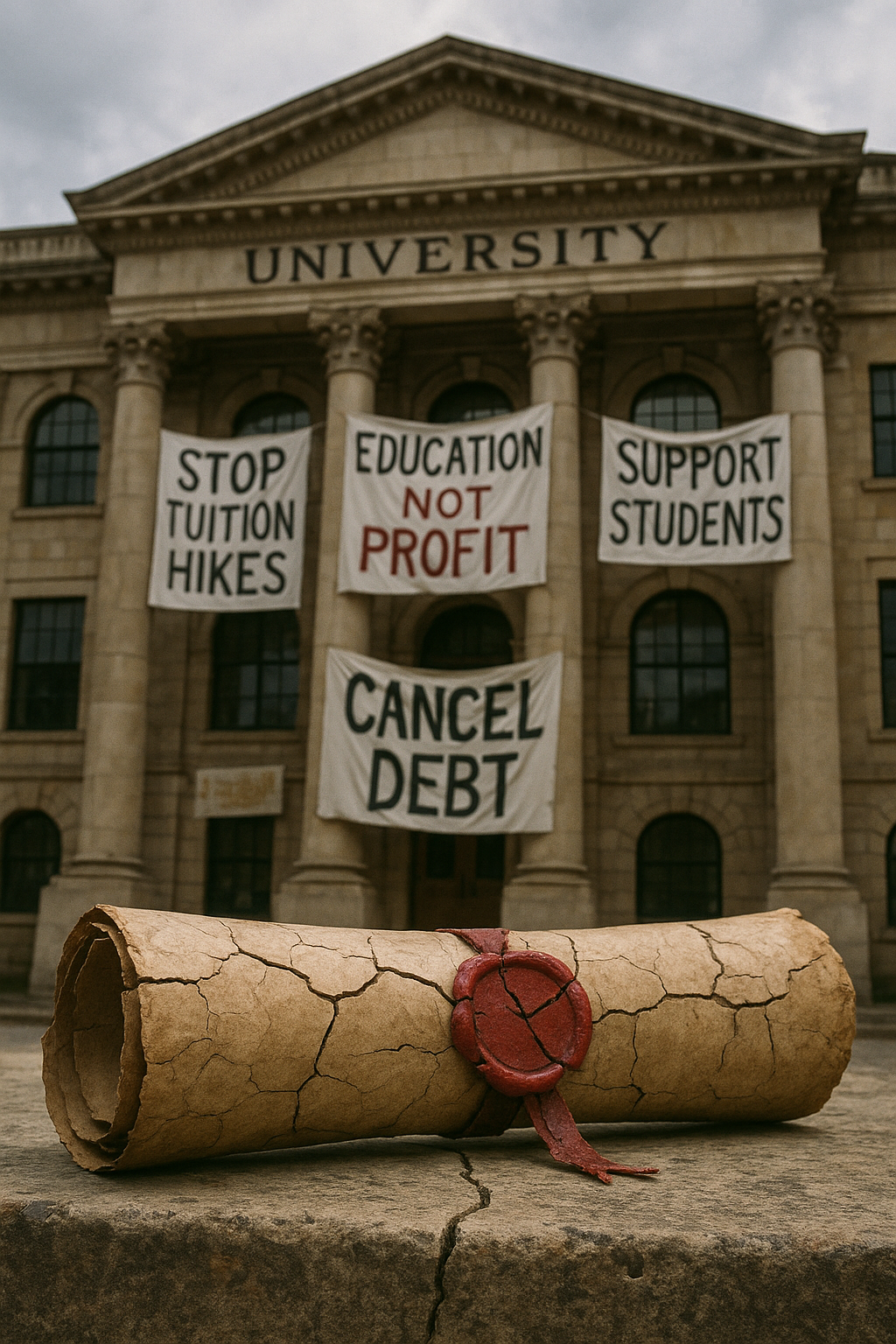
UCT faces intense backlash over an honorary doctorate for Gift of the Givers founder Imtiaz Sooliman, sparking campus-wide debate.
A huge fight broke out at UCT because they wanted to give a special award to Dr. Imtiaz Sooliman. People were angry because they said he was too neutral about the Israel-Palestine issue, even though his group helps people everywhere, including Gaza. This caused a big mess, with students protesting, donors getting mad, and professors arguing. Everyone wondered if the university was doing the right thing by honoring someone who just wants to save lives, not take sides.
What caused the controversy at UCT regarding Dr. Imtiaz Sooliman's honorary doctorate?
The controversy at the University of Cape Town (UCT) stemmed from Dr. Imtiaz Sooliman's past statements and actions regarding the Israeli-Palestinian conflict. Critics accused him of being a "Zionist apologist" due to his organization's neutral stance on political conflicts and a resurfaced photo with the Israeli ambassador, despite Gift of the Givers' extensive aid to Gaza.
Get Cape Town news in your inbox
Stay updated with the latest stories from the Mother City.
1. The Campus That Woke Up Wrong
Mid-July in Rondebosch is usually a postcard of stillness: squirrels outnumber students, the cafeteria’s idea of hospitality is kettle water and a sachet, and the bronze tablets that record a century of honorary graduates stay mirror-bright. 17 July 2024 broke the spell. Security asked for staff cards twice, clusters of professors whispered beside the Khoisan rock engravings as though someone had died, and the vice-chancellor’s door carried a single directive: “Media → Communications Division.”
The detonator was an e-mail sent at 22:13 the previous night. The registrar confirmed that Dr Imtiaz Sooliman - founder of Africa’s largest relief agency, Gift of the Givers - would keep the honorary doctorate approved months earlier. By 22:15 the line was screen-grabbed, scrawled over in crimson capitals - “WHY IS UCT HONOURING A ZIONIST APOLOGIST?” - and fired into 37 student WhatsApp groups. At sunrise #SoolimanDoctorate sat second on the national trending list, pinned just below Eskom’s latest schedule.
No one on Council, Senate, or even the janitorial staff recalls anticipating this. Honorary degrees have always detonated - Mandela’s 1990 hooding triggered a staff walk-out, and a proposal for Angela Merkel nearly capsized in 2016 over the Herero genocide - but those eruptions came from one ideological trench. The Sooliman blast arrived from every direction, a perfect cross-fire that no risk-management PDF had ever modelled.
2. How a Routine Rubber-Stamp Turned Into a Minefield
The nomination began in the Faculty of Health Sciences two years earlier, after Gift of the Givers froze a Cape Town gang war long enough to vaccinate 38 000 people against COVID-19. A junior lecturer drafted the citation, crowning Sooliman “the planet’s most effective emergency-care choreographer”. Two faculty committees nodded, the Honorary Degrees Committee yawned and approved, and in April 2024 Council slid the item through in eleven minutes. “It felt like clearing a Covid backlog,” one councillor admitted. “We’d burnt ninety minutes arguing data-storage; by 7.3 everybody wanted lunch.”
The 48-page dossier handed to councillors glowed with ambulance statistics and tonnage of blankets, but it left out the sound-bites now weaponised on TikTok. In May 2021, while Israeli bombs fell on Gaza, Sooliman told Radio 702, “We go where the wounded are; we are not political.” Editors looped “not political” twelve times in thirty-seven seconds; the clip has 1.4 million hits and counting. Critics say the refusal to name the power imbalance sanitises oppression. A 2009 photo of Sooliman shaking the Israeli ambassador’s hand during a SAR-dog briefing has resurfaced with lurid arrows and the damning label “normalisation”.
Yet the counter-file is equally thick: 437 tonnes of medicines trucked to Gaza since 2009, first foreign NGO convoy into Aleppo in 2016, two paramedics lost to Syrian shells. The man cuts an awkward silhouette for social media’s monochrome morality. A former SRC president summarises the knot: “Sooliman stops bleeding first and asks questions later; universities live to ask questions first. That mismatch is now a war.”
3. Cash, Campuses and Coalitions: The Battle Spreads
Donor rage arrived in three waves: e-mail, phone, registered mail. A private-equity alumnus who bank-rolled a R15 million economics building fumed that the award “mocks Jewish security fears”. A digital-insurer froze a R3 million data-science fellowship, calling any “brand adjacency to antisemitism uninsurable”. Three Atlantic-Seaboard couples quietly “paused” quarterly gifts, pushing the withheld total past R50 million - pocket change against UCT’s R7 billion endowment, yet enough to shelve 2025 bursaries.
Students split into fractal alliances. The Palestinian Solidarity Forum occupied Sarah Baartman Hall steps, projecting rubble imagery and chanting, “Aid without justice is complicity.” The South African Union of Jewish Students held an all-night vigil, reciting 7 October victims’ names. Between them, first-year medics who had vaccinated fellow citizens in Gift of the Givers tents formed a “grey bloc,” handing out leaflets: “I was jabbed by Muslims and Jews together.” Someone torched the leaflets; grainy CCTV captured a masked arsonist who has not been identified.
Academics retaliated with the tools they trust: agendas and footnotes. Political Studies demanded a two-thirds Senate majority for any future honour “where international humanitarian law is contested.” Hebrew Studies - three scholars in an attic - warned that the campaign “rehearses ancient tropes of Jewish string-pulling.” Forty-nine critical-human-rights scholars snapped back: “Crying antisemitism deflects settler accountability.” The English department clocked that 38 % of that week’s seminars veered into whether the word “honorary” still means anything at all.
4. Between the Arch of Cardboard and the Trucks Heading North
Vice-Chancellor Mosa Moshabela, a clinician who once ran HIV trials in rural KwaZulu-Natal, opted for diagnostic calm. His 1 400-word open letter reminded readers that UCT “confers public-service recognition, not sainthood,” and quoted the statutes: only fraud, plagiarism, or genocide can claw back a degree. None apply. Privately he concedes Council may need a “serious disrepute” clause - yet who benchmarks disrepute? In 1987 the apartheid press vilified UCT for honouring Julius Nyerere; today the same decision looks prophetic.
While Council commissions legal opinions on “reputational injury,” the theatre of outrage grows baroque. A master’s student built an arch from 437 empty cardboard boxes - one for every tonne of Gaza medical cargo - on Jameson Hall steps. Visitors scribble slogans, then restack the arch, turning it into a mutating monument titled “Ambivalent Aid.” A deep-fake audio clip has Sooliman allegedly claiming “Palestinians teach hate”; experts debunk, yet Telegram forwards it hourly. A sage bush in the indigenous garden is now cordoned with police tape because Gift of the Givers once used it in Gaza herbal packs.
And still the green-bibbed trucks roll out of Bramley, bound for cholera wards in Sudan, flood zones in Durban, earthquake craters in Morocco. Sooliman’s only public comment remains three sentences: “We save lives. We do not comment on awards. The needy are waiting.” His silence has become yet another Rorschach test: arrogance to some, ascetic focus to others. A WhatsApp sticker circulates of a tiny medic shrugging beneath the caption “Too busy for drama.” Whether the University of Cape Town will join him in that calm, or stay locked in its own high-stakes seminar forever, is the next semester’s unwritten syllabus.
[{"question": "
What caused the controversy at UCT regarding Dr. Imtiaz Sooliman's honorary doctorate?
\nThe controversy at the University of Cape Town (UCT) stemmed from Dr. Imtiaz Sooliman's past statements and actions regarding the Israeli-Palestinian conflict. Critics accused him of being a \"Zionist apologist\" due to his organization's neutral stance on political conflicts and a resurfaced photo with the Israeli ambassador, despite Gift of the Givers' extensive aid to Gaza.
"}, {"question": "How did the decision to award Dr. Sooliman's honorary doctorate get approved?
\nThe nomination for Dr. Sooliman's honorary doctorate originated in the Faculty of Health Sciences two years prior to the controversy, following Gift of the Givers' impactful work in vaccinating 38,000 people against COVID-19 in Cape Town. It was subsequently approved by two faculty committees and the Honorary Degrees Committee before being rubber-stamped by the UCT Council in April 2024 during a quick session, with council members prioritizing lunch after a lengthy debate on other matters.
"}, {"question": "What specific actions or statements of Dr. Sooliman were criticized?
\nCritics primarily pointed to a May 2021 statement Dr. Sooliman made to Radio 702, where he said, \"We go where the wounded are; we are not political,\" during Israeli bombings in Gaza. This \"not political\" stance was seen by some as sanitizing oppression. Additionally, a 2009 photo of him shaking hands with the Israeli ambassador during a SAR-dog briefing resurfaced and was labelled as \"normalisation.\"
"}, {"question": "How did the controversy impact UCT's relationship with its donors and student body?
\nThe controversy led to significant donor backlash, with one private-equity alumnus freezing a R15 million economics building donation, a digital insurer freezing a R3 million data-science fellowship, and several couples pausing quarterly gifts, collectively withholding over R50 million. The student body was also deeply divided, with the Palestinian Solidarity Forum protesting and the South African Union of Jewish Students holding a vigil. A \"grey bloc\" of first-year medics, who had worked with Gift of the Givers, attempted to promote unity.
"}, {"question": "What was Vice-Chancellor Mosa Moshabela's response to the escalating crisis?
\nVice-Chancellor Mosa Moshabela, a clinician, issued a 1,400-word open letter emphasizing that UCT confers \"public-service recognition, not sainthood\" and stated that only proven fraud, plagiarism, or genocide could revoke a degree, none of which applied to Dr. Sooliman. He acknowledged privately that the Council might need to consider a \"serious disrepute\" clause for future cases, drawing parallels to past controversial honorary degree decisions that later proved prophetic.
"}, {"question": "What is Dr. Sooliman's stance and the Gift of the Givers' mission amidst the controversy?
\nDr. Sooliman has maintained a consistent and concise public stance: \"We save lives. We do not comment on awards. The needy are waiting.\" This reflects the core mission of Gift of the Givers, which is to provide humanitarian aid impartially, responding to crises globally without engaging in political commentary. His organization continues its work, delivering aid to various disaster-stricken and conflict-affected regions, demonstrating its commitment to saving lives above all else.
"}]
A Russian-Spanish journalist and Cape Town native, channels his lifelong passion for South Africa into captivating stories for his local blog. With a diverse background and 50 years of rich experiences, Serjio's unique voice resonates with readers seeking to explore Cape Town's vibrant culture. His love for the city shines through in every piece, making Serjio the go-to source for the latest in South African adventures.
View all articles →