
South Africa is bleeding to death – and it’s because of guns
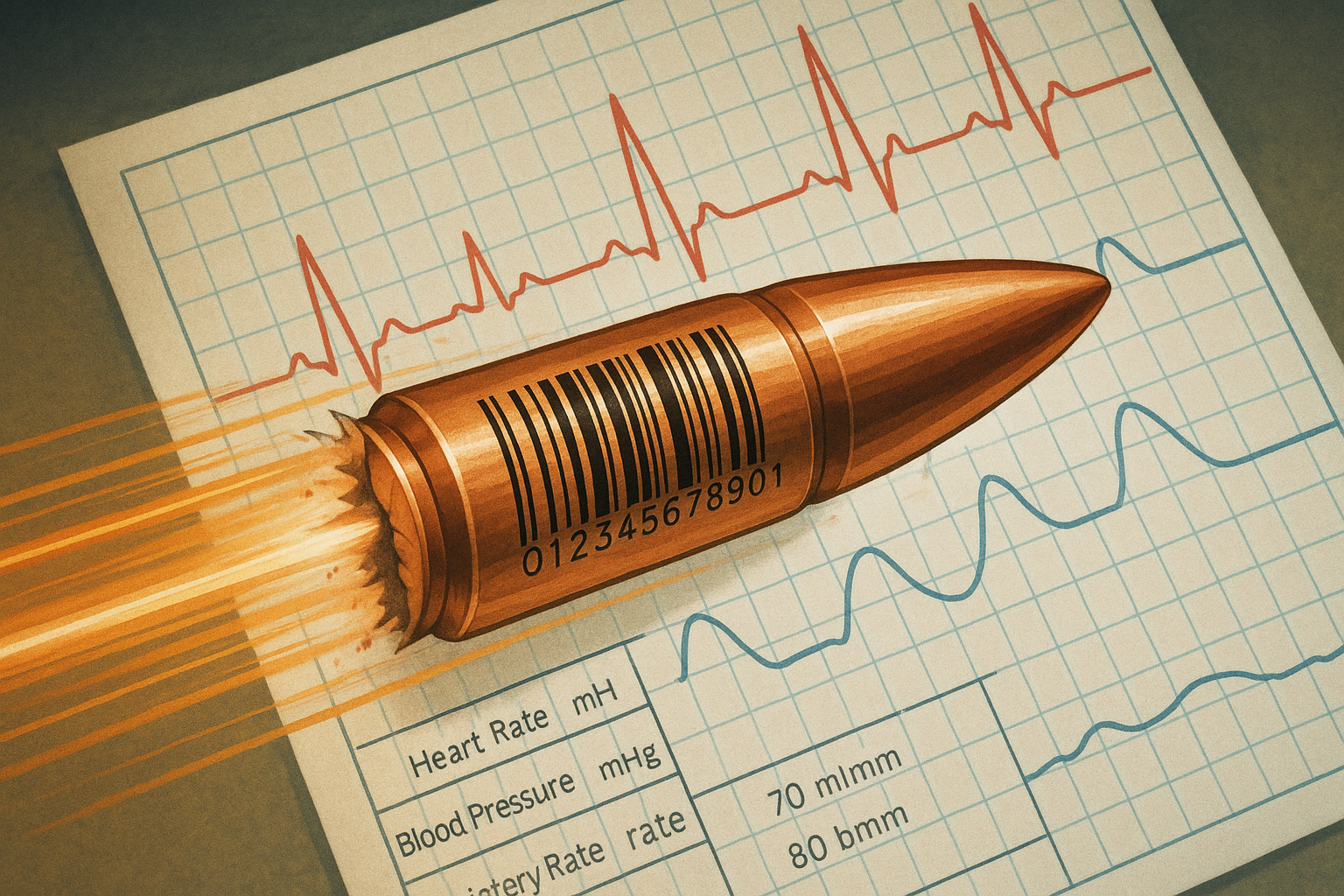
South Africa transforms ERs into epidemic-tracking stations, treating gun violence as a notifiable disease to inform policy and prevention.
South Africa is fighting gun violence like a sickness. They're tracking every bullet injury, just like a disease, to understand where and why shootings happen. This helps them make smart choices to stop the violence. They're even making bullet fragments part of a special database and helping survivors with their minds, not just their bodies. It's all about using information to heal the whole country from the pain of gun violence.
How is South Africa treating gun violence like an epidemic?
South Africa is implementing the "Bullet-Trace" protocol, treating gun injuries as notifiable events like diseases. This system logs bullet-related data, tracks weapons, maps incident locations, and costs, enabling data-driven interventions. It also includes initiatives like collecting ballistic evidence, imposing an ammunition health levy, offering vocational training for ghost gun surrender, and providing mental health support to survivors.
Get Cape Town news in your inbox
Stay updated with the latest stories from the Mother City.
1. A Fresh Vital Sign in the Resuscitation Bay
On a steamy Saturday night in Khayelitsha District Hospital, a registrar snaps on nitrile gloves while the triage sister belts out numbers: pressure 60/40, pulse 148, coma score 6, projectile sliced through the liver. Routine chaos - except the clerk now adds a brand-new line to the electronic chart: GV-NIC, a 12-character string that will stalk the patient from ambulance stretcher to operating table, ICU cubicle, physiotherapy gym, social-work dossier, insurance file and, if the victim walks out alive, a six-month check-up slot. The code treats a bullet rip like a positive malaria film: a condition that must be punched into the national dashboard within 120 minutes so every provincial health chief sees the dot light up in real time.
This identifier is the thinnest yet most subversive slice of the “Bullet-Trace” protocol, soft-launched in October 2025 after surgeons threatened to stop counting corpses for free. The rulebook does four things earlier trauma notebooks never dared:
- It slips gun-injury into the same legal annex as cholera, measles and COVID-19, making it a scheduled notifiable event.
- It handcuffs every medical file to a police docket number, letting the SAPS ballistic engine flag whether the weapon was licensed, lost, lifted or unknown.
- It nails GPS coordinates to within ten metres, so analysts can spot a flare-up smaller than a basketball court before the sun rises twice.
- It keeps a running tab: theatre minutes, blood bags, ventilator days, counselling hours, pay-cheques lost - turning each slug into an invoice the Finance Ministry can no longer shred.
Between launch and March 2026 the pilot wards - Groote Schuur, Red Cross, Livingstone and Steve Biko - fed 3,811 GV-NIC rows into the cloud. One pattern jumped out: one in every nine shootings occurred within two football fields of a primary-school fence between 13:00 and 15:00, the exact minute the final bell meets the security-guard shift swap. @HealthZA blasted the stat; within a week the Basic Education Ministry ordered staggered dismissal times across 48 Cape Flats schools - proof that a clinical data blip can redraw the bell schedule.
2. Freezers Full of Slugs and the Math That Links Them
South Africa already hunts HIV mutations like a bloodhound; the same obsession is now aimed at ballistics. Surgeons at the University of Cape Town drop every removed fragment into a −80 °C canister, arguing that lead carries its own “microbiome” of scrape marks, soot traces and DNA hitch-hikers. Eighteen months yielded a freezer farm of 2,400 projectiles. A home-grown algorithm chews through striation patterns plus GV-NIC clinical angles - entry tilt, organ corridor, exit speed - to narrow the hunt far faster than classic ballistics ever could.
Detectives recently traced 42 scattered shootings to one 9 mm Z88 that vanished from a Durban armoury in 2019 yet kept moonlighting in gangland contracts. The freezer rack sits opposite the blood-bank fridge; a registrar slapped on a sticker reading “Bullets - just faster red cells.” Donors waiting to bleed for strangers see the sign and quietly realise gun trauma is a circulatory disease for the whole city.
The real twist came when Colombian surgeons cloned the software. In Cali’s valley, the Spanish-language fork revealed that 28 % of gunshot patients had already been shot once before age 25; each event had been filed in a different district, so police never spotted the repeat victimisation. Cape Town analysts reran the query and found an identical blind spot: 19 % of local GV-NIC entries owned an earlier“assault” or“accident” file that never mentioned a firearm. The proposed fix - a new ICD-11 tag “repeat firearm injury” - will hit the World Health Assembly in 2027, turning hidden cycles into countable epidemiology.
3. Making the Consumable Pay: A Levy on Rounds, Not Rights
In 1994 Treasury whacked cigarettes with a 50 % excise; smoking prevalence nose-dived from 34 % to 18 % within ten years. Ammunition has never faced a similar health tax. A loose civil-society alliance - many of them the same nerds who pushed the Bullet-Trace code - now wants a 35 % Ammunition Health Levy on every legal cartridge. Modelling predicts R 2.3 billion in year one, enough for 1,100 extra trauma nurses and fifteen new spinal-rehab beds per province.
Industry lobbyists cry that enthusiasts will simply road-trip to Botswana, yet HSRC polls show 71 % of licensed hunters will swallow the tax if cash is ring-fenced for trauma care - the same trick that crashed plastic-bag use by 94 %. Meanwhile, an overlooked spill-over is environmental: roughly 180 tonnes of lead are blasted into soil and groundwater annually from licensed ranges alone, equal to 2.4 million car batteries. Kids living within five kilometres of Gauteng ranges already carry 30 % more lead in their blood. The Amendment Bill now tables a forced swap to copper-jacket or steel-core training rounds by 2029, subsidised for five years. Copper mushrooms less inside flesh, shaving 18 minutes off debridement; multiply that by 14,000 annual gunshot surgeries and you free up 4,200 ICU hours - an entire 12-bed unit for a year.
4. Ghost Guns, Ghost Jobs and the Student Swap
Privately printed receivers are the new wild card. Instead of pretending prohibition works, police opened a six-month window in April 2026: hand in a 3-D printed lower and you get R 5,000 - not in cash, but in TVET-college tuition credit. Early stats say 72 % of voucher holders actually enrol within three months, dwarfing any cash-for-guns scheme on record. Preliminary seizures show a 14 % month-on-month drop in improvised guns in the two Cape precincts where the pitch is advertised on TikTok. If the curve holds, the Firearms Control Amendment Bill will lock the swap into statute: the first time any country trades disarmament for vocational school.
5. Coding the Mind After the Missile Leaves the Barrel
Gunshot survivors kill themselves at 14 times the national average, yet state hospitals discharge them with no mandatory psych tag. A UCT psychiatry crew piggy-backed a single yes/no question onto the GV-NIC form: “In the past two weeks, have you felt you’d be better off dead?” Answer yes and a WhatsApp CBT chatbot spams daily check-ins for 90 days. Eight weeks in, suicidal ideation scores drop 37 %. Price tag: R 28 per patient - less than a packet of silk sutures. Treasury is tempted to fund the bot straight out of the proposed ammunition levy, closing the fiscal loop: the same rounds that shred flesh pay for the digital tourniquet around the mind.
6. Surgeons Who Lobby Between Clamps
Doctors rarely have spare minutes, yet their word carries iron weight. A WhatsApp group named “ScrubbedIn” ships one weekly two-liner - “This week Groote Schuur burned through 47 bags of blood thanks to bullets. Tap here to mail your MP” - with an auto-attach letter loaded with live GV-NIC tallies. Six weeks after launch, 4,200 surgeons and anaesthetists - 18 % of the national pool - had clicked send. Parliament’s health committee has already fast-tracked the group for Amendment Bill hearings, a podium usually reserved for seasoned NGOs.
There will be no tidy closing line, because epidemics do not fade with op-ed word counts. They recede when data loops tighten, when prices tell the truth about harm, and when a bullet is as unthinkable as cholera in the tap water. Every gunshot is now a dashboard pixel, every theatre minute an itemised invoice, every survivor a possible repeat admission whose second dance can be forecast - and perhaps prevented. The system does not care whether you call the fix ammo tax, copper slugs, or college-for-guns vouchers; it simply logs that another projectile has left the chamber, and the stopwatch to the next cascade - blood bank, ICU bed, spinal ward, therapy bot - has already started.
[{"question": "
How is South Africa treating gun violence like an epidemic?
", "answer": "South Africa is implementing the \"Bullet-Trace\" protocol, treating gun injuries as notifiable events similar to infectious diseases like cholera, measles, and COVID-19. This system involves logging bullet-related data, tracking weapons, mapping incident locations, and calculating costs associated with treatment. This data-driven approach enables targeted interventions. The initiative also includes collecting ballistic evidence, proposing an ammunition health levy, offering vocational training in exchange for ghost gun surrender, and providing mental health support to survivors."}, {"question": "What is the 'GV-NIC' and how does it help?
", "answer": "The 'GV-NIC' (Gun Violence - Notifiable Incident Code) is a 12-character identifier assigned to every bullet injury, treating it like a positive malaria film that must be reported to a national dashboard within 120 minutes. This code allows for real-time tracking of patients from injury to recovery, linking medical files to police dockets to identify weapon origins, pinpointing incident locations with GPS coordinates, and itemizing all associated costs (theatre minutes, blood bags, counselling hours, lost wages). This comprehensive data helps identify patterns, such as the timing and location of shootings near schools, leading to proactive measures like staggered school dismissal times."}, {"question": "How are bullet fragments being used in the fight against gun violence?
", "answer": "Surgeons in South Africa are collecting every removed bullet fragment and storing them in -80 °C canisters. These fragments carry a unique 'microbiome' of scrape marks, soot traces, and DNA. A homegrown algorithm analyzes striation patterns and clinical angles (entry tilt, organ corridor, exit speed) to rapidly identify weapons and link seemingly unrelated shootings. This approach has already helped trace numerous incidents to specific firearms, and the data is also revealing patterns of repeat victimization that were previously overlooked."}, {"question": "What is the proposed 'Ammunition Health Levy'?
", "answer": "A civil society alliance is proposing a 35% 'Ammunition Health Levy' on every legal cartridge. Similar to the successful excise tax on cigarettes, this levy is projected to generate R 2.3 billion in its first year, which would be ring-fenced to fund additional trauma nurses and spinal rehabilitation beds. Despite industry concerns, polls show that a significant portion of licensed hunters would accept the tax if the funds are dedicated to trauma care. Additionally, this initiative aims to address the environmental impact of lead ammunition by subsidizing a switch to copper-jacket or steel-core training rounds, which also reduce debridement time in surgeries."}, {"question": "How is South Africa addressing 'ghost guns'?
", "answer": "Recognizing the challenge of privately printed 'ghost guns,' South African police launched a six-month initiative in April 2026. Instead of outright prohibition, individuals who surrender a 3-D printed lower receiver receive R 5,000 in TVET-college tuition credit. Early statistics indicate that a high percentage of voucher holders enroll in vocational training, outperforming traditional cash-for-guns schemes. This program has shown a significant month-on-month drop in improvised gun seizures in pilot areas, marking the first time a country has directly linked disarmament with vocational education."}, {"question": "What mental health support is being provided to gunshot survivors?
", "answer": "Given that gunshot survivors have a 14 times higher suicide rate than the national average, a UCT psychiatry team integrated a crucial 'yes/no' question into the GV-NIC form: 'In the past two weeks, have you felt you’d be better off dead?' If the answer is 'yes,' a WhatsApp CBT chatbot provides daily check-ins for 90 days. This low-cost intervention (R 28 per patient) has demonstrated a 37% drop in suicidal ideation scores within eight weeks. The Treasury is considering funding this bot directly from the proposed ammunition levy, creating a fiscal loop where the same rounds that cause harm also fund the digital mental health support.", "additional_info": "The 'Bullet-Trace' protocol exemplifies a public health approach to violence prevention, shifting from reactive policing to proactive, data-driven strategies. By integrating medical, forensic, and social data, South Africa is creating a comprehensive system to understand, prevent, and mitigate the impact of gun violence, ultimately aiming to make gun trauma as 'unthinkable as cholera in the tap water'."}]
Tumi Makgale is a Cape Town-based journalist whose crisp reportage on the city’s booming green-tech scene is regularly featured in the Mail & Guardian and Daily Maverick. Born and raised in Gugulethu, she still spends Saturdays bargaining for snoek at the harbour with her gogo, a ritual that keeps her rooted in the rhythms of the Cape while she tracks the continent’s next clean-energy breakthroughs.
View all articles →