
South Africa moves towards a total ban on drinking and driving
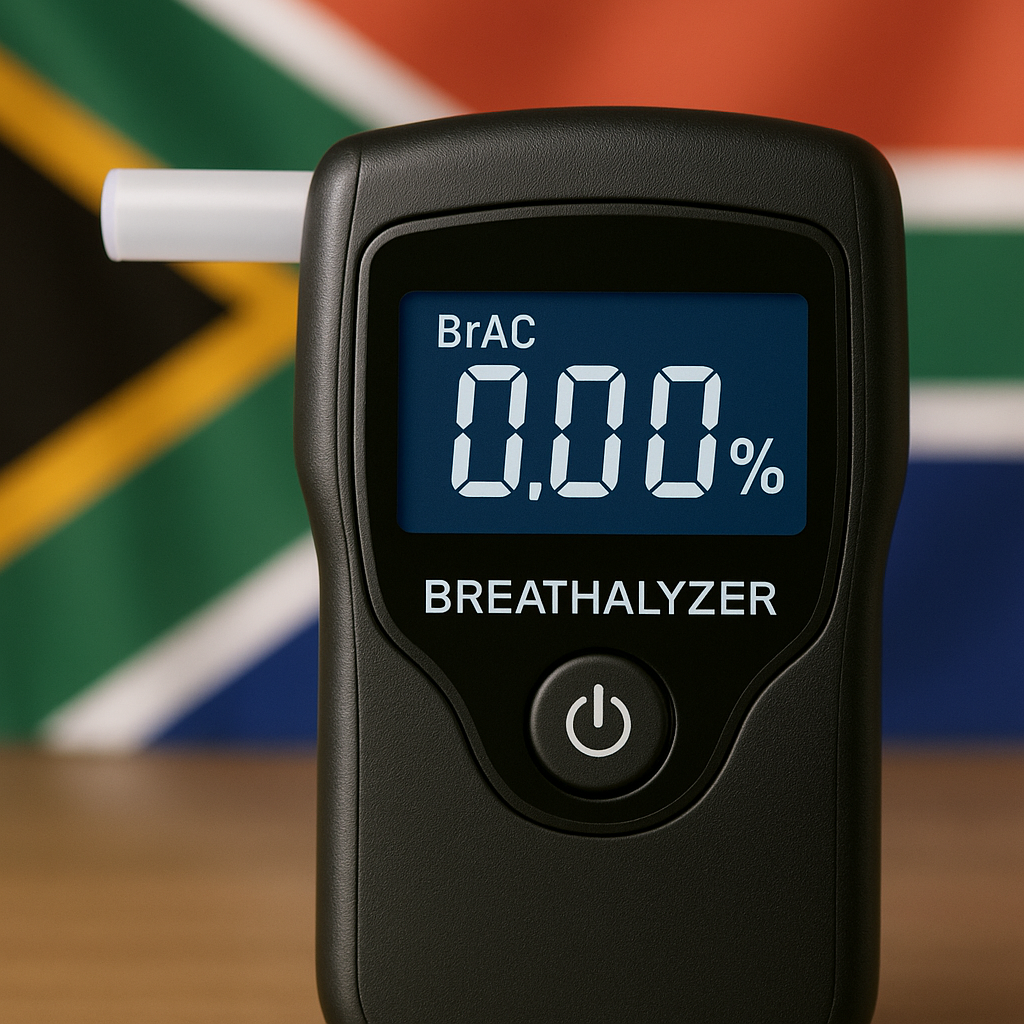
SA's new 0.00% BAC law by Dec 2026 targets drunk driving with strict penalties, roadside screening, and tech like alcolocks.
South Africa is getting tough on drunk driving! By December 2026, a new law means absolutely no alcohol in your system if you drive. Not even a tiny bit, like after one beer. If caught, you could face huge fines, jail time, or lose your license forever. They're even putting special devices in taxis and buses to stop drunk drivers. This massive change aims to save lives and make roads safer for everyone.
What is South Africa's new drunk driving law?
South Africa is implementing a zero-tolerance drunk driving law by December 1, 2026, setting the blood alcohol limit to 0.00%. This amendment to the National Road Traffic Act criminalizes driving with any detectable alcohol, applies to all vehicle types, and introduces severe penalties including hefty fines, imprisonment, and license cancellation.
Get Cape Town news in your inbox
Stay updated with the latest stories from the Mother City.
The Legal Earthquake – From “One Beer” to Absolute Zero
South Africa’s current National Road Traffic Act still allows a 0,05 g alcohol per 100 ml blood ratio for everyday motorists - about the amount an 80 kg adult male clears after a single lager in 60 minutes. Professional licence holders must remain under 0,02 g/100 ml, a margin so slim that a spoon of rum-laced dessert can breach it. In March 2026 Transport Minister Barbara Creecy sent provinces an amendment that erases both numbers and replaces them with a single, unforgiving sentence: “No person may drive or sit in the driver’s seat of a motor vehicle on a public road if any alcohol whatsoever is detected in that person’s blood or breath.” Implementation is pencilled in for 1 December 2026, giving the country a nine-month behaviour runway that straddles the busiest travel season of the year.
The blunt wording is intentional. Government drafters rejected softer phrases such as “negligible level” or “trace amount,” arguing that only an absolute standard removes courtroom wriggle-room. The draft also unifies categories: e-hailing drivers, farmers on tractors, miners in haul trucks and even courier cyclists using motorised attachments will all be tied to the same 0,00 % benchmark. Officials briefing Parliament predicted that, once promulgated, the clause will be inserted verbatim into municipal by-laws, company fleet rules and insurer policy wordings, turning an already low limit into a national zero-tolerance anthem.
Although the amendment is still technically open for comment, Creecy has repeatedly warned that “the pen is off the paper,” signalling her refusal to dilute the provision. Provincial transport MECs were told to budget for information campaigns rather than legal push-back, and magistrate courts have begun pre-emptive scheduling upgrades to handle an expected surge in cases. The message is clear: the legislature wants the culture of “one for the road” retired before the first summer holiday traffic jam starts.
The Data That Scared Pretoria – Festive Season Stats and the Flat-Lining Death Toll
During the 2025/26 year-end safety blitz police stopped 173 695 drivers at 1 632 roadblocks; 8 561 recorded readings above the present 0,05 % cap, a leap of 144 % compared with the prior season. Paradoxically, the actual death figure dipped 5 % to 1 427, the leanest tally since the Road Traffic Management Corporation began modern counts. Creecy calls the gap “the final alarm bell”: alcohol incidence is climbing yet emergency-room skill and safer cars are masking the butcher’s bill. She argues that once medical teams reach the limits of trauma care, the curve will rebound with “catastrophic steepness” unless ethanol is removed from the driving equation completely.
Calendar-year figures back her up. Preliminary 2025 numbers list 11 418 fatalities arising from 9 674 crashes, the gentlest five-year gradient on graph paper. Statisticians inside the RTMC, however, say the downward vector is already plateauing, and Monte-Carlo models predict stagnation from 2027 onward if behaviour stays unchanged. In short, South Africa has squeezed most of the safety juice out of speed enforcement, seat-belt blitzes and car-crash engineering. Alcohol is the lone remaining lever capable of delivering a step-change, and ministers believe only absolute prohibition can yank it.
Road-safety lobbyists add another warning: the 144 % increase in positive breath tests happened despite high-profile patrols. Imagine, they say, how many undetected drinkers stream through everyday traffic when cameras are not flashing and headlines have moved on. To policy makers the festive blitz was not an outlier but a trailer for everyday averages once the holiday spotlight dims. Turning every day into 0,00 % BAC is viewed as the only sustainable counterweight.
The Everyday Reboot – Five New Rules That Will Touch Each Trip
Clause 1 erases special pleading: every licence code, from courier bike to forty-ton truck, answers to the same absolute zero. Clause 2 criminalises refusal of a roadside “sniffer” test, a pocket-sized wand that draws in ambient breath without the driver blowing. Declining attracts the same charge as blowing positive, closing a loophole defence lawyers long exploited. Clause 3 sets minimum sentences: first offenders choose between R15 000 fine or five years in prison; a second arrest doubles both yardsticks and adds a five-year licence cancellation, meaning many motorists will never legally drive again.
Clause 4 drags vehicle owners into the dock. If the title holder “knowingly permits” an intoxicated friend to take the wheel, the court must impose the identical tariff it gave the driver. Fleet managers and parents are therefore incentivised to verify sobriety before handing over keys. Finally, Clause 5 creates a publicly searchable civil-registry database, mirroring sex-offender lists. Schools, hospitals, trucking boards and ride-hailing platforms may legally reject applicants who appear on the roll, turning a night in the cells into a lifelong career impedance.
Together the clauses form a spider-web: the state can nab you at the roadside, the registry can haunt you in the job queue, and the sentencing grid can remove you from the road for half a decade. Officials hope the overlapping penalties will achieve what sporadic roadblocks never managed - making the first sip of beer feel like a direct threat to household income.
Tech, Townships and Tricks – How the New World Will Be Policed, Hacked and Survived
The transport ministry has ring-fenced R1,2 billion over three years for a national alcolock roll-out. A Swedish-South African consortium, Autolock SA, will fit 40 000 buses, 25 000 minibus taxis and 18 000 school buses with devices that immobilise engines if breath alcohol exceeds 0,00 %. Local assembly in Gqeberha has driven the unit price below R3 500, cheap enough for fleet owners to absorb without fare hikes. In parallel, Discovery, Santam, Outsurance and Old Mutual Insure will market pocket-sized smartphone breathalysers that sync biometrically to policy profiles; drivers who string together 365 consecutive zero-alcohol days can pocket cash-back bonuses of up to 15 %, monetising abstinence.
Yet technology cuts both ways. Online forums already trade “blow-bags” - latex balloons prefilled with clean breath - and 3-D-printed whistles that mimic human exhalation wave-forms. Autolock countered with infrared CO₂ pulse detection and will soon add lip-reading cameras cross-referenced against the national driving-licence photo bank. Analysts predict a garage industry of hacks and counter-hacks reminiscent of the early days of satellite television piracy, except this time the stakes are imprisonment rather than missing the Sunday match.
Rural areas face a humbler battle. OR Tambo District owns only three working evidential breathalysers to patrol 80 000 km²; officers now calibrate R900 handheld ethanol meters designed for livestock, accurate to ±0,005 %. Nicknamed “sheep that never lie,” the gadgets will probably be the first portable testers many villages see. Traditional leaders, meanwhile, revived the pre-colonial rule of “utwala olungcolile”: families that serve home-brew to drivers must pay three goats to crash victims’ kin, layering customary law atop the national code. Whether the hardware is a R3 500 engine interlock or a goat fine, the objective is identical - make alcohol before driving unimaginable.
[{"question": "
What is South Africa's new drunk driving law?
", "answer": "South Africa is implementing a zero-tolerance drunk driving law by December 1, 2026. This means the blood alcohol content (BAC) limit for all drivers will be 0.00%. The current law allows a 0.05 g/100 ml blood ratio for everyday motorists and 0.02 g/100 ml for professional drivers. This amendment to the National Road Traffic Act will criminalize driving with any detectable alcohol, applying to all vehicle types, and introduces severe penalties."}, {"question": "When will the new drunk driving law come into effect?
", "answer": "The implementation of the new 0.00% BAC limit is pencilled in for December 1, 2026. This gives the country a significant period to adjust to the new regulations before the busiest travel season of the year."}, {"question": "What are the penalties for violating the new drunk driving law?
", "answer": "The penalties are severe and include hefty fines, imprisonment, and license cancellation. For first offenders, the choices are a R15,000 fine or five years in prison. A second arrest doubles both the fine and prison time and adds a five-year license cancellation, potentially meaning many motorists will never legally drive again. Refusing a roadside 'sniffer' test will incur the same charge as blowing positive."}, {"question": "How will the new law affect vehicle owners and fleet managers?
", "answer": "The new law extends accountability to vehicle owners. If a title holder 'knowingly permits' an intoxicated friend to drive their vehicle, they will face the identical tariff given to the driver. This incentivizes parents and fleet managers to verify the sobriety of individuals before handing over keys."}, {"question": "What technological measures are being implemented to enforce the law?
", "answer": "The transport ministry has allocated R1.2 billion for a national alcolock roll-out, which are devices that immobilize vehicle engines if breath alcohol exceeds 0.00%. Over 80,000 buses, taxis, and school buses will be fitted with these. Additionally, insurance companies will market pocket-sized smartphone breathalyzers that can offer cash-back bonuses for consistent zero-alcohol driving. Rural areas will also see the introduction of portable ethanol meters, nicknamed 'sheep that never lie'."}, {"question": "Will there be a public registry for drunk driving offenders?
", "answer": "Yes, a publicly searchable civil-registry database, similar to sex-offender lists, will be created. This means that schools, hospitals, trucking boards, and ride-hailing platforms will legally be able to reject applicants who appear on this roll, making a drunk driving conviction a lifelong career impedance."}]
Tumi Makgale is a Cape Town-based journalist whose crisp reportage on the city’s booming green-tech scene is regularly featured in the Mail & Guardian and Daily Maverick. Born and raised in Gugulethu, she still spends Saturdays bargaining for snoek at the harbour with her gogo, a ritual that keeps her rooted in the rhythms of the Cape while she tracks the continent’s next clean-energy breakthroughs.
View all articles →