
South African school water tests raise health alarm over E. coli
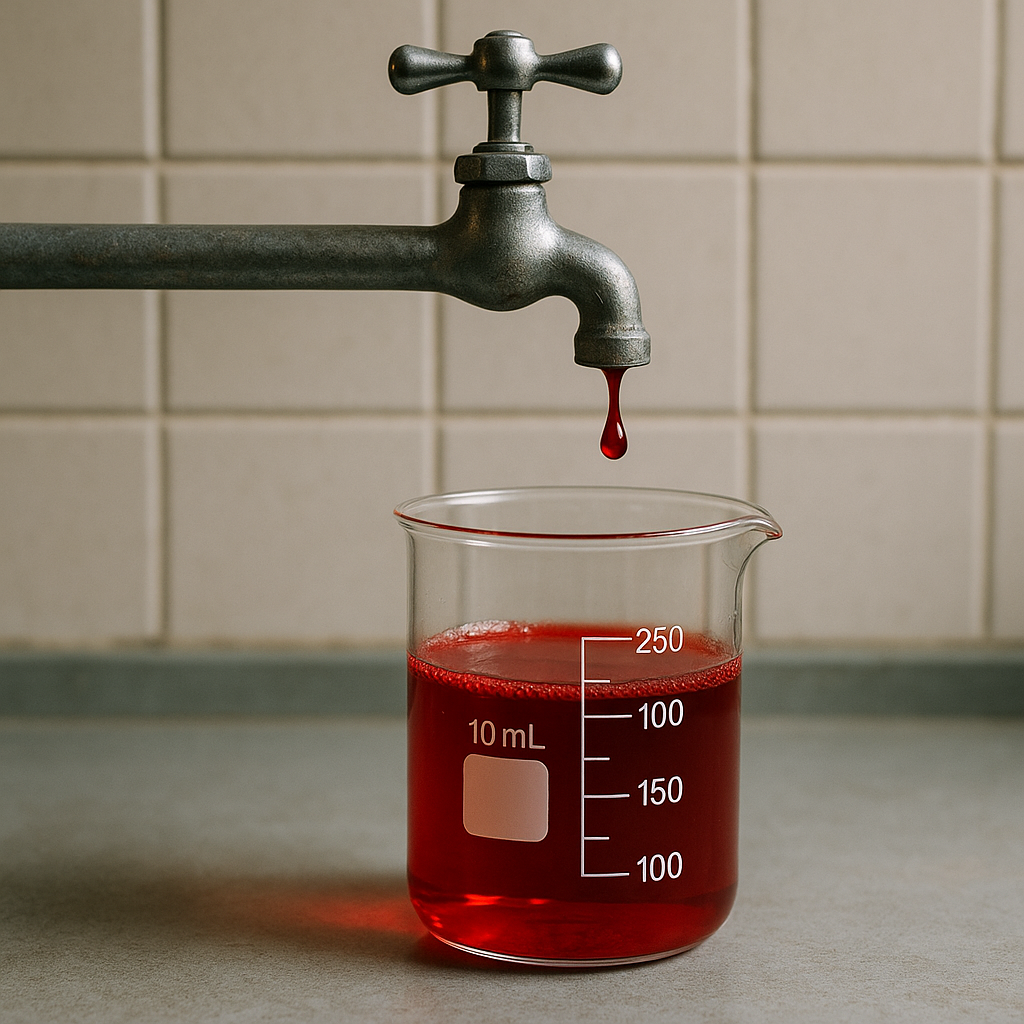
Nationwide warning: School water samples reveal dangerous E. coli contamination, impacting thousands of students & staff. Find out why.
South African schools are facing a serious problem with dirty tap water, making many children and staff sick. Citizen scientists discovered that 1 in 4 water samples had poop in them, showing that old pipes and bad upkeep are to blame. These everyday heroes used simple kits to test water and shared their findings online, proving that communities can find solutions when officials don't act. They are demanding cleaner water for everyone, showing that even small actions can lead to big changes.
What is the state of water quality in South African schools?
South African schools face a severe water contamination crisis, with 1 in 4 tap water samples showing faecal intrusion, posing health risks to over 12,000 pupils and 800 staff. This is due to aging infrastructure, poor maintenance of water tanks, and inadequate official oversight, as revealed by citizen scientists.
Get Cape Town news in your inbox
Stay updated with the latest stories from the Mother City.
1. The Shockwave: 72 Bottles That Exposed 12 000 Children
Between 16 and 27 March, parents, learners and teachers stuffed 72 clean jam jars with tap water, snapped on lids and delivered them to a volunteer courier network. Within a day each bottle was mixed with a pin-prick of Colilert powder, left overnight on a windowsill and then checked under a cheap UV torch. The verdict: one in four samples blazed the dreaded cherry-red that signals “faecal intrusion”.
The 20 scarlet flags came from sports fields, kitchen sinks and classroom basins stretching from Cape Town’s southern suburbs to rural Mpumalanga coal towns. Geotagged photos flew onto WaterCAN’s open MapMyWater platform, creating a constellation of danger points that, taken together, expose more than 12 000 pupils and 800 staff to a daily gulp of E. coli-rich water.
Campaign organisers had hoped for 30 schools; they got 72 in eleven days - double the previous record - proof that communities no longer trust the official line that “all is well”.
2. The Science in a Sachet: Why One Viable Bacterium Equals Alarm
The field kits do not count colonies like a laboratory; they simply ask a yes-or-no question: is there at least one living E. coli in 100 ml? One “yes” equals human or animal faeces in the pipe, tank or tap - a neon sign that chlorine has vanished, a crack has opened or a cross-connection has been botched.
Epidemiologists treat that single-cell signal as seriously as a smoke detector’s beep. A gram of faeces can unload 10 billion viruses and 100 million bacteria. For a six-year-old with still-maturing stomach acid, the dose that will sicken half of exposed children can be fewer than 100 organisms - less than a droplet.
Symptoms begin within 12–72 hours: cramps, exploding diarrhoea, rapid dehydration. One infected child can carry the outbreak home, seeding a second-wave neighbourhood surge. KwaZulu-Natal hospitals still remember May 2022, when paediatric wards overflowed exactly two incubation cycles after the start of the school term.
3. Anatomy of a Breakdown: Pipes, Tanks and Midnight Plumbing
Free State gold-mining towns still rely on 1960s asbestos-cement mains whose design life ended in the previous century. Every night, when bulk pumps shut down, pressure inside the pipe slips below atmospheric, sucking soil - rich with coliforms - through hairline cracks.
On school grounds, the situation worsens. JoJo tanks offer a lifeline during municipal cuts, yet cracked lids, absent first-flush diverters and bird-laden gutters convert them into giant Petri dishes. Midday tank temperatures hit 38 °C, slashing E. coli doubling time to twenty minutes.
Mpumalanga threw a new twist into the mix: a 2019 after-hours plumbing hack that secretly linked a toilet cistern to the drinking line, creating a direct faecal highway to the water fountain. Inspectors found the DIY disaster only after children began vomiting in class.
4. Legal Limbo, Empty Pockets and Citizen Power
South Africa’s laws point in three directions at once: municipalities must deliver water, school governors must keep the site safe, and nobody is compelled to test more than once every five years. The vacuum produces the familiar game of bureaucratic hot-potato while children keep drinking danger.
Treasury gives schools R1.94 per learner per day for water, electricity and refuse combined. Once Eskom arrears are paid, principals are left with roughly 67 cents per child - nowhere near the R330 price of a single accredited lab test.
Enter the citizen scientists. MapMyWater uploads geotagged photos within seconds, creating an immutable public record the state cannot bury. Fishing hamlets in Port St Johns and shack settlements in Khayelitsha already use the same toolkit, proving that community data is borderless and budget-light.
5. Global Echoes: From Flint to Bangladesh - And What Works
When Michigan officials swapped Flint’s water source to save cash, Virginia Tech researchers armed residents with DIY kits identical in spirit to Colilert. The resulting open-data map forced a federal state of emergency.
In rural Bangladesh, students presenting turbid water at a science fair triggered UNICEF’s roll-out of chlorine dispensers on every tube-well. The lesson repeats: when authorities retreat, communities equipped with cheap tests and open maps can yank the emergency brake.
South Africa now joins that global arc. March’s red dots are local leverage, not just statistics.
6. Price Tags, Proven Fixes and Tomorrow’s Tech
A 2021 engineering audit priced full national compliance at R12.7 billion over five years - 0.26 % of a single annual budget. For that sum every school could own UV or ozone reactors, tamper-proof polyethylene tanks and dedicated sampling ports.
Low-cost miracles already exist: silver-doped clay pot filters that delete 99.999 % of E. coli, repackaged HTH chlorine tablets at 42 cents per 20-litre drum, and scrap-metal SODIS racks that let each learner solar-pasteurise a personal bottle before home-time.
Eleven Cape schools are piloting LoRaWAN sensors that whisper tank temperature, humidity and pH to a WhatsApp group every quarter-hour. At R1 100 per unit and a three-year battery life, the hardware costs less than a single bout of learner absenteeism.
7. Your Rights, Your Radio Drama, Your Next Move
Section 28 of the Bill of Rights guarantees children “basic health-care services” - a clause courts have already used to force scholar transport. The same logic can compel safe water. Parents can launch a provincial case armed with MapMyWater photos and the promise of Section 32 access-to-information requests.
While lawyers draft papers, airwaves are shifting minds. “Amanzi okuPhezulu”, a 30-part radio serial in isiZulu and isiXhosa, embeds microbiology inside playground whodunits. Pilot episodes pulled 154 000 listeners in KZN’s Midlands - proof that story beats scare-mongering.
Finally, track the money. Equal Education’s Vulekamali spin-off, AmaziBudget, logs every Rand pledged for school water upgrades. To date, R418 million sits on the books, but only R46 million has left the planning column - pressure material for community meetings.
Close the contaminated tap, roll in the dispensers, log every absent child, demand lab confirmation within seven days - and keep uploading photos. The network that exposed the crisis is the same one that can force its end.
What is the current state of water quality in South African schools?
South African schools are facing a severe water contamination crisis. Citizen scientists discovered that one in four water samples from school taps contained faecal matter, indicating widespread contamination. This poses a significant health risk to students and staff.
How was this water contamination problem identified?
Citizen scientists, including parents, learners, and teachers, collected 72 tap water samples from schools across South Africa. They used simple, inexpensive kits to test for faecal intrusion. The results, showing one in four samples had contamination, were then geotagged and uploaded to the MapMyWater online platform, creating a public record of the problem.
What are the main causes of water contamination in these schools?
The contamination is primarily due to aging and poorly maintained infrastructure. This includes 1960s asbestos-cement pipes that crack and suck in contaminated soil, and improperly maintained JoJo tanks (e.g., cracked lids, no first-flush diverters) that become breeding grounds for bacteria. In one instance, an illegal plumbing connection linked a toilet cistern to the drinking water line.
What are the health risks associated with contaminated school water?
Consuming water contaminated with E. coli and other faecal bacteria can lead to serious health issues, particularly in young children whose immune systems are still developing. Symptoms can include cramps, severe diarrhoea, and rapid dehydration. A single infected child can trigger a wider outbreak in the community.
Why haven't authorities addressed this issue effectively?
Several factors contribute to the lack of official action. Laws are unclear about who is responsible for water quality in schools, and testing is only mandated once every five years. Schools receive very limited funds for water and maintenance (R1.94 per learner per day for all utilities), making proper testing and repairs unaffordable. This bureaucratic vacuum and lack of funding create a "hot-potato" situation where responsibility is avoided.
What solutions are being proposed or implemented to tackle this problem?
Citizen scientists are using platforms like MapMyWater to create an immutable public record, forcing accountability. Affordable solutions exist, such as silver-doped clay pot filters, HTH chlorine tablets, and solar water disinfection (SODIS) racks. Some schools are piloting LoRaWAN sensors for real-time water quality monitoring. Furthermore, advocates are pushing for legal action based on children's rights to basic healthcare and are tracking allocated funds for school water upgrades to ensure they are utilized effectively.

Tumi Makgale is a Cape Town-based journalist whose crisp reportage on the city’s booming green-tech scene is regularly featured in the Mail & Guardian and Daily Maverick. Born and raised in Gugulethu, she still spends Saturdays bargaining for snoek at the harbour with her gogo, a ritual that keeps her rooted in the rhythms of the Cape while she tracks the continent’s next clean-energy breakthroughs.
View all articles →