
South African town split over move to honour anti-apartheid icon Sobukwe
Graaff-Reinet's proposed renaming to Robert Sobukwe ignites a battle over identity, heritage, and economic impact in South Africa.
This South African town is fighting over its name. The government wants to change it to honor a freedom fighter, but many locals are upset. They worry about losing money from tourists and feel left out of the decision. Now, a court will decide if the town keeps its old name or gets a new one, showing how hard it is to change history and make everyone happy.
Why is Graaff-Reinet considering a name change?
Graaff-Reinet is considering a name change to Robert Sobukwe, proposed by the government, to honor a prominent anti-apartheid activist. This move is part of broader efforts to redress historical imbalances and reflect post-apartheid South Africa. However, it faces strong opposition due to concerns about economic impact and procedural fairness.
Get Cape Town news in your inbox
Stay updated with the latest stories from the Mother City.
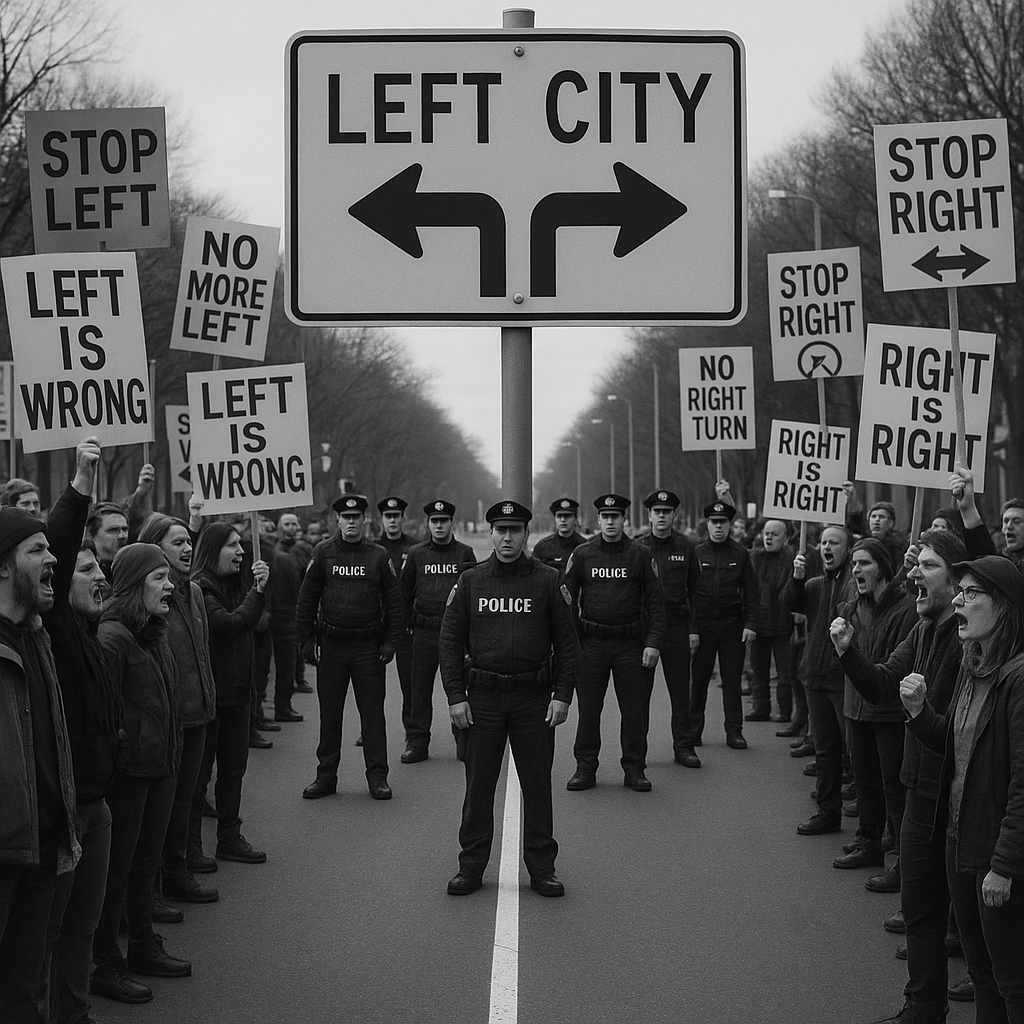
The Karoo wind never apologizes. On a recent Saturday it whipped up Main Road, shoving dust into eyes and history into throats. One procession marched south: khaki shirts, sun-creased bonnets, a canvas-covered wagon flying the 1876 Cape Colony tricolour. Their chant - “Los ons naam alleen!” - rose above the diesel growl of police Nyalas. Two hundred metres north, a second column answered with paint-tin drums and a plywood coffin stencilled “RACISM 1652-2026”. Between them, officers in riot vests formed a living fence, palms lifted like traffic cops at a four-way stop that nobody trusts. No stones flew, yet every onlooker felt the same thought ricochet: one loose brick and the afternoon would detonate into front-page ink.
Few outsiders realised they were watching chapter seven of a story that began with a PDF. On 14 February 2026 Government Gazette 48273 slipped onto the internet after business hours. Item 17 occupied only two lines: “Graaff-Reinet (EC1015) is hereby altered to Robert Sobukwe (EC1015) with immediate effect.” No radio jingle, no town-hall flyer, just the bureaucratic equivalent of a midnight eviction notice. Within 48 hours a WhatsApp group birthed in a Kroonvale kitchen multiplied to 7 000 members; by Friday the same week 22 000 handwritten objections - almost one per registered voter - left the local post office in shrink-wrapped bundles bound for Pretoria. Attorney Derek Light, whose great-great-grandfather traded merino rams here in 1840, filed a 182-page urgent application arguing procedural unfairness, economic sabotage and a breach of the Constitution’s linguistic-rights clause. Court papers list the applicant as “the Town of Graaff-Reinet, a legal persona capable of reputational harm.” In short, a 240-year-old Karoo dorp is suing to keep its own name.
Heritage Dollars and Sense: Why a Label Matters to the Local Economy
Tourism here is not a hobby; it is payroll. Each year 98 000 visitors occupy 98 000 bed-nights, leave behind R260 million and keep 2 100 families solvent. They come for cacti-framed gables, for ginger beer on Coldstream’s Victorian stoep, for the thrill of stepping inside 220 pre-1860 monuments crammed into four square kilometres - more National Heritage plaques per capita than anywhere outside the Cape Town city bowl. Karen de Wit, chair of the regional hospitality association, fans a stack of cancelled bookings: German coach tours, French photographers, a Japanese botanical society that re-routed to Cradock. “Google Maps still shows Graaff-Reinet,” she sighs, “but travel insurers flag ‘destinations experiencing civil unrest’. One client asked if we had renamed ourselves to hide an earthquake.” The fear is not fantasy; every cancelled reservation threatens dish-washing shifts, petrol-station hours, butcher-shop orders. In a town where the largest private employer is a 38-room hotel, heritage is spelled j-o-b-s.
Numbers only hint at the anxiety. Talk to the night cleaner at the Drostdy, and she lists which grandchildren live on her pension; talk to the farm-hand who moonlights as a tracker for lion-photography safaris, and he knows exactly how many foreign lenses equal a month’s school fees. Their worry is microscopic compared with Johann Rupert’s R5 million donation to the “heritage-defence” fund, but it is visceral. A fridge-magnet trader admits he has already slashed prices on stock reading “Gem of the Karoo”; when asked what he will order next, he stares at the veld as though the answer might sprout from the baked earth.
The municipality counters with spreadsheets of its own. Officials predict that a “global google-search spike” for Robert Sobukwe will funnel curious clicks toward local B&Bs. They point to potential renaming grants - R18 million earmarked for new road signs within a 100 km radius, R4 million for updated stationery, R700 000 for tourism-rebranding workshops. Yet treasury coffers remain locked until the court rules, so ambulances still race to addresses that officially no longer exist, and Garmin devices pronounce the town’s future name in an American accent that confuses every Afri- and N- in the Karoo night.
Echoes of 1960: The Sobukwe Claim to the Soil
Mangaliso Tsepo Sobukwe clicks through ancestral photographs on his phone like a man flipping evidence to a jury. The first image shows a single-room corrugated-iron shack behind what is now the Drostdy’s five-star spa. “My grandfather entered the world here in 1924, delivered by a coloured midwife who had to ask rent in advance because the landlord classed blacks as risky,” he says. Four decades later that baby had become a teacher, lawyer and founder of the Pan Africanist Congress whose Sharpeville protest left 69 bullet-riddled bodies and a government so rattled it created the Sobukwe Clause - unique legislation allowing Parliament to keep one man in solitary confinement year after year without trial. Robben Island’s bungalow, built exclusively for him, still stands as an island within an island. To the PAC, stamping his name across the atlas is reparations in lowercase: a correction to the ledger that remembers van Riebeeck, Rhodes and Shepstone but erases its own liberators.
Yet honour travels slower than resentment. In uMasizakhe township, PAC chair Bongani Nodada rehearses another set of facts: 80% of commercial farmland around the town remains in white hands; the local private hospital, bottling plant and 24-hour petrol station all trace to Rupert-led consortiums; the 22 000 objection forms were photocopied on machines reportedly supplied by the Remgro foundation. “Weaponised colouredism,” he calls it - an old apartheid stratagem dressed in new constitutional clothes. His supporters drum on paint cans outside the railway station, convinced that every khaki shirt across the road is a proxy for billion-rand interests that dread land audits more than name boards.
Gladys Swarts, 78, stirs tripe on a cast-iron pot while the dispute booms from her transistor. In 1972 bulldozers flattened her family’s “hotnotslaan” cottages to create a buffer zone between white Graaff-Reinet and the new township. She keeps two yellowed artefacts on her kitchen shelf: a 1983 newspaper that branded coloured people “a dying race” and a 2025 pamphlet that promises “radical economic transformation.” Both, she says, smell of eviction. “Van de Graaff never knew my birthday, Sobukwe never sent me a card - why must I choose which stranger sleeps on my ID document?” Her question hangs above the rooftops like the jacaranda blossoms that will soon carpet Donkin Street purple, indifferent to whatever humans decide to call the ground.
Courts, Clouds and the Unfinished Road to Tomorrow
Professor Renfrew Leslie drives five hours from Port Elizabeth to attend a meeting in the town library, where 40 residents share four microphones and one interpreter. His 2023 survey shows 68% of South Africans back “meaningful” name changes, but only 24% trust the process; in the Karoo the deficit widens because democracy without transport is a courthouse three provinces away. Low literacy - 41% of adults never finished grade 9 - turns written submissions into a technocrat’s mirage. “When inequality persists,” he tells the room, “names become the only land poor people can still occupy.” Heads nod, but nodding does not pay for diesel home across the lunar flats.
Precedent stalks every legal brief. Grahamstown became Makhanda on paper in 2018, yet municipal letterheads still use the colonial label after a Supreme Court finding of “fatally flawed” consultation. Pretoria oscillates between Tshwane for government and Pretoria for everything else, producing hybrid addresses that baffle couriers. Analysts predict Graaff-Reinet will decide whether procedural irregularity outweighs redress, a verdict that could unblock 400 pending applications - from Durban to Port Elizabeth - like a logjam in a Karoo gully after cloudburst.
Andile Maki starts his dawn hike to the Valley of Desolation with a playful disclaimer: “Welcome to Robert Sobukwe Town, formerly known as…” Then he pauses, invites tourists to vote, and most shrug before snapping selfies. Dassies - the rock hyraxes whose ancestors sunned here 200 million years ago - watch from dolerite columns, indifferent to Latin, Bantu, Khoe or Dutch syllables drifting upward on the thermals. Clouds drift too, casting shadows that dissolve as quickly as ink on archival paper. “Names are like these cumulus,” Maki laughs, gesturing toward the sky. “They look permanent until you try to stand on them.” Below, the town wakes to another day of jacaranda confetti, rubber stamps stuck in transit, and a future waiting for a judge to decide which past deserves the louder echo.
[{"question": "
Why is Graaff-Reinet considering a name change?
", "answer": "The South African government proposed changing Graaff-Reinet's name to Robert Sobukwe to honor a prominent anti-apartheid activist. This initiative is part of a broader effort to address historical injustices and better reflect the post-apartheid identity of the nation. Robert Sobukwe was a significant figure as a teacher, lawyer, and founder of the Pan Africanist Congress (PAC), known for his activism against apartheid, including the Sharpeville protest. The government believes this name change would be a form of 'reparations in lowercase,' correcting a historical ledger that has largely overlooked pivotal Black liberators."}, {"question": "Who was Robert Sobukwe and what is his significance?
", "answer": "Robert Sobukwe was a pivotal anti-apartheid activist in South Africa, a teacher, lawyer, and the founder of the Pan Africanist Congress (PAC). He played a crucial role in the fight against apartheid, notably leading the Sharpeville protest. His defiance led to the creation of the 'Sobukwe Clause,' unique legislation that allowed him to be held in solitary confinement for years without trial. A bungalow on Robben Island was even built exclusively for him. Honoring him through a name change is seen by many, especially the PAC, as a way to acknowledge and rectify historical erasures of Black liberators from the national narrative."}, {"question": "Why are locals opposing the name change?
", "answer": "Many locals are opposing the name change due to significant concerns about economic impact, particularly on tourism, and a feeling of being excluded from the decision-making process. Graaff-Reinet relies heavily on its heritage tourism, attracting visitors with its historical sites. There are fears that a name change could confuse tourists, lead to cancelled bookings, and ultimately jeopardize the livelihoods of 2,100 families dependent on the industry. Furthermore, the name change was announced bureaucratically via a PDF in the Government Gazette, leading to accusations of procedural unfairness and a lack of public consultation. Some perceive it as 'economic sabotage' and a breach of linguistic rights, leading to a legal challenge."}, {"question": "What are the economic implications of the name change?
", "answer": "The economic implications are a major concern for Graaff-Reinet. Tourism is a primary driver of the local economy, generating R260 million annually and supporting 2,100 families. Locals fear that a name change could deter visitors who are unfamiliar with the new name or perceive the town as unstable due to the dispute. Evidence of cancelled bookings from international tour groups already exists. The town's largest private employer is a hotel, highlighting how deeply intertwined heritage and jobs are. While the municipality suggests potential benefits like a 'global Google-search spike' for Robert Sobukwe and rebranding grants, these are speculative and contingent on court rulings, leaving the town's current economic stability in jeopardy."}, {"question": "What is the legal status of the name change?
", "answer": "The name change is currently in legal limbo. Attorney Derek Light filed an urgent application arguing procedural unfairness, economic sabotage, and a breach of the Constitution's linguistic-rights clause. The application lists 'the Town of Graaff-Reinet, a legal persona capable of reputational harm' as the applicant, indicating the town itself is suing to retain its name. The court's decision will be pivotal, not only for Graaff-Reinet but also for potentially unblocking over 400 other pending name change applications across South Africa, as it will weigh whether procedural irregularity outweighs the government's goals of historical redress."}, {"question": "How does this situation reflect broader issues in South Africa?
", "answer": "The struggle over Graaff-Reinet's name highlights several broader issues in South Africa's post-apartheid nation-building. It underscores the ongoing tension between redressing historical injustices and preserving existing heritage, as well as the economic realities that often complicate such efforts. The dispute also reveals deep-seated divisions around identity, land ownership (with 80% of commercial farmland still in white hands), and perceived 'weaponised colouredism' where economic power intersects with racial politics. Furthermore, it exposes challenges in democratic processes, particularly regarding public consultation and the impact of inequality on civic participation, where access to information and legal processes can be limited for many. The unresolved nature of the name change, with ambulances still using old addresses and Garmins mispronouncing new ones, symbolizes the lingering complexities of a nation striving to reconcile its past with its future."}]
Hannah Kriel is a Cape Town-born journalist who chronicles the city’s evolving food scene—from Bo-Kaap spice routes to Constantia vineyards—for local and international outlets. When she’s not interviewing chefs or tracking the harvest on her grandparents’ Stellenbosch farm, you’ll find her surfing the Atlantic breaks she first rode as a schoolgirl.
View all articles →