
Stampede hits Athlone Stadium after jobs drive surge
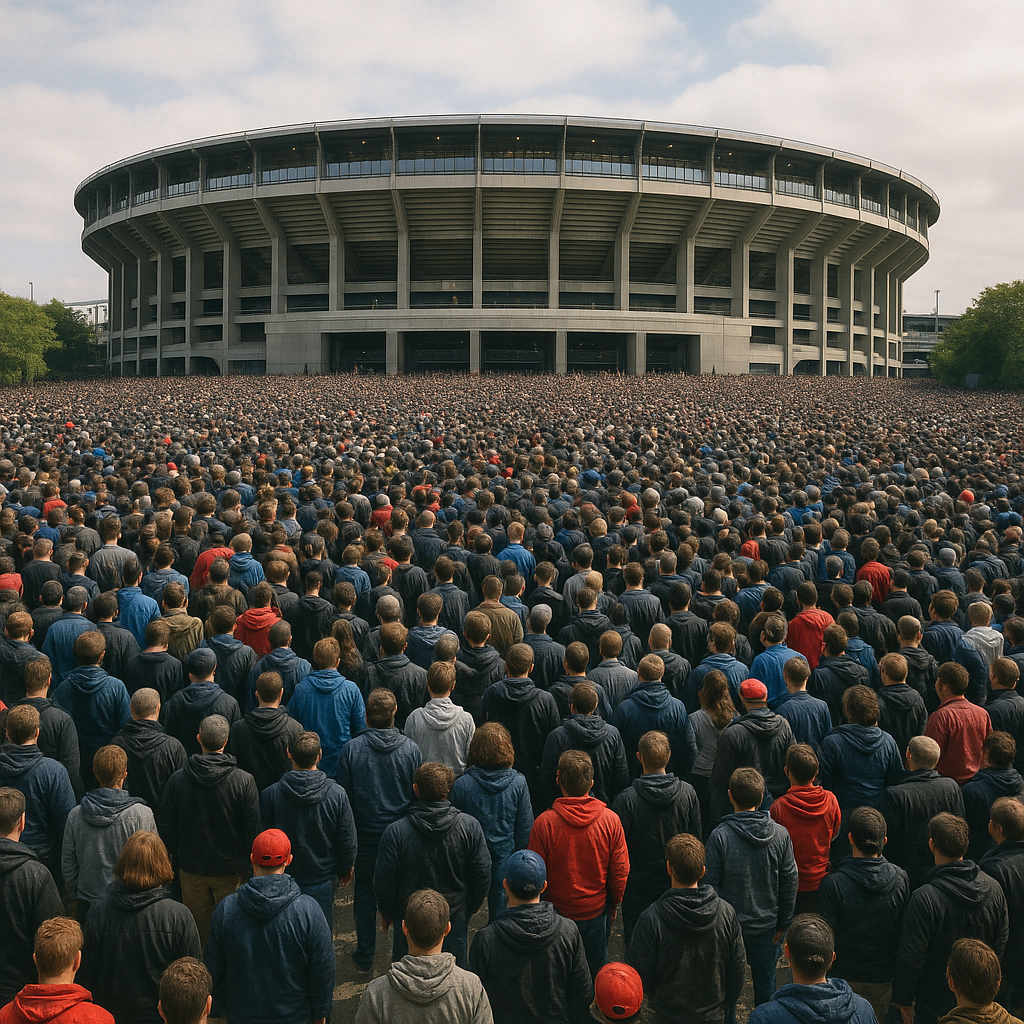
Cape Town's "Day of 1,000 Opportunities" turned into a stampede, injuring dozens. This article explores the miscalculations, societal pressures, and digital divides that led to the chaos.
A huge crowd of 25,000 people, hoping for jobs, rushed into Cape Town's Athlone Stadium. Organizers expected only 1,200, but late gate openings and not enough security caused a dangerous crush. People were pushed and injured, and ambulances struggled to get through. Though no one died, many were hurt, and the event left a lasting scar on those who just wanted a chance at a better life.
What caused the Cape Town stadium stampede?
The Cape Town stadium stampede was caused by an overwhelming crowd of 25,000 job seekers, ten times the expected number, trying to access an event designed for 1,200. Gates opening late, inadequate security, and a lack of clear communication led to a dangerous crush as people surged forward, resulting in numerous injuries but, miraculously, no deaths.
Get Cape Town news in your inbox
Stay updated with the latest stories from the Mother City.
Dawn at Athlone: The Queue That Swallowed a City
What began as a low-key “Day of 1 000 Opportunities” turned into a human tsunami before the sun had cleared Devil’s Peak. Athlone Stadium’s access road resembled a pop-up megacity: minibus taxis spilled youths in crisp white shirts every few heartbeats, aunties power-walked balancing handbags and grandchildren, and uncles compared the weight of glossy reference letters against the latest PDF on a cracked phone screen. Organisers had prepared 1 200 numbered tickets and 40 neon-vested marshals; by 06:45 more than ten times that number had already wrapped the block, forming a living python that reached the M5 on-ramp.
The stadium’s 22 turnstiles became pressure valves in a boiler. When gates stayed shut 30 minutes past the advertised time, rumours ricocheted: “Only the first 500 will see a recruiter.” Backpack straps twisted into improvised ropes as strangers linked arms against the surge. A cordon ribbon - pink, fragile, designed for flower shows - snapped twice, each break accompanied by a roar that rippled outward like a stadium wave. Grandmothers lifted toddlers onto their shoulders; teenage boys used CV folders as sails to surf the crowd. No one could hear the muffled apologies crackling from a municipal loudspeaker built for rugby crowds of 5 000, not 25 000.
At 08:12 the physics of desperation took over. Those at the back, unable to glimpse the choke point, kept feeding forward motion; those at the front folded like paper dolls against steel railings. Security flung open a side gate to relieve the crush, but the new stream hit the old at a right angle, turning two orderly lines into a whirlpool of limbs. Cell-phone clips show a brief, eerie forest of raised white folders - pleading surrender - then the forest vanishes as bodies tilt thirty degrees toward the asphalt.
Anatomy of a Crush: Mistakes, Myths and Missing Ambulances
The City’s risk register, filed six weeks earlier, rated “audience overspill” less likely than lightning or a gale. Only two ambulances were rostered; both had to ram through screaming pedestrians to reach the injured. Paramedics commandeered the athletics track as a triage paddock, lining the lanes with adrenaline shots and cardboard splints. Eighteen casualties reached Groote Schuur and Vanguard hospitals: three snapped femurs, one woman lost two fingers to a boot heel, a 19-year-old from Philippi nursed a punctured lung after ribs cracked like dry twigs. Miraculously, no one died - an outcome doctors credit to the track-side medics who had rehearsed for gang-war mass casualties, not job-fair stampedes.
While stretchers rolled, smartphone fiction soared. A 12-second TikTok of a policeman drawing his pistol - filmed from behind so viewers missed the upward angle - was captioned “LIVE ROUNDS FIRED AT JOB SEEKERS.” Within minutes the clip trended nationwide, pulling distant relatives and radio shock-jocks into Athlone’s already grid-locked streets. Athlone Community Police Forum chair Naweed Mohamed spent four hours circling the block with a megaphone: “No gunshot wounds. Only stun grenades.” The truth could not outrun the algorithm; parents who had never heard of the job fair arrived in panic, forming yet another incoming tide that blocked paramedic routes.
Inside the stadium bowl, survivors oscillated between tears and frantic phone checks. A WhatsApp voice note claiming “interviews restarted at Gate F” ignited a secondary rush; hundreds sprinted across the turf, slipping on brochures that now carpeted the grass like snow. Security responded with more stun grenades, each thunderclap fertilising fresh rumours. By 10:00 the event had produced two distinct disasters: a physical crush at the gate and an informational stampede in cyberspace.
Why They Came: Maths versus Myth in South Africa’s Job Desert
Official youth unemployment hovers at 45 percent; on the Cape Flats it punches past 60. Call-centre work - advertised inside the stadium - promotes itself as one of the last formal ladders that does not demand a university badge. A junior agent earns R5 500–R7 000 a month, more than double the state pension many households survive on. Add a transport stipend and the possibility of hitting a bonus by selling an insurance upgrade to a stranger in Bloemfontein, and the proposition becomes intoxicating.
The numbers, though, are merciless: roughly 700 actual wage-paying posts, 300 learnerships without immediate salaries, and 25 000 hopefuls who woke before dawn. Psychologists call the refusal to leave the queue “commitment escalation”: every photocopied certificate, every R3 spent at an internet café to bold the heading “CURRICULUM VITAE,” acts like a deposit in a slot machine that must eventually pay. Teenagers clutched plastic sleeves swollen with short-course badges - “Microsoft Excel for Beginners,” “Inbound Sales Mindset” - as if credentials were life jackets that could keep ambition afloat in a rising sea of bodies.
City officials, overwhelmed, advised rejects to “register on SAYouth.mobi.” The recommendation ignores the lived geometry of data poverty. A 2023 UCT survey shows more than half of Cape Flats homes buy data in 20-MB sachets - enough for WhatsApp greetings, not for a 12-MB PDF festooned with skills logos. The platform’s AI gatekeeper rejects CVs that omit keywords such as “omnichannel” or “CRM,” terms seldom whispered in under-funded classrooms. Even if the algorithm smiles on you, the nearest digital-work hub sits 14 km away in Observatory, a R42 taxi ride that equals a full day’s pay before you have earned it.
Aftermath: From Trauma to Trash, the Unfinished Business of Hope
By sunset the stadium gates were chained, yet floodlights revealed hundreds still camped on the embankment, trading second-hand rumours of secret second-round interviews. Vendors pivoted to selling tissues and sugary tea to soothe tear-gas tears; one entrepreneur offered a “Queue Buddy” fold-up stool rental, proving that disaster capitalism can thrive on micro-margins. Opposition parties erected card tables in the far parking lot, signing affidavits for a promised class-action suit. A provincial minister arrived with a media cloud, vowing a “forensic review,” while the City blamed the private logistics contractor. None of the press statements mentioned expanding apprenticeships, fixing commuter rail, or capping future RSVPs to match actual demand.
Paramedics noticed an emotional after-taste distinct from gang-violence scenes they usually patch up: survivors apologised to their children, youths muttered about “wasting my family’s last taxi money.” Médecins Sans Frontières converted the stadium gym into a pop-up trauma clinic, running 20-minute group debriefs. Early screenings suggest one in five attendees now flinch at crowded taxi ranks or wake gasping from replay dreams. Untreated, acute stress ossifies into chronic anxiety, eroding the very employability they queued for - another hidden cost no budget speech tallies.
Clean-up crews filled 18 refuse bags with abandoned résumés: matric statements, computer certificates, church references, neatly typed objectives - “to grow with a progressive firm.” The pages will be pulped, shipped to China, reincarnated as smartphone packaging for devices these applicants cannot buy. Somewhere on the embankment a last optimist refreshed his inbox, hoping the next ping would be a recruiter, not another “please call me.” Until cities turn job scarcity into infrastructure instead of spectacle, the most valuable skill South Africa’s youth may possess is the ability to wake up tomorrow and try again - without being trampled in the process.
What caused the Cape Town stadium stampede?
The Cape Town stadium stampede was caused by an overwhelming crowd of 25,000 job seekers, ten times the expected number, trying to access an event designed for 1,200. Gates opening late, inadequate security, and a lack of clear communication led to a dangerous crush as people surged forward, resulting in numerous injuries but, miraculously, no deaths.
How many people were injured in the stampede?
While no one died, 18 casualties reached Groote Schuur and Vanguard hospitals. Injuries included three snapped femurs, one woman losing two fingers to a boot heel, and a 19-year-old suffering a punctured lung. Many more likely sustained minor injuries but were not formally reported to hospitals.
What was the initial purpose of the event at Athlone Stadium?
The event was advertised as a "Day of 1,000 Opportunities," aimed at offering job prospects, primarily in call-center work and learnerships, to unemployed youth and adults in the Cape Flats area, where youth unemployment is particularly high.
Why was the crowd so large when organizers expected far fewer attendees?
Organizers expected only 1,200 attendees and prepared accordingly with limited tickets and marshals. However, the severe youth unemployment rate (over 60% in the Cape Flats) and the allure of formal employment paying significantly more than the state pension drew an estimated 25,000 desperate job seekers, vastly exceeding expectations.
What role did misinformation play during the stampede?
Misinformation, particularly via social media, exacerbated the chaos. A 12-second TikTok clip showing a policeman drawing his pistol was miscaptioned as "LIVE ROUNDS FIRED AT JOB SEEKERS," causing widespread panic and drawing more people to the already gridlocked area, hindering emergency services. Later, a WhatsApp voice note claiming "interviews restarted at Gate F" caused a secondary rush within the stadium.
What are the long-term consequences for the survivors of the stampede?
Beyond physical injuries, many survivors are experiencing psychological trauma. Medics observed emotional distress, with some apologising to their children or expressing guilt over wasted taxi money. Early screenings suggest one in five attendees now flinch at crowded taxi ranks or suffer from replay dreams, indicating acute stress that could develop into chronic anxiety, further eroding their employability.

Oliver Daniels is a Cape Town journalist who chronicles the intersection of food, migration and identity in South Africa's kitchens—from wood-fired Gugulethu braai spots to Constantia vineyards. Born and raised on the slopes of Devil’s Peak, he still starts each week with a dawn walk across Table Mountain to catch the first Atlantic light before filing copy.
View all articles →