
The awkward question no one asked for
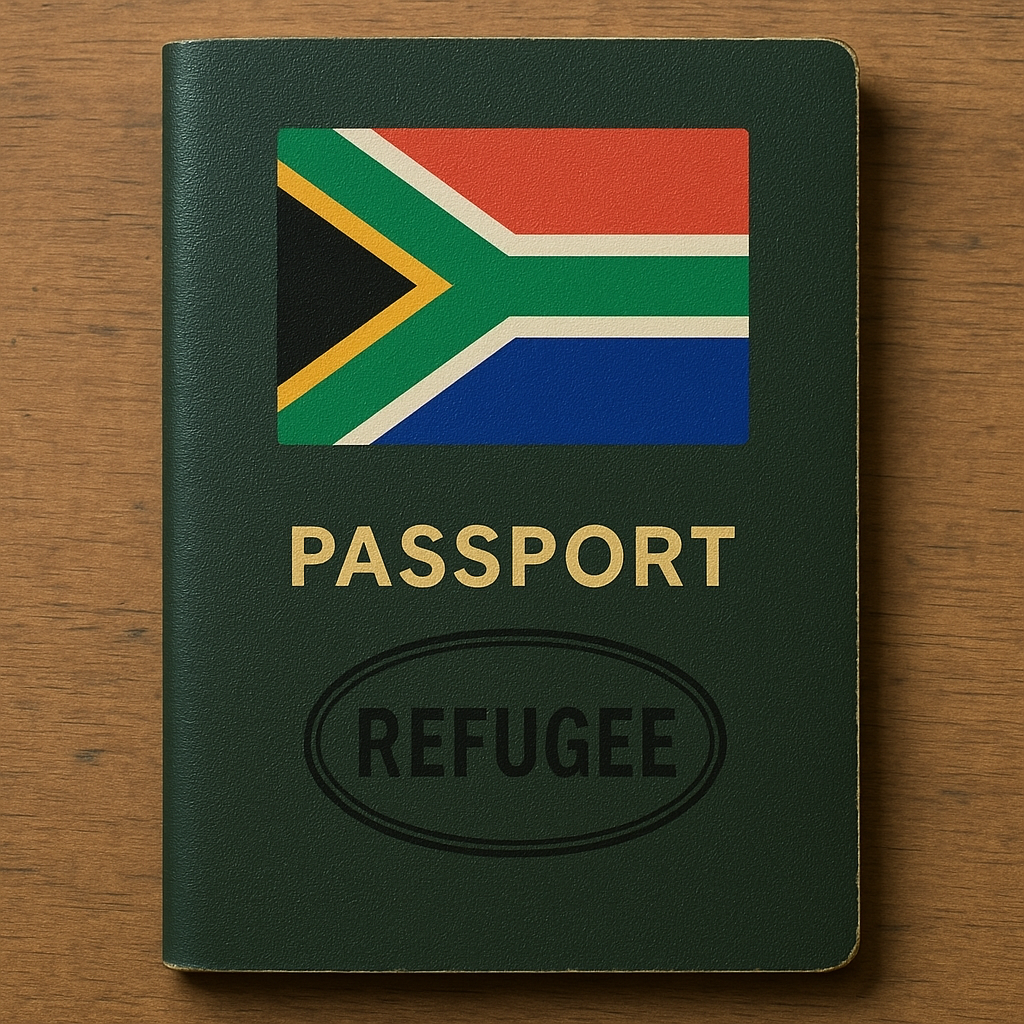
US refugee policy redefines "Afrikaner," impacting South Africa's identity and creating a new diaspora. Learn how a single word is reshaping a nation.
The Passport That Rewrites “Afrikaner” – How One U.S. Tick-Box Is Quietly Re-Engineering South Africa’s Fiercest Label
The U.S. asylum form now lets people claim "Afrikaner – persecuted minority" status, changing what it means to be Afrikaner. This new rule is based on speaking Afrikaans, not just race or family history. Now, many different South Africans, including white, Coloured, Indian, and black people, are getting asylum under this label. This has led to an unexpected and diverse group of "Afrikaners" forming in places like Arizona, where they are building a new community based on their shared language and experiences.
What is redefining the term "Afrikaner" in South Africa?
Recent changes to the U.S. asylum form, allowing individuals to claim "Afrikaner – persecuted minority" status, are redefining the term. This broad interpretation, based on speaking Afrikaans rather than traditional ethnic or racial criteria, has led to a diverse range of South Africans, including white, Coloured, Indian, and black individuals, being granted asylum under this label.
Get Cape Town news in your inbox
Stay updated with the latest stories from the Mother City.
1. A Drop-Down That Redefined a Nation
One morning in March 2023, the Department of Homeland Security slipped an extra line into the online I-589 asylum form.
Hidden inside the menu “Race/Ethnicity – South African” sat a fresh option: “Afrikaner – persecuted minority.”
No footnote, no glossary, just the instruction “tick the group you believe will harm you.”
By Christmas 1,037 South Africans had cleared the border under that tag.
Redacted case files, prised loose by a Southern Poverty Law Center FOIA suit, reveal who they said they were:
- four in ten were white, Protestant, Afrikaans-first;
- three in ten were Coloured, Afrikaans at home, married into white families;
- one in five were Indian-South Africans who argued BEE rules choke “Indian-Afrikaner” firms;
- seven percent were black citizens who swore they were “culturally Afrikaner” after lifetimes on Afrikaans farms and in Afrikaans classrooms;
- the rest were a scatter of Chinese-South Africans, naturalised Zimbabwean whites and a single Namibian Baster clan.
Proof of seventeenth-century Dutch blood? Not required.
A sworn line declaring “I speak Afrikaans and I am unsafe” was enough.
Washington had created the fastest Afrikaner certificate in history.
2. The Numbers Apartheid Never Wanted You to See
Nationalist memory insists Afrikaner means trekboer, Blood River, the 1948 Republic.
Census ink tells a different tale.
In 2022, 17.5 million South Africans spoke Afrikaans in the kitchen; only 6.1 million called themselves white.
The other 11-odd million were Coloured, black, Indian or born beyond the borders.
Sociologists call it “language-shift-without-identity-shift.”
The new U.S. tick-box ignores the nuance: if most Afrikaans mouths are brown or black, and if “Afrikaner” is now a persecuted speech group, then statistically the victims must be people once classified “non-white.”
Apartheid’s linguistic under-class has therefore become, in American legal English, the emblem of Afrikaner vulnerability.
Academics at Stellenbosch are brawling over the irony.
Prof. Melissa Steyn calls it “racial capitalism outsourcing its nostalgia.”
Her rival, Prof. Gideon van der Watt, counters that “identity is negotiated at the edge; the diaspora is democracy’s unfinished homework in fast-forward.”
Both have asked the National Research Foundation for cash to chase interviewees across the Arizona desert.
3. Who Owns the Word? Courts, Commerce and the Consulate
In 2017 Cape Oranje Vineyards tried to trademark “Afrikaner” for a line of cabernets.
The Institute of Race Relations objected, insisting the term belongs to the public.
The Companies Tribunal shrugged: the Liquor Products Act does not protect ethnicity.
Instant precedent: anyone can monetise the label.
Six years later the same logic rules refugee law.
Because no community holds the copyright, anybody can slip on the jersey.
Once a week a grey trailer outside the U.S. consulate in Pretoria becomes the stage for “credible fear” hearings.
Texas interpreters Zoom in; applicants stare at a Nebraska officer on a laptop.
A leaked transcript from 14 August shows a Coloured man explaining why he is Afrikaner:
“We cook kerrie-vis, we say ‘gogga’ not ‘insect’, my gran worked the Davie farm.
Eugene Terre’Blanche would have shot me for trespass, but the guys who shot my brother spoke our taal.
That is why I fear.”
Asylum granted.
Law lecturers now call it persecution-by-shared-tongue theory.
4. Exit, Voice and the Neon Orange Cap
Facebook’s algorithm lit up within days.
A private group titled “Afrikaners Without Borders” added 43,000 members in a month.
Header photo: a white toddler hugging a Coloured shepherd, an Indian granny in voortrekker bonnet, a black man clasping a worn Afrikaans Bible.
House rules ban “swart-gevaar” rants and apartheid nostalgia.
Three Coloured call-centre women from the Cape Flats moderate 24/7, deleting bile faster than they once picked up township trash.
Handle @TaalTant summarise the mission: “We hack White fear’s algorithm; if America pays the ticket, we write the script.”
Phoenix, Arizona, has become the biggest landing strip.
Rents mimic Karoo prices, guns are legal and the desert smells like home.
On Sundays the Grace Bible Church hosts trilingual services - Afrikaans, English, Kaaps - then splits the offering with a Somali mosque to lobby for halal and kosher shelves in the municipal food bank.
Junaid Adams, a Coloured mechanic, runs “Karoo Quick” tyre shop next to a white farmer from Thabazimbi.
They rotate a single generator whenever the grid flickers and laugh that Eskom followed them overseas.
At Mesa Junior High the 3 p.m. bell releases the “Saffa Squad.”
Their playground game is “Border Jump”: negotiate a checkpoint using only Afrikaans vocabulary; winner earns a neon orange cap reading “Refugee Champ.”
Asked what it means, a twelve-year-old shrugs: “Springbok status, but for staying alive.”
Parents in pickup trucks swap biltong recipes made from Arizona beef and admit they fled bullets only to watch their children invent something no bureaucrat predicted: an Afrikaner future that belongs to whoever still speaks the taal when the guns fall silent.
What is redefining the term "Afrikaner" in South Africa?
Recent changes to the U.S. asylum form, allowing individuals to claim "Afrikaner – persecuted minority" status, are redefining the term. This broad interpretation, based on speaking Afrikaans rather than traditional ethnic or racial criteria, has led to a diverse range of South Africans, including white, Coloured, Indian, and black individuals, being granted asylum under this label.
How did the U.S. asylum form come to include "Afrikaner – persecuted minority"?
In March 2023, the Department of Homeland Security quietly added "Afrikaner – persecuted minority" as an option under the "Race/Ethnicity – South African" menu on the online I-589 asylum form. This change was implemented without a footnote or glossary, simply instructing applicants to "tick the group you believe will harm you." This single addition has profoundly impacted the perception and definition of Afrikaner identity.
Who is being granted asylum under the "Afrikaner – persecuted minority" status?
The new asylum status has led to a highly diverse group of South Africans being granted entry. By Christmas 2023, over 1,000 individuals had cleared the border under this tag. This includes approximately 40% white, Protestant, Afrikaans-first individuals; 30% Coloured individuals; 20% Indian-South Africans who claim their businesses are stifled by Black Economic Empowerment rules; and 7% black citizens who identify as "culturally Afrikaner" due to their upbringing in Afrikaans-speaking environments. There are also smaller numbers of Chinese-South Africans, naturalised Zimbabwean whites, and a Namibian Baster clan.
What is the primary criterion for claiming "Afrikaner" status for asylum?
The primary criterion for claiming "Afrikaner" status for asylum is the ability to speak Afrikaans and a sworn statement declaring oneself unsafe. Proof of 17th-century Dutch ancestry or traditional racial classifications is not required. This linguistic-based definition means that individuals from various racial and ethnic backgrounds who speak Afrikaans can now claim this status, shifting the focus from race to shared language as a marker of identity.
Where are these new "Afrikaners" establishing communities in the U.S.?
Phoenix, Arizona, has emerged as a significant hub for these new "Afrikaner" communities. The area is attractive due to its relatively affordable rents (compared to South Africa's Karoo region), legal gun ownership, and a desert climate that some find reminiscent of home. These communities are actively building new social structures, with trilingual church services (Afrikaans, English, Kaaps), shared business ventures, and even new playground games among children that celebrate their collective experience.
How has this new definition of "Afrikaner" impacted South African society and academic discourse?
This redefinition has sparked significant debate within South Africa, particularly among academics. While some sociologists note the irony of apartheid's linguistic under-class becoming the emblem of Afrikaner vulnerability, others like Prof. Melissa Steyn criticize it as "racial capitalism outsourcing its nostalgia." Conversely, Prof. Gideon van der Watt views it as "identity negotiated at the edge," suggesting that the diaspora is accelerating a re-evaluation of identity. The situation also highlights a previous legal precedent where the term "Afrikaner" was deemed monetizable, as no single entity holds copyright over the word.
Michael Jameson is a Cape Town-born journalist whose reporting on food culture traces the city’s flavours from Bo-Kaap kitchens to township braai spots. When he isn’t tracing spice routes for his weekly column, you’ll find him surfing the chilly Atlantic off Muizenberg with the same ease he navigates parliamentary press briefings.
View all articles →