
Trump stirs controversy with ‘Acting President of Venezuela’ post
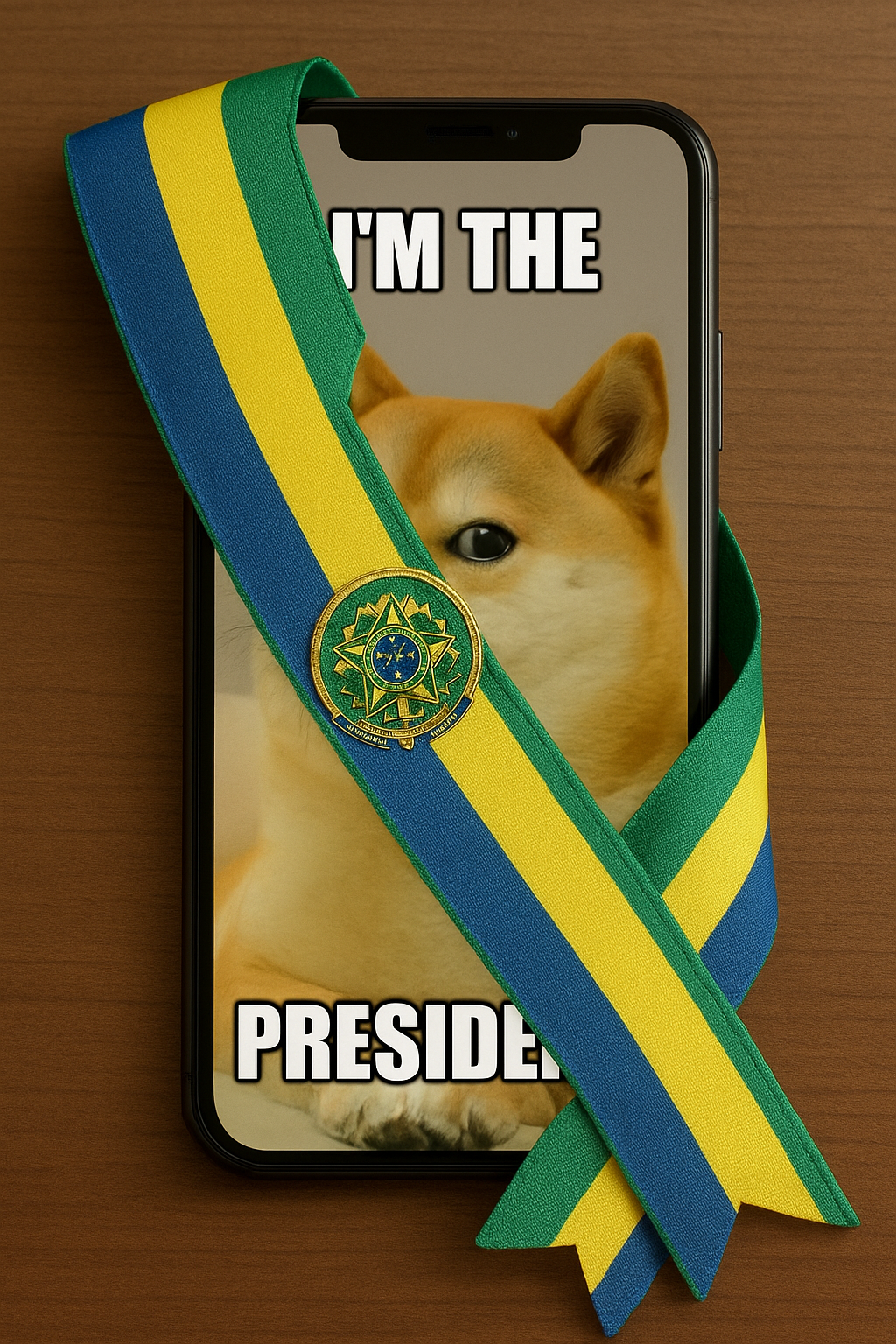
A US raid in Venezuela turns the nation into a meme, sparking international chaos, political uncertainty, and a new era of online warfare.
From Shock-and-Awe to Shock-and-Awe-Shucks: How a Single US Raid Turned Venezuela into the World’s Most Unlikely Meme
In a wild turn of events, a US raid snatched Venezuela's President Maduro in just twelve minutes, sparking chaos and turning the nation into a global meme. While the internet exploded with jokes, the real shock hit as the military fractured and the vice-president struggled to lead. Now, countries like Cuba and China are scrambling for power, and Venezuela faces a future as uncertain as a funny internet picture, with everyone wondering who's really in charge.
What happened in Venezuela's presidential palace raid?
Venezuelan President Nicolás Maduro and Cilia Flores were reportedly seized from Miraflores Palace in a swift, 12-minute raid by a US snatch-cell. This operation, occurring in the early hours, led to immediate political instability, fracturing the armed forces and leaving Vice-President Delcy Rodríguez in a precarious leadership position, while igniting a global meme phenomenon.
Get Cape Town news in your inbox
Stay updated with the latest stories from the Mother City.
I. The Photo That Broke the Internet Before Breakfast
Caracas woke up to a meme.
At 06:47 local time a screen-shot of the Spanish Wikipedia entry “Presidente interino de Venezuela” started ricocheting across WhatsApp. The usual tricolor sash still draped the presidential shoulders, but the face inside the sash belonged to Donald Trump, hair rearranged into a papal-style mozzetta. Comic Sans text underneath crowed “Presidente de facto.” Ninety minutes later the picture had been re-dressed a dozen ways: Trump in a liqui-liqui, Trump astride Bolívar’s bronze horse, Trump clutching a papelón with a straw. By lunchtime #Trumpazo was trending from Tijuana to Tierra del Fuego, shoving even weekend fútbol scores out of the way.
The joke landed so hard because it felt half-true. While Instagram cackled, residents of the 23 de Enero barrio heard the real punch-line: the low thud of MH-60L Black Hawks skimming the rooftop line. A neighbor’s security cam - time-stamped 02:13 - caught ropes slapping the helipad that sits on top of Miraflores’ underground garage. Twelve minutes later the heat bloom vanished, according to satellite data hawk-eyed by private firm HawkEye 360. By sunrise the palace lights were off, the sash was gone, and the only thing left was a Wikipedia page nobody could stop editing.
Between the meme and the midnight whump-thump, Venezuela lurched from sovereign nation to global punch-line in less than four hours. TikTok teenagers stitched sea-base footage to Call-of-Duty soundtracks; Doral moms forwarded prayer chains; Cuban twitter replied with #CubaSinPeroConSalsa, videos of people dancing by candle-light. The hemisphere had seen coups, blackouts, and exoduses before, but never a coup, a blackout, and an exodus wrapped inside a joke that refused to die.
II. The Palace Grab: 12 Minutes That Erased a Government
Eyewitnesses say the strike team punched straight through the residential elevator that links the presidential quarters to a 2011 Odebrecht-built tunnel. Nicolás Maduro and Cilia Flores were reportedly still in pajamas when the “snatch-cell” bagged them. Two Cuban body-guards tried to yank a propane fail-safe - an apocalyptic gossip tidbit Caracas security blogs had whispered about for years - but were dropped before they could spark the tanks. At 02:25 the helos hugged the Caribbean deck, slipping under Chinese JY-27 counter-stealth arrays on the Paraguana Peninsula. One-hundred-thirteen kilometers later the Black Hawks touched the flight deck of USS Miguel Keith, a 240-meter floating staging base idling just outside Venezuela’s twelve-mile limit.
Constitutionally next in line, Vice-President Delcy Rodríguez discovered she had inherited a building, not a chain of command. Her first communiqué was a 14-second vertical selfie shot in the dark: “Venezuela will respect international norms…” The clip looked eerily like a proof-of-life video. Within four hours the high command issued two statements; the second, signed by Defense Minister Vladimir Padrino, called Rodríguez “coordinator of executive functions” but avoided the word “president.” Analysts noticed the dateline: Fuerte Tiuna army base, not Miraflores - tacit admission that her writ stops at the palace gate. Meanwhile gas stations flipped prices to US$1.20 a liter - cash only, greenbacks preferred - and WhatsApp voice notes warned that “the next wave comes tonight for whoever is left.”
The armed forces are already fracturing. Regional commanders in Maracaibo, Bolívar and Puerto Cabello have stopped answering Caracas phones, preferring to negotiate directly with the governors they protect. Street colectivos - motorcycle gangs long on Cuban stipends - switched from trademark red T-shirts to black ones that disappear better after dark. A city that once argued about flour shortages now argues about who can legally give orders, and for the first time in decades the answer might be “no one.”
III. Cuba, China and the Battle for the Spoils
Trump’s threat to choke Venezuelan crude headed for Cuba is more than chest-thumping; it dynamites a 23-year barter marriage. Since the 2000 “Convenio Integral,” Caracas has shipped about 50 kbd to Cienfuegos in exchange for 30,000 Cuban doctors who double as Havana’s eyes and ears inside Latin America’s biggest barrios. Cut that lifeline and the island loses one-fifth of its energy overnight, forcing it to burn high-sulfur domestic oil and extending blackouts already at 8–10 hours a day. Roughly 1,200 Cuban “protection officers” were thought to be embedded here - some inside the very tunnel that got breached - so Havana’s fury is both geopolitical and personal.
While the Western internet giggled, China played a quieter hand. Within thirty-six hours state-owned Citic Group filed an emergency lien in Hong Kong against PDVSA’s 49 % stake in the Sinovensa upgrader, claiming US$1.2 billion in unpaid revolving credit. If the court upholds the claim, Beijing could legally divert 110 kbd - virtually every barrel Venezuela still sends east - leaving any future US-friendly administration without the cash flow to rebuild roads, hospitals, or popularity. Lawyers call the tactic “debt-trap foreclosure,” slower than a SEAL team but harder to reverse.
Oil traders, for their part, yawned, then panicked, then yawned again. Brent spiked US$4.62 when markets opened, then gave back half when people remembered Venezuela was already producing only 420 kbd, down from 700 kbd last year, and most of that never left the country. The bigger crypto tremor hit the Petro, Maduro’s long-dead “stable” coin, which shed 68 % on the Bittrex exchange, proving yet again that a regime token is only as stable as the regime. Ironically the only Venezuelan asset to moon was the 1887 “Carmen” stamp - tiny, untraceable, beloved by money-launderers - now trading for US$1,800 in Coral Gables pawn shops, triple last week’s price.
IV. Scenarios, Memes and the End of Certainty
Washington’s inter-agency planners are gaming three mutually exclusive futures. Path A, the “Soft Pivot,” imagines Delcy Rodríguez signing a transitional charter, María Corina Machado flying home to a hero’s welcome, and sanctions relief in exchange for elections within 270 days; odds: 25 %. Path B, the “Hard Vacuum,” foresees the military splitting along regional lines, ports closing, and China plus Russia recognizing a rival “oil president” holed up near Maracaibo; odds: 35 %. Path C, christened the “Perpetual Meme,” says Trump keeps trolling, oil keeps moving in clandestine barter, and Venezuela becomes the hemisphere’s first post-modern conflict: too online to stabilize, too offline to govern; odds: 40 %.
International law, meanwhile, is stuck in 1989. Article 2(4) of the UN Charter bans force against member states, but the US invasion of Panama - when Manuel Noriega was hustled to Miami on drug charges - left a precedent Washington still quotes. Colombia’s Gustavo Petro wants an emergency UNASUR summit, Brazil’s Lula demands “proof of life,” Mexico’s Sheinbaum talks of hauling the case to The Hague, yet none threaten concrete sanctions; their left-wing bases still taste the bitter banana interventions of the last century. Inside the EU Council Hungary single-handedly vetoed a condemnation, with Viktor Orbán asking, “If the ICC can indict Putin, why can’t the US snatch Maduro?” The legal vacuum is complete, creating a 1990s-Somalia ambience where facts are whatever the fastest operator says they are.
Back in Caracas, new verbs are already conjugated in barrio slang: “Trumpear” means to disappear someone without due process; “Delcymento” is the four-second gap between a leader’s promise and its retraction. Overpriced bodegón cafés sell US$12 arepas while patrons bet whether Rodríguez will survive the mythical “paisa,” forty days. Hill-side colectivos run night-time checkpoints in black shirts, no longer bothering with the trademark red. Engineers at Corpoelec whisper that diesel reserves will be empty in twenty-one days, after which the grid will cough up eighteen-hour blackouts, silencing cell towers, hospital generators, and - crucially - the surveillance cameras Washington hoped would monitor street dissent. The darker Venezuela grows, the harder it becomes to know who, if anyone, is steering the runaway horse.
1. What exactly happened during the raid on Venezuela's presidential palace?
Venezuelan President Nicolás Maduro and Cilia Flores were reportedly seized from Miraflores Palace in a swift, 12-minute raid by a US snatch-cell. This operation, occurring in the early hours, led to immediate political instability, fracturing the armed forces and leaving Vice-President Delcy Rodríguez in a precarious leadership position, while igniting a global meme phenomenon. Eyewitnesses suggest the strike team used a residential elevator connected to an underground tunnel built in 2011. Maduro and Flores were reportedly in their pajamas when apprehended.
2. How did the international community and social media react to the events?
The internet exploded with jokes and memes, with #Trumpazo trending globally after a doctored Wikipedia screenshot showed Donald Trump as Venezuela's interim president. Meanwhile, residents heard the real event: MH-60L Black Hawks were seen near the palace at 02:13, and satellite data confirmed their departure twelve minutes later. TikTok, WhatsApp, and other platforms were flooded with content, ranging from humorous to politically charged, reflecting the chaotic and surreal nature of the situation. Countries like Cuba and China also reacted, with Cuba facing a potential loss of Venezuelan oil and China initiating debt-trap foreclosure tactics.
3. What immediate political and military consequences followed the raid?
Following the raid, Vice-President Delcy Rodríguez inherited a government in disarray, struggling to assert authority. Her first communiqué was a 14-second selfie video, which appeared more like a proof-of-life message. The military quickly fractured, with Defense Minister Vladimir Padrino's statement referring to Rodríguez merely as "coordinator of executive functions" from the Fuerte Tiuna army base, not Miraflores. Regional commanders began operating independently, and state-backed street colectivos switched to less identifiable black shirts, indicating a breakdown of central command.
4. How are Cuba and China leveraging the instability in Venezuela?
Cuba, heavily reliant on Venezuelan oil through the 2000 "Convenio Integral," faces a severe energy crisis if the US threat to block crude shipments materializes. This could lead to extensive blackouts on the island. China, on the other hand, quickly filed an emergency lien against PDVSA's 49% stake in the Sinovensa upgrader, claiming unpaid debt. This move, dubbed "debt-trap foreclosure," could legally divert a significant portion of Venezuela's remaining oil exports to Beijing, severely limiting any future government's ability to rebuild.
5. What are the potential future scenarios for Venezuela, according to Washington's planners?
Washington's inter-agency planners are considering three main scenarios. "Path A, the 'Soft Pivot'" (25% odds) envisions a transitional charter, sanctions relief, and elections. "Path B, the 'Hard Vacuum'" (35% odds) predicts military fracturing, port closures, and international recognition of a rival "oil president." "Path C, the 'Perpetual Meme'" (40% odds) suggests Venezuela will become a post-modern conflict, too online to stabilize and too offline to govern, with continued trolling and clandestine barter.
6. What is the current state of international law and the practical realities on the ground?
International law, particularly Article 2(4) of the UN Charter, bans force against member states, yet the US invasion of Panama sets a precedent Washington references. Latin American leaders have condemned the actions but have not threatened concrete sanctions, reflecting historical sensitivities to foreign intervention. European nations are also divided, with Hungary vetoing a condemnation. On the ground, new slang like "Trumpear" (to disappear someone without due process) and "Delcymento" (the gap between a promise and its retraction) has emerged. Diesel reserves are reportedly low, threatening widespread blackouts and further communication breakdown, making it increasingly difficult to ascertain who truly holds power.

A Russian-Spanish journalist and Cape Town native, channels his lifelong passion for South Africa into captivating stories for his local blog. With a diverse background and 50 years of rich experiences, Serjio's unique voice resonates with readers seeking to explore Cape Town's vibrant culture. His love for the city shines through in every piece, making Serjio the go-to source for the latest in South African adventures.
View all articles →