
Tsitsikamma’s famous suspension bridge to close for rebuild
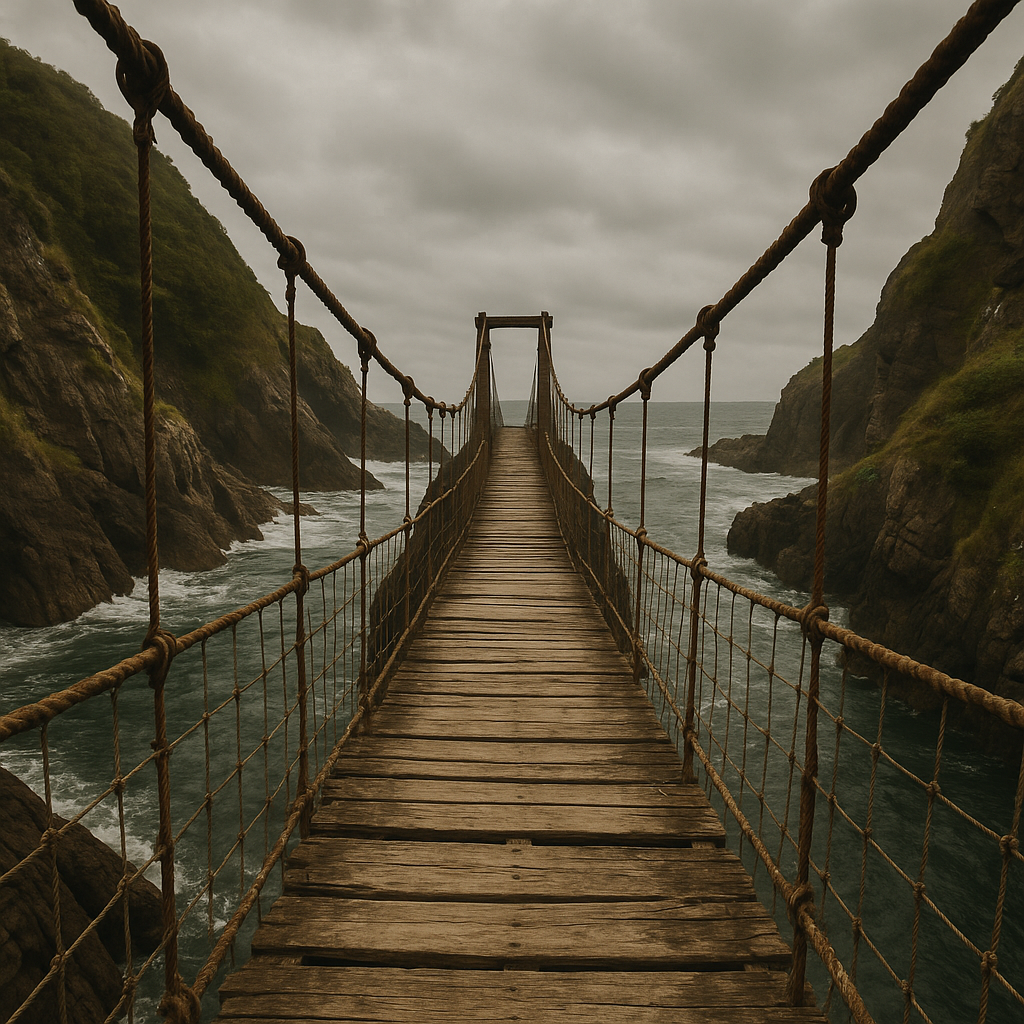
Explore the incredible engineering behind Tsitsikamma's suspension bridges, set to sway for another 60 years with innovative new materials.
South Africa's beloved Storms River suspension bridge, born from a 1967 napkin sketch, is getting a huge makeover from 2024-2026. This isn't just a fix; it's a rebirth using super strong, space-age materials like rust-proof basalt and zinc-armoured cables. The goal is to keep its famous bouncy feel while making it last until at least 2086, even against the harsh sea. So, the bridge will dance on, stronger than ever, for generations to come.
What is happening to South Africa's iconic Storms River suspension bridge?
The Storms River suspension bridge is undergoing a significant 2024-2026 rebuild, transforming it with advanced materials like basalt-fibre rebar and zinc-aluminium armoured cables to withstand harsh coastal conditions. This ensures its longevity and maintains its famous bounce, continuing its legacy as a Garden Route attraction.
Get Cape Town news in your inbox
Stay updated with the latest stories from the Mother City.
Section 1 – The Napkin That Refused to Fall
Gert van der Lith, a freshly qualified Pretoria engineer, ordered a strawberry shake at the Mitchell’s Pass Wimpy in 1967. While the blender roared he flipped the paper serviette and drew two identical arches, adding a light scribble of hangers between them. The sketch was neither signed nor dated; he simply pushed it across the table to a SANParks ranger and joked, “Let it bounce, but never break.” Two seasons later the world’s first African pedestrian suspension bridge built purely for sight-seers opened above the churning mouth of the Storms River. Spanning 77 m and sagging exactly 6.4 m, it carried no traffic except curiosity. Van der Lith never asked royalties; he died in 2003 unaware that 14 million soles have since tapped his doodle, turning it into a rite of passage for every Garden Route visitor.
Salt, however, is patient. For five and a half decades the Agulhas Current hurled 12 m swells, two phantom tsunamis and uncountable storms at the little bridge. Rainfall exceeding 1 200 mm a year wrapped the steel in a wet blanket; humidity rarely dropped below three-quarters saturation. Engineers say coastal steel ages in “dog years”: every 365 days here equal four inland winters. By 2019 dye-penetrant tests found 212 hair-line cracks in the 8 mm deck plates, some racing forward 3 mm each million footfalls - roughly one busy summer weekend. The bridge had danced magnificently, but its tendons were fraying.
Section 2 – Why 2024 Had to Happen and the Space-Age Toolkit That Will Keep the Sway Alive
Repair was never an option; only a re-birth would do. SANParks drafted a tender that reads like a Mars-shot parts list. The new arteries are 3.2 km of fully-locked Dyform coil, 36 mm thick, wrapped in zinc-aluminium armour and finished with a jet-black HDPE jacket that laughs at UV rays. Instead of steel reinforcement, the north anchor block will be the continent’s first structure poured with basalt-fibre rebar - rust-proof, twice as strong as mild steel and half the weight. Each 3 m deck module is being prefabricated in a humidity-controlled Cape Town hangar, then slung into place by Super-Duty helicopters that never touch the fragile fynbos.
Where metal must meet salt, 400 zinc “lollipops” will sacrifice themselves, corroding gently so the bridge never has to. They sit hidden in the shadows, scheduled for replacement every dozen years - no drama, just dutiful decay. Handrails conceal 2 200 K amber LEDs tuned to the colour temperature least confusing to juvenile Cape cormorants, ensuring that night selfies won’t send fledglings off course. Even the grating’s geometry was run through vibration software to keep the bounce identical to Van der Lith’s 1969 feel - 120 mm of give when 300 hikers crowd the centre. The span will dance, but under surveillance stronger than a parent at a school gate.
Section 3 – Three Bridges, Two Closures, One Continuous Trail
Guidebooks repeat “the suspension bridges” as if nature built twins. Look closer and you’ll spot a 14 m minnow 200 m upstream, dangling 8 m above a side ravine. Tourists march past it daily, yet this forgotten cousin is the project’s guinea pig. Engineers will load it to 1.8 times its design weight - picture 300 teenagers bouncing in perfect chaos - while laser vibrometers track every micro-twitch. If the basalt-concrete courtship survives 250 000 cycles the larger siblings will inherit the same recipe.
Closing everything at once would throttle park income, so the rebuild is choreographed like ballet. Step one, July 2024 to March 2026, keeps the famous 77 m span open. Contractors reach the smaller bridges by a temporary cantilevered walkway pinned to sandstone with 16 mm Dywidag bars drilled three metres deep. Tourists snap photos overhead, unaware a diamond-wire saw is slicing 1969 concrete beneath their sandals. Step two flips the script: the big bridge naps for three months while numbers one and three reopen and a freshly minted 450 m cliff-top boardwalk swings visitors back to the start. Carbon-fibre piles were driven by a low-rattle rig so African black oystercatchers could keep their pebble nests.
Nothing sails away. Cable off-cuts become 300 mm souvenir “bridge bones,” sand-blasted and laser-etched with GPS coordinates, sold for R 150 to fund alien-vegetation clearing. Old grating morphs into thirty poetry benches quoting Pieter van der Loo: “Die see het geheue, maar ons het bene” – “The sea has memory, but we have legs.” Even the zinc anodes will retire inside the park, melted into educational sculptures that explain galvanic corrosion to school groups.
Section 4 – Science, Swallows and the Solstice Re-Opening
Stellenbosch University wired the entire structure into a 30-year open-air laboratory. Hair-thin fibre-optic nerves nestle inside the fresh concrete, streaming strain, moisture and temperature data to a LoRaWAN gateway disguised as a boulder. Download the free “BridgeScope” app, point your phone, and the screen reveals live deflection, corrosion probability and how many boots are aboard right now. Designers in Norway and Chile have already mined the anonymised data under a Creative Commons licence, proof that Tsitsikamma is now a classroom for the world’s coastal engineers.
Feathered stakeholders staged their own protest. When 72 Greater Striped Swallows arrived in March 2025 they discovered their historic mud nests scraped from the north tower. A viral selfie triggered 18 000 online signatures in 48 hours. The contractor responded with a 3 m plywood ledge bolted five metres from the work face; within a week 64 nests were rebuilt. Completion slips five days - already baked into the June 2026 buffer - while fledglings learn to fly against a backdrop of basalt and carbon fibre.
On 24 June 2026 the ribbon drops at sunrise. Expect the Tsitsikamma Ratepayers’ Association to lead the winter-solstice march, continuing a tradition older than most hikers. With Van der Lith’s original 1:12 sag-to-span ratio copied exactly, the deck will bob 120 mm under maximum load, echoing the bounce that made the first bridge a legend. The difference is tomorrow’s dancers will tread on materials engineered to forgive the sea until at least 2086 - plenty of time for the next milkshake epiphany to be doodled on whatever passes for a napkin by then.
What is happening to South Africa's iconic Storms River suspension bridge?
The Storms River suspension bridge is undergoing a significant 2024-2026 rebuild, transforming it with advanced materials like basalt-fibre rebar and zinc-aluminium armoured cables to withstand harsh coastal conditions. This ensures its longevity and maintains its famous bounce, continuing its legacy as a Garden Route attraction.
Who designed the original Storms River suspension bridge and how did it come about?
The original bridge was designed by Gert van der Lith, a freshly qualified engineer, in 1967. The initial concept was famously sketched on a napkin at a Wimpy restaurant and presented to a SANParks ranger.
Why is a complete rebuild necessary instead of just a repair?
After five and a half decades of exposure to harsh coastal conditions, including high humidity, salt spray, and heavy rainfall, the bridge developed numerous hairline cracks in its deck plates. Engineers determined that repair was insufficient, and only a complete rebuild with advanced, durable materials would ensure its long-term integrity and safety.
What advanced materials are being used in the bridge's makeover?
The rebuild incorporates cutting-edge materials such as fully-locked Dyform coil wrapped in zinc-aluminium armour for cables, and basalt-fibre rebar for the north anchor block. Basalt-fibre rebar is rust-proof, twice as strong as mild steel, and half the weight. Zinc anodes will also be used for sacrificial corrosion protection.
How will the famous 'bounce' of the bridge be preserved?
The geometry of the new grating was specifically designed using vibration software to replicate the exact 120 mm bounce of the original bridge when 300 hikers are at its center, ensuring Van der Lith's original feel is maintained.
When will the Storms River suspension bridge reopen to the public after its makeover?
The grand reopening of the Storms River suspension bridge is scheduled for sunrise on June 24, 2026, coinciding with the winter solstice. This rebuild aims to make the bridge resilient until at least 2086.

Emma Botha is a Cape Town-based journalist who chronicles the city’s shifting social-justice landscape for the Mail & Guardian, tracing stories from Parliament floor to Khayelitsha kitchen tables. Born and raised on the slopes of Devil’s Peak, she still hikes Lion’s Head before deadline days to remind herself why the mountain and the Mother City will always be her compass.
View all articles →