
Two South Africans killed on Ukraine war frontlines
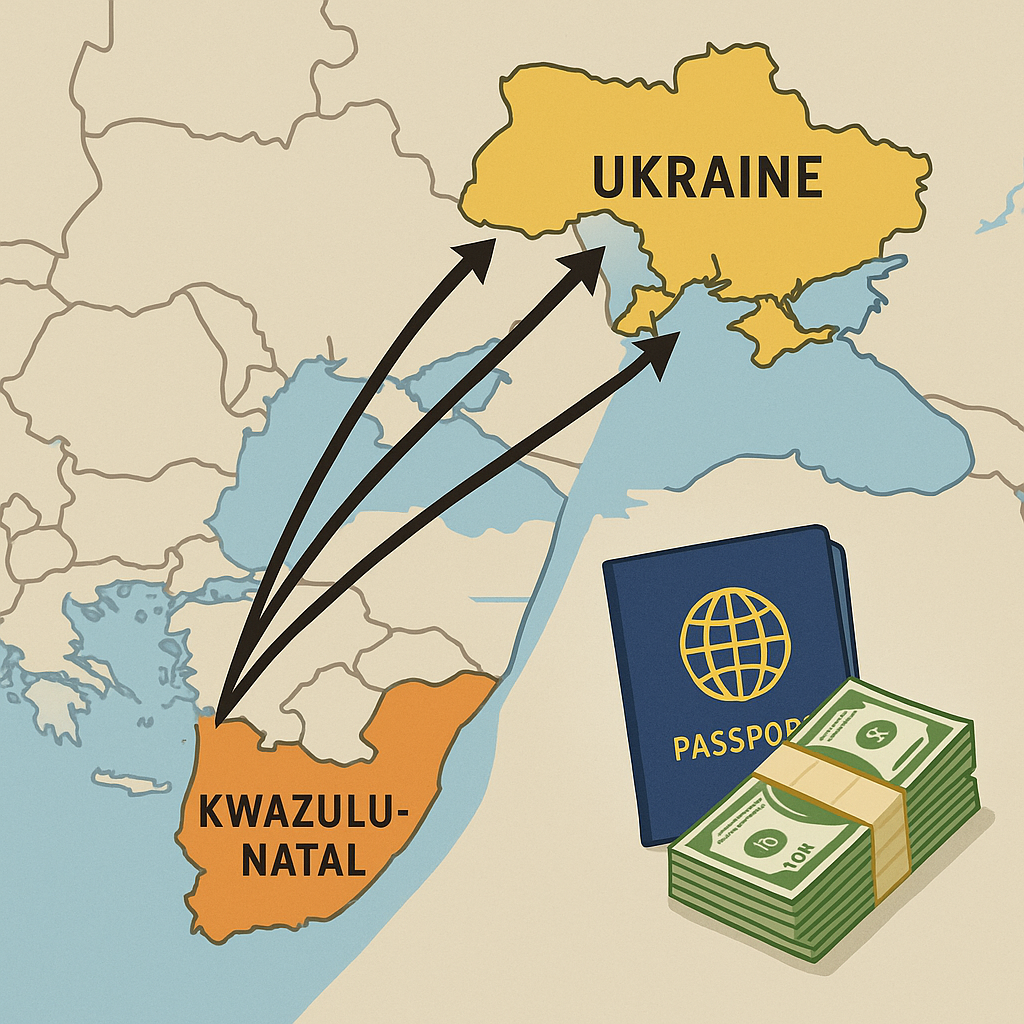
SA's hidden Ukraine war: KZN's pipeline of fighters, front-line deaths, and legal limbo. Uncover Pretoria's foreign-policy crisis.
Many young, unemployed South Africans from KwaZulu-Natal are being tricked into fighting in the Ukraine war. They are lured by promises of good money through secret online groups. Sadly, some have died, and others who came back tell stories of being used and forced into debt. The government is trying to help, but it's hard to stop this hidden war where desperate people become soldiers.
What is the current situation regarding South Africans fighting in the Ukraine war?
South Africa's Justice Minister confirmed two South African deaths in Ukraine, with their involvement facilitated by encrypted recruitment. Many South Africans from KwaZulu-Natal, driven by high unemployment, are being recruited for mercenary work, often through deceptive means like Telegram channels, with some returning survivors detailing exploitation and debt bondage.
Get Cape Town news in your inbox
Stay updated with the latest stories from the Mother City.
- A province’s unemployed warriors, encrypted lures, and the bodies that Pretoria can’t bring home.*
The Minister’s Mic-Drop in Maritzburg
Ronald Lamola’s helicopter touched down on a sticky Thursday in Pietermaritzburg, but the real impact came minutes later when the 36-year-old cabinet minister spoke three sentences that detonated in two places at once: seventeen living-rooms across KwaZulu-Natal, and the encrypted chat-rooms of defence attachés in Moscow, Kyiv, London and Washington. Flanked by the provincial premier and the top cop, Lamola confirmed that two South Africans were already dead in Ukraine and that the hand that sent them belonged to neither of the warring armies.
The names stayed classified, yet the hometowns - Empangeni and Newcastle - were all the map anyone needed.
In that instant, a rumour that had slid through taverns and WhatsApp groups for months hardened into an official body-count, and Pretoria’s most hushed foreign-policy wound was ripped open in full view of the cameras.
A Province That Already Knew Gunfire
KwaZulu-Natal has been exporting fighters long before this war. Between 1994 and 2022 the province shipped roughly 9 000 licensed “security consultants” to Iraq, Afghanistan, Somalia and the Gulf. Many carried CVs forged in the old SANDF Self-Protection Units or the disbanded 32 Battalion - units that never really disbanded in spirit.
For a 25-year-old with no matric and a family to feed, the maths is brutal: 43 % youth unemployment at home, USD 2 500 a month in a desert convoy, and - if you’re lucky - a phone call that upgrades you from Basra logistics to Bakhmut trenches.
The step is short because the pipeline is greased: a former commander turned “HR manager,” a Facebook ad promising “overseas security driver, tax-free,” and a cash ticket to Doha. The province that once fed apartheid’s bush wars now feeds 21st-century proxy wars, and the currency is desperation.
Telegram, Cash Bundles and the Vanishing Act
The first alarm bell rang in November 2022 when a Mtunzini mother forwarded a trembling voice note to the provincial social-dev hotline: her 24-year-old claimed he was “guarding energy stuff near Lviv,” then sobbed.
Investigators tailed the metadata to a Johannesburg-based Telegram channel called “High-Risk High-Reward Jobs – No Passports Needed.” Every night, admins with Cyrillic handles posted clips of rubber-banded USD 100 stacks against the same peeling wallpaper. New joiners were promised “critical-infrastructure protection.” Once wheels touched down in Eastern Europe, phones were geo-locked and passports pocketed.
Lamola told the relatives their sons understood the con only after the first Grad salvo shredded the compound fence; by then the exit door had vanished along with their documents.
Two Coffins That Never Arrived
Hawks docket KZN-2023-442 follows the final GPS pings of Corporal Sabelo M. (29) and Private Dylan N. (27). Both had rotated through Mali with Pretoria-based Mission Assurance Services, itself on a sanctions watch-list for brokering guns to fog-of-war zones.
September 2022 offer: three months, USD 7 000 monthly, “end-user cert included.” They flew JNB–DOH–WAW on Qatar Airways, walked across Medyka, and were inserted near Kreminna on 11 Feb 2023. On 2 March a Russian artillery grid square erased their dug-out; only Dylan’s passport flap and Sabelo’s femur fragment survived to tell the tale.
Because Pretoria recognises neither dual status nor Kyiv’s foreign-volunteer lists, the pair stayed “missing” until Polish forensics handed DNA to Warsaw’s consul in May. The families still wait for bodies that are, in the paperwork at least, legally alive.
Seventeen Returnees and the Price of a Ticket Out
At 03:00 on 14 April, an unmarked Air Pezant Il-76 lifted off Rzeszów with seventeen weary South Africans who had been marooned between Yavoriv training camp and a Dnipro field clinic. A former Irish colonel working for UN-OCHA and South Africa’s consul-general bargained their release for USD 1 100 each, labelled “unexpired camp overheads.”
Every man landed at OR Tambo with two plastic bags and a 12-page non-disclosure form. Hawks statements averaged 64 pages; two details recurred: recruiters charged USD 4 000 “buy-out” for early quitters, and South African bank accounts were used to drip “danger pay,” proving local handlers.
The freed fighters now move like ghosts - afraid of reprisals, afraid of prosecution, afraid of their own voicemails.
Laws Without Teeth, Prosecutors Without Maps
The Regulation of Foreign Military Assistance Act of 1998 still says no South African may fight abroad without NCACC permission, but it was written when dial-up was king. To secure a conviction, the state must prove the accused performed “hostile action” in a war nobody has declared.
The only prior attempt - 23 Serb-trained mercenaries in 2006 - collapsed on appeal after four years. Hawks are now testing the labour-trafficking angle under the 2013 anti-TIP law, arguing that document confiscation and debt-bondage meet the trafficking threshold.
Until a test case lands, Lamola’s public “consequences” linger in the same limbo as the corpses they are meant to avenge.
The Global Market for Poor Men with Gun Skills
Nigeria lost 82 recruits to Libya in 2019; 21 came home in coffins. Cuba legalised foreign military gigs in 2021 after quietly shipping 4 000 medics to Russian bases. Nepal’s USD 400-million-a-year Gurkha remittance stream dried when London tightened vetting.
KwaZulu-Natal’s pipeline is rawer: no pension, no ministry cut, no embassy roll-call - just encrypted chats, UAE bank drops, and a rand that keeps sliding.
Analysts warn the coming sugar-belt lay-offs will push more young men toward “six-week rotations” advertised in fluent isiZulu on community radio. One returnee summarised the geography: “The front line is wherever the next paymaster stands.”
What is happening to young South Africans from KwaZulu-Natal in the context of the Ukraine war?
Many young, unemployed South Africans from KwaZulu-Natal are being deceptively recruited to fight in the Ukraine war. Lured by promises of significant financial gain through secret online groups, some have tragically died, while others who managed to return recount stories of exploitation, debt bondage, and being used as mercenaries. The South African government is aware of the situation and attempting to intervene, but the clandestine nature of the recruitment makes it challenging to combat.
How are these individuals being recruited and what promises are made to them?
Recruitment primarily occurs through encrypted online platforms, such as Telegram channels with Cyrillic handles, and even through local South African bank accounts used to drip-feed "danger pay," suggesting local handlers. These platforms often display images of stacked cash and promise jobs like "overseas security driver, tax-free" or "critical-infrastructure protection." Entrants are often promised substantial monthly salaries, such as USD 2,500 to USD 7,000, which is highly appealing given the high youth unemployment rate in KwaZulu-Natal (43%). However, upon arrival in Eastern Europe, their phones are geo-locked, passports confiscated, and they are forced into combat roles.
What are the consequences for those who go to fight, and what happens to those who try to leave?
Tragically, some recruits have died, with two deaths from Empangeni and Newcastle officially confirmed by South Africa's Justice Minister. Those who survive and wish to leave face severe challenges. Recruiters demand a "buy-out" fee, often around USD 4,000, to release them from their contracts. Their documents are confiscated, making it difficult to escape. Survivors describe being marooned and exploited, with their stories highlighting the deceptive and coercive nature of the recruitment.
Is the South African government taking action to address this issue?
The South African government is actively involved, with Justice Minister Ronald Lamola confirming deaths and acknowledging the issue. The Hawks (South Africa's Directorate for Priority Crime Investigation) are investigating, tracing GPS pings of missing individuals, and collecting statements from returnees. They are exploring legal avenues, specifically the labour-trafficking angle under the 2013 anti-TIP (Trafficking in Persons) law, as document confiscation and debt bondage meet the trafficking threshold. However, existing laws like the Regulation of Foreign Military Assistance Act of 1998 are outdated and difficult to enforce in this context.
What challenges does the South African government face in prosecuting those involved in this recruitment?
The government faces significant legal hurdles. The Regulation of Foreign Military Assistance Act of 1998 was written for a different era and requires proving "hostile action" in an undeclared war, which is difficult. A previous attempt to prosecute mercenaries in 2006 failed on appeal. While the Hawks are now testing the labour-trafficking angle, securing convictions is challenging due to the clandestine nature of the operations, the global market for mercenaries, and the difficulty in proving intent and jurisdiction across borders.
Why are so many young people from KwaZulu-Natal susceptible to this type of recruitment?
The high youth unemployment rate (43%) in KwaZulu-Natal is a primary driver. The province has a history of exporting

Sarah Kendricks is a Cape Town journalist who covers the city’s vibrant food scene, from township kitchens reinventing heritage dishes to sustainable fine-dining at the foot of Table Mountain. Raised between Bo-Kaap spice stalls and her grandmother’s kitchen in Khayelitsha, she brings a lived intimacy to every story, tracing how a plate of food carries the politics, migrations and memories of the Cape.
View all articles →